
Dean Baker says this piece by Thomas Edsall on The New York Times Opinionator blog should be “mandatory reading for reporters” covering the Social Security and Medicare debates. I think I have to agree.
Scarborough and Sachs knock down a strawman and name it Paul Krugman
One of the things that drives me crazy about public argument is the willingness of those doing the arguing to ignore the basics of logic.
Regularly, we are forced to listen to politicians and talking heads violating the most basic of principles — making ad hominem (or personal) attacks or engaging in a straw-man argument or equivocation.
Consider this piece in The Washington Post from Joe Scarborough and Jeffrey Sachs, which using the straw man to take down an argument that has been made repeatedly not only by the man under attack, but by a large contingent of economists.
Dick Cheney and Paul Krugman have declared from opposite sides of the ideological divide that deficits don’t matter, but they simply have it wrong. Reasonable liberals and conservatives can disagree on what role the federal government should play yet still believe that government should resume paying its way.
It has become part of Keynesian lore in recent years that public debt is essentially free, that we needn’t worry about its buildup and that we should devote all of our attention to short-term concerns since, as John Maynard Keynes wrote, “in the long run, we are all dead.” But that crude interpretation of Keynesian economics is deeply misguided; Keynes himself disagreed with it.
And so does Krugman. Economists like Krugman, Dean Baker and others are not arguing that deficits do not matter, and they certainly are not saying that debt is free. What they are saying is that we have short-term issues that need to be addressed that will go a long way toward plugging the deficit and that once the economy is on sounder footing the federal government should turn its attention to deficits.
This Post piece is the class use of the straw man, defined by Logicalfallacies.info as
one that misrepresents a position in order to make it appear weaker than it actually is, refutes this misrepresentation of the position, and then concludes that the real position has been refuted.
Krugman’s actual position on deficits, however, is far more subtle than Scarborough and Sachs portray it to be. Krugman wrote a piece the Times’ headlined “Nobody Understands Debt” that eventually made its way around the internet as “Why Deficits Don’t Matter,” which argued that our approach to government debt and deficits is based on erroneous assumptions. “Deficit-worriers,” he said, “portray a future in which we’re impoverished by the need to pay back money we’ve been borrowing.” The analogy is to family or household debt, which Krugman says is faulty because governments are not households. They do not have to pay the money back in the same way. All governments need to do, he said,
is ensure that debt grows more slowly than their tax base. The debt from World War II was never repaid; it just became increasingly irrelevant as the U.S. economy grew, and with it the income subject to taxation.
Just as importantly, “an over-borrowed family owes money to someone else; U.S. debt is, to a large extent, money we owe to ourselves.”
This was clearly true of the debt incurred to win World War II. Taxpayers were on the hook for a debt that was significantly bigger, as a percentage of G.D.P., than debt today; but that debt was also owned by taxpayers, such as all the people who bought savings bonds. So the debt didn’t make postwar America poorer. In particular, the debt didn’t prevent the postwar generation from experiencing the biggest rise in incomes and living standards in our nation’s history.
But isn’t this time different? Not as much as you think.
It’s true that foreigners now hold large claims on the United States, including a fair amount of government debt. But every dollar’s worth of foreign claims on America is matched by 89 cents’ worth of U.S. claims on foreigners. And because foreigners tend to put their U.S. investments into safe, low-yield assets, America actually earns more from its assets abroad than it pays to foreign investors. If your image is of a nation that’s already deep in hock to the Chinese, you’ve been misinformed. Nor are we heading rapidly in that direction.
The key point, however, especially when it comes to the disingenuous Scarborough/Sachs argument is that Krugman does view debt as potentially dangerous to the economy:
Now, the fact that federal debt isn’t at all like a mortgage on America’s future doesn’t mean that the debt is harmless. Taxes must be levied to pay the interest, and you don’t have to be a right-wing ideologue to concede that taxes impose some cost on the economy, if nothing else by causing a diversion of resources away from productive activities into tax avoidance and evasion. But these costs are a lot less dramatic than the analogy with an overindebted family might suggest.
The issue, he says, is not the debt but the debt as it relates to the tax base — and the current political mania for tax cuts and austerity. Nations with what he calls “stable, responsible governments” or governments “willing to impose modestly higher taxes when the situation warrants it”
have historically been able to live with much higher levels of debt than today’s conventional wisdom would lead you to believe. Britain, in particular, has had debt exceeding 100 percent of G.D.P. for 81 of the last 170 years. When Keynes was writing about the need to spend your way out of a depression, Britain was deeper in debt than any advanced nation today, with the exception of Japan.
Of course, America, with its rabidly antitax conservative movement, may not have a government that is responsible in this sense. But in that case the fault lies not in our debt, but in ourselves.
So yes, debt matters. But right now, other things matter more. We need more, not less, government spending to get us out of our unemployment trap. And the wrongheaded, ill-informed obsession with debt is standing in the way.
Krugman, as you can see, has not declared deficits irrelevant. On the contrary, his argument has more to do with politics than economics. But that doesn’t matter to Scarborough and Sachs, who never address Krugman’s actual argument (aside from pointing out something he wrote in 2001). That makes the Scarborough/Sachs pieces a perfect example of the strawman, because “the position that has been claimed to be refuted is different to that which has actually been refuted; the real target of the argument is untouched by it.”
Send me an e-mail.
Can’t we wait a bit before we start the next election?
This may seem like great news for Hillary Clinton, but I’m not sure this is all that wonderful for the rest of us.
But not because I have anything for or against the former senator and secretary of state. This issue is not her — or the various political names listed in this Quinnipiac poll — but the fact that we are running polls like this in early March 2013, with the next presidential election still three years and eight months away.
The problem is that polls like this contribute to a degradation of our politics by turning every question into one about the White House. They take the focus away from the other two branches and state-level races. They make it seem like the only important question in politics is who resides in the White House.
We have four years ahead of us before that can change. Barack Obama is president now and has a long agenda he wishes to carry out. Whether Clinton or Jeb Bush or even Chris Christie will be running to replace him is not particularly relevant.
What is relevant, however, is who is sitting in Congress, working on the legislation or stalling it; what is important is how the courts function and who sits in the statehouses and city halls around the country
Hillary Clinton may become president in four years, but she isn’t now.
Send me an e-mail.
Scene around New Brunswick: Words to live by

An American family in exile
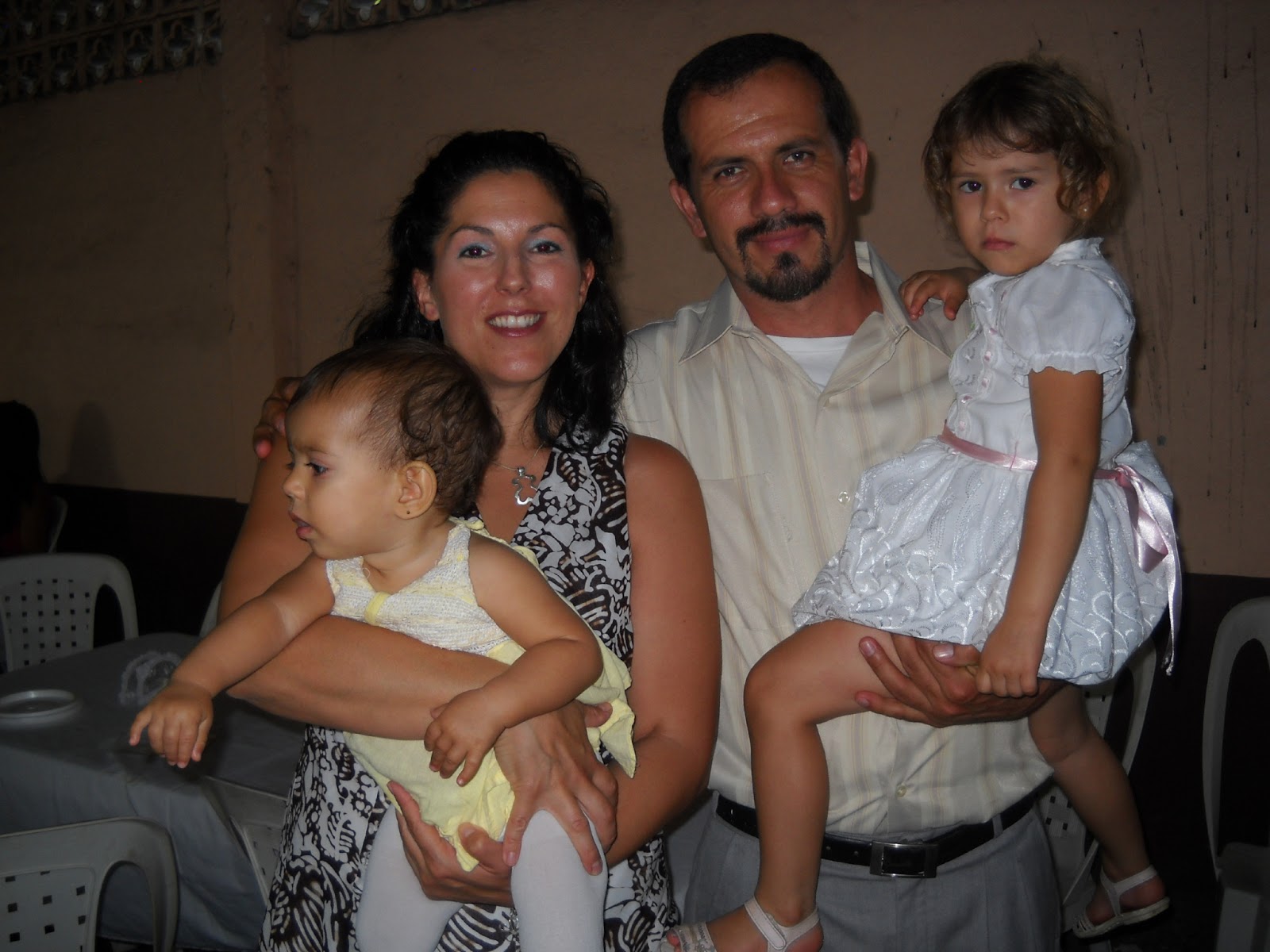
Margot Traverso had to make what she calls an impossible decision.
It was nearly eight years ago and her husband, Osmark Bruemmer Gonzales, remained undocumented. The couple had gotten married in 2005 and decided to try and legalize Gonzales’ immigration status, assuming that their marriage would allow for an orderly process.
They were wrong, and their effort to “do the right thing,” as Traverso said, has landed the couple and their two young children in Vera Cruz, Mexico, where they are waiting out a 10-year bar on Gonzales’ re-entry into the United States.
The reason is the so-called 10-year bar, under which immigrants who are “unlawfully present” in the United States for more than a year must return to their country of origin, where they can apply for a waiver. However, if the immigrant in question has entered more than once – as Gonzales did – he or she is barred for life, though there is a slim possibility that he or she could qualify for a pardon or a waiver.
“When this happened in 2005, my choices were to stay in New Jersey without him for 10 years, or I can leave my whole life for Mexico,” she said. “These are not very good options for a U.S. citizen. The family values were very important to me.”
“To me, the best choice was to keep the core family in tact,” she said later. “I had to leave my aging father, my sister, my career – it was almost like there is no good choices.”
Gonzales first came to the states in 1992 when he was about 18 years old, Traverso said. He stayed about six years and then returned to southern Mexico to visit his ailing mother in 1998. He headed north again a year later, eventually settling in Monmouth County where he met Traverso.
“He hadn’t seen his mother in six years,” Traverso said. “His mother was having health problems and he took that risk and now we are paying the consequences of it.”
The 10-year bar was created as part of the 1996 immigration reforms, passed by the Republican-controlled House and Senate and signed into law by President Bill Clinton, a Democrat. Those reforms were meant to be a crackdown on illegal immigration, with the hope being that it would lead to a reduction in the number of unauthorized immigrants in the United States.
As we know now, the byzantine rules the ’96 reforms put in place have been a miserable failure. There now are more than 11 million undocumented immigrants in the country who have to live in the shadows. While there seems to be some energy pushing the nation toward larger immigration reforms, public debate remains mired in a pointless discussion over border security and conservative demands that there be no amnesty.
The hope is that comprehensive reform will offer a path to legal residency and citizenship for the bulk of the undocumented immigrants and that we will come to the realization that allowing capital to move freely across borders but not people is inhumane.
Comprehensive reforms remain a pipe dream, despite proposals from the president and a bipartisan group of eight senators, so we have been watching President Obama institute small-bore, incremental reforms like the deferred action program for children and a family unification program that will do nothing for Traverso and Gonzales and the thousands of so-called mixed-status families like them. Many live separate lives, while others – like Traverso and Gonzales – find themselves living far from where they consider their home to be.
The family unification rules, which took effect yesterday,are designed to streamline the process for mixed-status families to obtain their visas and green cards. Undocumented immigrants can now apply for a re-entry waiver before they leave the country (they must return to their home country to obtain their visa), which is supposed to reduce the amount of time they must spend outside the United States, while also making the visa trip less risky.
Traverso said the new rules are an improvement over the existing regimen, but they will do little for most of those caught in the mixed-status web because they only apply to immigrants with a single entry into the states and they are not retroactive.
That means remaining in limbo unless comprehensive reform passes or the president widens the program.
“I am a United States citizen,” she said. “We feel United States citizens should have a priority. We just want to present our case before an immigration judge and let him weigh all of the factors.”
For more information on families with mixed-status, check out American Familes United.
Send me an e-mail.
 Hank Kalet