
I wanted to post this video, which is from The Colbert Report earlier this month and was re-aired last night, because it is, for my money, the best argument I’ve seen for abolishing the death penalty.
New unemployment rule: a minor change, but a petty change
It is a minor rule-change to be sure, but the hurdle the state Department of Labor and Workforce Development is proposing be placed before those seeking to claim unemployment benefits is pretty typical of the way the Christie administration has dealt with those in economic distress.
Jobless residents would have to search for openings online, on a state-run jobs board called Jobs4Jersey.com, every week. The only current requirement is that they check in with state officials by phone, mail, in person or online.
The state Department of Labor and Workforce Development said a weekly search of the jobs board is “the very least that a claimant can do” and the governor expects to save money for New Jersey taxpayers by putting more people back to work.
“If a claimant fails to simply register with Jobs4Jersey, then he or she is not actively seeking work and should not collect benefits,” Labor Department officials wrote in the New Jersey Register, detailing their proposal. “Each such effort benefits all taxpayers in that it helps to restore the solvency of the Unemployment Compensation Trust Fund.”
This would be a relatively minor change, though not one that will do the unemployed any favors. The governor says it will help taxpayers, who have been on the hook to the federal government for loans to cover trust fund shortfalls, but those shortfalls were not created by the unemployed. Rather, they are the result of legislative theft — governors and legislators of both parties, when unemployment was low, saw the trust fund as an easy mark, raiding the fund to balance budgets. The proposal seems petty and won’t address the larger issue.
But what makes it particularly irksome is that it is part of a pattern on the part of the Christie administration. Consider the kinds of policies the governor has pushed for those in economic distress:
- He cut in the Earned Income Tax Credit (from 25 percent of the national credit to 20 percent), with consent of the Democrats, was put forth as a way of balancing the budget. It was supposed to be temporary — doesn’t this make it a one-shot revenue? — but it has become, for all intents and purposes, a permanent cut because the governor has tied its restoration to a series of policies he knows the Democrats won’t support.
- He vetoed a minimum wage hike and offered a significantly weaker alternative that was never going to be seriously considered by the Democratic majority. The result? No increase and a Democrat-backed constitutional vote in November that, if the polls are to be believed, will be approved.
- He dissolved the Council on Affordable Housing, raided housing trust funds (both state and local), vetoed legislation that would have allowed towns to buy up abandoned foreclosed properties and use them as affordable housing.
And these are just the ones that come readily to mind. Taken with this as the larger context, one has to ask why the governor wants to pick on those of us who are claiming benefits from an unemployment system into which we have paid.
Send me an e-mail.
Priced out
My latest for NJ Spotlight, on a report showing that nearly six in 10 New Jersey renters are paying more than they can afford for their housing.
Send me an e-mail.
Eclectic pair featured at SB poetry reading
For poets Mark Hillringhouse and Richard O’Brien, poetry is just one of many ways they express themselves.
Hillringhouse, author of Between Frames, is also an accomplished photographer, while O’Brien is a published novelist — author or Little Flower of Luzon — who has taken up painting.
And both will bring their eclectic mix of talents to the South Brunswick Library on Sunday, where they are the feature readers at the monthly reading series sponsored by the South Brunswick Arts Commission.
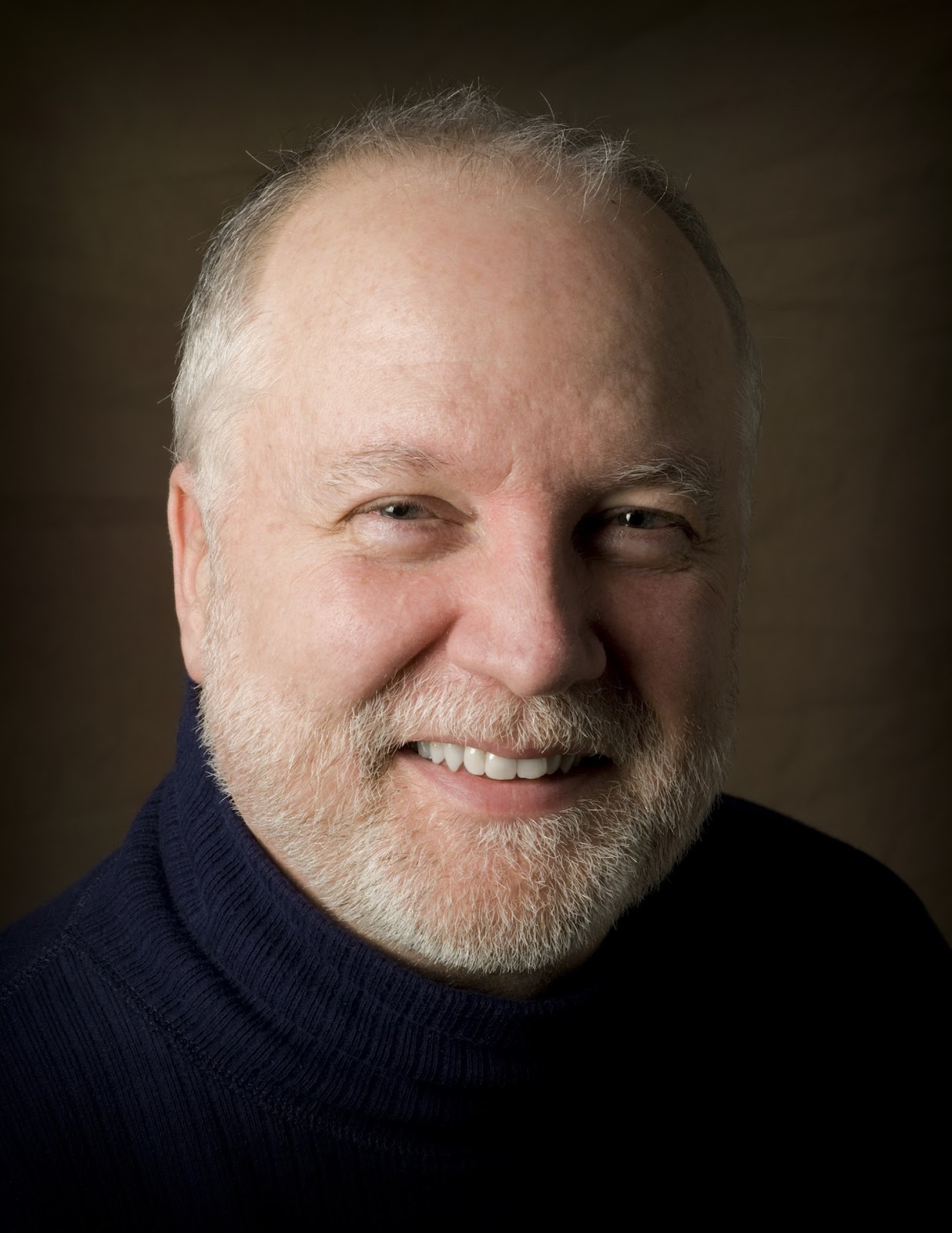 |
| Mark Hillringhouse |
Hillringhouse, 59, lives in Englewood and has been writing since he was 14. He was influenced by a pastor at his church and started writing spiritual meditations that were published in the church magazine.
“I was a strange, quiet kid who liked to read,” he says in a publicity questionnaire. “I hung out in the public library after school. I discovered section 8.11 in the Dewey Decimal system, that’s the American poetry section and I discovered poets like Wallace Stevens and William Carlos Williams and Robert Frost and Ezra Pound, all the big names.
“I was into some philosophy then, too, and I would always argue religion or theories about the godhead with the minister of my church,” he adds. “I was about 14 and I wrote this spiritual poem that the minister liked and he published it in the church magazine. I thought I was a poet!”
He counts as his influences those American giants, but the shared New Jersey roots gives Williams a special place.
“Frost was the first major American poet I remember as a kid since I watched him read at Kennedy’s inauguration,” he says. “I fell in love with Wallace Stevens in college and William Carlos Williams. I later got to know both of Williams’s sons, Eric and Paul, when I ran the Williams Center for the Performing Arts in Rutherford. I interviewed them. I am still writing about Williams.”
And taking pictures inspired by his work.
“I did a year-long project writing and photographing the Lower Passaic River that was commissioned by the American Poetry Review,” he says. “The editor, David Bonnano, asked me to write him something about the Passaic. I thought a good thing would be to trace the locations mentioned in Williams’s 1938 collection of short stories titled ‘Life along The Passaic River,’ which was published by New Directions. I have a first edition of the text and I read and reread the stories looking for clues and finding that Williams being a doctor was very specific in mentioning places and street names.
“So I tried to follow the old roads that Williams took as he went on his house calls in cities and towns along the Passaic such as Wallington and Passaic and Garfield and Rutherford and Lyndhurst. I paddled canoes and kayaks up and down and took photographs of the river at different spots in different seasons and in different weather and I interviewed dozens of people close to the river. I got some poems out of it, too, like the poem titled ‘At The Arlington Diner,’ which is in my new book. The poem grew from doing the photo-essay.”
Williams, he says, “proved that you could take a place like Paterson and make it into a book-length poem and that an artist can turn his attention to what is here locally and create something that is as powerful and as important as anything exotic and remote. He wrote about where he lived and about the people he encountered.”
O’Brien, 46, says he began writing in high school, inspired by Percy Bysshe
Shelley.
“The line from ‘Ode to a Skylark’ haunted me for years: ‘We look before and after, and pine for what is not,'” he says. “Then, Bukowski when I was in my 20s, and Robert Creeley.”
O’Brien, who like Hillringhouse recently finished his Master of Fine Arts degree at Fairleigh Dickinson University, cites the MFA faculty there — H.L. Hix, Renee Ashley and David Daniel — as big influences and he is looking forward to Sunday’s reading.
“I don’t do readings as often as I like, but I value them,” he says. “The benefit is hearing your work aloud, and the work of others, of course.”
Mark Hillringhouse and Richard O’Brien will read at the South Brunswick Library, 110 Kingston Lane, Monmouth Junction, on Sunday, March 17, at 2 p.m. An open reading will follow the featured poets. Admission is free, but a donation of a non-perishable food item to the township Food Pantry is appreciated. The reading is sponsored by the South Brunswick Arts Commission. Arts Commission website: www.sbarts.org; South Brunswick Library website: www.sbpl.info.
Send me an e-mail.
10 years between records, but 30 years between gems: Bowie strikes gold with <i>The New Day</i>
It’s been 10 years since we’ve heard from David Bowie, though it has been more than 20 — probably close to 30 — since we’ve heard the kind of genre-bending, mind-expanding music that made him famous. So why the hype surrounding the Grand White Duke’s latest, due to be released Tuesday?
One listen to the free stream provided by iTunes and it is clear that The New Day is a return to form for Bowie, but not only that. The record, which is awash in discordant guitars , organs and saxophones, connects with the better parts of Bowie’s past catalogue while still feeling fresh and forward-thinking.
The music moves between aggressive proto-art-punk in which the guitar feels like a weapon, to dance tracks and shockingly sensitive ballads (“Where are We Now?” is spare and absolutely beautiful).
Ten years is a long time to wait, but 30 years is even longer. The New Day is the album we’ve been waiting for since Let’s Dance. Believe the hype.
 Hank Kalet