
Hold owners accountable for PEDs in baseball

Baseball has dealt itself another black eye. And it is not the player’s fault.

Despite what the sportswriters and the owners what us to believe, the scourge of performance-enhancing drugs is a) not the worst thing to happen to the sport since pitchers started throwing overhand and b) shouldn’t be laid at the feet of the players, at least not solely.

The players — especially Yankee third-baseman Alex Rodriguez, an insufferable bore and poster child for the selfish-athlete stereotype — are convenient scapegoats for the failures of Major League Baseball’s corporate overlords, who created an environment in which it made sense for players to chase the illusive advantage, even if it came from a bottle, and then feigned shock like Capt. Renault in Casablanca when apprised of the gambling taking place at Rick’s place.

This is what we know, 12 players have agreed to 50-game suspensions, including all-stars Jhony Peralta and Nelson Cruz, and Rodriguez has been suspended, pending an appeal, through the end of the 2014 season.

What we also know is that baseball has spent the last two decades pretending to clean up the game, even as it has showered more and more money on players who hit for power. The big contracts go to the big bats, as do the endorsement money. Baseball, of course, has always been OK with this imbalance. Remember this TV ad?

Chicks dig the long ball and ownership has never been too worried about where the power came from — until the PED scandals hit with Barry Bonds and the Mitchell report. So, the players are now expected to stay clean and still hit homeruns or find themselves on the wrong end of a suspension (if they are suspected of using PEDs) or out of baseball (if they can’t reach the fences). The owners, however, who created the environment in which “chicks dig the long ball” could stand as the league’s motto. The issue is one of accountability and to make players bear the burden of that accountability lets the owners off the hook again.

Send me an e-mail.
Byrd is the word — thoughts on the Mets’ second half

How much is a 36-year-old outfielder worth to a team looking for an extra bat? That’s the question that the Mets should try to answer over the next couple of days in respect to Marlon Byrd.

Here are the top 15 outfielders ranked by RBI (from ESPN):

RK PLAYER TEAM AB R H 2B 3B HR RBI SB CS BB SO AVG OBP SLG OPS WAR
1 Jay Bruce CIN 420 62 115 30 1 22 73 3 3 31 128 .274 .323 .507 .830 3.5
2 Domonic Brown PHI 373 51 101 17 4 24 69 8 1 25 76 .271 .316 .531 .847 3.1
3 Carlos Gonzalez COL 377 71 112 23 6 26 67 19 2 41 114 .297 .366 .597 .963 4.7
4 Michael Cuddyer COL 318 51 105 22 1 17 60 7 1 35 62 .330 .398 .566 .964 1.9
5 Marlon Byrd NYM 320 46 90 17 3 17 59 2 3 20 101 .281 .326 .513 .838 3.1
6 Carlos Beltran STL 356 53 106 13 3 19 56 2 1 19 66 .298 .332 .511 .844 2.0
7 Andrew McCutchen PIT 382 61 115 27 2 14 55 21 5 40 65 .301 .373 .492 .865 5.3
8 Alfonso Soriano CHC 362 47 92 24 1 17 51 10 5 15 89 .254 .287 .467 .754 0.7
Hunter Pence SF 411 55 114 24 4 14 51 14 0 26 71 .277 .320 .457 .778 2.4
Carlos Gomez MIL 366 58 112 23 9 17 51 26 4 18 96 .306 .347 .557 .904 6.8
RK PLAYER TEAM AB R H 2B 3B HR RBI SB CS BB SO AVG OBP SLG OPS WAR
11 Matt Holliday STL 317 64 84 16 1 13 47 3 1 38 53 .265 .349 .445 .794 0.2
Justin Upton ATL 365 61 91 16 2 16 47 6 1 51 104 .249 .343 .436 .778 0.8
13 Carlos Quentin SD 274 42 76 21 0 13 45 0 0 31 55 .277 .365 .496 .861 2.0
14 Nate Schierholtz CHC 281 40 78 23 3 14 43 5 2 22 50 .278 .339 .530 .869 1.8
15 Jayson Werth WSH 269 47 82 9 0 15 42 4 0 29 63 .305 .374 .506 .880 2.1


Yes, Byrd is having as good a season as Carlos Beltran and Hunter Pense and a better season than Matt Holliday, Justin Upton Carols Quentin and Jayson Werth. He is having a better season than the entire Yankee outfield, a better season than the entire Red Sox, Rangers, Braves and Athletics outfields, as well.

The Mets, with Byrd, are going nowhere. At the same time, they need to find out whether guys like Juan Lagares can play at the Major League level and they need to make a real decision on Ike Davis at first, which means they need somewhere for Josh Satin to play. Byrd, in this setting, is a luxury.

True, he is having a career year — his career high in home runs is 20, which he should blow by, and in RBI is 89, which he has a shot to surpass. But he is not the Mets’ future. That belongs to the young pitchers, possibly to Ike and Tejada (no guarantees, but they deserve a final chance to prove themselves), and to a few others. Byrd’s usefulness to the Mets now is to keep the offense competitive, but his value might be greater if they can use him to pry away a prospect or two from a contender.

The same may go for John Buck, though his experience may have some value in terms of how he helps Harvey, Wheeler, et al.

The upshot, I think, is that Byrd should be offered to teams like Texas, which has had trouble scoring runs, and the Mets should be open to offers for everyone aside from Matt Harvey, Zack Wheeler and David Wright (the face of the franchise) — along with Travis D’Arnaud and the crew of young arms likely to be hitting the Major League roster in the next year or two.

***

A final thought: There are three players who have shown some promise but have either been maddening or injured in recent years and deserve a chance to show that they can be Met corner stones going forward: Ike Davis, Ruben Tejada and Jenrry Mejia. Davis has been in a season-long funk — though he has been a bit better in July (not great, but better). The problem is that this funk comes after he wasted the first half of last year. His second half last year, which allowed him to finish with 32 home runs and 90 RBI, along with his torrid 2011 start (he was killing the ball when he hurt his leg and then missed the rest of the season) and solid 2010 rookie campaign make it hard to give up on him at the age of 26. That said, Davis has to pull out of the slump. The Mets need to avoid bailing on him too early, but that does not mean the time will come when they have to say “it’s time to move on.”

Tejada is a more difficult one, because there never was an expectation that he would carry a big bat and because he is just 23. The problem with Tejada is that he regressed this year and not only at the plate. His calling card is supposed to be his glove and his head, but he has played stupid baseball this year and was among the worst defensive short stops in the game at the time he got hurt. There is no excuse for that and the Mets are right to wonder whether the steps backward he has taken this year are an indication that he cannot be counted on in the future.

As for Mejia, the Mets jerked him around in 2010, moving the then-20-year-old into a relief role with the big club, when they should have left him in the minors to mature as a starter. Now that he has recovered from arm surgery and on the heels of Friday’s dominant outing against the Nationals, the Mets should leave him in the rotation to see what he really can do. 

Send me an e-mail.

J.J. Cale was more than Clapton’s muse

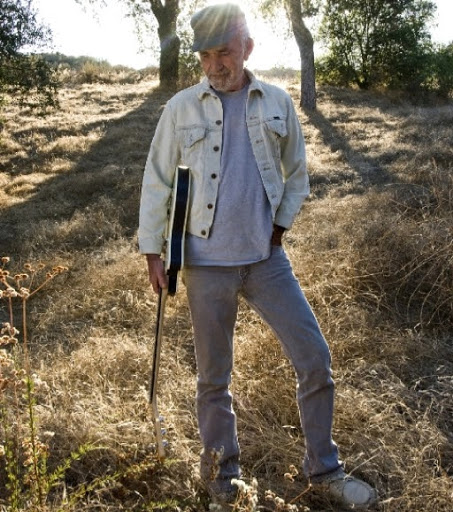
I was saddened by the news today that J.J. Cale had died at the age of 74.

Like most people, my initial exposure to J.J. Cale’s music came through recordings by others — most notably, “Cocaine” and “After Midnight” by Eric Clapton. Lynyrd Skynyrd recorded a solid version of “Call Me the Breeze” and so many others cherry picked his songs that they have become a part of the aural landscape.

But Cale was a great recording artist in his own right, which I learned by doing what I did often back in my late teens and early 20s — checking the label for songwriting credits and then seeking out the people who originally recorded many of the songs I loved.

I was working at WEHR East Halls Radio at Penn State at the time and pulled Cale’s music from our stacks after seeing his name on the label for Clapton’s classic, self-titled debut, which featured “After Midnight” — along with the Clapton-penned “Blues Power” (with Leon Russell) and “Let It Rain” (with Bonnie Bramlett). I loved what I was hearing, a kind of laid-back funky blues that not only influenced Clapton’s ’70s sound (not just the solo, but nearly everything he recorded up through the live Just One Night album (nearly everything that followed, unfortunately, was failed pop or blues that was overly respectful of its source).

Four Cale albums stand out for me — Naturally, recorded after Clapton had a hit with “After Midnight”; Troubadour, which features “Cocaine”; 5; and Shades — though, on some level, the albums are interchangeable. They all feature the same basic formula — flawless guitar work, Cale’s understated voice and introspective and often funny lyrics, a steady, chooglin’ boogie.

Overall, he release 15 studio and live albums — including the fabulous, Grammy-nominated The Road to Escondido, which ended up being Clapton’s finest late-career move and a bit of a swan song for Cale. It is a soulful, playful record, tightly focused and cleanly produced, that breathed some air into Clapton’s stale blues.

Despite that nomination, Cale remained a bit of a cult figure. He was never quite in fashion as a performer, but he has always held an important place in my record collection and I am glad I stumbled across his music back when I was still learning my way.

Summer reading list (so far)

I’d been off the novels kick for a while, until my good friend and fellow poet Richard O’Brien mentioned that he was reading John Hawkes. I hadn’t read Hawkes in years, I told him, but books like The Cannibal, Beetle Leg and Second Skin were among my favorites from my days as an undergraduate.

The discussion that ensued on Facebook led me to put aside all of the other things I was reading (research for a book, essays by Orwell and Walter Benjamin) and reread Hawkes’ great The Lime Twig, which is perhaps his best. That began a month-plus devoted to nothing but fiction that continues this week with The Girl Who Played with Fire.

Here is the list, so far) of the summer of fiction:

  • John Hawkes, The Lime Twig
  • Don Delillo, Angel Esmerelda
  • Russell Banks, The Reserve
  • Ernest Hemingway, For Whom the Bell Tolls

On the list for the rest of the summer: More John Hawkes, Jim Thompson’s The Getaway and we’ll see what else piques my interest.

Send me an e-mail.

CCR: An appreciation

Creedence Clearwater Revival is one of those bands that everyone acknowledges as great, but that few people think to rank among the best of their era. But John Fogerty’s achievement with the band — and CCR only exists with Fogerty as front man — is one of the most singular of any American musician. As I said in a tweet last week, Creedence Clearwater Revival might be the most American of bands.

On six albums across about five-plus years, Fogerty and his band provided us with a tour of American music — moving from country and folk to swamp blues, all of it built atop a strong rhythm section, Fogerty’s screaming guitar and one of the most recognizable vocal styles in rock ‘n’ roll.

Two things stand out, though, which may explain CCR’s oddly ambivalent place in the rock pantheon. First, Fogerty (usually) eschewed the typical late-’60s excess in his songwriting. Aside from a handful of guitar-driven classics (“Heard It Through The Grapevine,” “Suzy Q”), Fogerty mastered the three-minute pop song and applied this tightly structured approach across what we now call the Americana genre. He could have a light touch — “Lookin’ Out My Back Door” — or full of pathos –“(Wish I Could) Hideaway.” He could go country (“Lodi”), rage politically (“Fortunate Son”) and play some R&B (“Born to Move”).

Something else struck me as I relistened (and relistened and relistened) to the CCR catalogue: the cover songs. Fogerty and band were recording at a time when playing others’ music was still an acceptable practice in rock — as it has remained in the other genres — and each album features CCR remaking early rock and blues in their own image. What is key, though, is that the cover impulse is reciprocal — Ike and Tina’s driving version of “Proud Mary” is the obvious example, but it is much more extensive than that. CCR may tear through “The Night Time is the Right Time,” but punk stalwarts like Richard Hell and the Voidoids doing a masterful version of “Walking on Water,” one of Fogerty’s lesser-known classics. Or The Gun Club doing a punked-up “Run Through the Jungle.”

No one denies the greatness of CCR (and if they do, they probably know very little about rock ‘n’ roll), but CCR does tend to get lost in the shuffle. For my money, they are every bit as good a band as the era produced. If you need a reminder, get your car, rolled down the windows and blast Green River from the speakers.

Send me an e-mail.