See this film, when you can

<!– /* Font Definitions */ @font-face {font-family:"Arial Unicode MS"; panose-1:2 11 6 4 2 2 2 2 2 4; mso-font-charset:0; mso-generic-font-family:auto; mso-font-pitch:variable; mso-font-signature:3 0 0 0 1 0;} /* Style Definitions */ p.MsoNormal, li.MsoNormal, div.MsoNormal {mso-style-parent:""; margin:0in; margin-bottom:.0001pt; mso-pagination:widow-orphan; font-size:12.0pt; font-family:"Times New Roman"; mso-fareast-font-family:"Times New Roman"; mso-bidi-font-family:"Times New Roman";} p.Body1, li.Body1, div.Body1 {mso-style-name:"Body 1"; mso-style-parent:""; margin:0in; margin-bottom:.0001pt; mso-pagination:widow-orphan; font-size:12.0pt; mso-bidi-font-size:10.0pt; font-family:"Times New Roman"; mso-ascii-font-family:Helvetica; mso-fareast-font-family:"Arial Unicode MS"; mso-hansi-font-family:Helvetica; mso-bidi-font-family:"Times New Roman"; color:black;} @page Section1 {size:8.5in 11.0in; margin:1.0in 1.0in 1.0in 1.0in; mso-header-margin:.5in; mso-footer-margin:.6in; mso-paper-source:0;} div.Section1 {page:Section1;}

Let’s start with some basic facts: There are about 650,000 homeless men, women and children in the United States, as of the last official count, a figure that some say is only a fraction of the actual number.

There are about 11,000 in New Jersey alone, a number that has declined a bit since the beginning of the recession, but not by much.

And we, as a society, have done very little to address the problem.

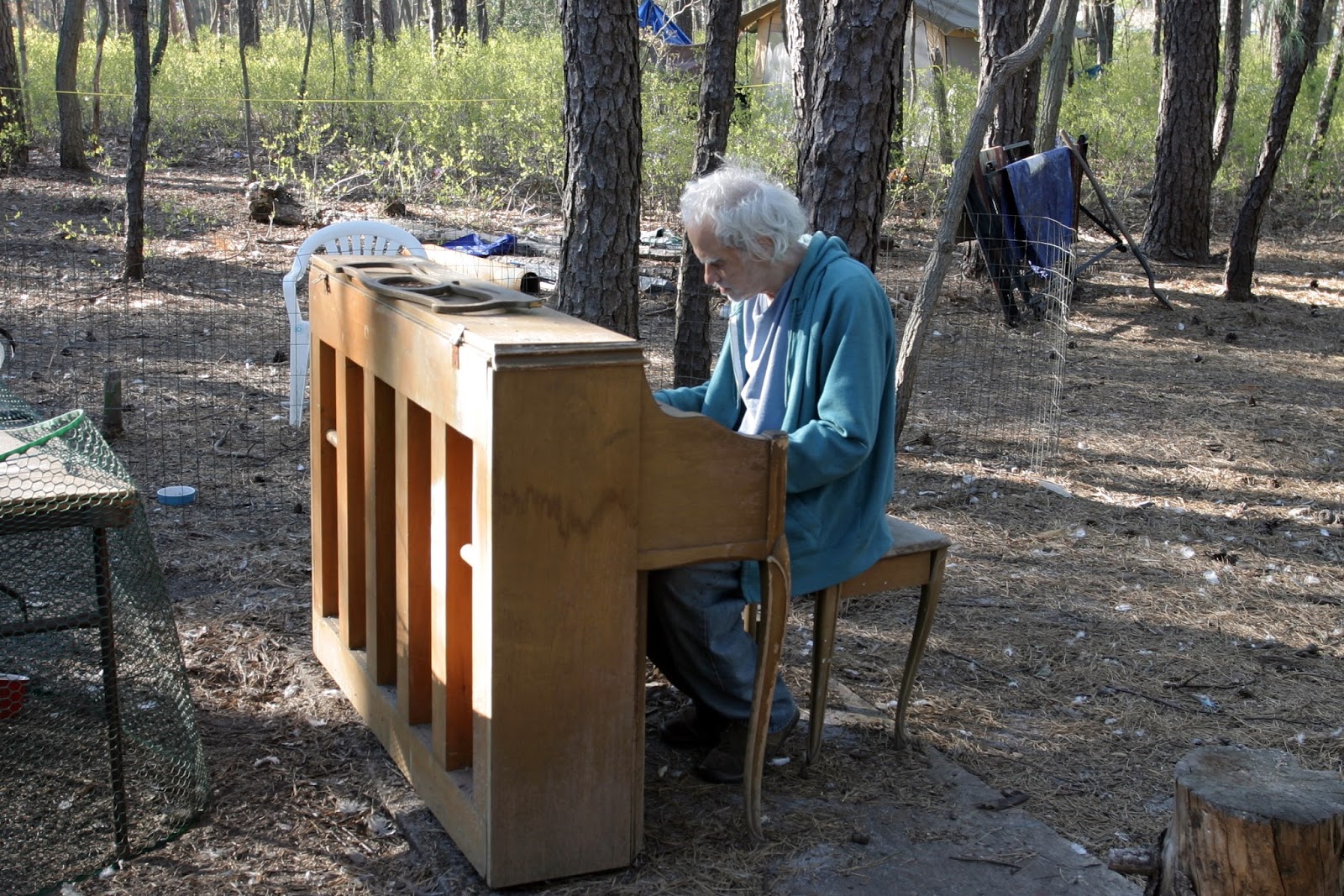
Enter Jack Ballo and his film, Destiny’s Bridge, which had its premiere at the Two River Theater Company in Red Bank on Wednesday. Ballo’s film tells the story of the Tent City homeless camp by following the fates of about a dozen of its residents — Minister Steve Brigham, the camp’s founder and de facto leader, Charlie, Angelo and the couples Jack and Deborah, Sheridann and Nahrida, Wil and Mo, Elwood and Cynthia and Michael and Marilyn — as they struggle to get by. It also follows the very beginnings of “Destiny’s Bridge,” an effort by Brigham and some others to create a new kind of shelter for the homeless.


Here I need to offer full disclosure: I have been working with Jack and the photographer Sherry Rubel on what we call The Tent City Project since last year. The film is Jack’s piece of the puzzle. Sherry has shot dozens of amazing still images and I have finished the manuscript for a book-length poem (for which I am seeking a publisher and an excerpt of which appears on the back of the film-premiere program) that centers on Tent City.

The story of the camp has grown familiar over the last year to New Jersey residents (partly due to my own journalistic efforts, I am proud to say): Brigham essentially founded the camp about seven years ago as a way of helping a man who came to him for help. The camp has grown to nearly 100 residents since then, creating tensions with the township of Lakewood, where it is located, and resulting in lawsuits. A consent decree signed by the homeless and the township is designed to close the camp, but only after housing is found for its residents. A second lawsuit against Ocean County, which still lacks any formal homeless shelter, continues.

But most of the journalism, whether in print or on video, has been of the hit-and-run variety — a story here, a story there, generally when something spectacular and horrible has happened at the camp.

Ballo’s film does something very different. It commits to telling the stories of the camp’s residents in a holistic manner, to offering the good (a surprise birthday party) and the bad (the arrest of Minister Steve) within the larger context of the camp’s day-to-day existence.

Ballo’s approach is different than most documentary filmmakers and very effective. Unlike Michael Moore, he stays out of things. He  doesn’t appear on camera, doesn’t offer voice over or commentary. His goal, as he said during a question-and-answer session following the premiere, is to tell the truth and let the audience decide.

That approach cedes a lot of authority to Minister Steve, who is rightly critical of local officials who have taken a highly combative position — at least until recently. Steve also is critical of a shelter system that warehouses the homeless (thankfully, this is changing) and he views elements of the tent encampment as a possible model. In this, the film posits a solution that is housing based — construct small houses on small lots that can be affordable to low-income people.

My own analysis is more systemic — while I agree that there is a need for more available low-cost housing, I also think there is a need for broader change in how capitalism functions. American corporate capitalism is designed to maximize profit by minimizing costs. This design creates what can best be described as waste product that corporations then push onto to the larger society and expect us to deal with. I use the metaphor of a chemical reaction, which always needs to be in balance. This often leaves a remainder product, an excess compound or element that is discarded.

For American capitalism, that discarded excess is not just air and water pollution, but also the sub-population of people we view as unnecessary to the functioning of our economy. That is why full employment does not mean full employment (4 percent unemployment is considered acceptable) and why we have been more likely to aggressively prosecute the homeless for quality-of-life crimes than to find them housing, address their mental and physical health needs or to make sure that they have enough money to function and do more than just barely survive.

But I digress. Ballo’s film is necessarily simpler and more focused (and in that way different and better than the film I might have made). It does not attempt to take on all of capitalism, but a particularly inhumane aspect of it by reminding us that the people who live in homeless camps like Tent City in Lakewood — which is just one of hundreds around the country — are really not a whole lot different than our neighbors or ourselves.

None of the characters in the film — characters is probably not the right word here; these are real people and treated as real people throughout — want to be living in the woods. They want something better, but that something better has been pushed out of reach for a time. They are struggling with the fallout of their own bad decisions and the decisions made by the big banks, the government and business, which cost us millions of jobs. They are struggling against a bureaucracy that has been designed to deny them help with one hand even as that help has been offered with the other.

In the end, it is clear to the viewer that something is very wrong, that our willingness to allow nearly 100 people to live in a camp in the woods is a failing that needs to be addressed. To Ballo’s credit, he leaves it to the viewer to formulate how to move forward.

Send me an e-mail.

Investment questions

There are a lot of things to not like about the report in The New York Times today on Cory Booker, but the biggest is something the Newark mayor says deep into the story:

Mr. Booker said it was not hard to raise $1.75 million in seed capital “because of the power of the idea.”

“Power of the idea” or, perhaps, some other kind of power?

The story goes like this: Booker, with the help of Silicone Valley’s biggest players, starts his own tech company called Waywire. The company, according to the Times, was set up in 2012 with financing from Eric Schmidt of Google among others. Its goal is to make it simple to “’collect, curate and share’ videos from across the Web.”

Booker, apparently, does not have day-to-day responsibilities at Waywire, though he

received the largest stake because of his social media profile, his name recognition and his connections to investors, and he was not expected to run the company, Mr. Richardson said, though Mr. Booker has attended every board meeting, according to another investor. “Cory is the inspiration architect,” Ms. Ross said. “He really is the thought-leader soul part of the business.”

He’s also running for Senate and expected to win, meaning he could have something to say about how Silicone Valley is regulated — which the investors in his internet start-up no doubt have an interest.

That’s why the ease with which he was able to raise start-up cash sends up so many red flags. There is nothing illegal going on here, but these kinds of investments raise questions as to whether the mayor is cashing in on his political celebrity and, perhaps more troubling, whether the investors view their investment as being about more than the company. Do they see themselves as investing in the career of Cory Booker with an expectation of something in return?

These are just questions, but they are questions to which the voters deserve an answer.

Send me an e-mail.

The governor’s muddled thinking on marriage equality

Gov. Chris Christie’s stance on marriage equality has always been a bit muddled. He is opposed to marriage equality if it is passed by the Legislature (the representatives of the state’s voters), but would allow it to stand if it were backed by voters — a stance that essentially boils down to “I can only veto bills in the Legislature, not state constitutional amendments.”

It’s also why, for instance, he opposes a constitutional vote on a minimum wage, which he says is not something that should be included in a constitution. The constitution, he says, should be reserved for questions of overarching rights. This, of course, is ludicrous — the constitution sets forward all kinds of rules, well beyond the idea of individual rights or the basic structure of government. The New Jersey constitution, for instance, weighs in on whether and where gambling is permitted and who can run lotteries and other games of chance, as well as setting aside specific allotments for hazardous waste clean up and other public needs. There is no reason it cannot include a provision on a minimum wage.

But I digress. Christie doubled down last week when the state issued its brief in Garden State Equality v. Dow, the lawsuit challenging the state’s failed civil union law. The plaintiffs are arguing, persuasively I think, that the existence of the separate marriage and civil union designations create a secondary status for gay and lesbian couples and that in doing so the state has failed to ensure that gays and lesbians are being treated equally.

The state, in its brief, is attempting to defend the indefensible, which has led it to present what Nathaniel Frank on Slate.com calls “may be the most incoherent defense of heterosexual supremacy yet.”

Christie’s brief defends civil unions in three ways. First, it argues that the state can rationally restrict the label “marriage” to heterosexual unions because it is “preserving” the definition of the word. Second, it contends that it’s actually the feds who are now blocking gay equality by withholding benefits to civil union partners. And third, it claims that the state courts should move very cautiously when contemplating a major change in social institutions—all fine and well except that, as the state itself admits, calling a gay union a marriage isn’t much of a change anymore. In fact, throughout the brief, what’s most striking is that every last argument Christie’s administration makes, it then proceeds to blatantly contradict.

Frank then goes on to deconstruct the Christie administration’s bizarre tangle of reasoning, which only proves that arguments against marriage equality can only be made if the folks making them are willing to contradict themselves — unless, of course, they are willing to engage in outright homophobia.

This is of a piece with Christie’s overall strategy on the issue. He continues to profess opposition to same-sex marriage — whether it is from sincere belief or from a pragmatism born of his apparent desire to run for president as a Republican, which will require him to pass through the gaunlet of homo-haters in the GOP primary. But he knows that his position has grown unpopular in the state, so he is throwing a bone to voters by saying he’ll live with the outcome if they endorse marriage equality on the ballot — which he also knows most advocates of same-sex marriage have refused to endorse. This has created the present stalemate, one likely to end only when the court acts.

But Christie, in his brief, discredits the court option, saying the court needs to show caution and essentially stay out of it.

The chances of this are slim — the court is very likely to rule in favor of marriage-equality advocates, given the very real and documented problems with civil unions and the movement toward acceptance of same-sex marriage in the state and the nation.

If the court rules against marriage-equality advocates, however, — or a potential veto override fails during the winter lame-duck session — then they are going to have to rethink their opposition to a statewide referendum as the only way to advance the issue. Initially, I opposed a referendum, but with Christie serving as a massive impediment to full equality for the LGBT community, there likely would be no other way to grant full rights.

We have to acknowledge that rights are legal constructs and they lack any meaning if they lack legal foundation. LGBT New Jerseyans deserve equal marriage rights as soon as they can be granted — whether they come via the Legislature, the courts or a constitutional change.

Send me an e-mail.

Endorsing hype in New Jersey

The New York Times’ endorsement of Cory Booker in the Democratic primary for U.S. Senate was a marvel in fact-free praise and proof that even the Times is not immune from political hype. Consider its rationale: Booker is best because he is unconventional. He’s best because he wants to battle obesity and guns (which puts him on the same page as his three opponents). He’s best because, well, he just is.

The Times posits a huge change in the city’s fortunes over the last six years: “anyone who remembers Newark before Mr. Booker became mayor in 2006 knows what a difference he has made to that benighted city.”

He has lived in some of the roughest neighborhoods as he tried to improve the quality of life. He rode on night patrol with police as he was trying to bring down crime. He is a deeply unconventional politician, once rushing into a burning house before the fire department arrived — saving a woman and traumatizing his security detail.

As mayor, he has lured big money to Newark’s schools — notably a matching grant of $100 million from Mark Zuckerberg, a co-founder of Facebook. And he has worked well with Gov. Chris Christie, a Republican, on areas of agreement in crime, development and education. That ability to work with the political opposition could be an asset for Mr. Booker if the ice age of a divided Congress ever ends.

None of this has altered the Newark landscape. The schools are still troubled. The crime rate remains virtually what it was in 2005 and there are real questions as to whether Booker’s allegiance is to the city or to the capital interests with whom he seems so cozy (remember his TV appearances criticizing Barack Obama for being critical of the hedge-fund industry?).

Is Booker the best option among the four Democrats? He’s far from the most progressive — that would be Rush Holt, with Frank Pallone a relatively close second — but that does not mean he wouldn’t make a fine senator. My criticism here is not of Booker (well, not only of Booker), but of a Times’ endorsement that seems to value name recognition above all else.

Send me an e-mail.

Hold owners accountable for PEDs in baseball

Baseball has dealt itself another black eye. And it is not the player’s fault.

Despite what the sportswriters and the owners what us to believe, the scourge of performance-enhancing drugs is a) not the worst thing to happen to the sport since pitchers started throwing overhand and b) shouldn’t be laid at the feet of the players, at least not solely.

The players — especially Yankee third-baseman Alex Rodriguez, an insufferable bore and poster child for the selfish-athlete stereotype — are convenient scapegoats for the failures of Major League Baseball’s corporate overlords, who created an environment in which it made sense for players to chase the illusive advantage, even if it came from a bottle, and then feigned shock like Capt. Renault in Casablanca when apprised of the gambling taking place at Rick’s place.

This is what we know, 12 players have agreed to 50-game suspensions, including all-stars Jhony Peralta and Nelson Cruz, and Rodriguez has been suspended, pending an appeal, through the end of the 2014 season.

What we also know is that baseball has spent the last two decades pretending to clean up the game, even as it has showered more and more money on players who hit for power. The big contracts go to the big bats, as do the endorsement money. Baseball, of course, has always been OK with this imbalance. Remember this TV ad?

Chicks dig the long ball and ownership has never been too worried about where the power came from — until the PED scandals hit with Barry Bonds and the Mitchell report. So, the players are now expected to stay clean and still hit homeruns or find themselves on the wrong end of a suspension (if they are suspected of using PEDs) or out of baseball (if they can’t reach the fences). The owners, however, who created the environment in which “chicks dig the long ball” could stand as the league’s motto. The issue is one of accountability and to make players bear the burden of that accountability lets the owners off the hook again.

Send me an e-mail.