Review: Bob Dylan, crooner

The announcement sometime in the fall that Bob Dylan would be recording and releasing an album of standards recorded by Frank Sinatra — Shadows in the Night — was met by many with incredulity. Dylan, the craggy-voiced former folkie, had no business dabbling in the Great American Songbook, some said.

Others, like me, were intrigued. Dylan, after all, has spent more than 50 years deeply immersed in the American musical traditions, creating his own, to be sure, but also the traditions of others. He has covered folk, blues and country classics, forgotten masterpieces and the random ephemera that makes up the conversation that is our musical legacy.

That’s why the question for me was never, “what was Dylan thinking?” but “what took him so long?”

Dylan says as much in his interview with Robert Love in AARP The Magazine, when asked if his long-time fans should be surprised:

Well, they shouldn’t be surprised. There’s a lot of types of songs I’ve sung over the years, and they definitely have heard me sing standards before.

So, Shadows in the Night dropped today and, for my money, it is an album that fits neatly within Dylan’s late-career narrative, one that has focused on using, deconstructing and reconstructing American music history, making it his own and injecting a bit of the past into a present zeitgeist that has little patience for anything not of the moment. It is not, as might have been expected, an album steeped in irony or one recorded with a wink and Dylan’s tongue firmly in cheek.

The recordings are faithful, rather than pastiches of styles or older lyrics — and Dylan’s nearly spent voice is in surprisingly good form, its flaws (the limited range, the cracks) lending a warmth and sense of a weariness indicative of experience to songs (and a singer) that have lived a long, long time. Reviewing individual songs is unnecessary here — Shadows in the Night is best digested whole, its 10 songs working together, like a suite, its tempo consistent if muted and ruminative.

People interested in the long conversation that is American musical history should appreciate this album. People interested in the kind of recreation of the American Songbook recorded by Michael Buble or Rod Stewart (Rod’s voice may be up to the task, but his recordings made me wonder just how connected he was to the project or whether he actually understood the words he was singing) probably won’t.

As for skeptical Dylan fans, I say this: Relax, sit back and let Bobby take the wheel. I think you’ll be happy you did.

Send me an e-mail.

Rambling thoughts on cheating

Read this quotation from The New York Times today from an ethicist discussing the Patriots, “deflate gate,” and cheating in sports:

“This kind of gamesmanship goes on all the time,” said Stephen Mosher, a professor at Ithaca College who studies sports ethics. “It’s certainly accepted as part of the culture that you game the system as much as you possibly can, and if you don’t get caught, it ain’t cheating.”

Interesting — and not just because it is about a sports issue in the news. Think about it: “if you don’t get caught, it ain’t cheating” could be our cultural mantra.

If you don’t get caught, you weren’t speeding.

If you don’t get caught, those short cuts you took on your taxes are perfectly OK.

If you don’t get caught, that she’d you built without your town’s approval is perfectly fine.

Perhaps this is not a problem. I’d like to think we’d be bothered by this, but I know we’re not — and I’m just as guilty of these small, seemingly meaningless infractions as anyone.

This raises a question: Does our complicity in these small violations preclude us from being critical of larger violations? Does the extra deduction we might take mean we should accept the larger, far more impactful liberties taken by those with power?

My answer is no, though I think it is difficult to draw a hard line separating what might be acceptable and what should not be. There are obvious no-nos: Chemical companies dumping waste into the environment (essentially cheating by passing the cost of disposal onto the larger society); or an elected official using his power to enrich himself. Cheating on a test or a paper — by stealing answers, say, or plagiarizing — is obviously wrong. But there is no prohibition — almost no prohibition — against seeking other advantages.

Other issues are not so clear cut. Base runners stealing signs from catchers remains acceptable; using a camera to do so is not. The effect is the same — stolen signs — but the means create the greater violation. I understand — and agree — that there is a difference, but exactly where the line is drawn is more difficult to explain.

But there is a line and, like the court’s response to pornography, we know it when we see it.

The demise of the American newspaper

Today’s Home-News Tribune looks more like a newsletter than a newspaper, an emaciated shell of its former self. The same goes for The Star-Ledger, the New York tabloids — just about every newspaper out there.
As newspaper revenue — mostly in the form of classified and retail ad revenue, but also subscriptions — has dried up, newspapers cut costs. Reporting staffs have been gutted, bureaus closed, editors let go. These cuts, rightly, have gotten the lion’s share of the public notice. But papers have also taken other measures that have, while reducing costs, made their product less appealing.
The reduction in web size — the size of the press and paper used — has made meaningless the term broadsheet. Papers like THNT and others are barely larger than tabloids, lacking in news space and telegraphing to readers that there is just not a whole lot to read any longer.

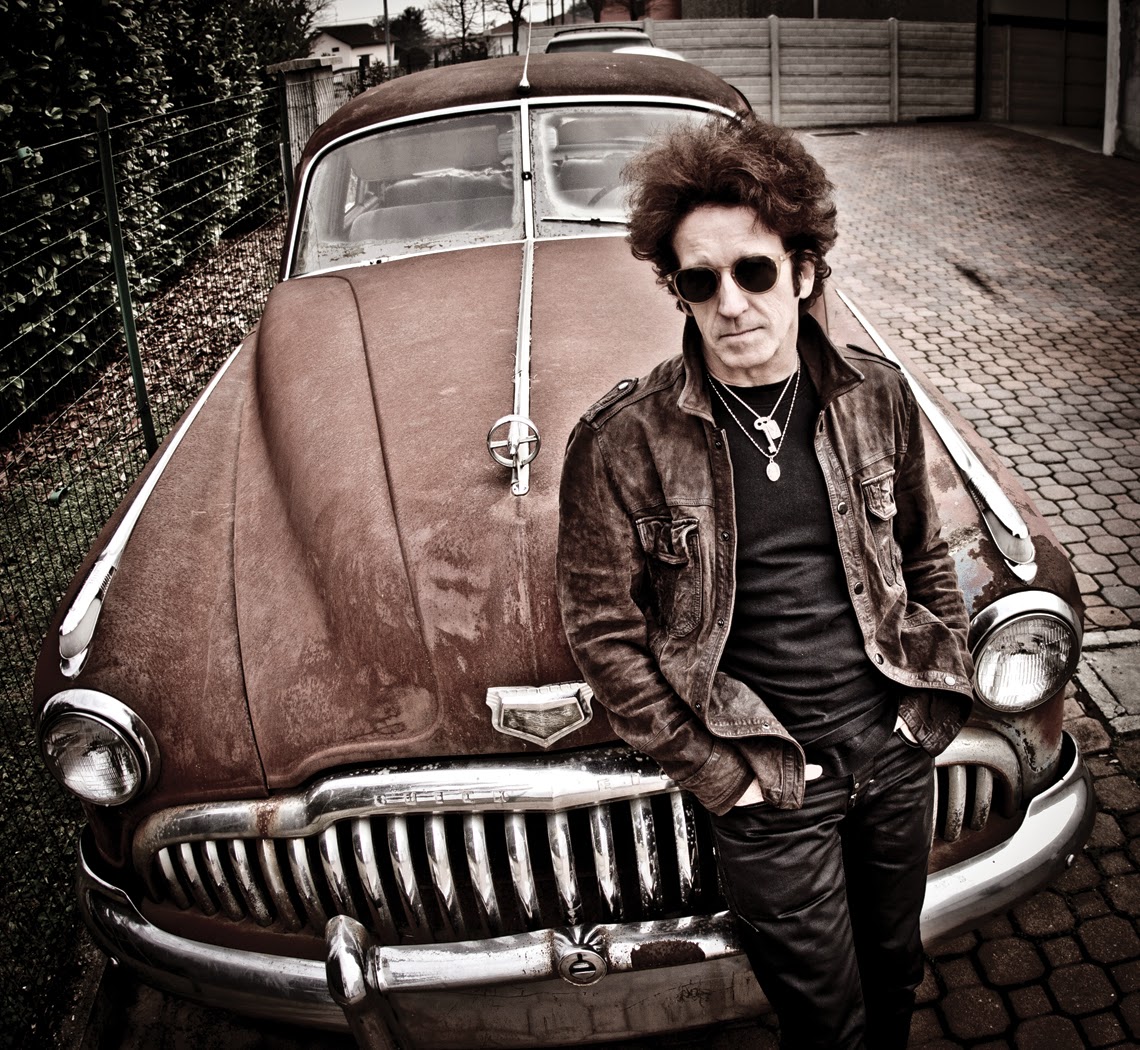
On his own time: An interview with Willie Nile

Photo by Cristina Arrigoni

Willie Nile has been making music for more than three decades, but not continuously.

His first album – the eponymous Willie Nile – came out in 1980, followed in 1981 by Golden Down. The albums – squarely in the Bruce Springsteen/Tom Petty rock camp – were well received, but didn’t sell particularly well, though both broke the Billboard 200, according toAllMusic.com. And the critics loved him – like his friend Bruce Springsteen, he was tagged with the “New Dylan” label.
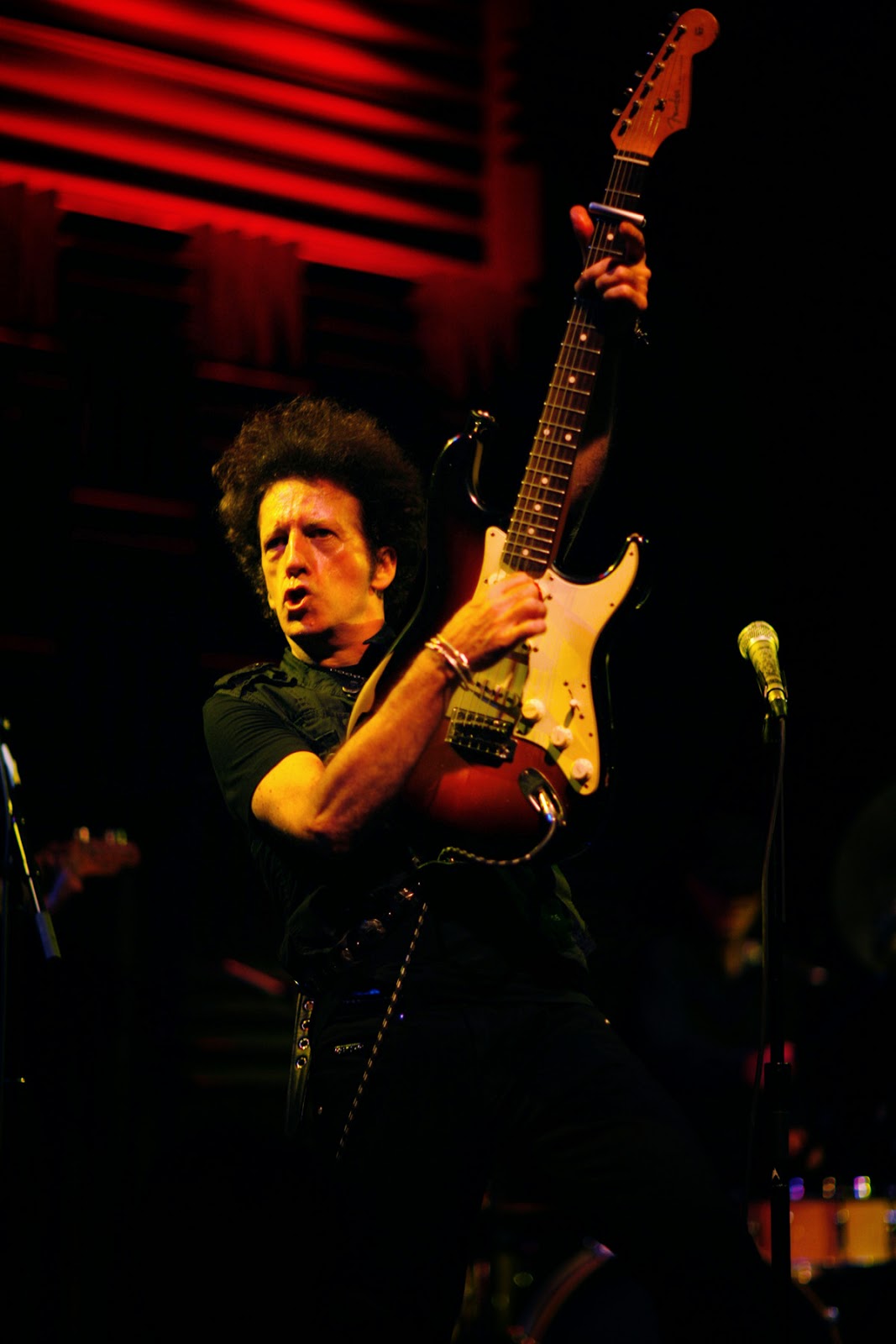
Photo by Lucas Noonan

Nile then disappeared. There were some legal issues, and Nile – who is playing the Light of Day benefit shows in Asbury Park on Friday and Saturday – says he felt it was time to talk away. His wife was pregnant and it was no longer fun.

“I walked away from the business in ’81,” he told me. “I went to New York because I loved music, but when it became more about business and the business hassles around the music, I walked away. My wife was pregnant, so I went back to Buffalo.”
Nile hails from Buffalo. He spent much of the 1970s in New York City, seeing shows, writing music, and then performing. Getting signed was a big deal, of course. He toured with the Who early in his career. He won praise from the critics. Through it all, he said, he remains “just a poet from Buffalo.”
“It didn’t throw me,” he said. “I’m a poet first. I didn’t get into this to become an ‘American Idol.’ Wrote poetry first. I played guitar. At some point, I put it together.”
Nile attempted a return to music with some live shows in the middle 1980s – he missed playing music — but didn’t record again until 1991 when he released Places I Have Never Been on Columbia. It was well received critically, but not commercially and Nile once again faded from view.
This time he continued to perform, gaining a following in Europe, and releasing a live record. All of this set the stage for his third act – a 10-year stretch in which he has released six records, two live albums and a DVD, while touring regularly with what he calls a “tight band” that allows him the freedom to do pretty much what he wants.
“These are the best days of my activity in music,” he said.
The consistent activity – especially the performing – has made him a better musician, he said.
“When you’re on stage, you have an instinct for what can work,” he said. “I’m having so much fun with it, with this incredible band. We’re playing a lot, playing so much and we’ve gotten so tight. There are certain things you can only get from playing and that naturally opens the songwriting doors.”
Most of his recent records – particularly Streets of New York (2006), which Dave Thompson of AllMusic.com called “a swaggering braggart of a disc that is to the modern Apple everything that Lou Reed’s New York was 15 years before,” and American Ride (2013), have a big sound reminiscent of the best of the Jersey Shore music scene.
I asked him about this – explaining that I’d assumed early in Nile’s career that he was from the Shore area.
“I’ve played a lot of shows in Jersey and the fans in Jersey been very supportive,” he said. “The Jersey fans love their rock ‘n’ roll and know their music. And because I’ve been involved in Light of Day, even though not from Jersey or the Jersey Shore, I am associated with it.”
His most recent release is quieter – a piano-based record If I Was a River – that he says is something he has been wanting to do for a long time.
“You have to make a change once in a while,” he said. “Now that I am making records more often, more frequently, I can do more of a variety of things for the fun of it. When you put one out every 10 years – well, I just follow my instincts and it felt like the right time.”
Nile said he is excited about the Light of Day shows. The Light of Day Foundation was founded by Bob Benjamin, who had worked in the recording industry, after he was diagnosed with Parkinson’s Disease around his 40th birthday. He decided to have a birthday party and asked that, instead of gifts, people make donations to Parkinson’s research. That led to the concert series, which started in 2000 and has featured local and national acts, including Joe Grushecky, Garland Jeffreys, Southside Johnny, LaBamba, Max Weinberg, Jesse Malin, Nicole Atkins, Lucinda Williams, and others. Bruce Springsteen has made numerous appearances at the concerts, usually unbilled, jamming with Nile and the other musicians.
Nile has participated all 14 years, because “one good stone thrown in the pond can cause ripples.” Every year has been special, though he loves it most when everyone is on stage, singing, especially with Springsteen.
One particular moment stands out, however. Springsteen was on stage at the Stone Pony and Michael J. Fox, who  had been diagnosed with Parkinon’s in 1991 but had only recently disclosed his condition to the public, was waiting in the wings. He looked nervous and was having a rough day, but Fox grabbed a guitar and went out and played “Light of Day” with Springsteen. Springsteen wrote the song for the Fox movie of the same name.
“The courage it took for him to get on the stage with his body not 100 percent,” Nile said. “He walked up with a guitar, and he rocked with Bruce. He gave everything he had and I will never forget that as long as I live.”
Moments like that keep him coming back.
“When music can be meaningful and can be a real part of our lives and make us feel better — we have this thing we share together,” he said. “It is the thing that keeps us alive. It gives us reason to move on. If we can use the music to help our fellow man that is a reason to get up in the morning.”
Willie Nile will play the Stone Pony, 913 Ocean Ave., Asbury Park, on Friday, Jan. 16, as part of the Asbury Angels show. The show begins at 6:30 p.m. Tickets are $25 in advance through Ticketmaster and $30 at the door. He also will participate in the sold out  Paramount Theater main show on Jan. 17. Light of Day website, lightofday.org; Willie Nile’s website, willienile.com; Stone Pony website, stoneponyonline.com. For more information on the organization email  info@lightofday.org.

Send me an e-mail.