Trump, 100 days and the normalization of hate

We’ve hit the 100-day mark of the Trump administration and the news media has been filled with volumes of copy focusing on what he has and has not accomplished at this arbitrary milestone. While it is true that he has managed little legislatively, he has changed the focus of the federal government — administratively gutting environmental enforcement, ending oversight of local police, and so on.
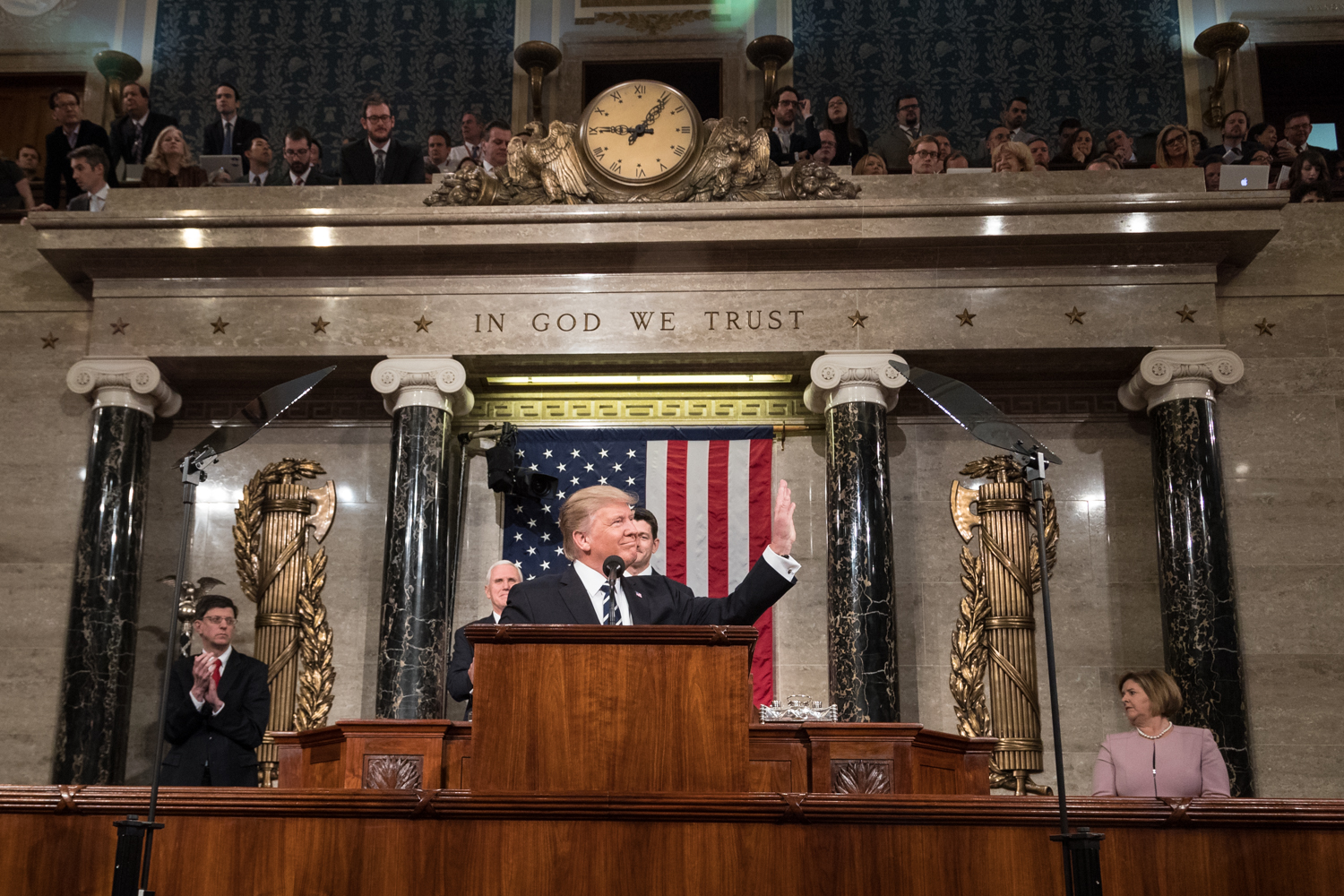
These are significant changes that demand more coverage than they are getting — I have a piece coming soon at NJ Spotlight on New Jersey counties and immigration. But they are not his only legacy.

Much has been written about the empowering of “alt-right” groups and the possible rise in hate crimes — the numbers are notoriously difficult to gather or vet — that have been a hallmark of this administration.

This passage from yesterday’s 100-day rally speech (link has been de-activated) is instructive, I think. Here we have the president of the United States reading the lyrics to a ’60s soul song, “The Snake,” , essentially a reworking of the Aesop’s tale and similar in theme to the scorpion and the frog. (He attributes its writing to Al Wilson, who sang a cover version of the song, but it was written and first performed by Oscar Brown). The song is apolitical, though the story can be applied to politics, as both Aesop’s fable and the later tale tell stories of unchanging nature — both the snake and the scorpion end up biting and killing their benefactors. Thematically, they are warnings that “the wicked show no thanks.”

And I thought of it having to do with our borders and people coming in.  And we know that we’re going to have; we’re going to have problems.  We have to very, very carefully vet.  We have to be smart.  We have to be vigilant.

So here it is, “The Snake.”  It’s called “The Snake”:

Trump, though, recontextualizes it — pointing the “moral” not at the powerful but at his favorite scapegoats, Latino and Muslim immigrants. Here is what he said:
“On her way to work one morning, down the path along the lake, a tender-hearted woman saw a poor, half-frozen snake.

His pretty colored skin had been all frosted with the dew.  “Poor thing!” she cried.  “I’ll take you in and I’ll stake care of you.”

The border.  (Laughter.)

“Take me in, oh, tender woman.  Take me in for Heaven’s sake.  Take me in, oh, tender woman,” sighed the vicious snake.

“She wrapped him up all cozy in a comforter of silk, and laid him by her fireside with some honey and some milk.  She hurried home from work that night, and as soon as she arrived, she found that pretty snake she’d taken in had been revived.

Take me in, oh, tender woman.  Take me in for Heaven’s sake.  Take me in, oh, tender woman, sighed that vicious snake.

She clutched him to her bosom, ‘You’re so beautiful,’ she cried.  ‘But if I hadn’t brought you in by now, oh, heavens you would have died.’  She stroked his pretty skin again and kissed him and held him tight.  But instead of saying, ‘thank you,’ that snake gave her a vicious bite!

Take me in, oh, tender woman.  Take me in for Heaven’s sake.  Take me in, oh, tender woman, sighed the vicious sake.

‘I have saved you,’ cried the woman.  ‘And you’ve bitten me, heavens why?  You know your bite is poisonous, and now I’m going to die.’

‘Oh, shut up, silly woman,’ said the reptile with a grin.  ‘You knew damn well I was a snake before you took me in.'”  (Applause.)

Does that explain it, folks?  Does that explain it?

Well, yes. It explains a lot — about Trump. The use of an otherwise innocuous song — contrary to Michael Gershon’s contention in an otherwise inciteful column, the lyrics themselves are not racist — to paint immigrants as unchanging in their nature and that, no matter how moderate and mainstream they might seem, no matter how much we help them, they eventually will lash out. It’s what they do and who they are and the only way to prevent it is to build a wall and keep them out. This is racist nonsense reminiscent of attacks on other groups — the “Jew vermin” of the Nazi era, our own depiction of blacks as sub-human, and so on.

Trump used this song lyric repeatedly in rallies during the election campaign, so we shouldn’t be surprised that he reached for it again when standing before a friendly crowd at a moment when he feels himself besieged by the press corps (see the first half of this speech). There is a difference, however: He is no longer a candidate.

He is the president, and rallying a crowd of supporters with naked appeals to race and ethnic purity is downright terrifying and carries with it dangerous possibilities. I’m not saying he is a fascist or a Nazi, though the historian Timothy Snyder in an interview with Salon said he sees “elements of his approach which are fascistic.

The straight-on confrontation with the truth is at the center of the fascist worldview. The attempt to undo the Enlightenment as a way to undo institutions, that is fascism.

Whether he realizes it or not is a different question, but that’s what fascists did. They said, “Don’t worry about the facts; don’t worry about logic. Think instead in terms of mystical unities and direct connections between the mystical leader and the people.” That’s fascism. Whether we see it or not, whether we like it or not, whether we forget, that is fascism.

Another thing that’s clearly fascist about Trump were the rallies. The way that he used the language, the blunt repetitions, the naming of the enemies, the physical removal of opponents from rallies, that was really, without exaggeration, just like the 1920s and the 1930s.

Snyder fears a Reichstag fire moment, though that seems a reach. And yet, there is Trump still holding rallies, still inciting the crowd with hate, still pointing fingers, creating scapegoats, fomenting rage. And few call him out for it. Much of the coverage focused on his attacks on the press (because, you know, we only worry about our own), with few focusing on the hate-filled core of his comments.

Gershon, a conservative with whom I agree on little, was one of the few, calling the speech “arguably the most hate-filled presidential communication in modern history,” and adding that the only thing more terrifying was “the apathetic response of those who should know better”

Citing the essay “Politics, Morality and Civility” by Vaclav Havel, the late-Czech dissident, playwright and former Czech president, he describes Trumpism as “moral and spiritual poverty”:

the cultivation of anger, resentment, antagonism and tribal hostilities; the bragging and the brooding; the egotism and self-pity. All is visible. None will be forgotten.

Gershon prescribes an antidote — the “democratic faith” that the American “people, in the long run, will choose decency and progress over the pleasures of malice.”

It is the job of responsible politics to prepare the way for new leaders, who believe that all of us are equal in dignity and tied together in a single destiny. But this can take place only if we refuse to normalize the language of hatred.

We have been blinded by Trump’s overactive Twitter finger and the incomprehensible nonsense that spews from his mouth on an almost daily basis — so much of it, in fact, that it all seems to run together. We dismiss it whole cloth, assuming it is either the ravings of a lunatic or a well-thought-out plan to distract us. The press corps, which has no experience with a man like this, attempts to treat him as any other president even as he hectors them and upends all of the rules.

This may make sense in terms of policy — much of what his policy agenda is in line with Republican orthodoxy, or at least in line with what George W. Bush did or attempted. But his influence goes beyond policy. it is cultural. What he says matters because his followers take what he says as gospel. He has spread the gasoline and he now stands ready with lighter in hand.
 Send me an e-mail.
Respectability, ‘uplift suasion,’ and being ‘woke’

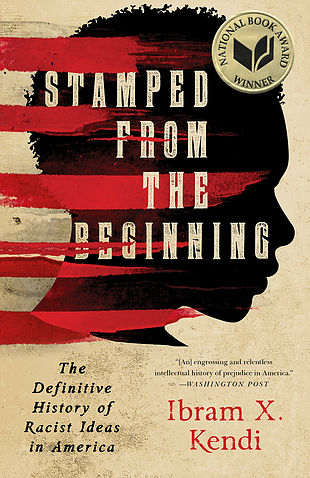
I’m reading Stamped from the Beginning: The Definitive History of Racist Ideas in America by Ibram X. Kendi, an important look at the birth and continuance of sometimes overt and sometimes unconscious racist thought. I was struck by this long passage (pp. 124-125), which echoes the arguments made by people like Randall Kennedy, Barack Obama and Bill Cosby over the years:

As freed Blacks proliferated in the 1790s and the number of enslaved Blacks began to decline in the North, the racial discourse shifted from teh problems of enslavement to the condition and capabilities of free Blacks. The American Convention (for promoting the Abolition of Slavery and Improving Conditions of the African Race) delegates believed that the future advance of abolitionism depended on how Black people used their freedom.

That meant, Kendi writes, advocating “uplift suasion” and pushing blacks to

attend church regularly, acquire English literacy, learn math, adopt trades, avoid vice, legally marry and maintain marriages, evade lawsuits, avoid expensive delights, abstain from noisy and disorderly conduct, always act in a civil and respectable manner, and develop habits of industry, sobriety, and frugality.

There is nothing wrong with any of these behaviors, in general, but the advice tracts published by the American Convention and targeted to free blacks, Kendi writes, meant that the “burden of race relations was placed squarely on the shoulders of Black Americans.”

If Black people behaved admirably, abolitionists reasoned, they would be undermining justifications for slavery and proving that notions of their inferiority were wrong.

Kendi’s book creates a taxonomy of America’s view of racial views, separating then into three basic categories: the segregationist/overt racist; the assimilationist racist; and the anti-racist.

The segregationist, he writes, views “Black people as biologically distinct and inferior to White people.” Blacks skin, for them, is an “ugly stamp on the beautiful White canvas of normal human skin” (p. 3).

The assimilationist, he writes, may seem to be an anti-racist, fighting to end slavery and segregation, but still fostered racist ideas.

In embracing biological racial equality, assimilationists point to environment — hot climates, discrimination, culture, and poverty — as the creators of inferior Black behaviors. For solutions, they maintain that the ugly Black stamp can be erased — that inferior Black behaviors ca be developed, given the proper environment. As such, assimilationists constantly encourage Black adoption of White cultural traits and/or physical ideals.

Kendi’s argument is simple: The creation of this kind of racial hierarchy, whatever its provenance, is racist. To say that blacks, for whatever reason are inferior, or that their behavior as a group is inferior, is racist. He is not saying that crime and poverty in black-majority neighborhoods does not exist, or that slavery and segregation, police brutality and de-industrialization have not taken their toll. On the contrary. He would agree that they have. What he is saying, however, is “there is nothing wrong with Black people as a group (italics in original), with any other racial group” (p. 11).

All cultures, in all their behavioral differences, are on the same level. Black Americans’ history of oppression has made Black opportunities — not Black people — inferior.

But what does this have to do with Kennedy, Obama and Cosby? He doesn’t directly address the “respectability” argument — at least not through the book’s first 120 pages — but he does point the finger at himself.

We have a hard time recognizing that racial discrimination is the sole cause of racial disparities in this country and in the world at large. I write we for a reason. When I began this book, with a heavy heart for Trayvon Martin and Rekia Boyd, I must confess that I held quite a few racist ideas. Even though I am an Africana studies historian and have been tutored all my life in egalitarian spaces, I held racist notions of Black inferiority before researching and writing this book.

Being an African American, he says, did not insulate him from an internalized racism. “Racist ideas are ideas” and

Anyone — Whites, Latina/os, Blacks, Asians, Native Americans — anyone can express the diea that Black people are inferior, that something is wrong with Black people.

There is a strain within black thought and in progressive thought more generally that essentializes race, that uses cultural reasons to explain so-called toxic or allegedly pathological behaviors among blacks (this could be anything from actual street violence that does real harm to individuals and communities to rather benign behaviors like the wearing of saggy jeans or the use of unacceptable slang or pronunciations) and tie the behavior of some to blacks as a racial group. This is not Jim Crow racial geneticism, but it creates the same kinds of racial hierarchies in the culture.

So when the nation’s first black president ignoring racial issues for much of his eight years in office except when he is hectoring a black audience and lecturing black youth for their saggy pants he fosters the mythology of black inferiority. While not letting the segregationists off the hook — yes, they still exist and still exert a dangerous level of influence on policy — Obama points the fingers at black culture, sharing the blame and, ultimately, making it the responsibility of black America to end discrimination and racism. This is the “uplift suasion” argument brought into the present. The

strategy to undermine racist ideas was actually based on a racist idea: “negative” Black behavior, said that idea, was partially or totally responsible for the existence and persistence of racist ideas. To believe that hte negative ways of Black people were responsible for racist ideas was to believe that there was some truth in notions of Black inferiority. To believe that there was some truth in notions of Black inferiority was to hold racist ideas.

I know this puts me out on a limb — a middle-class, white Jew pronouncing on the racial views of middle-class blacks is incredibly problematic and I apologize if I seem presumptuous. And I know I am far from pure on this issue. I am guilty of making the same kinds of arguments in the past that I am criticizing today, falling prey to the logical fallacy of generalizing, of turning behaviors that are more properly tied to a paucity of opportunity into pathologies and a ascribing them to “the black community” as if it is a monolith. My motivations were decidedly progressive — removing barriers to opportunity and ending segregation and discrimination — but my thinking and language relied on an underlying assimilationist approach.

My underlying racist — and those of most progressives who carry them — notions do not stem from any animus on my part, but are the outgrowth of hundreds of years of history in which the dominant powers cast blacks in the role of inferior beings. Recognizing this is important. I think this is why the word “woke” and its modern definition is so perfect for our times. Most of us have acknowledged the role race has played in our society, but many have yet to examine their own buried (and, for some, not so buried) racist beliefs. That examination, seeing how it governs our thinking, our language, our policies — seeing it, recognizing it for what is is, and then working to change this dynamic — that is what it means to be “woke.”

Death be not proud

There are a lot of reasons to be pleased that Eric Frein, who killed a Pennsylvania State Trooper in 2014, was sentenced to death today — but I’m not pleased. It’s not because I have any empathy for Frein, or believe there was any doubt to his guilt. Nor is it that I lack empathy for his victim or his victim’s family.

In fact, my concern has nothing to do with Frein. It’s much broader. My concern is with our willingness to use the power of the state to take a life.

First, the background, from the Morning Call:

Frein killed Cpl. Bryon Dickson, a 38-year-old Marine veteran, and left Trooper Alex Douglass permanently disabled in the Sept. 12, 2014 attack at the Blooming Grove barracks. He eluded capture for 48 days, with state police spending more than $11 million on a manhunt that spanned hundreds of square miles of the rugged Pocono Mountains.

The case caught major regional attention and its resolution appears to have pleased state troopers in Pennsylvania, and Pike County Judge Gregory Chelak said he hoped “the story of Eric Frein ends today,.”

Don’t bet on it. As the Call reports, “Frein’s lawyers promised to tie up his case in appeals.” And, while Pennsylvania has been a death penalty state since the mid-1970s, there has not been an ‘execution since 1999 and only three since the U.S. Supreme Court restored the death penalty.” The state also placed the death penalty on hold two years ago, when Democratic Gov. Tom Wolf declared a moratorium.

Pennsylvania is one of four states with moratoriums on the books. Another 19 do not use capital punishment — some, like New Jersey, eliminated the death penalty via legislation, while others, like New York, Connecticut and Delaware, had the penalty eliminated by the courts.

Arguments in favor of capital punishment generally follow this line of logic: The worst crimes warrant the harshest punishment,

  • to create a deterrent against future crimes;
  • to provide closure for the victims’ families;
  • to ensure a proportional response to the worst crimes.

These “rational” arguments fail most logical tests. There is no correlatio, for instance, between murder rates and the existence of the death penalty, though the states with the lowest rates often do not use capital punishment. Does this disprove deterrence? No, but it does raise serious doubts. The same questions dog the closure argument, with family members — even those supportive of a particular execution — signalling that closure had failed to materialize.

Implicit in all of this, though often left unstated, is the very human desire for revenge, for “an eye for an eye,” as the Bible says. It is a visceral, emotional response, something that exists, perhaps, in our DNA.

And we shouldn’t downplay this emotional response, though we need to be careful to separate the emotional and personal from the broader policy implications. Emotion can cloud judgment and, if we are to toy with the machinery of death, to borrow a phrase from Justice John Paul Stevens, we must approach the question with clear-headedness, even as we acknowledge the emotions behind our thirst for revenge.

Think back to Michael Dukakis and his response to a debate question in 1988.

His inability to engage with the emotional aspect of the question doomed his campaign. This failure has guided the Democratic response to death penalty questions in the intervening years: No Democratic nominee for president has come out against the death penalty since Dukakis. Bill Clinton even went so far as to make a show of pausing his campaign in 1992 to kill a death-row inmate.

The issue, however, was not so much the answer offered by Dukakis. It was the framing of the question — the assumption that all decisions must be made emotionally. Let me say here that, were something to happen to my family, I can’t promise that my opposition to the death penalty would hold. The emotion of the moment — the grief and anger — very well could overwhelm whatever core beliefs I hold. But that is why we should not legislate based on immediate emotion. Leading with our heart is understandable, but dangerous. It creates its own momentum and often causes us to ignore information that runs counter to our beliefs — hence the rash of exonerations of death row inmates. These are men who often were sentenced to death because of the headlong rush toward retribution created by our emotional responses to heinous crimes.

The sentencing of the innocent to death, the vast racial disparities in the death penalty’s use, its failure as a deterrent, the growing international consensus that it is wrong — all of these are good reasons for abolishing capital punishment. So is the extreme cost — the death penalty costs more per inmate than life in prison without parole because of the appeals process and the need for a separate, isolated death penalty wing, according to the anti-capital punishment Death Penalty Information Center.

Some would say these reasons are enough to abolish capital punishment. They aren’t. They carry within them a distant hope, an underlying logic, that assumes the death penalty can be fixed, that it is an acceptable, a moral form of punishment. If we can prevent the death of the innocent, can remove racial disparities, can moderate the cost, what is to stop us from putting the worst criminals to death?

These are useful arguments, but they are not enough. We have to keep the moral argument front and center. Capital punishment is state-sanctioned, premeditated murder, a cruel and unusual punishment that carries no broader benefit to society; and as such, it undercuts our efforts internationally to proclaim ourselves as a moral beacon; and its brutality sends a signal to those at home that state power is not to be trifled with.

The Rev. Dr. Martin Luther King, in his Advice for Living column in 1957, described capital punishment as both immoral and a failure in criminological terms:

I do not think God approves the death penalty for any crime — rape and murder included. God’s concern is to improve individuals and bring them to the point of conversion. Even criminology has repudiated the motive of punishment in favor of the reformation of the criminal. Shall a good God harbor resentment? Since the purpose of jailing a criminal is that of reformation rather than retribution — improving him rather than paying him back for some crime that he has done — it is highly inconsistent to take the life of a criminal. How can he improve if his life is taken? Capital punishment is against the best judgment of modern criminology and, above all, against the highest expression of love in the nature of God.

And the philosopher Albert Camus, a French atheist existentialist, damned the use of capital punishment as the worst form of public crime, focusing on its premeditated nature and the harm it does psychically to both the condemned and the society as a whole.

The use of the death penalty does not make us safer. It does not make us better. It makes us coarser. It sends a message to the world that retribution is the highest principle.

So, no, I cannot rejoice as another man has been sentenced to death.

Send me an e-mail.

The great tax heist

The American press is obsessed with wins.

As it approaches the Trump administration’s 100-day mark, cable news and much of what’s left of the print press have been focused on the president’s failure to enact much of his professed agenda. Healthcare? A loss. The border wall? A loss. Supreme Court? A win.

It’s obvious why. Covering the wins and losses as if what goes on in Washington was the same as NBA playoff game coverage makes it easier on the reporter — analysis is difficult, and it can leave reporters open to accusations of political bias.

So, it’s no surprise that the response to the plan was to paint it as an effort to get a win among many losses. Coverage on Brian Williams 11th Hour was typical:

Approaching 100 days? Needing a win? Debate about Republican support? Check. Check. Check.

Forget the politics. Forget the wins and losses. These things are important, but should not be the primary focus of coverage or debate. There is only one thing that matters about this bullet-point handout passing as a tax plan: It’s little more than a heist. The rich get richer, the poor get nothing and those of us living in blue states get screwed.

Here is the description of the plan, as described by The New York Times (The Times also offered this useful breakdown):

The proposal envisions slashing the tax rate paid by businesses large and small to 15 percent. The number of individual income tax brackets would shrink from seven to three — 10, 25 and 35 percent — easing the tax burden on most Americans, including the president, although aides did not offer the income ranges for each bracket.

Individual tax rates currently have a ceiling of 39.6 percent and a floor of 10 percent. Most Americans pay taxes somewhere between the two.

The president would eliminate the estate tax and alternative minimum tax, a parallel system that primarily hits wealthier people by effectively limiting the deductions and other benefits available to them — both moves that would richly benefit Mr. Trump. Little is known of Mr. Trump’s tax burden, but one of the small nuggets revealed in the partial release of a 2005 tax return this year was that he paid $31 million under the alternative minimum tax that year.

Corporations would not have to pay taxes on their foreign profits, an unusual proposal for a president who has championed an “America first” approach and railed against companies that move jobs and resources overseas. They would also enjoy a special, one-time opportunity to bring home cash that they are parking overseas, though administration officials would not say how low that rate would be or how they would ensure that the money would be invested productively.

Mr. Trump wants to double the standard deduction for individuals, essentially eliminating taxes on around $24,000 of a couple’s earnings. That proposal was met with alarm by home builders and real estate agents, who fear it would disincentivize the purchase of homes. The proposal would scrap most itemized deductions, such as those for state and local tax payments, a valuable break for taxpayers in Democratic states like California and New York.

But the president would leave in place popular breaks for mortgage interest, charitable contributions and retirement savings.

That’s a lot to unpack and, given the skeletal nature of what was released yesterday, it is likely to take some time to put flesh on its bones. But its broad outlines should raise concerns. The liberal Economic Policy Institute issued a press release yesterday that called these outlines “a very big step in precisely the wrong direction.” Trump, EPI said, “is proposing straightforward tax cuts for the rich, which will need to be temporary because they will increase the federal budget deficit.” The “centerpiece” of the plan is a “cut to the rate faced by both corporations and ‘pass-throughs’ to 15 percent, accompanied by the claim that the tax cuts will pay for themselves” by creating unprecedented economic growth.

EPI offers three issues with this:

1. They would be, if passed, “a windfall to already-rich households,” because “this type of income is incredibly concentrated at the top, with the top 1 percent alone claiming 53 percent of it in 2013.”

2. While pitched in Reaganesque fashion as helping the rich to help the rest of us, “these tax cuts will not trickle down,” because “corporate tax cuts are terribly inefficient fiscal stimulus relative to nearly any other tax cut or spending increase.”

3. They won’t pay for themselves, which will disincentivize personal — and ultimately, government — savings. This is likely to create a series of economic and policy outcomes that will harm middle- and working-class people that include cuts to needed programs. (EPI doesn’t dig into this.)

This is the exact opposite approach than the one that should be taken, EPI says.

The corporate income tax is steeply progressive, and genuine tax reform should be raising more money from the corporate income tax, not less. Tax reform should close loopholes, not open new ones.

The most damning comment comes from The New York Times editorial board, which accurately described the plan as “a laughable stunt by a gang of plutocrats looking to enrich themselves at the expense of the country’s future.”

Taken alongside his budget “plan” — also little more than a set of bullet points — Trump has now given us a roadmap of his vision. Budgets — both the spending and revenue components — are policy documents. The money makes concrete the priorities. For Trump, who is pushing to cut social programs and taxes mostly for the rich, while expanding the military and gutting the State Department, the priorities seem pretty clear.

To put this in the language of winning and losing: The rich will win and the rest of us lose. Bigly.

Send me an e-mail.

Can we talk?

Richard Spencer spoke at Auburn University on Tuesday, giving a two-hour defense of whiteness and white culture amid protests. As CNN reported:

There were several attempts to shout him down as he extolled the virtues of being white and and called on whites to fight for their rights. People called him names and yelled at him to get to his point.

Spencer’s supporters occasionally chanted, “Let him speak” when he was interrupted.

Reiterating his key talking points, Spencer denounced diversity as “a way of bringing to an end a nation and a culture” defined by white people.

“There would be no history without us,” he said, prompting shouts from the crowd. “The alt-right is really about putting Humpty Dumpty back together again.”

Humpty should sue. Spencer’s views are vile. He has recast his overt racism as a defense of white heritage, attracting other racists to his cause while hoping to make his brand of white supremacy palatable to the mainstream. That there are groups on campuses across America interested in hearing this nonsense says a lot about where we are as a culture. While we’ve made progress on race, it has been tenuous and remains subject to the whims of a white majority.

But that’s not why I’m writing this. Spencer’s speech had been canceled by the university on the grounds that the event could lead to violence on campus. The courts stepped in. U.S. District Judge W. Keith Watkins allowed the speech to proceed, writing in his opinion that “Discrimination on the basis of message content cannot be tolerated under the First Amendment.”

So the speech went on and, as the First Amendment also permits, it was met with protests. Yes, there were some violent acts, but by and large it went off as so many others like it have — bad speech met with good speech, and (as reported by CNN) a crowd that thinned drastically by the end, a signal perhaps that those in attendance were only there because of the curiosity and that, after listening to Spencer speak, the curiosity wore off and indifference to his nonsense set in.

The Spencer speech — and the protests — are part of a pattern that warrants a far more complicated response than we’ve gotten to this point. Speeches by right-wing provocateurs Milo Yiannopoulos and Anne Coulter have been met with similar protests, including calls for them to be canceled. Berkeley already has postponed a speech by Coulter, citing fears of violence. Though Coulter has vowed to speak there.

Let’s be clear: People like Spencer, Coulter and Milo Yiannopoulos are repugnant. They traffic in caricature, use bullying tactics, and endorse an authoritarian approach to government that is contrary to what democratic self-governance is supposed to be about. I have no sympathy for them or their views and I support efforts to counter what they say and what they advocate with protest and solidarity.

But I’m also concerned that efforts to shut them down — and others on the far right — will backfire, not only because doing so may create sympathy for these thugs, but because anti-speech tactics, once unleashed, can be used by those in power to silence the rest of us.

This is not a First Amendment issue — at least not directly. The First Amendment only addresses government interference in the right to conscience (speech, press, religious belief, assembly and petition, when taken together, are about free thought and conscience). The goal was to protect individuals like Thomas Paine, who had been critical of the crown and instrumental in turning public opinion in favor of the revolution, from being silenced by the newly formed American government.

But the ideas that support the First Amendment undergird everything we say we stand for in this country. The government cannot shut speech down, unless there is a direct and provable likelihood that it will incite violence — which means that the speaker would need to do the inciting. It is not enough that violence may occur or that the speech may be degrading to some. If free speech is to mean anything, it has to be free and even the worst speech must be allowed to go forward.

This does not mean defending what is said. Just as Spencer — or Coulter or Yiannopolous or David Duke — has a right to spew his vile nonsense, we who oppose him have the same right to respond. By protesting at his speech and inside the auditorium where he is to speak, by answering him point by point, by turning his address into a debate, by providing good speech as a counter to his bad speech.

Yes, there is such a thing as bad speech. Racist, sexist, homophobic, anti-Semitic slurs and theories are bad speech. I’d love nothing more than to see these words consigned to the dust bin of history, to never be uttered again. They offer nothing to the public discourse. And where they rise to the level of legitimate threat or incitement to violence, we should shut the speakers of this language down. But absent a clear and present threat, we can’t.

The notion that some speakers lack rights because of their views is dangerous. Allowing the government or the crowd — what the courts have called the “heckler’s veto” — to determine what can be said may seem right when applied to the noxious views of a Richard Spencer, but we need to remember our history. This veto has more often than not been applied to voices on the left. Think of the treatment of the civil rights and labor movements, of suffragists and the women’s movement, of the LGBTQ movement, of socialists and communists in the United States. As the legal philosopher Geoffrey Stone wrote recently, “the court has held that the government’s constitutional obligation in such circumstances is to take all reasonable steps to protect the rights of the speaker,” and with good cause.
The issue came to a head over controversies during the civil rights movement, when angry whites threatened violence if civil rights marches were permitted to take place. In this light, the court recognized the danger of the “heckler’s veto” — that is, the danger of allowing threats of violence by opponents of a speaker to oblige the government to silence the speaker.
The court understood that giving such power to a speaker’s opponents would encourage opponents of other speakers to make similar threats. Recognizing that this would endanger freedom of speech, the Supreme Court concluded that the government’s responsibility in these circumstances is to control those who threaten violence, rather than to sacrifice the speaker’s First Amendment rights.

Shutting down Spencer may seem logical. But if Spencer can be silenced, who is to say the same cannot happen to Cornel West, to Chris Hedges, to #BlackLivesMatter organizers and so on? We must defend the right to speak, even if it means allowing thugs and carnival barkers like Spencer an opportunity to spew their nonsense. It doesn’t mean they get a free pass to say what they want without response — none of us do. Defending Spencer in the end is not about Spencer, but about speech in general. It is about ensuring that dissidents are not silenced, that we — and I mean we on the left — have the platform to speak truth to power.

Send me an e-mail.