I thought I was a beat, but I was just a boy, part 16

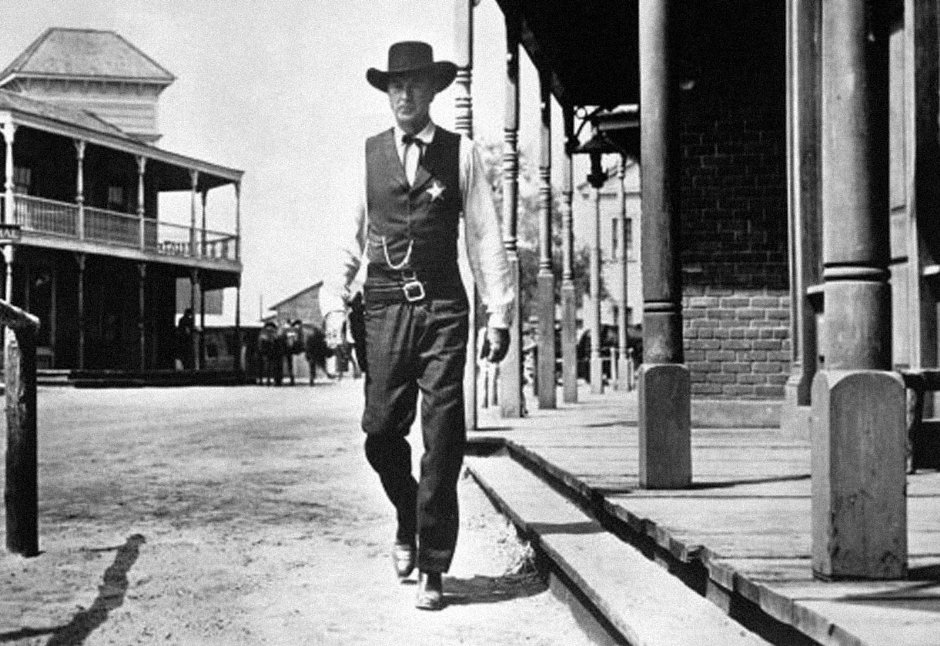
Gary Cooper in High Noon

I thought I was a beat, but I was just a boy

Notes on Re-Reading Kerouac in my 50s: Part 16

(Read Part 15 here, Part 14, Part 13 here, Part 12 here, Part 11 here, Part 10 here, Part 9 here, Part 8 here, Part 7 here, Part 6 here, Part 5 here, Part 4 here, Part 3 here, Part 2 here, and Part 1 here.)
 
I keep coming back to the words “myth” and “mythology” as central tenets of Kerouac’s world view in On the Road, and I think it’s because Kerouac uses superlatives and archetypes as shorthand, offering the reader a story of a disappearing America that he’s gleaned from popular culture as much as from actual American history.

The superlatives — big, great, mysterious — tend to be generic, but work together to create an impression of godlike grandeur. He writes of “the bird of Shenandoah” and the “hillbilly night of Charleston,” phrases that are relatively vague and that ultimately derive their meaning from repetition over the full expanse of the novel.

The dark and mysterious Ohio, and Cincinnati at dawn. The Indiana fields again, and St. Louis as ever in its great valley clouds of afternoon. The muddy cobbles and the Montana logs, the broken steamboats, the ancient signs, the grass and ropes by the river. The endless poem. By night Missouri, Kansas fields, Kansas night-cows in the secret wides, crackerbox towns with a sea for the end of every street; dawn in Abilene. East Kansas grasses become West Kansas rangelands that climb up to the hill of the Western night. (255)

Wildly impressionistic, to borrow a construction Kerouac might use, the passage depends on the reader having followed Sal on his travels for 250-plus pages, and on the hundreds of novels, stories, songs, films, etc., that the reader has grown up with and internalized. Woody Guthrie and his “ribbon of highway” is there, as are Huck and Jim’s travels on the Mississippi and James Fennimore Cooper’s forays into the dark American woods. All are present in these few words, and in Sal’s/Jack’s perceptions of the world around him. It is there in his concept of the Fellaheen (which he only touches upon in On the Road and more fully develops later), in his depictions of small towns, of Denver, his imaginings of Dean’s father, even of Dean himself.
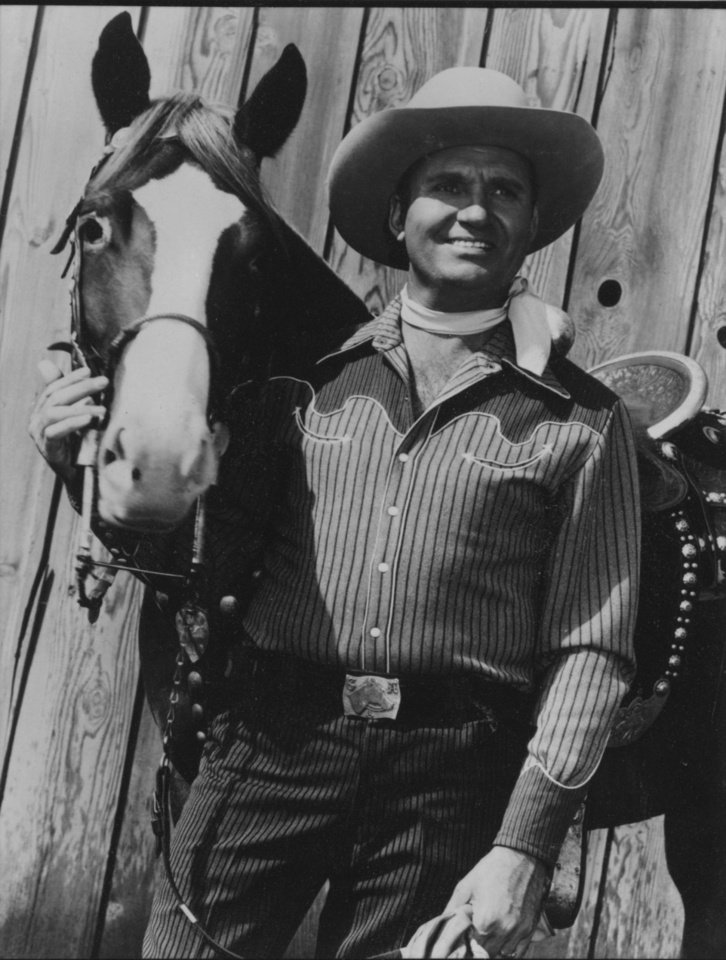
A young Gene Autry

Dean is as much an archetype as he is a fully fleshed out character. As Sal describes him, Dean is a man of the West and a native American intelligence. Sal’s first impression of Dean is key, because it builds the character from a set of broadly understood cultural archetypes. He “was a young Gene Autry — trim, thin-hipped, blue-eyed, with a real Oklahoma accent — a sideburned hero of the snowy West” (5). This is the trope from which all of the mythologizing flows.

Roland Barthes describes myth as “a type of speech” (109) that “is chosen by history” (110) and “has already been worked on so as to make it suitable for communication” (110). It carried pre-agreed-upon, though often unstated, cultural meaning, acts as a touchstone to which we can return to construct our narratives. Think the evil step sister, mother-in-law jokes, and the various monsters that come to us via folk and fairy tales. These act as shorthand, returning again and again in different tales, more often than not providing this agreed-upon information.

Advertising uses the myth-making function, building brands by creating a common language — both word and image based. The vague phrase “just do it” has been transformed into an exhortation to workout, to be an athlete, no excuses, while also being linked specifically to the Nike brand. Nike equals athletics, is athletics, in the popular imagination, thanks in no small part to Michael Jordan (another figure who has attained mythological status) and a pithy turn of phrase.

Myth, Barthes says, uses pre-existing semiological chains — “a relation between two terms,” and a third, the correlation between them that unites them and creates meaning. He uses the example of a bunch of roses that “signify” passion (Barthes 113). Roses exist on their own as flowers and are turned into a signifier through the act of giving. Passion is the message, indicated by the relationship between giver and recipient, but also by historical associations. The roses, therefore, become more than flowers, the giving more than action. Together, they tell a story.

We see this form of myth in our understanding of the American West. John Mack Faragher, writing about Daniel Boone and “the myth of the frontier,” he describes myth

not as a synonym for erroneous belief, but as the body of tales, fables, and fantasies that help a people make sense of its history. Like history, myth finds meaning in the events of the past. But unlike history, myth is less concerned with facts than with ideological essences.

The Western, whether a Buffalo Bill extravaganza, pulp novel or film, film, is “the story form of the myth,” he writes, and “tells a tale of progress, a justification of violent conquest and untrammeled development” — a narrative of American exceptionalism that contains within itself its own critique. It is “consistently subverted by the presence of pathfinders who are also critics of civilization, outlaws who are Robin Hoods, or whores who have hearts of gold.”

Kerouac’s vision of the West, which is the primary focus of On the Road, like his vision of Dean is based in this Western myth. He writes of the “Great American Desert” (182) and “huts with the weather beaten signs still flapping in the haunted shrouded desert wind, saying ‘Rattlesnake Bill lived here’ or ‘Broken-mouth Annie holed up here for years.'” In doing so, he is signifying a lost time and a changing landscape by alluding to a kind of Hollywood-inspired western lore, a legend of the American West filtered through memory, dime-store novels and John Ford westerns that exists on a plane parallel to what we learn about the west in our history books — a romantic notion that is as backward-gazing as the the work of Ford, Zane Grey, or Frederick Remington.

This is not a criticism, so much as an observation — and one that often gets left out of discussions of Kerouac’s work. There often is an effort to cast Kerouac as a groundbreaking progenitor of a new mode of writing, the scion of a world-changing generation that has always held itself in great regard. This obscures Kerouac’s connections to earlier American writers or his mournful view of change.

Kerouac, through Sal and his other stand-ins, is conflicted, caught between the need to break free from social restraints and a romantic attachment to the past, which drives his own movement.

This myth-making is central to his ethos, and is as important as the freedom he extols and that Dean represents in creating an audience for the book. The first wave of young readers wanted something different, but also were brought up in a culture that mythologized itself, that revered an Old West and American archetypes symbolized in the images of Gary Cooper, John Wayne, Jimmy Stewart, and Henry Fonda.

Western imagery would come to be an important component of the ’60s counterculture. Some of it was overt: films like Sergio Leone’s trilogy or Butch Cassidy and the Sundance Kid, of course, updated the Western genre, but musical groups like Neil Young and Crazy Horse, The Byrds, The Band, and even The Monkees toyed with wardrobe, album art, and lyrics that harkened back to a supposedly simpler and freer time. It is no accident, I think, that Peter Fonda — Henry’s son — and Dennis Hopper play Wyatt and Billy (as in Earp and The Kid) in Easy Rider, which is really just a modernized retelling of any number of Westerns from the ’50s and tracks almost perfectly with Newman and Redford’s Butch Cassidy.

Anti-heroes had become the norm, with flawed men (and it was almost always men) doing battle with an even more flawed and gravely ill social structure. Bonnie and Clyde were ruthless, but they were the heroes of Arthur Penn’s violent classic; no one was rooting for the g-men. The same goes for Sam Peckinpah’s The Wild Bunch, which captured the sense of change and drift that had marked American culture in the post-war period.

The anti-heroes were “real”; they existed outside the structures of square society and lived an “authentic life,” untainted by the conventions of polite society — which is why the Hell’s Angels, a group of violent marauders, attained a level of heroic legitimacy.

Again, Cooper and his Leatherstocking Tales are significant. Faragher ties Cooper’s tales, which he describes as “an enduring literary version of the (Daniel) Boone character” that “staged a conflict between civilized restraint and natural freedom.”

On the surface, (Cooper’s) stories make the case for “the march of our nation across the continent.” Yet his characters voice powerful countervailing arguments. “The garden of the Lord was the forest,” Leatherstocking declares, and was not patterned “after the miserable fashions of our times, thereby giving the lie to what the world calls its civilizing.” Ambivalence about progress resonated with a deeply felt American regret over the loss of wilderness as an imagined place of unbound freedom.

This easily could describe Kerouac’s vision of the West.

Send me an e-mail.
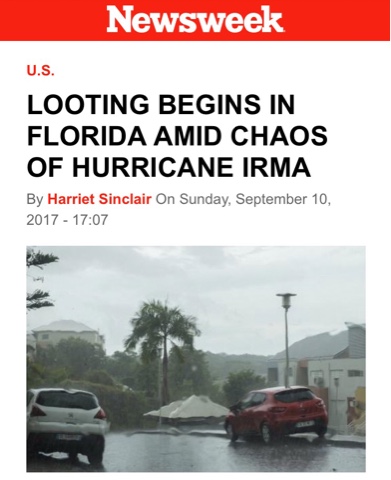
Disaster porn and those viral looting videos

Disaster coverage tends to be cliche: images of a storm or fire, anchors in safari or military garb, a reliance on hyperbole — and the inevitable images of (usually African-Americans) looting some neighborhood store. The story arc is predictable. Once we get past the stories of trapped tourists and occasional resident, we move on to the tsk-tsking of those who were either too stubborn or, more likely, too poor to escape the tragic calamity’s path, followed by stories and images of generally isolated incidents of bad behavior played large.
This is what we’re seeing now, as a handful of looters in Miami and Ft. Lauderdale are writ large and used to make the case that looting is widespread.
Newsweek, for instance, used the arrest of nine in Ft. Lauderdale to proclaim “Looting has begun,” implying a bigger, more ominous crime spree was in the offing. A closer look at the story makes clear, however, that the magazine was relying on the same report nearly every outlet was using — some to underscore racist stereotypes — and that the looting was a minor part of a broader overview of the storm and that looting was far from the norm, a couple dozen arrested in a region of 7 million residents.
Newsweek is not alone — a bevy of news sites around the country relied on the video, along with a slew of conservative web sites for whom the looting underscored the racial scare quotes that is their bread and butter.
These images of looting should be part of the coverage — they happened and are news — but only part. They require context (an admission of their rarity) and should not be sensationalized as they have been. Context unfortunately goes out the window during storms like Irma, as networks battle each other to see who can offer the most salacious pictures to drum up viewers and page view. Bad behavior fits the bill, because it breaks up what quickly becomes generic storm video.
The 24-7 nature of the coverage sadly encourages bad journalism, as does the quest for ratings and clicks. Rather than nuanced coverage that provides usable information or answers thorny or unasked questions, we get what has come to be called “disaster porn,” which John Doyle in the Toronto Globe & Mail defined as “indulg(ing) in endless coverage of destruction,” which, “as with all forms of pornography, is numbing.”
“Viewers,” he adds, “become desensitized and instinctively long for even more dramatic, horrific footage. Perspective is lost, and talk and discussion seems redundant as images dominate.”
The upshot is that discussion of climate change, disaster readiness, and land-use regulations, is ignored as we focus on the mind-numbing repetition that is storm coverage.
Doyle asks viewers to push back:

It’s up to those of us who watch TV to remember how easy it is to be numbed by the saturation coverage of giant waves, collapsing buildings and people clinging to the wreckage. It is up to viewers to think about issues of infrastructure, safety and what obligations governments have. Numbed by over-stimulation from disaster porn, we can fail the planet and ourselves, and all-news TV is just an enabler. When language is beggared by images, it’s time to react by thinking hard.

This sounds great in theory, but the clicks prove that most viewers, despite what they tell us, are willing to devour disaster porn without much thought. It is not the viewers who need to change, but the people who make decisions about news coverage. Rather than just. Having clicks and viewers, we need to remember that we are not just for-profit businesses (and we need to discuss whether the for-profit model is our best hope going forward) but that we offer a public service, and sometimes we need to give viewers and readers what they need and not just what they seem to want.
At the very least, we should end the practice of normalizing the abnormal.

Replay: Lost Ones, original thoughts post-9/11

This is admittedly a bit mawkish, but it was where my head was shortly after the 9/11 attack 16 years ago. I wrote it over a three-day period almost three weeks after the attacks, when the names of those killed started filtering into the public consciousness, and I have not altered it.

I thought it worth re-posting today to remember a lost friend.

LOST ONES: SEPT. 11, 2001 
— for Mukul Agarwala

Mukul Agarwala in his 1980 yearbook photo.

The picture on CNN was vaguely familiar, I guess, older, thicker, an adult version of someone I knew once, listed among the missing with thousands of others.

The name was what I remembered, connected to longtime memories, eroded with time, vague like that face on the computer screen.

There was the joke and the smile, something witty in my yearbook, that’s what I remember, the easy way we got along, but no images, nothing concrete beyond the hazy sense of knowledge, the house on Karen Street, the smell of curry permeating.

Your second day on the 94th floor, jet crash, terror attack, the towers came down, bodies lost, some vaporized, thick smoke, extreme heat, so much death.

I talked with your mother, talked with your father, listened to the heavy sighs and sobs, their grief hanging like an aging sunflower, its heavy head too much for its shriveling staff, bending it beyond its breaking point.

I went to synagogue for Rosh Hashana for the first time in nearly two decades, to be a part of a tradition, to remind myself of the temporary nature of our lives here and the vastness of the universe. And I needed to pray — for the hundreds confirmed dead, for the thousands more still missing, for the lost sense of security and safety, for peace, for the hope that the terrible events of Sept. 11 will not breed more bloodshed and violence.

I received an e-mail from someone I knew in high school, someone I hadn’t seen in 20 years or more, someone on the periphery of my life, lost long ago as we cut loose from the past. He’d heard of your disappearance like I had, struck by the photo, by the resemblance to a grainy memory saved in black and white with the others, one among many in a yearbook tucked away somewhere.

It took me a while to find my yearbook, packed in a trunk loaded down with odd mementos and debris of time past, loaded with rusted punk rock buttons, old greeting cards, a denim jacket signed by all of Annie’s friends in Brooklyn.

I e-mailed Andy, hadn’t heard from him in years, old friend, a best friend, lost friend, we grew apart like so many others from that time, wanting to reconnect, knowing that I missed that chance with you.

I’d thought of you over the years, decades now, wondered what you’d made of your life, occasional fleeting thoughts tied to a time past, another life really, thinking of all those people who litter the imagination, the memory, old friends and classmates, teammates and such, the random faces returning periodically like snippets of songs.

We leave too many things unsaid in this life, that’s what I’ve learned, leave too many things for the next day, too often waiting for the right moment, any moment, too content to let events control our lives, until the time passes, old friend, and there is no time left to talk and far too much left to say.

Quote of the Day: Immigration edition

From a perceptive column by Masha Gessen in The New York Times:

But what’s wrong with the decision to discontinue DACA is that people — not workers — will be deported. Lives — not careers — will be shattered. The problem is that it’s inhumane. As long as politicians consider it necessary to qualify the victims as “hardworking” or “talented,” they fail to stand up to the administration’s fundamentally hateful immigration agenda.

They discussed this idea on The Majority Report yesterday, making the point that this kind of rhetoric might seem necessary, though it creates unnecessary hurdles for immigrant groups and plays into conservative tropes about difference and, ultimately, the dangers of allowing these “others” to mix with “American” society.

This ties to my post yesterday about whiteness as the overriding focus of all of our immigration restrictions.

Found: A favorite book from adolescence

I’ve been writing a lot lately about On the Road, a book that meant a great deal to the 19-year-old me. But On the Road was not the first book that struck a nerve.

When I was in grade school, I avoided reading anything but sports-themed books and a handful of comic books. It seems odd to say now, but I wasn’t a reader.

That changed in sixth grade in Ann Sisko’s class when I read several books that caught my attention and indoctrinated me into the joys of the written word.

The first was The Outsiders — the first book I read and reread. Another was a book written in the 1950s by Nevil Shute called On the Beach (published the same year as On the Road), which traced the difficult route taken by a military submarine as it dealt with the fallout from a nuclear explosion.

Both of those books were the subject of feature films, have remained in print and are fairy well known. The third book in my triumvirate of formative works, however, fell out of print and was largely forgotten.

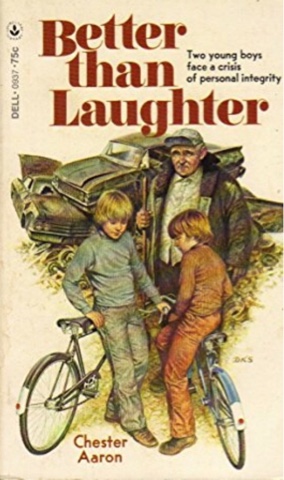
But there was a book I had read about eight years earlier that stuck with me. I didn’t remember the title. All I remembered was a bare plot outline — two kids run away to a junk yard where they meet someone named Horace. That’s it. But I did remember its effect on me.

A few years ago, I decided to look for the book. I don’t know what triggered my decision, and I had little to go on. As I said: No title, no author’s name. I reached out to Ann, with whom I’ve remained in touch, and she couldn’t remember the book. No luck. I’ve made periodic efforts to find it since, also to no avail — until last night, that is.

I was tooling around the web and started playing with search terms and different combinations that included the words “runaways,” “brothers,” “junkyard,” and “Horace.” I added “YA,” for young adult, which is the new fiction craze. And there it was. The book was called Better than Laughter. It was by Chester Aaron, a largely forgotten but prolific writer of both YA and adult fiction. 

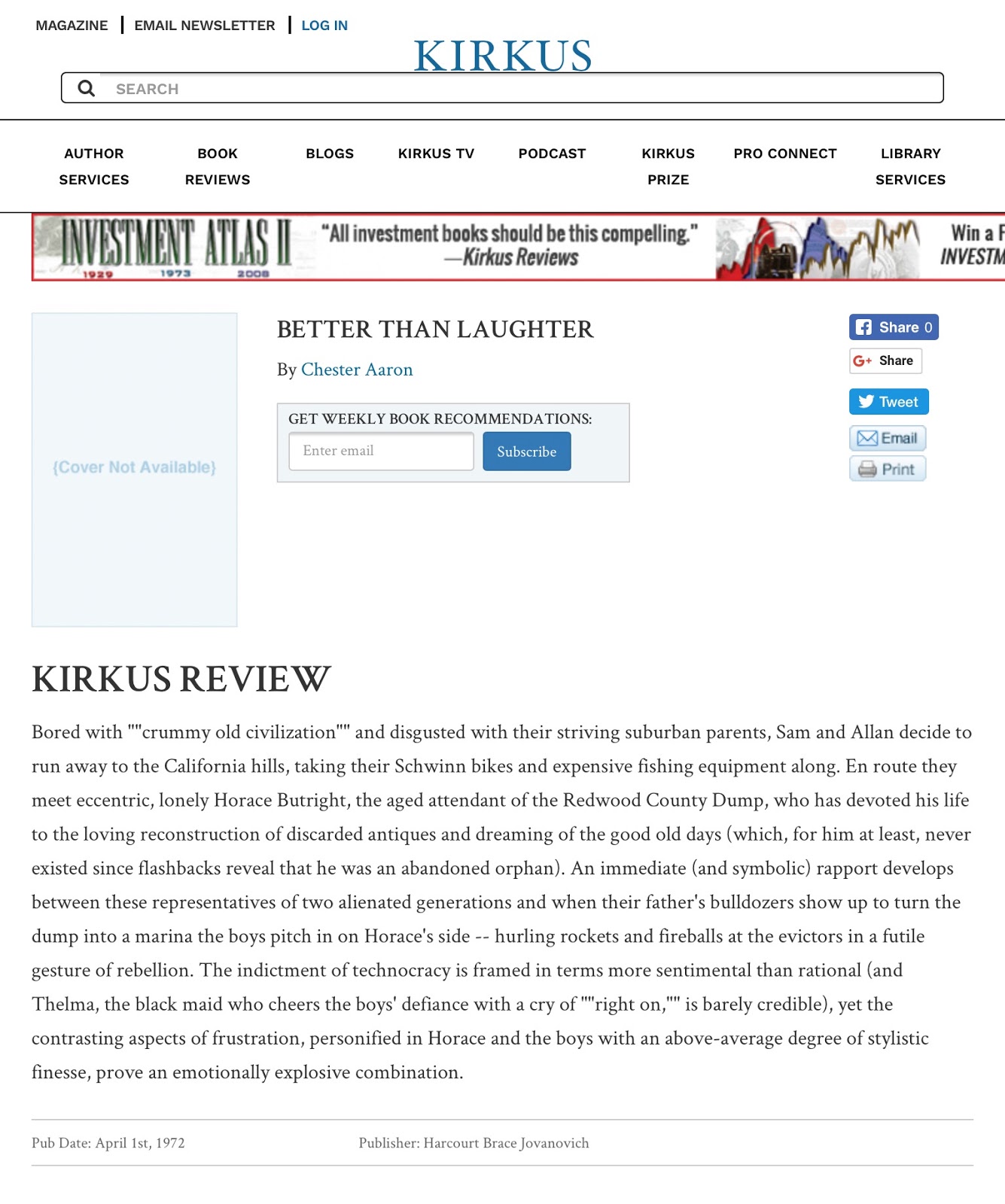
Here is a review of the book on Kirkus Reviews:
 

Reading the review — and I’ll be ordering a used copy of the book today — I now understand how it fits into my personal syllabus: The need for authenticity, the distaste for phoniness, the alienation and disconnection from modern capitalistic civilization. It would appear to fit nicely alongside Salinger, Twain and Hinton, and even Kerouac.