Journal: Notes on history, whiteness and statues

The following is a journal entry that I have decided to post publicly:

The news cycle in The Age of Trump moves at lightning speed. It has been less than a month since the awful spectacle of Nazis and other racists and anti-Semites marching in Charlottesville and this show of strength by an emboldened new-fascist right seems ancient.

But this substrata of conservatism remains a potential threat, and the issues it raises must be addressed. White supremacy is a real undercurrent in our culture, baked into the cake of American exceptionalism, that lie we tell ourselves to allow us to avoid confronting the real problems with which we are beset. It’s not just slavery, but Jim Crow. Not just lynching, but red-lining. It’s in our language and in the kinds of public expressions we deem acceptable. We elected a man president after he demeaned Mexicans and Muslims, winked and nodded at the KKK and so on.
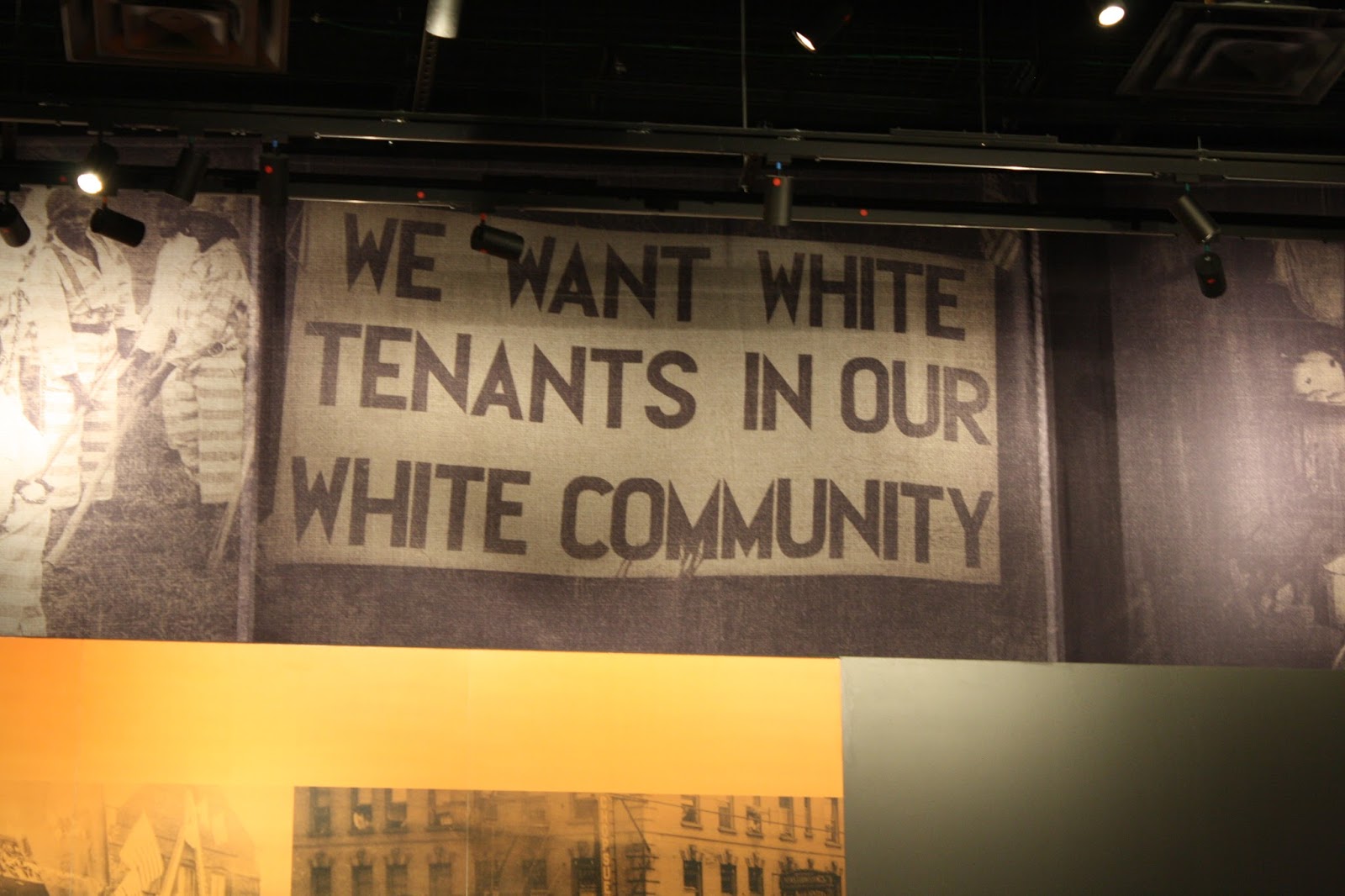
I took this photo at the National Civil Rights Museum in Memphis in August 2015.

The history of people of color in the United States has been a troubling one. Trump ended DACA yesterday, following on the heels of Charlottesville and his Muslim ban, hot on the heels of his ugly nativist campaign. But he is not the aberration we wish to believe. His racism is our racism — ours in a cultural sense. Our nation was built on it — slavery and Jim Crow, Chinese labor and the Chinese exclusion acts, the Zoot Suit riots, Japanese internment camps, exclusionary policies — “No Niggers, No Dogs, No Jews,” “Mexicans Needs Not Apply,” etc.

This history, or a part of it, is the point of Roger Cohen’s column in The New York Times today: “In moments of national fragility, history rears its head,” he writes. “The past becomes a vast storehouse of grievance. Revived memory is manipulated to produce violent nationalism. This is what is happening today in the United States, a nation suddenly at war with its past.”
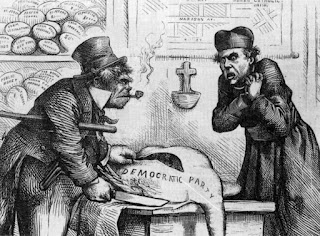
An infamous cartoon from the mid-1800s.

He goes on to describe the current debate over Confederate statues, which really is a debate over imagery, over symbols, and a debate over how we define the word “American.” There always has been an element of race in this definition. Americanness and whiteness have been conflated. This notion has created a racial hierarchy, but also allowed the notion of white supremacy to maintain its hold. Whiteness originally included only the Brits, Germans and French. The Irish, early on, were an other, portrayed in political cartoons as apes, left to toil in decrepit cities with free blacks and other “others.” But whiteness has been a fungible concept, as Nell Irvin Painter points out in The History of Whiteness, expanding to include previously excluded groups as a way of buttressing the white power structure against changing demographic tides. The Irish were first, subsumed into whiteness as a bulwark against emancipated blacks and the growing immigration from southern and Eastern Europe. Christian immigrants were next, and so on.

Blacks have been excluded from this designation, though the exclusion is no longer strictly a legal one. Jim Crow and red-lining have been ended, but policing strategies and legislative priorities, while officially race-neutral, continue to have what the courts call a disparate effect on blacks — in schooling, in asset ownership and wealth accumulation, and so on.

We pretend otherwise — John Roberts saying the only way to end discrimination is to end discrimination is the most concise example of this, an empty tautology presented as a statement of purpose. Roberts, however, ignores the history, demeans the victims of one of history’s greatest crimes (the enslavement and then oppression of black Americans), and elides the need for a full accounting, which has to include some for of restitution to the victims and their descendants. I’m sorry, Mr. Chief Justice, but “Oops, I’m sorry. We’ll stop now,” just isn’t enough.

Roberts comes from a tradition that says history is past tense, that it is nothing more than what has been consigned to the history books. (Yes, I’m reading a lot into his comment, but so be it.) But history is a living thing. Facts are facts, of course, but interpretations can change as we New information comes to light or previously known, but disregarded information gets a new hearing.

How we view our history speaks to who we are. Thomas Jefferson is not the saint of American democracy he had been painted as for so long, but a complicated figure who was both a democrat and a slaveholder. Focusing only on his ability to sell the democratic ideal to his contemporaries — and to posterity — but ignoring his slave ownership and “relationship” with Sally Hemings (rape is probably more accurate, given the inability of Hemings, a slave, to truly consent) says a lot about what we as a society may consider important.

The debate over Confederate statues must be seen in his light. As Cohen writes:

America has been adept at evasion. A nation conceived as exceptional, a beacon to the world, could not but run from its original sin. How often I have wondered at all the museums and memorials to the Holocaust, the great crime against European Jewry that did not happen here, of which the United States was neither perpetrator nor victim. By comparison, the great American crime of slavery, the laceration and lynching of black bodies, was scarcely memorialized.

The “bravery” of Confederate soldiers and their leaders, however, remains on full display throughout the south — monuments to “heritage,” which is just another way of saying whiteness. As Cohen points out:

The statues now being upended tell a story, after all. Not the story they were erected to propagate — of Confederate valor — but of an attempt in defeat to mask the terrible “great truth” of the Confederacy and by so doing extend for many decades the subjugation and humiliation of American blacks.

In the end, I’m ambivalent about their outright removal. They exist, we need to find a way to recontextualize them, to tie these “brave heroes” back to the evil institution they were defending and make it clear that the statues themselves were the product of Jim Crow-era efforts to intimidate blacks.

Send me an e-mail.
Dreamers deserve better than Trump and Sessions

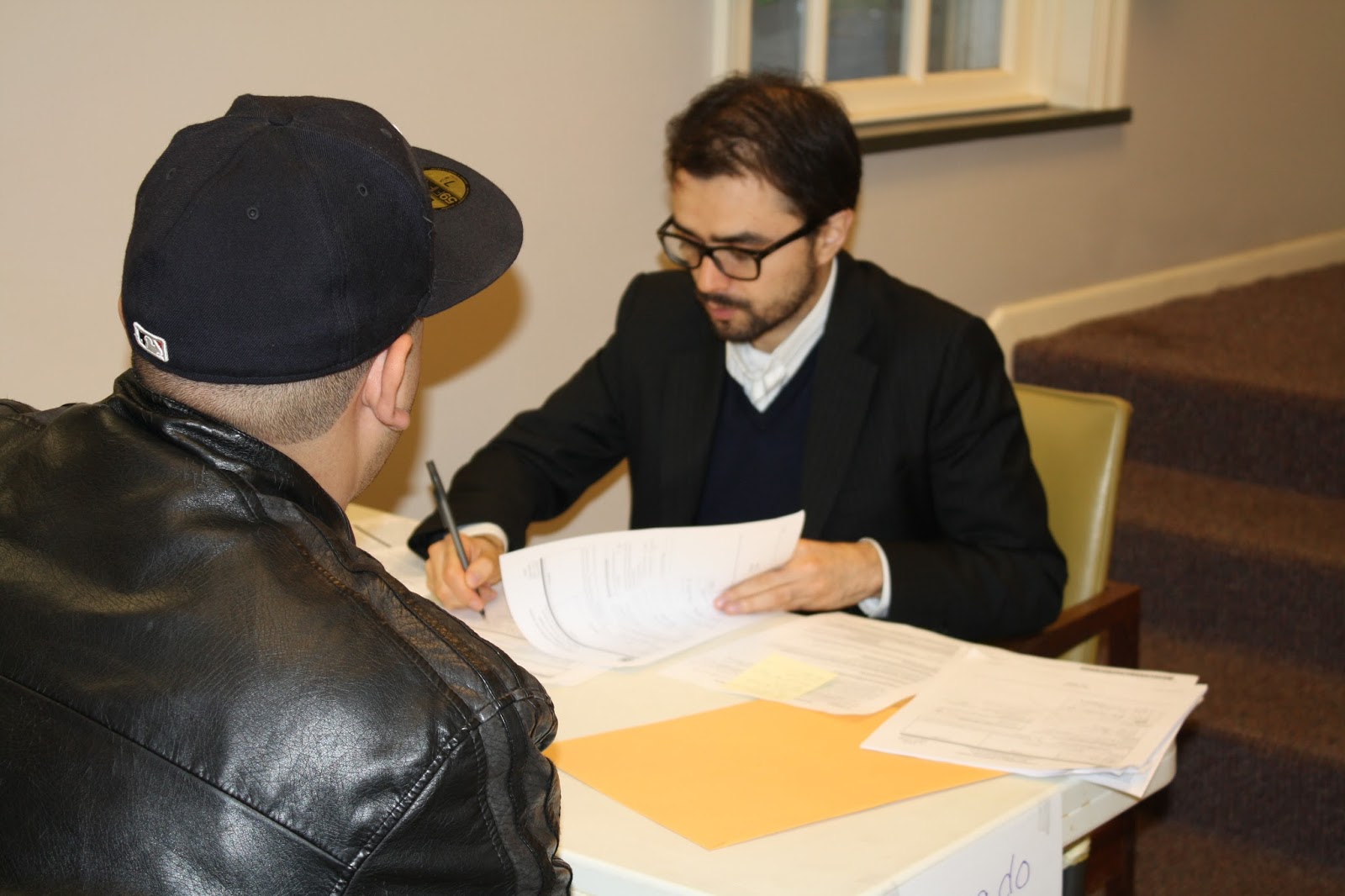
Immigration attorney Oscar Barbosa councils a Dreamer during a DACA information session in Hightstown in 2012.

And so the count down begins.

After seven-and-a-half months in office, President Donald Trump has moved to keep one of his more inhumane campaign promises, announcing that Deferred Action for Childhood Arrivals would be phased out starting in six months.

Attorney General Jeff Sessions made the announcement about the program, which was created by an Obama executive order in 2012 and granted temporary protection from deportation to about 800,000 immigrants who came as children.

The group, generally called Dreamers after long-sought legislation that would have created a pathway to fully legal status and possibly citizenship, has been in limbo since the election. During the transition, Trump seemed to soften his anti-DACA stance, saying he would “work something out that’s going to make people happy and proud.”

“They got brought here at a very young age, they’ve worked here, they’ve gone to school here. Some were good students. Some have wonderful jobs. And they’re in never-never land because they don’t know what’s going to happen.”

But Trump’s solution, announced today by Attorney General Jeff Sessions, leaves Dreamers in “never-never land” by ending protections and asking a dysfunctional Congress to act. DACA protections, two-year deferrals of immigration enforcement and a work authorization permit, will begin expiring with all deferrals expected to run out in 2020. No renewal applications will be accepted, nor will new applications for protection.

Sessions, in his announcement, said DACA “was implemented unilaterally to great controversy and legal concern after Congress rejected legislative proposals to extend similar benefits on numerous occasions to this same group of illegal aliens.” This, Sessions said, amounted to “an open-ended circumvention of immigration laws” and “an unconstitutional exercise of authority by the Executive Branch.”

Sessions also blamed what he called “a surge of unaccompanied minors on the southern border” on DACA, conveniently ignoring the brutal conditions across Central America that were driving these kids north.

So DACA’s authorization is being revoked and the program will go through an “orderly process” as it winds down. All of this sounds good — until you factor in the 800,000 or so immigrants who are in limbo, immigrants wo are working and/or going to school, creating better lives not only for themselves and their families, but for their communities.

I talked with Daniela Velez, director of undocuJersey, an advocacy group. Velez came to the United States when she was 9 from Venezuela to escape the political turmoil that occurred as Hugo Chavez assumed power. That was 2002. She has been in the state’s since, graduating from the Burlington County Institute of Technology and Rowan College at Burlington County. She is starting at Rutgers this fall.

She said the feeling in the Dreamer community can be summed up by a single word: “Anxiety.”

“It is a word best to describe the situation, she said. “Basically, it means students, workers, families, parents, community supporters organizing and finding new solutions.”

What happens next, she said, is hard to know.

“What does it mean?” She asked. “Does it mean going back under cover? Does it mean relocating, We gave our information to the government (when we enrolled in DACA). Does it mean you disappear so they don’t come for you?”

As The Daily Beast reports, the administration “may use the information these people gave the government as a means of gaining temporary protection to, instead, find and deport them.”

In a memo, the Department of Homeland Security answered this question. And its statement – full of wordy legalese – made clear that Immigration and Customs Enforcement officers will be able to use DACA recipients’ personal information to deport them.

“Information provided to USCIS in DACA requests will not be proactively provided to ICE and CBP for the purpose of immigration enforcement proceedings, unless the requestor meets the criteria for the issuance of a Notice To Appear or a referral to ICE under the criteria set forth in USCIS’ Notice to Appear guidance,” said the statement.

In other words, USCIS (United States Citizenship and Immigration Services, the agency which handles DACA) won’t proactively give immigration enforcement officers a list with the names and addresses of all DACA recipients. But if ICE officers ask for it, the agency will provide it.

“They’re saying we will not give your information unless ICE tells USCIS they need it to deport you, which basically means we’ll give your information out whenever ICE says it’s necessary to deport you,” said Leon Fresco, an immigration attorney who represents many DACA recipients. “That’s the point.”

So, the information is in play — given ICE’s history and Trump’s take-off-the-gloves attitude. And that has Dreamers mad.

“We came out of the shadows,” Velez said. “We told the government we are here. We are working. We want to succeed. We want to give back to this country. We are visible. We came out did. We did everything required and now that can be used against us.”

On a personal level, Velez was concerned about her work authorization. If she can’t work, she will not be able to attend school.

“I worked to pay for school,” she said. “If ends, does it mean I take leave of absence from Rutgers, do I drop out? Does it mean I go to working cash? For me, my world will end.”

With today’s announcement, it is likely her work authorization and deferred status will end later this year — it is set to expire, though she has applied for a two-year extension. Her sister’s DACA status runs out next year.

Advocates point to stories like Velez’s and others as evidence of the heartlessness of Trump’s action.

But Trump continues to claim “a ‘great love’ for the young immigrants protected by the DACA program.” As the Associated Press reported, he told “a meeting with administration officials and congressional leaders Tuesday, (that) he has a ‘great heart’ for the young people. He says he hopes ‘Congress will be able to help them and do it properly.'”

Given the make-up of both houses of Congress, the likelihood of a DACA-like program being created seems slim. Congress is controlled by Republicans, a party that itself is controlled by anti-immigration hard-liners. And even if immigration-reformers can peel away so-called moderates, it has to worry that conservative Democrats do not side with hard-line Republicans. And that assumes that Democrats will even be willing to discuss legislation that might give Trump a perceived win.

Members of Congress are saying the right things — even many Republicans — so there is hope, however small.

So, as Velez points out. It’s time to get busy and organize.

* * *

Much of Sessions’ announcement was boilerplate stuff — except that he raised the specter of an out-of-control executive violating the rule of law, not realizing perhaps that he was describing conditions put in place primarily by Republicans in recent years, and that very much describes the know-nothingism and kleptocratic instincts of his boss, the current president of the United States: “Societies where the rule of law is subject to political whims and personal biases tend to become societies afflicted by corruption, poverty, and human suffering.”

Send me an e-mail.

I thought I was a beat, but I was just a boy, part 15

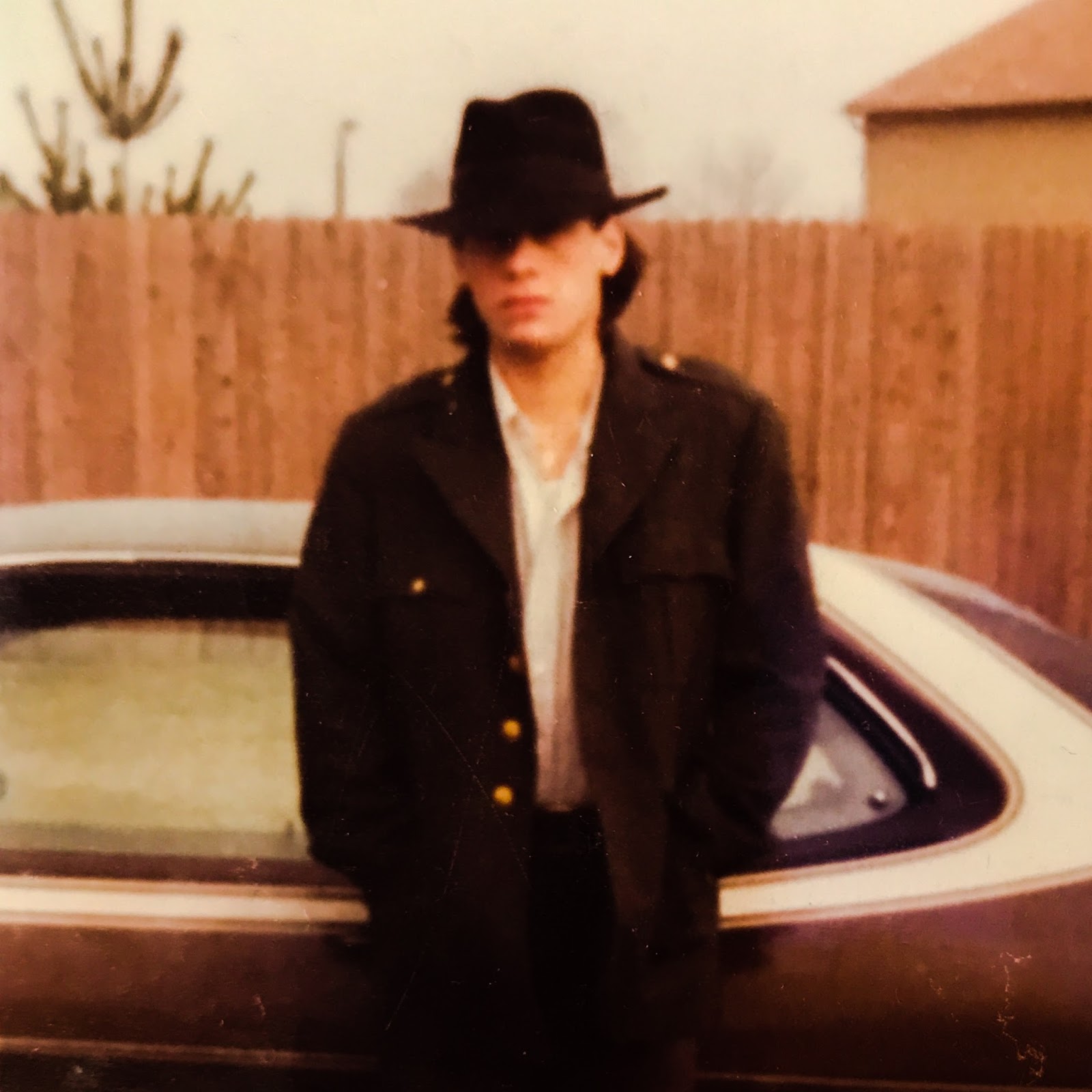
I don’t have any pictures of the Oldsmobile, but here I am with my first car — a 1974 Dodge Dart Sport..

I thought I was a beat, but I was just a boy 

Notes on Re-Reading Kerouac in my 50s Part  15

It was my dad’s car, a 1976 Cutlass with an eight-cylinder engine that demanded fuel at least twice a week. It looked tame, but could rev up to triple digits if you pushed it, and sometimes I just had to push it. Route 80 heading out to State College had a long, empty stretch, straight as a razor, mountains rising on both sides. I drove that stretch a dozen times, maybe more, in the two years I attended Penn State. And I hitchhiked the same stretch another half dozen times, before finally leaving school in the spring of 1982.

I was restless. I’d worked a summer job in a factory, a job for which I was ill-suited but that I found more authentic than what was expected of me. College felt wrong, class work unnecessary.  At the same time, being away at school, at Penn State, gave me a chance to break with the bland conformist I had been in high school, to engage my right brain.

The car offered me a sense of freedom. State College was a small town back then, surrounded by smaller towns and farms, and it felt like it existed on a different planet, divorced from everything that made sense. When I had the car, I would take long drives out by the quiet stadium where, during the fall, more than 80,000 would pack in for games and the parking lots would be filled with tailgaters. I would head east beyond the medical center and the mall, beyond the suburban tract housing on roads lined with farms and granaries. Past the highway. Past the prison that was visible from the distance.

Sometimes I’d stop, get out, and wander along a creek bank. It reminded me of the creek behind my house, which would freeze. I’d walk it with my neighbor Neil, or my friend Bic, or Mukul, tramping through the suburban backyards to the park and school down the road. It seems cliche — is cliche — but tramping frozen ground in silence connected me both to home and to Jack Kerouac, who had become one of my heroes.

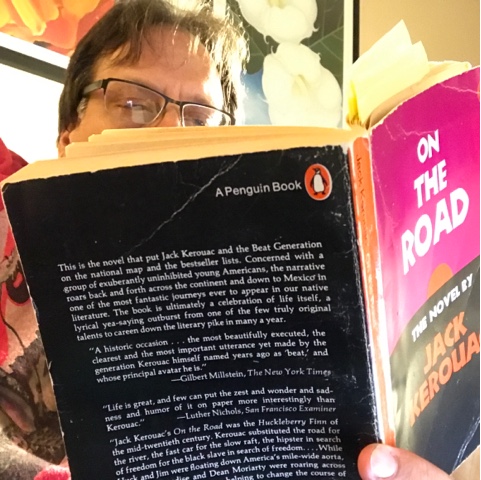
On the Road, Kerouac’s most famous novel, was published in 1957 after several years of rewriting and editing. Written in 1950 on a massive roll that he created by taping one sheet to another so he could avoid stopping to change paper, it recounts the three-year period following Kerouac’s introduction to the charismatic and maniacal Neal Cassidy. The book’s opening captured my feelings perfectly: “I first met Dean not long after my wife and I split up. I had just gotten over a serious illness that I won’t bother to talk about, except that it has something to with the miserably weary split-up and my feeling that everything was dead” (3).

I wasn’t ill but I was struggling. Call it ennui or undiagnosed depression. Call it teen-aged angst. I was 19 and looking ahead with trepidation, awe and confusion. On the Road spoke to those feelings, granted permission for my restlessness, while creating a romantic image of the young artist in his infancy — mirroring my conception of myself as a developing poet.

This permission was important. I’ve come to realize that two strands comprise my personality: an urge toward non-conformity and a fear of how my nonconformity will be received. It’s why, I think, I’ve always felt a discomfort within groups, a sense that I don’t fully fit in regardless of the association. My need for approval runs deep, but so does a questioning of that approval’s necessity, along with a skepticism of authority more generally.

I get the need for approval from my father. My dad, as I write in another essay, has always been overly concerned with others’ opinions of him and of his family. This is not unusual for someone his age — he turns 80 next year and came of age during a decade — the 1950s — characterized by  William H. Whyte’s The Organization Man and the growing corporatization of America. Father Knows Best and Leave It to Beaver offered powerful lures, especially for a boy who’d lost his father, as my dad had. My dad and I have never discussed this — part of my ambivalence about authority, perhaps? — and it’s possible I’m turning my dad into an archetype and not giving him the credit he deserves. But his political and social conservatism is deeply ingrained and it made telling him I planned to leave Penn State difficult.

I don’t remember what I said, nor his exact response. I imagine it was something like, “You’re out of your mind.” That’s long been his response when my brother, sister or I would do something he finds odd or out of bounds.

It was probably March of 1982 when I told him what I was planning. The University of North Carolina was making a run to a college basketball title. I was a fan of the Tar Heels, but I remember little of that tournament, only know UNC featured James Worthy and Michael Jordan. There was probably snow on the ground in State College, because there always seemed to be snow on the ground in State College during the winter trimester and into the beginning of the spring.

I hate snow, have since those two Penn State winters. I lived in Sproul Hall in the East Halls area. To get to classes, I had to walk across a massive parking lot. In the winter, the lot would turn into a a vast tundra of ice and wind that blew horizontally, that cut threw you with the precision of a stiletto.

It snowed at home in Jersey, too, but it would turn slushy and black with car exhaust and then melt away before the NCAA tournament, before the Mets would open the season. There were winds, but they lacked the ferocity of the Penn State winter.

The winter’s brutality — along with my own inertia and what I see now was a form of depression — led me to abandon my course work. I attended few classes that winter, failing each in spectacular fashion.

There may have been snow on the ground when I got home. I probably watched some of the tournament with my dad, perhaps the St. John’s game — everything cordial until I dropped the news. He would have been angry, but probably didn’t yell. He didn’t yell. He’d go silent. That has always been his way, the sudden, inexplicable silence, the bottling up. I probably left. I may have taken the Cutlass, or perhaps called Bob or Bill or Rich. We probably hit to the Hub for beers and cigarettes. Or we’d walk, or find some place to hang out and get high.

I say probably, because I don’t really remember. I remember few of the details of that time. I remember friends — Steve and Doug and Katie, my work at the radio station. I remember blowing off classes, smoking a lot of dope.

This was my rebel period, something I think most of us experience after high school in some form. For most it manifests in a stretching of boundaries, in discovering and crossing the line between childhood and adulthood. For me, it involved something more. It was a period in which I created a personal ethos that mixed sixties-era political revolt (without the actual activism), a perceived punk-rock nose-snubbing, and Beat-era Bohemianism. The first two ingredients were musical: I was listening to Lou Reed’s The Blue Mask, The Clash and The Sex Pistols, XTC, the Talking Heads. The Beatles, Stones and Dylan, of course, and Springsteen. Jazz was new to me, and I was particularly taken by Traffic’s live album, with its slinky horns. The album filled the gaps for me between bebop and rock and roll, and the larger palette of sounds — which I often boiled down into mix tapes — created a soundtrack for my somewhat limited rebellion.

I’d read On the Road by this time. More than once. And The Dharma Bums and The Subterraneans. It was my “born again” experience, opening my eyes and mind to possibilities I’d never fully considered. The world as I understood it was in flux and I needed a sign post. Or a map. On the Road offered a version of that map, a structure for the haphazard and unformed accumulations of thoughts and beliefs that were swirling around my brain.

That the structure was never stable, that the narrative Kerouac presents lacks a traditional or at least overt dramatic arc has never mattered; On the Road has a frame — Sal’s relationship with Dean — but it is not so much about their friendship/love as is is a meandering journal of Sal’s exploration of post-War America, a time when everything and nothing seemed possible, when the immediate was most important.

Everything and nothing. Certainty and doubt. The ineffable unreliability of life. The world does not move in a straight line. There are no grand plans. Accidents happen, events alter directions, are not preordained, do not have an inevitable momentum. The Rev. Dr. Martin Luther King Jr. said, “the arc of history is long, but it bends toward justice,” a hopeful note that is belied by history (and our current politics). If there is an arc it is one we create, one we bend.

I remember one early morning after an acid trip that had me wandering the quiet streets of State College and the Penn State campus. This must be weeks later. I must have returned home and deposited the car — the events, as they have formed in my memories, lack access to a car. I remember wearing an old brown sweater over an untucked denim shirt. I remember this distinctly because I thought it made me look like Sal Paradise. I remember returning to my dorm room and finding a sleeping roommate and a suicide note and freaking out, giving up, heading to the bus depot.

I had a few things in a backpack. A few dollars in my pocket. I was at the depot. I was going to San Francisco. Or someplace out west. I was going to take the bus as far west as I could, as far as my money would allow. Then I would hitchhike. I stood there. I must have, anyway. Until my will faltered. I didn’t buy a ticket, didn’t get on that bus.

My time at Penn State was effectively over. My time in State College was soon to be, but I did not head west. I returned to my dorm room, to my roommate, began the difficult project of packing up my relatively short life. Within a few weeks, I’d hitchhike home, make my official announcement to my family, dad turning stony, silent, then take the Cutlass back to Penn State for a final time.

I cut my ties, let friendships end. Penn State was behind me, and the Road (capitalized in my imagination) was ahead — but not in the manner I anticipated. I wouldn’t follow Jack’s path; mine would be an internal journey, a localized journey, that would lead me to lasting love, an important vocation, and a very different way of viewing the world than the one Kerouac settled on in the wake of On the Road‘s publication. I’ve been lucky. I’ve avoided he regrets and disappointments that dogged Kerouac and fueled his alcoholism, that damaged his ability to make deep connections, that left his suspicious and angry and resentful in his final years.

There is a photo (Gifford 314) of Kerouac and his third wife Stella — “the sister of his old friend Sammy,” an old girlfriend from Lowell, from the days before his fame (304-305). Kerouac is seated in a wooden chair. His body is swollen showing the effects of his drinking, his face puffy, his expression vacant but pained. There is little of the openness, the receptiveness and warmth you find in earlier photos. Stella stands behind him, a hand on his meaty arm, a half grin on her face. Kerouac is 46 or 47 in the photo, but looks much older. He would die probably within a year of this picture being taken.

He is far from the adventures of his youth, far, I’m sure, from where he planned to be, though, he foreshadows his own narrative — all of our narratives, really — as On the Road closes: “nobody, nobody knows what’s going to happen to anybody besides the forlorn rags of growing old” (OTR 310), and as I approach 55 years on this earth I can finally say I understand.

Send me an e-mail.

I thought I was a beat, but I was just a boy, part 14

I thought I was a beat, but I was just a boy 

Notes on Re-Reading Kerouac in my 50s Part  14


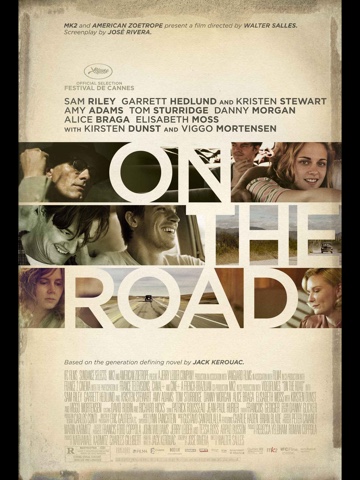
On the Road, because of its underlying formlessness, resists easy interpretations into other media. It took 55 years for the book to make it to screen, after several failed attempts, and the 2012 film has its charms — mostly the portrayals of its female characters — but ultimately the film fails because it had to fail.

On the Road is too big and too much inside Sal Paradise’s head to easily turn it into a coherent film. Too much has to be left out, too much has to be compressed, to squeeze the travels of its main characters into a two-hour narrative.

Other Beat Generation works faced similar hurdles. Naked Lunch, William Burrough’s classic heroin dystopia, for instance, needed to be smashed to pieces and put back together before it could make sense as a film. Howl, Allen Ginsberg’s classic poem, became a canvas on which to tell the story of its writing and the obscenity trial that followed its publication. Both films were impressionistic re-imaginings that only used the source material as jumping off points. And because of this, both films work well and stand alone as art in their own rights.

On the Road, directed by Walter Salles, suffers because of its source material, both because too much of an effort is made to stay true to the novel and because it deviates from the novel in several strategic ways. The events have been re-ordered, several of the characters changed, and several important scenes have been compressed so much that they almost fail to register (his brief love affair with Terry).

This is not unusual when adapting a book to film, and it’s why it can be dangerous to compare film and source material. Salles’ changes are worth discussing, however, because the cast fresh light on some of the book’s themes — and offer a reminder of what the book is not.

Salles’ cuts and compressions narrow the film’s scope — a thematic shift underscored by the film’s shooting style. Salles keeps much of the film in close-up, often extreme close-up, creating a cramped sense of space. The film is claustrophobic, and the sense of space and openness created by the book has been sacrificed to keep the Sal-Dean friendship front and center.

Dean is played by Garrett Hedlund as a laconic western cowboy, a ’50/s film cliche. He is muted, laconic, almost bored. He is introspective, admits to considering suicide, and attempts to explain his mania and his inability to escape his urges. This personalizes the narrative, shrinks it — it is Dean’s very human failings and his somewhat cliched past that matter, his personal demons rule the film.

The film opens with Dean at a New York City parking garage, showing off his handling of the cars he parks, and then a shot of him stealing a car. This is Dean Moriarty, a quick visual snapshot of something that Sal finds attractive and authentic. Dean is the mad driver, the car thief, the thrill seeker who commits crimes because he is bored and the boredom remains an underlying flaw in Dean’s character. He can’t sit still, which causes him to hurt others, to abandon his lovers, his closest friends.

Here is how the novel opens: “I first met Dean not long after my wife and I split up. I had just gotten over a serious illness that I won’t bother to talk about, except that it had something to do with the miserably weary split-up and my feeling that everything was dead.”

The film, after giving us a glimpse of Dean as car-park attendant, moves to Sal’s dark and claustrophobic bedroom. Sal is played a bit nebishly by Sam Riley. Sal sits at the typewriter as the voice-over bridges the image of Dean stealing a car into Sal writing. “I first met Dean,” Sal says, “not long after my father died. I had just gotten over a serious illness that I won’t bother to talk about, except that it had something to do with my father’s death and my awful feeling that everything was dead.”

The change from failed marriage to dead father is underscored two scenes later, after a drunken party, when Sal and Dean have their first heart-to-heart discussion. They are huddled close. The camera is in their faces, an extreme close-up.

“The day before my father died,” Sal tells Dean, his expression pained, “he took hold of my hand. He looked at it and he said ‘you got no callouses, Sal. You don’t do any real fucking work, boy.'”

Dean, equally mournful, tells Sal that Old Man Moriarty was rarely around, a drunken wanderer who left Dean to his own devices. This, in the film and the book, is designed as a building block for Dean’s character, the essential cause of Dean’s breathlessness and wanderlust. But novel Dean lacks the introspection implied here with film Dean. Novel Dean is chaotic, a whirlwind. He’s about escaping the dull impositions of post-war American culture and it’s gray flannel suits and middle-management jobs. Finding his father is important, but as an adventure, a chance to discuss the old man’s adventures on the Denver streets and through out the Southwest. It is consistent with the book’s ethos of adventure and pure kicks, and it is part of a hip-v.-square dynamic that is buried in the film. This frame is present, but it’s muted, shunted to the side, as the film narrows its focus — one of the reasons for the constant use of close-up shots. Film Dean also seeks kicks, and he shares the wanderlust and allergy to responsibility with novel Dean. But film Dean has been transmuted. His tragicness is connected to his missing father, to a desire for some sort of approval, a desire he shares with film Sal.
“To the old men,” Dean says, lifting his beer as their heart-to-heart closes.

“To the good old dead demented men we love,” Sal says.

“And the west,” Dean says, a nod to the trips that are to follow.
Later, Dean is lost in morose thought, focused on his failure to find his father. Sal comforts him:
“Here’s what’s going to happen. Right when you think you’re never going to see him again, someone’s going to come and tap you on the shoulder looking for a dime or a light. You’re going to turn around and you’ll be face to face with him.”

“That’ll be real nice, brother.”
The sadness of the scene makes Dean seem small, fragile, and hints at the final scene when Dean returns to New York after abandoning Sal in Mexico. Dean is apologetic, wants to talk, but Sal is heading out to a concert.  He’s dressed in evening wear, his friend Remi (who plays a crucial early role in the book, but is excised from the film) waiting with two girls and a cab. Sal doesn’t have time for his best friend, who is in obvious pain and needs Sal’s approval and forgiveness. Sal’s clothing tells part of the tail, the flannel shirt swapped for the attire of the elites. Dean is dressed as he always is, in t-shirt and jacket. Something has changed. Something is broken.

This final encounter in the book is more drawn out, with Dean arriving earlier than anticipated and now set apart from the New York crew. It is unclear in the book how much Dean’s abandonment has damaged his relationship with Sal, as Sal is drawn away by his previous commitment to Remi. Dean asks to share a cab to spend as much time as he can with Sal, but Sal demurs — Remi, who Sal screwed over earlier in the novel, dislikes Sal’s friends, and especially Dean.

The similarities here are outweighed by the differences — the film implies this is the first time Sal and Dean have been in contact, while the book makes it clear that they have been writing each other and that Dean had been in New York for a few days before this final scene. The book doesn’t so much as end as it pauses, takes a breath. This is not the last we’ll see of Dean, it seems to say.

These differences highlight the core themes of the book, which is the thrill of nonconformity, the desire for authenticity, and a the ultimate failure of an unthinking hedonism that proves to be selfish and damaging to personal relationships. Mexico is more than just a trip to a whorehouse; and the larger quest made by Sal is about more than just kicks, which often get in the way of his personal growth and understanding.

Dean is the symbol of these currents in the book, a mix of raw sex and desire. His quest at all times is for kicks, and he leaves shattered lives in his wake. He is raging id, a massive and intrusive presence, who like a category 5 storm leaves destruction in its wake. He looks like Henry Fonda and act like the Tasmanian Devil. He should jump with energy, eat up the screen. Dean is kinetic, the brightest star in the constellation, and when he crashes he takes everyone with him.

It is important to remember that the book is about Sal and his quest, his exploration of a changing America, and an attempt to find something essential on the road. Dean, like Jay Gatsby, is a conduit through which we can understand the changes in Sal’s life and the changes in post-war America.

This is not meant as a criticism of the film — though, I did find it shockingly dull and difficult to watch — as much as it is an argument that On the Road’s structural anarchy and the bigness of its vision are not easily translated to the screen.

I thought I was a beat, but I was just a boy, part 13

I thought I was a beat, but I was just a boy 
Notes on Re-Reading Kerouac in my 50s Part  12

When I started this project, I wasn’t thinking about anniversaries. On the Road turns 60 in September, which would seem to give my most recent re-reading a bit of urgency — a news peg, we’d call it in the newspaper business. But this anniversary had nothing to do with my decision to return to the book after a good decade away. I’ve read this book probably a dozen or more times, and each reading has offered different pleasures and different view points. When I was 19, it was fresh and new, and my own intellectual journey was still in its infancy. I read it in a single sitting and thought I’d take off across the country. I was at Penn State; the bus station wasn’t far, and I imagined buying a ticket with the little money I had, going as far west as the fare would allow, and then hitch hiking the rest of the way.

I didn’t, and I don’t have any regrets. But that memory has always acted as a foundation in my reading and rereading of On the Road and Kerouac’s other books. Desolation Angels made me want to drop everything and become a fire look out. The Subterraneans had me chasing the artistic ones, thinking that the kicks were the thing, while The Dharma Bums pointed me toward a (superficial) exploration of Eastern religion.

Kerouac remained a touchstone, of sorts, but started to recede, to seem less a part of my own writing history as my own work grew more complicated, as I attempted to integrate my journalism into my poetry and I began to fully consider the personal essay as something worth pursuing. (I had been afraid of the format, or perhaps the honesty it requires to do it well.)

So, a reread of Kerouac was not necessarily on my radar. I had an extensive summer book list that included philosophy, poetry and Samuel Becket, and I was working on a long poem on race and America, writing a play, and reporting an immigration story. The last thing I needed was another project.

But Kerouac is always in the air, which is important. He’s not just a personal touchstone, but a cultural one, and On the Road is in many ways the book that signaled much of what was to come in the 1960s and beyond.

Roger Ebert sums up the book’s allure in a 2013 review of the film adaptation. He and his friends “talked idly of pointing them west and not stopping until we reached the Pacific..”

As a teenager, I snatched up the book in its first paperback edition and chose it above any other to display on my desk at the News-Gazette, sometimes underlining trenchant passages. Still in high school, I slipped away to the Turk’s Head, a campus coffee shop, which played Miles Davis and Monk, and Beats were rumored by the townspeople to stand on the tables and recite their poetry, although table-standing seems to run counter to the Beat ethos.

Vin Scelsa, the legendary New York disc jockey (and a personal hero), name drops Kerouac in a 2015 podcast interview with his daughter, describing his movement away from his Roman Catholicism, and his decision not to attend NYU — because, as his daughter Kate says, Scelsa was a rebel.

“It was my Jack Kerouac phase,” Scelsa says. “I was going to go out west and be a fire watcher on a mountain and get in touch with my Desolation Angels, and that whole thing. I was into the whole Beat world, Allen Ginsberg and all that.”

He didn’t. Instead, he found himself at the Upsala College radio station WFMU, where his rebellious streak and innate creativity found it’s outlet in free-form musical programming. I discovered Scelsa probably in 1978 or 1979 when he ruled the late night airwaves and spun records no one else on commercial radio dared play. The timing was propitious — I was growing tired of the commercial stuffed began listening to more punk and early New Wave, and Scelsa’s imprimatur was important. He showed that this new music was important and that it was part of a much larger mosaic of sound that could include both the popular and the underground.

So, I was prepared for what Kerouac had to offer, not realizing how much Kerouac actually paved the way for someone like Scelsa — or how much Kerouac had and would continue to seep into the larger culture.

The 10,000 Maniacs capture this on their 1987 album In My Tribe, with the song “Hey, Jack Kerouac”: Kerouac, Ginsberg and William Burroughs, the song posits, allowed the “Hip flask slinging madmen, steaming cafe flirts,” and “Cool junk booting madmen, street minded girls,” to speak through them. Or to believe this lonely alcoholic writer lost in a changing America spoke for them.

This is why his influence extends beyond literature and into the broader culture. As Kerouac describes in Big Sur — his novelized take on the aftermath of On the Road‘s success — he couldn’t go anywhere without some 20-something wanting to join the party that had happened 10 years earlier. Big Sur is a difficult book, especially for readers still caught up in the romance of On the Road. It describes Kerouac’s descent into alcoholism and his growing alienation from the new youth culture, an alienation that ultimately would push the so called “King of the Beats” in a few years to outright disgust with the hippies.

But Big Sur describes the cultural moment and his influence on it surprisingly well. His book offered this new generation born during and after World War II liberation. And they took it and ran with it.

Which is why Ebert. says the novel “grew not into a movement but into a brand,” one pushed hard by the new advertising industry, and that ultimately turned the novel into something it wasn’t — a buddy-road story and unapologetic exploration of hedonism.

The novel was always more and less than that, but disentangling its core from the myth has long been shunted aside by its fans, who focus on the freedom and not on the book’s darker elements.

This has made the book far more influential than it might have been, given what William Plummer calls its lack of “literary style in the sense that Hemingway, say, or Faulkner did: a controlled and nuanced voice.” This, Plummer says in a 1979 essay in The New York Times, is why Kerouac’s literary progeny are more likely to be found among adherents of the “New Journalism” — writers engaged in deeply reported, long-form forays in which the journalist became a central character.

The pop and fizz of Tom Wolfe’s prose are surely Wolfe’s own, but his and George Plimpton’s buddying-up with outsize characters like Ken Kesey and Alex Karas owes much to Kerouac’s worshipful relation to Cassady. Then, too, Hunter Thompson’s doped-up madcap forays across the continent are almost unthinkable without his Beat predecessor’s model.

His influence extended to poetry, as well, he writes, though the influence filters through Ginsberg, Corso and Ferlinghetti. His then asks an important question: “who reads Kerouac these days?”

Easy: the same kind of kids, mostly young males, who have been reading him since the fanfare died down in the early 60’s. Bob Dylan read him, and so did future novelists Thomas McGuane and Ken Kesey; all three were extremely impressed. Actor Nick Nolte read On the Road while still in high school in Omaha. His statement in a recent interview is eloquent testimony to Kerouac’s effect on American adolescents: “I remember thinking, ‘You mean you can just do that? Pick up and go?’ It seemed incredible to me.” (Plummer)

Nolte played Neal Cassidy in Heartbeat opposite the late John Heard, as Kerouac. Others as various as S.E. Hinton, Sam Shepherd, Patti Smith, Robert Hunter, Donal Logue, and Amber Tamblyn — all interviewed in One Fast Move or I’m Gone, the documentary on the writing of Big Sur — cite his influence. Tamblyn’s presence in the film, which caught critics by surprise, is evidence of the film’s lasting reach. Tamblyn was 25 when the documentary was released in 2008, but talks about her connection to Kerouac like he was an old friend, romanticize grandson the Beats like so many have before.

This isn’t a criticism. It is nearly impossible to read the book for the first time today without succumbing to the same mythology that has made the book the cultural touchstone it has been, and that drew me in 36 years ago. The struggle, for both the new reader and the long-time admirer, is to disentangle what we’ve come to think about the novel from what really takes place.

On the Road, if it is anything, is an elegy for Dean and for an America on the cusp of change written by a writer in thrall to the apocryphal stories created in dime-store novels and cowboy films, in the culture of the day. Dean’s unraveling in the book’s final act — symbolized by the enormous bandage on his thumb, by his increasingly incoherent proclamations — too often is left out of our conversations about the book. Nolte’s comment — “You mean you can just do that? Pick up and go?” — still represents the consensus of assumptions about the book. Sal’s disconnection, his alienation from his moment in time as his friend, who he builds up as a true American archetype, falls into madness is the book’s true thesis.

I don’t think I got that when I was younger, not for a while, at least. But at nearly 55, I do. This, I think, says as much about me as it does about the book, about how my perspective has changed as I’ve grown older. I see things now I didn’t or couldn’t earlier on — such as the dismissiveness the book has toward women, its casual homophobia, its disturbing condescension on race.

All of this was there the first time I read it; I was just incapable of seeing it.

“There are nights when I think that Sal Paradise was right / Boys and girls in America / They have such a sad time together,” sings Craig Finn of The Hold Steady, as he makes his case that the kicks have consequences. “Stuck Between Stations,” the opening cut of Boys and Girls in America, is anthemic and bold, but sad and painful — like the album it leads off and the novel from which it borrows its opening line.

What we have is never enough, Finn sings, so we chase what we don’t have and do not need, thinking it will make us whole. In the end, it can’t, and we are left to struggle and pick up the pieces.

My point is that everyone remembers the party, but no one remembers the clean-up. We remember the excitement, the kicks — the breathless adventures, the drinks, the music. But parties end. People go home, or crawl up in a ball in the corner and sleep. What follows are he recriminations — smoking the butts of cigarettes, drinking stale beer from plastic cups. And the clean-up. No one remembers the clean-up.

On the Road is both party and clean-up. We remember Sal and Dean rushing west and east and west in a crazy buddy movie; we remember the jazz clubs and blow-outs, the Benzedrine-fueled gabfests that took all night. We romanticize these elements, but rarely consider the book for what it is — a romance in the sense of the Romantic-era, of Byron, Shelley and Keats. The English romantics of this second generation were tragic figures, rebels against the contemporary order who created mournful elegies that looked both forward and backward.

On the Road is in that tradition, and is one of the saddest books to be published in America.

Send me an e-mail.