
Clinton worship

Democrats and Republicans have a lot more in common when it comes to their relationship to their own past.

Republicans have turned Ronald Reagan into a conservative icon, erasing his more pragmatic side and ignoring some basic facts – the huge budget deficits he left, the tax increases passed on his watch and his willingness to work with Democrats when he needed.
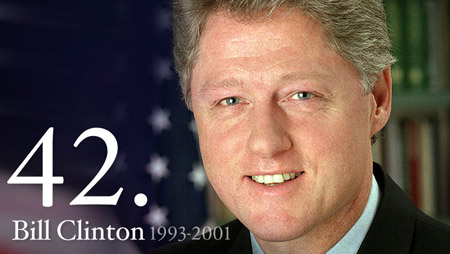
Democrats have essentially done the same thing with Bill Clinton. The 42nd president, who spoke last night, is the party’s elder statesman and touchstone. They remember the balanced budget, but forget that it was his treasury secretary who allowed numerous banking mergers in violation of banking rules that would soon be eliminated with Clinton’s support. They remember the strong economy, but forget that the growth was fueled by a tech-sector bubble. They forget that he kept Alan Greenspan on as Federal Reserve chairman, that he “ended welfare as we know it.” And they ignore the rise in income inequality that occurred during the 1990s – see the income inequality report put out by the Center for American Progress. Many people prospered during the Clinton presidency, but a whole lot of people did not.

An honest assessment of the Clinton years would take these things into account.

*  *  *

I have one other critique of this mythologizing that has nothing to do with Clinton and everything to do with how we’ve come to view the presidency. Rather than looking at the chief executive as an elected official who shares power with Congress and the courts, we expect the president to be our savior. Whether we are discussing Clinton, Bush, Obama or Romney, it is pretty clear that the direction of the country is going to depend upon our efforts as citizens to keep the government focused on what’s important to those of us in the lower 99 percent rather than what is important to the people who fund their campaigns. We have become complacent, assuming at exactly the moment when citizen-power is most needed to combat the money that has corroded the system.

Obama is not perfect. Clinton was far from perfect, but they are and were better than the other options on the table. Neither of them, however, matter much if the populace does not get involved to counter the money.

The founders inadvertently created a system that has the potential to empower the average citizen. (I say inadvertently because they were hoping to rein in the rabble, but the amendment system has allowed us to open the system up some.) The money people have hijacked the system with the help of the Supreme Court

  • Send me an e-mail.
  • Read poetry at The Subterranean.
  • Certainties and Uncertainties a chapbook by Hank Kalet, will be published in November by Finishing Line Press. It can be ordered here.
  • Suburban Pastoral, a chapbook by Hank Kalet, available here.
Early notes on the 2013 governor’s race

Polling released today offer some interesting numbers regarding the Christie administration. Widely viewed as a popular governor and a potential presidential candidate, it remains unclear whether Chris Christie can even win a second term.

As a Rutgers-Eagleton poll points out today:

Nearly two-thirds of New Jersey voters are skeptical of Gov. Chris Christie’s claim that the “Jersey Comeback has begun” — even though a plurality feels the state is heading in the right direction, according to a Rutgers-Eagleton poll released today

And voters are split on whether the governor deserves a second term.

Poll respondents say the state is heading in the right direction (48-41 percent) and Christie’s approval ratings remain high (49-40). But,

When asked if Christie deserves a second term, 47 percent said they’re ready to re-elect him and 46 percent said it’s time for someone new. 

This is not exactly good news for the governor. After all, he will be running in a blue state — the state has gone for Democrats at the presidential level five straight times and is likely to do so this year — and it has not elected a Republican to the U.S. Senate in 40 years. Democrats control both houses of the state Legislature and represent a majority of the state’s Congressional delegation.

Christie won election in 2009 with 49 percent of the vote, running against one of the most unpopular incumbents in recent history. Jon Corzine’s approval numbers were mired in the mid-30s throughout his re-election campaign, and he still managed to pull in 44 percent of the vote.

None of this proves anything, of course, but it does place today’s poll results in context while demonstrating the terrain in which Christie will be running.

I suspect that Christie is in the same position that Christie Whitman was in when she sought re-election in 1997. She had won a narrow victory over a wildly unpopular governor, was more popular with her national party than with voters in New Jersey and her party was losing much of the ground it had gained in 1990 and 1991. She won, narrowly, over a still relatively unknown Jim McGreevey and then left for Washington before her term was up.

The outcome this time, therefore, could be determined by Christie’s opponent, as much as it is by Christie’s own popularity and job performance. Stay tuned.

  • Send me an e-mail.
  • Read poetry at The Subterranean.
  • Certainties and Uncertainties a chapbook by Hank Kalet, will be published in November by Finishing Line Press. It can be ordered here.
  • Suburban Pastoral, a chapbook by Hank Kalet, available here.

Latest reporting

A couple of new pieces on NJ Spotlight by yours truly:

Plus, my piece on homeless camps is due in the October issue of The Progressive. Keep your eyes open for it.

  • Send me an e-mail.
  • Read poetry at The Subterranean.
  • Certainties and Uncertainties a chapbook by Hank Kalet, will be published in November by Finishing Line Press. It can be ordered here.
  • Suburban Pastoral, a chapbook by Hank Kalet, available here.

A victory for conservation

There are few things likely to be more effective in reducing our energy consumption than conservation. We can search for new fuels, spend millions trying develop clean coal technology, drill off the coast to lessen our reliance on foreign oil, but unless we find a way to cut down on the fuel we use, it is unlikely to matter.

President Obama seems to understand this. His administration unveiledplans for higher fuel-efficiency standards plans for higher fuel-efficiency standards that will “mandate an average fuel economy of 54.5 miles per gallon by 2025” and are designed to

increase the pressure on auto manufacturers to step up development of electrified vehicles as well as sharply improve the mileage of their mass-market models through techniques like more efficient engines and lighter car bodies.

Current rules for the Corporate Average Fuel Economy, or CAFE, program mandate an average of about 29 miles per gallon, with gradual increases to 35.5 m.p.g. by 2016.

The standards already have been criticized by Republicans who are referring to the Environmental Protection Agency as the Employment Prevention Agency because of its role in the creation of the new standards.

But the increase in the CAFE figure is long overdue. The Union of Concerned Scientists has been pushing for an increase for years and called the new standards “one of the biggest actions ever taken to reduce U.S. oil use and a huge step on the path toward halving the country’s projected consumption within 20 years.”

“This is truly a watershed moment. Twenty years from now we’ll be looking back on this as the day we chose innovation over stagnation,” said Michelle Robinson, director of UCS’s Clean Vehicles program. “These standards will protect consumers from high gas prices, curb global warming pollution, cut our oil use, and create new jobs in the American auto industry and around the nation.”

The UCS says the standards will

  • Cut oil use by as much as 3.1 million barrels per day by 2030 – roughly the amount we import from the Persian Gulf and Venezuela combined;
  • Save consumers $8,000 over the life of a model year 2025 vehicle, compared to the average vehicle on the road today, even after paying for fuel-saving technology; and
  • Reduce U.S. global warming pollution by as much as 570 million metric tons in 2030, the equivalent of taking a third, or 85 million, of today’s cars and trucks off the road for an entire year.

There is a potential loophole — “inclusion of a critical midprogram review period” sought by the auto industry.

The review, to be conducted at the end of the decade, is meant to assess the progress made toward achieving the 54.5 m.p.g. goal. The standard could then be altered if the manufacturers are struggling to meet the new guidelines.

One industry trade group, the Alliance of Automobile Manufacturers, said a “rigorous midterm review” was necessary to determine how consumers reacted to new models that had better mileage but might be more expensive.

“Compliance with higher fuel-economy standards is based on sales, not what we put on the showroom floor,” the alliance said in a statement.

Even with teh loophole — which won’t hit until around 2019 — it is likely that the auto industry will at least make an effort to get the job done and we’ll be saving a significant amount of oil and reducing our emission of carbon into the atmosphere.

  • Send me an e-mail.
  • Read poetry at The Subterranean.
  • Certainties and Uncertainties a chapbook by Hank Kalet, will be published in November by Finishing Line Press. It can be ordered here.
  • Suburban Pastoral, a chapbook by Hank Kalet, available here.