
Thoughts on ‘The Dark Knight Rises’

I’ve been trying to think of what I can say about The Dark Knight Rises aside from that it was a fun ride with some good scenes. It is a good film, but not a great film. It features odd plot twists and a boatload of action, though it slows in some spots.

It is thrilling and completely implausible (the cops keep walking into traps) and, unlike The Dark Knight, wholly dependent upon having seen the first two films of the franchise.
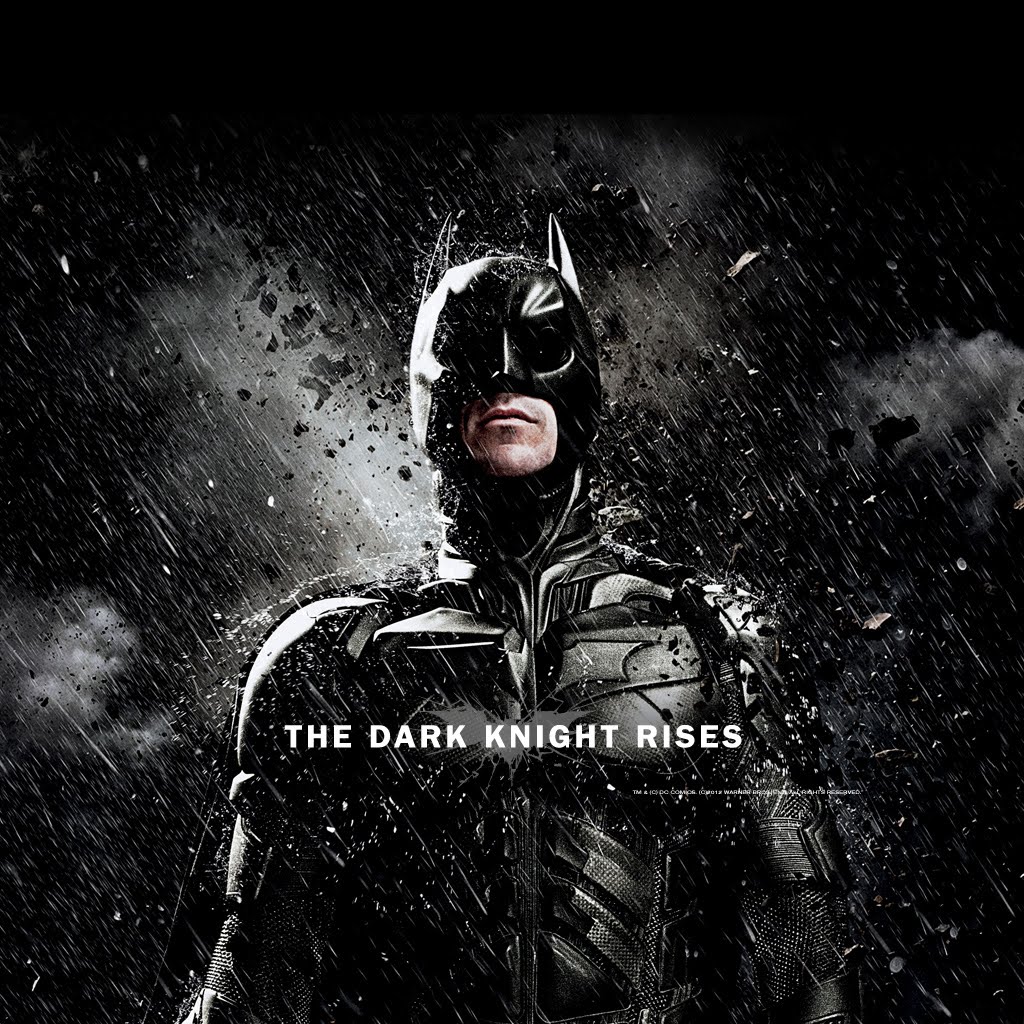
But that’s not what I’ve been thinking about. What strikes me about the film – and about the Dark Knight series overall – is its defense of elites and noblesse oblige. This is not foreign to the super hero genre, which posits the notion of a world in disarray and in need of a singular, super-powered individual to step up and save it.

What separates the Dark Knight Batman series from the other examples of the genre – The Avengers, Iron Man, the earlier (and inferior) Batman films of the ’90s – are several things: Bruce Wayne’s background (not only s he the scion of a rich family, but his father makes it clear during the first film that the family’s wealth creates an imperative for them to do things to help others) and this final film’s use of elements of the French Revolution (the citizen trials of the rich for their crimes against society presided over by the villain from the first film makes it clear that the director views the trials and the complaints as illegitimate).

One exchange stands out for me. Bain, one of the film’s chief villains, has taken over the stock exchange. Outside, the exchange’s manager implores the police to act, saying that it is not just the exchange’s money but everyone’s. A police officer responds that it isn’t his – he keeps his in his mattress – which leads the exchange manager to reply that the cop’s cash will be worth a whole lot less if the theft is successful.

It is a version of the argument the financial industry used in 2008 as the mix of misdeeds and bad bets joined to crater the economy. The bailouts followed, likely preventing further damage, but they came without any cost to the people who engineered the original failure.

This is pretty typical of the film’s overall argument. The Nolans consistently counter populist claims with elite defenses. In fact, The Dark Knight Rises posits a world in which elites do battle, in which only the elites have a say (the closest we get to an exception to this rule is with Catwoman and Blake, though they have little impact on the final outcome, which is all Batman).

I guess my reaction to the film is consistent with my reactions to all three films in the franchise and my reaction to most superhero films (aside from the first Sam Raimi Spider-Man), which can be boiled down to this: I enjoy the adrenaline rush, but I abhor the politics.

  • Send me an e-mail.
  • Read poetry at The Subterranean.
  • Certainties and Uncertainties a chapbook by Hank Kalet, will be published in November by Finishing Line Press. It can be ordered here.
  • Suburban Pastoral, a chapbook by Hank Kalet, available here.

Romney and the RNC play the race card

Four years ago, speakers attacked Obama for his lack of administrative experience, his history as a community organizer and his celebrity, while lauding the virtues of the small town (as opposed to the big city). They skirted the issue of race.

Not this year. Expect some ugliness this week as the Republican convention unfolds — thanks to the Romney campaign’s use of race to try to sway white voters to his side. Thomas B. Edsall explains:

The Romney campaign is willing to disregard criticism concerning accuracy and veracity in favor of “blowing the dog whistle of racism” – resorting to a campaign appealing to racial symbols, images and issues in its bid to break the frustratingly persistent Obama lead in the polls, which has lasted for the past 10 months.

The result is a campaign run at two levels. On the trail, Paul Ryan argues that “we’re going to make this about ideas. We’re going to make this about a positive vision for the future.” On television and the Internet, however, the Romney campaign is clearly determined “to make this about” race, in the tradition of the notorious 1988 Republican Willie Horton ad, which described the rape of a white woman by a convicted African-American murderer released on furlough from a Massachusetts prison during the gubernatorial administration of Michael Dukakis and Jesse Helms’s equally infamous “White Hands” commercial, which depicted a white job applicant who “needed that job” but was rejected because “they had to give it to a minority.”

The party’s original list of speakers — seven birthers — indicates that these recent attacks are part of a larger party strategy. As Carlos Galindo wrote in the Tuscon Citizen, the party has

bet it all on a platform of fear and racism. They have actually convinced many blue collar workers to go against what’s best for them. They use code words and phrases like “the welfare president”, “socialist”, “European style governing”, “the Kenyan”, and the most common phrase, “I want my America back.”

Their America? That’s a key phrase, because the romanticized past is really a white past, one that consigned blacks to segregated neighborhoods and segregated schools, that made some jobs off-limits to blacks and severely limited the ability of black Americans to prosper.

The nation has huge problems, but taking us back to a time of legal segregation and discrimination will not fix them.

  • Send me an e-mail.
  • Read poetry at The Subterranean. 
  • Certainties and Uncertainties a chapbook by Hank Kalet, will be published in November by Finishing Line Press. It can be ordered here. 
  • Suburban Pastoral, a chapbook by Hank Kalet, available here.

    Christie: The false prophet of responsible budgeting

    Add caption

    Gov. Chris Christie has been lauded in some circles as a straight talker. He tells the truth, these folks say (and before you accuse me of putting up a straw man, just read all the laudatory clips written about him in the past).

    But the reality is Christie is a fraud. I’ve made this point before, but with the governor set to give the keynote speech in Tampa at the Republican National Convention, and the national press about to fawn all over him, the critique had to be made by someone with a national reputation. Enter Paul Krugman.

    Krugman, the Nobel Prize winning economist and The New York Times’ most effecxtive op-ed writer, deconstructs Christie in a scathing column that makes it clear that he “talks a good (and very loud) game about his willingness to make tough choices,” but has followed through in a very selective manner.

    The governor was willing to cancel the desperately needed project to build another rail tunnel linking the state to Manhattan, but has invested state funds in a megamall in the Meadowlands and a casino in Atlantic City.

    Also, while much of his program involves spending cuts, he has effectively raised taxes on low-income workers and homeowners by slashing tax credits. But he vetoed a temporary surcharge on millionaires while refusing to raise the state’s gasoline tax, which is the third-lowest in America and far below tax rates in neighboring states. Only some people, it seems, are expected to make sacrifices.

    Christie would never admit to any of this and I suspect that the national press will fail to notice any of it — which is what they did when Christie Whitman became a national darling in the 1990s. So, expect the hero worship to continue.

    • Send me an e-mail.
    • Read poetry at The Subterranean.
    • Certainties and Uncertainties a chapbook by Hank Kalet, will be published in November by Finishing Line Press. It can be ordered here.
    • Suburban Pastoral, a chapbook by Hank Kalet, available here.

    Dog whislte or dumb joke? Doesn’t matter

    http://cnettv.cnet.com/av/video/cbsnews/atlantis2/cbsnews_player_embed.swfLet’s take Mitt Romney at his word and assume that his joke about birth certificates was just a joke. Let’s assume that there was no animus behind it, that it was not a calculated “dog whistle” comment designed to be red meat for the base.

    Even if you assume all of this, the bad joke should still alarm people. As with his critique of British Olympic preparations while on a trip through Britain, it is clear as Jonathan Alter is saying right now on Martin Bashir’s show on MSNBC, as I write this, that Romney is gaffe-prone and inept. He cannot go off script. Is that the man we want in the White House, dealing with allies and enemies alike?

    Personally, I don’t buy that this was just a gaffe. He’s talked repeatedly about how the administration is not patriotic enough, and has been willing to hang with some of the most racist elements of his own party. 

    • Send me an e-mail.
    • Read poetry at The Subterranean.  
    • Certainties and Uncertainties a chapbook by Hank Kalet, will be published in November by Finishing Line Press. It can be ordered here.  
    • Suburban Pastoral, a chapbook by Hank Kalet, available here.

      The market for war

      This was supposed to be the good war, the one most connected to the terrorist attacks on the Twin Towers 11 years ago. It was a war with support from both sides of the aisle, one built on an allegedly legitimate rationale. But no war is a good war. That is the lie that has allowed us to engage in an 11-year farce of deadly proportions.

      Roger Cohen, who supported the war in its infancy, tries to explain the failure today

      The untruths have been almost too numerous to chronicle, beginning with the great untruth that Saddam Hussein had weapons of mass destruction that justified the war in Iraq (where more than 4,480 U.S. service members died); and sliding into the smaller, no less lethal untruths about how Pakistan was an ally in the Afghan struggle, and global terrorism beatable on the battle field, and nation-building feasible in Afghanistan, and sacrifice in the cause reasonable when half of the United States was off at the mall shopping, and victory always — always — within reach
      Afghanistan is a country where President Obama appointed an able envoy, the late Richard Holbrooke, only to emasculate him; where the president, Hamid Karzai, has long manipulated Western succor to his private ends; and where the greatest emergent threat comes from Afghans in the uniforms of the security forces America and its allies are training to take over from them in 2014. The country is a bottomless pit of hypocrisies.

      Cohen reminds us that the numbers — 2,000 Americans dead in this war — seem small by historical proportions, but that is only because “We have sanitized war.”

      It is kept at a distance, hardly more real than a video game. The shopping continues (although less of late). When a milestone is reached — 2,000 dead — attention flickers up

      But otherwise the war seems far away unless you are from a military family. Pilotless drones do ever more of the killing. The thing about robotic warfare is you can watch Afghans get vaporized on a screen near Las Vegas and then drive home for dinner with the kids.

      The new mode of war has allowed us to go about our days without giving thought to what has been happening on the other side of the world. News of the war has fallen from the lead pages of the nation’s increasingly unread newspapers. It has little place in our televised news coverage or even on news Web sites.

      And it has been nothing more than an asterisk in the 2012 presidential race, a time when we should be debating the major issues of importance to the nation. In 2008, then-candidate Barack Obama cited his support for the Afghan war to prove he was not soft on terror, even as he reiterated his original opposition to the war in Iraq. His criticism of Iraq separated him from his chief Democratic opponent, Hillary Clinton, and from the Republicans, and encouraged the liberal wing of his party. And he has followed through in Iraq, essentially ending that debacle.

      But in Afghanistan, he has held firm. His plan for disengagement there is a farce that foresees significant American involvement well into the 2020s, and he has aggressively pushed to expand the so-called Af-Pak theater with drone strikes. He sent planes into Libya without Congressional approval and it remains unclear how he will respond as Syria unravels or whether he will keep “all options,” including military intervention, on the table regarding Iran.

      Mitt Romney is worse, but it is only a matter of degree when it comes to foreign policy. The dirty little secret is that there is no debate when it comes to foreign policy and Washington and its corporate sponsors prefer it that way. The men and women who fight have become literal pawns to be sacrificed on the alters of natural resources and markets; democracy has become a buzzword without meaning, whether we are talking about the United States or elsewhere.

      The situation in Europe, seemingly unrelated, is a case in point. The central bankers refuse to budge in their imposition of austerity reforms, regardless of what the people in Greece, Italy, Spain and elsewhere want, regardless of what austerity might do to the average working person.

      In the meantime, the Afghan war grinds on, we continue our courtship of those authoritarian regimes that embrace markets or buy into our anti-terror meme (see Ethiopa), and the public keeps its head planted firmly in the sand.

      • Send me an e-mail.
      • Read poetry at The Subterranean.
      • Certainties and Uncertainties a chapbook by Hank Kalet, will be published in November by Finishing Line Press. It can be ordered here.
      • Suburban Pastoral, a chapbook by Hank Kalet, available here.