Deficit reduction is code for corporate welfare

The so-called “fiscal cliff” we are careening toward may prove to be the best of a bad set of options, but with a bipartisan group of senators talking we could be facing something that proves to be far worse — an accelerated expansion of corporate control of our economy and the levers of power.

The cliff — the set of automatic tax hikes and spending cuts due to take place in January because of the Congressional stalemate over long-term deficit talks — is designed to be a massive hammer to force action at some point. They will be painful and are, in most cases, unwise, further gutting a safety net that has proven to be the weakest of backstops in our post-financial meltdown economy.

So, it would appear to be a good thing that talks are resuming. Except that framework of the talks is likely to be build around the Washington consensus — i.e., the nation’s primary social insurance programs (Medicare and Social Security) must be transformed. That is the upshot of the plan crafted by former Republican Sen. Alan Simpson, who has long been pushing to privatize Social Security, and Erskine Bowles, the former Clinton chief of staff who spent most of his life as an investment banker. (It is important to note that the commission the pair led, the National Commission on Fiscal Responsibility and Reform, could not agree on a plan and that the chairmen felt it necessary to present their own. The mainstream media — thanks, in no small part to Bill Clinton and President Barack Obama’s willingness to regularly conflate the chairmen and the commission — rarely make this point.)

But is this the case? Are we being bankrupted by excessive spending, especially on programs like Social Security and Medicare? Let’s set out the parameters of what we are really dealing with:

The economy continues to struggle, with unemployment hovering stubbornly above 8 percent and economic growth barely visible. This has not only left millions in dire straits, but cuts into tax revenues (if people are not working, they are not paying income taxes, or not as much as they otherwise might). This has contributed as much as anything to the large deficits we are facing.

Three other factors are at play here that have a much greater impact on deficits than the amount we spend on food stamps and housing vouchers:

  1. our foreign military misadventures in Afghanistan and Iraq, which are winding down, our excessive military footprint around the globe and the undeclared wars in which we are engaged;
  2. the Bush era tax cuts, which primarily benefit the wealthy
  3. and rising health costs.

These issues might be on the table, but have not been the focus of talks. Instead, deficit reduction has become code for so-called entitlement reform as the hyperbole surrounding the Social Security and Medicare programs makes clear.

The reality is that Social Security is not going bankrupt. The truth is, were nothing to be done at all for the next 25 years, the system would still be able to pay out about 75 percent of its benefits. Small changes in the program — a lifting of the income cap, for instance — would sure the program up without hurting current and future retirees or most current workers.

Medicare is a much greater problem. But again, the problem is not with the program; it is with the larger healthcare system, which has been designed to drive prices up rather than provide quality care. How can I say this? Simple, study after study shows that the United States is paying twice per capita than other industrialized nations for its health care, but getting inferior care. We still have millions who are without insurance and are forced to use emergency rooms or go without care. We have higher infant mortality rates, lower life expectancies and a huge racial disparity in care — and these are not isolated issues. In nearly every important outcome measure, the United States ranks in the lower half of industrialized nations.

To summarize: Each of us — every man, woman and child in this country — pays twice what they pay in most European countries but we get far less in return.

Now apply this to the Medicare issue. Medicare is far more efficient than the rest of our health system — only about 2-3 percent goes to administrative costs, which is well below the average for the private sector health insurance companies — but its customer pool is constrained. It is forced to serve a population that uses more healthcare and more costly healthcare than the population as a whole. Expand the insurance pool — i.e., offer Medicare to the rest of the population and the costs can be spread more evenly.

Will this require an increase in spending on Medicare? Yes. But that increase would be offset by a cut in the amount of money we give to private insurers — and it can be plausibly argued that it would result in a net savings.

But these are not the proposals that are on the table. Rather, the grand bargain we are likely to get will probably feature some mix of the privatization proposals that have been floating around Washington for years — plans likely to benefit the financial services industry (in the case of Social Security) and private insurance firms (for Medicare and Medicaid).

In many ways, deficit reduction has nothing to do with creating a sustainable level of government and everything to do with expansion of the corporate state. If we allow for the dismantling of regulatory structures and the privatization of the social safety net, who wins? Will it mean more jobs and better health care? Will it lead to a more secure retirement? Or, as I would argue, will it continue the decades-long redistribution of wealth from average Americans and the poor to the 1 percent and the corporations who have already come to control much of our daily lives, including our elections.

While it is clear to me that a Romney presidency — especially if it comes with both houses of Congress held by Republican majorities — will fatal, we should not pretend that a Democratic win on election night will avert disaster. Given the corporate proclivities of the Obama administration and many of the top Democrats in the House and Senate — as proven by the appointment of Bowles to co-chair the deficit commission, among others — our choice on election day appears to be between the immediate handover of power to the corporate state (via the GOP) or a slower, but no-less-certain handover (via the Democrats).

That is why the Occupy movement is so necessary. Our best chance to stop — and, hopefully reverse — the corporate takeover is through the energy of protesters and the creation of a mass movement that can serve as a counterweight to the corporate money that has skewed the system.

Tea Party supporters are correct when they say we have to take our country back. What they are wrong about is whose taken over.

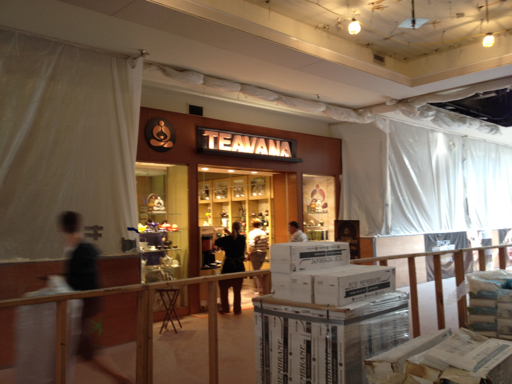
Under construction

Quaker Bridge Mall’s long overdue facelift is moving a pace. The Cheesecake Factory is open and busy. Macy’s rains an attraction, and now the inside is getting a makeover with some structural updates and new high-end stores.

The hope is that the new version of the mall can recapture a customer base that has abandoned it, leaving the mall a shell of its former self. Once a regional retail jewel, maybe it can regain that status.

Stay tuned.

The poet in the world

The poet H.L. Hix, whom I was lucky to work with briefly at the beginning of my MFA work at Fairleigh Dickinson, has been engaged in a wonderful project that uses the interview to do more than generate information.

In a series of dialogues — and that is what these interviews are, dialogues as rhetoric, as conversations and discussion starters — he is exploring the place of poetry in America and the place that America (its reality and mythology) have in the art.

In this interview, conducted three years ago with Mark Nowak, the questions of activism, politics and working-class consciousness get intertwined with formal concerns and questions of the place that the political might have in art.

Nowak, whom I focused on in the theoretical essay portion of my MFA thesis, crafts very nontraditional poems. Shut Up, Shut Down and, more recently the brilliant Coal Mountain Elementary, use documentary techniques — i.e., the use of documents and outside sources cut up and re-presented new with new meanings within the poem and as he poem, and a larger effort to create a work that can be said to mirror documentary film — to tell the stories of the victims of late capitalism.

Nowak does not shy away from the implications for the art, either.

HH: The frequency of numbers in these poems (in titles, etc.) might be construed in relation to the presence (actual and referential) of photography, as ways of signaling that these poems are not enclosed within an internal, alternate world, but in active congress with the “real” world. Is it apt to say that this book is not aimed at reflection as an end in itself, but at reflection as a call to action?

MN: “[I]n active congress with the ‘real’ world”: what a fabulous way to phrase it. Yes, and yes, definitely “reflection as a call to action” as well. I go back a good deal to Volosinov’s Marxism and the Philosophy of Language and his comment that “[a] sign that has been withdrawn from the pressures of the social struggle—which, so to speak, crosses beyond the pale of the class struggle—inevitably loses force, degenerating into allegory and becoming the object not of live social intelligibility [aka, the “real” world] but of philological comprehension.” In “Hoyt Lakes/Shut Down,” for example, I was experimenting with rendering Marx’s superstructure/base through poetic form—an expansion of the haibun, really—where the “superstructure” above is grounded in a very precise economic number, i.e., the exact number of people who lost their jobs in each and every Iron Range town when the LTV mine closed. In Coal Mountain I started with a similar question/problematic: how could I render what I think is a significant new development in labor organizing, transnational social movement unionism, in poetic form.

As both Hix and Nowak point out, this overt interaction with activism often is met with sneers in the art world, though it is an important emotional and intellectual strand that must be represented in the work we produce.

This is something I’ve long struggled with: What is the proper way to integrate my writing selves, to allow — no, require — the poet and journalist in me to become one? As a journalist, how do I bring in the poet part of my writing self to bear without violating the basic rules and conventions of the trade? And, perhaps more difficult, how do I use and integrate the journalist’s tools into my art?

One might argue that they are separate spheres, that it would be best to maintain the separation, but I find that disingenuous. I am a journalist, columnist and editorial writer. My days are consumed with these efforts. To keep them from my art would be the same as asking Joe Montana not to roll out of the pocket because of some narrow definition of what makes a good quarterback.

What Nowak talks about, and what Hix’s project makes clear, is that the poet must engage his or her world. That world can be inward-looking or externally focused, but there has to be engagement for the art to mean anything.

Jennifer Moxley, in another of Hix’s interviews, offers one of the best explanations of this that I’ve come across, so I’ll close with her words on the subject:

For me, poetry is a conversation back through history, forward into the future (Whitman: “I consider’d you long and seriously before you were born”), and with the present as well. I am influenced by Creeley’s sense of “company,” and Duncan’s “responsibility is to keep the ability to respond.” In this isolated and isolating art, I am comforted by the belief that a “conversation” can take place through literature, across time, as it were. I feel this is a foundational aspect of the art. Dante revivifies Virgil so they may talk. Clearly the poet would not have bothered if Virgil had not spoken to him first. Our works are invitations, often rejected, despite which fact they send their signals still. I cannot accept that I must “make do” with what my historical moment has on offer, nor that I should be moved by something I read and not manifest that feeling in a response, and a wish to so move others.

Another aspect of “poetry as conversation” emerges through my definition of lyric poetry. I have written on this, so will only summarize here: lyric makes real the response to the social conversation for which there is no space or permission, it is the voice of the silenced interlocutor, formally framed and decorated so as to escape censor. Thus conversation in poetry need not be wanted, or shared. It can be, and often is, a provocation.

From green to dark red

This story in today’s edition of The New York Times offers an example of how far to the iChat he national Republican Party has moved. Mitt Romney, as governor of Massachusetts, not only pushed through health-insurance reform that he now disavows, but was a leader on environmental causes — which he also has abandoned.

Romney, in his earlier incarnation, was very much an old-school liberal Republican — think Jacob Javitz, Millicent Fenwick or Mitt’s dad George Romney. But when he opted to run for president, things changed. And they changed because he understood he had no shot at the nomination unless he jettisoned his more enlightened views and dove into the muck of his party’s no-nothing base.

This shift is not only an indictment of both Romney and the GOP, but also of our larger political culture. We have a former Republican pragmatist turned rightist ideologue challenging a Democrat who has governed as a moderate Republican but is derided by the right as a socialist. The distortion this represents means that it is impossible for us to have an honest discussion of the issues and the future.

It also is an indictment of the two-party system and a reminder that we need multiple voices and parties, and a system in which these small parties can flourish (fusion voting, instant runoff, public financing, etc.).

Neither major party has a tent big enough to contain the multitudes of America. It is imperative that we erect more and bigger tents to ensure all of us can be heard.