
Court: Give schools what they deserve

A special master appointed by the state Supreme Court has found that education cuts pushed through by Gov. Chris Christie — and ultimately approved by the Democratic Legislature — violate the state’s constitution.

The cuts, which ignored Jon Corzine’s funding-reform law, had a disproportionate effect on low-income students, according to the master.

The ruling sets up a showdown between the governor and the court — the court, according to experts quoted by The Star-Ledger, is unlikely to ignore the findings of its own appointed master — that we have not seen since the court shut down the schools until the Legislature relented and passed the state’s first income tax.

The court decision puts the basic question in front of the public: What is the role of money in education? The answer, I think, is yes.

Given that there are plenty of studies that show that the best predictor of educational success is socio-economic status, meaning that communities that lack resources have the greatest trouble in providing quality schools. The only way we can offset the financial advantages that rich school districts have is by giving extra money to the poor ones — which rarely is enough to offset the vast array of other problems that hamper educational attainment.

You cannot expect a student who faces the danger of gunfire and gangs, hunger, lack of heat, broken families, etc., to perform at the same level as a kid from the suburbs, even a poor kid from the suburbs. The advantages that a kid gets in Cranbury, South Brunswick, Maplewood and Morris County are visceral and cannot be offset by charter schools, teacher accountability, high-stakes testing and all of the other gimmicks we have turned to as a way to avoid spending the necessary money to make up for the gap.

We should be striving for equity of opportunity, which we have basically abandoned.

For now, we are going to fight over where the money is going to come from to meet the court’s requirement that we actually pay for what we said we were going to pay for.

  • Send me an e-mail.
  • Read poetry at The Subterranean.
  • Certainties and Uncertainties a chapbook by Hank Kalet, will be published in November by Finishing Line Press. It can be ordered here.
  • Suburban Pastoral, a chapbook by Hank Kalet, available here.
An elegy for Wayne

A close friend died early this morning. This is for him and for those of us who loved him:

ELEGY: FOR WAYNE KRUGER, 1962-2011

Bombs fell in Baghdad that night, and all eyes were on the small screen
above the bar in a tavern that was demolished by mistake years later,
and what should have been a giddy chance to say goodbye and good luck
as you ventured west to the Rockies and a new start
became a solemn ceremony laced with uncertainty.
That war lasted just weeks, but never really ended, flaring
back up a dozen years later and still smoldering as the bombs
began to fall on Tripoli, hours before Bill called to tell us you were gone,
around the time that you left us. These things happen in threes is what they say, as if the dead
demand company in their travels, so when Annie heard about her Aunt Rae,
who died at ninety-seven a day before you were to go, it seemed to confirm
what we’ve known since Bill called with the news of your tumors:
It was when and not if, not maybe, and even the smallest bits of good news
provided in e-mail by your wife to the world were no match for the inevitable.
It all happened too quickly – a cliché, I know, but it did and I don’t give a damn
about the cliché right now because it all went down too quickly for any of us to comprehend.
And yes, too far away too to understand or say goodbye,
though distance is just physical and a piece of me feels
as if you’re still around the corner, as if we could meet at the Hub
and drink pitchers before driving to New Brunswick to throw
rice at the movie screen as Brad and Janet get married and drive off
into the sordid world of Dr. Frank-N-Furter.
One night, we stopped for drinks in the bar next door, the Stagecoach,,
Where the band played twisted, fevered jazz, the four of us the only white kids in the place
aside from a vibes player leading the musical assault.
We drank and left and laughed then shouted “asshole” at Brad on the screen
as sweet transvestites danced on the Arts Cinema stage.
On another night, you climbed the hill to the rail tracks
above the parking lot behind the theater –
I don’t remember who climbed with you but I do remember
the train whistle and someone yelling your name and the terror
that gripped my gut until you emerged from the darkness with a drunken laugh.
We were young, of course, and stupid and never thought of the consequences,
and I guess we were lucky to have gotten through all of that and, yes, to make a life,
which is all that we can ask of ourselves, to make a life and live it and be happy.
And I think of the tracer fire on the television that night
and the bomber planes over Libya tonight and question whether
anything has changed, whether it can, and know that so much has,
that you have left us, like Tommy and Glenn did before, too soon way too soon,
and that none of these words can do justice to your memory,
or the place you held in all of our hearts and souls.

  • Send me an e-mail.
  • Read poetry at The Subterranean.
  • Certainties and Uncertainties a chapbook by Hank Kalet, will be published in November by Finishing Line Press. It can be ordered here.
  • Suburban Pastoral, a chapbook by Hank Kalet, available here.
The mirage of acceptable risk

The nuclear disaster in Japan — caused by a historic earthquake that triggered a tsunami — should be calling into question the growing consensus that nuclear power can be a safe and cost-effective energy source that can allow us to move away from fossil fuels.

We have been hearing lots of talk about acceptable risk and cost-benefit analyses — a Slate podcast had left and right in agreement opposing alarmist overreaction.

Floyd Norris, in The New York Tomes, warns against the complacency that the acceptable risk mantra can cause.

Each case — a collapse of house prices and a cascade of problems threatening a large release of radiation — was viewed as so improbable that it could be virtually ignored in considering risks. Those who counseled otherwise were viewed as alarmists.

What was not considered sufficiently, perhaps, is just how serious an unlikely risk may be. If it is bad enough, the risk may not be worth taking, no matter how good the odds. There is a reason people do not play Russian roulette, even if the odds are highly favorable. It is a game you lose only once.

And that’s the issue — or one of the issues. When a nuke plant fails, even if it is rare, the fallout is a massive human toll, in immediate deaths and longer-term damage. That to me is unacceptable.

Lines in the political sand

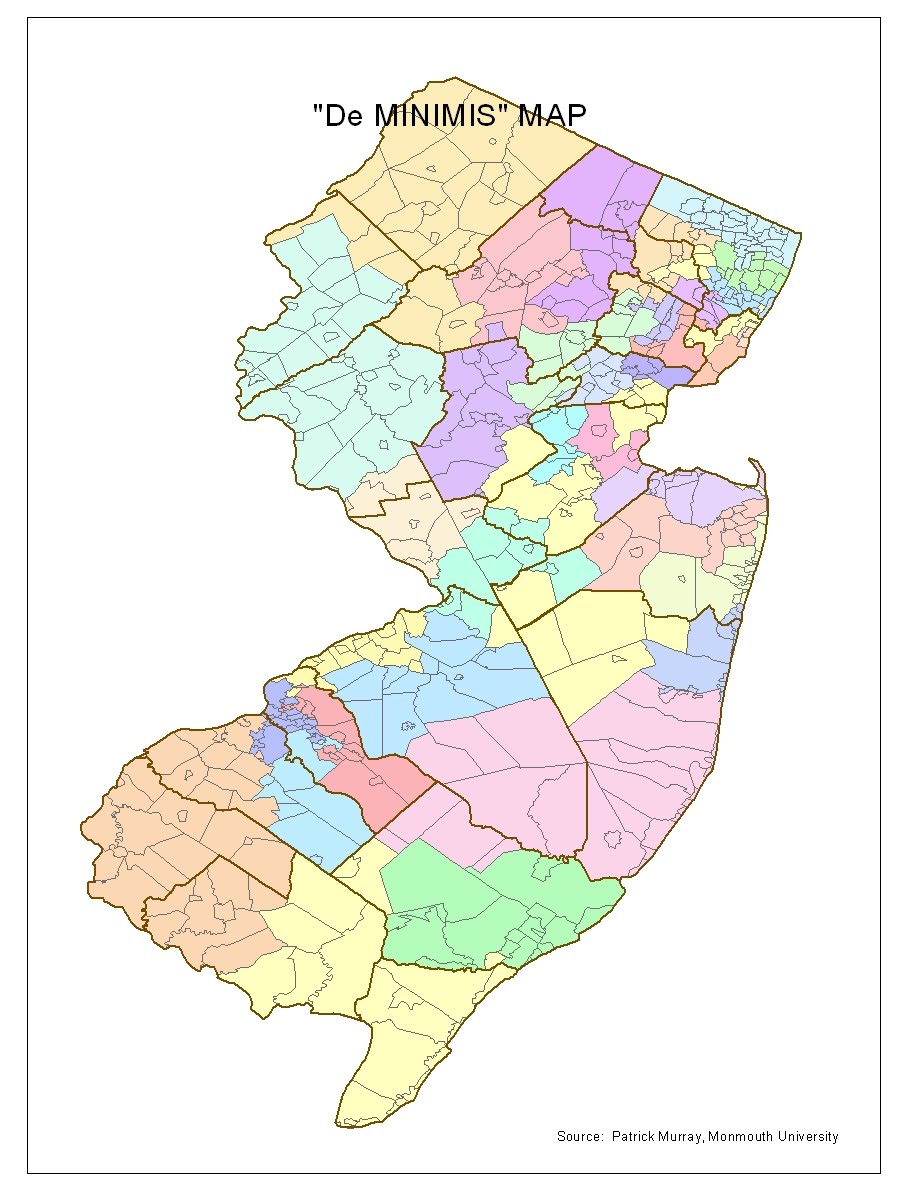
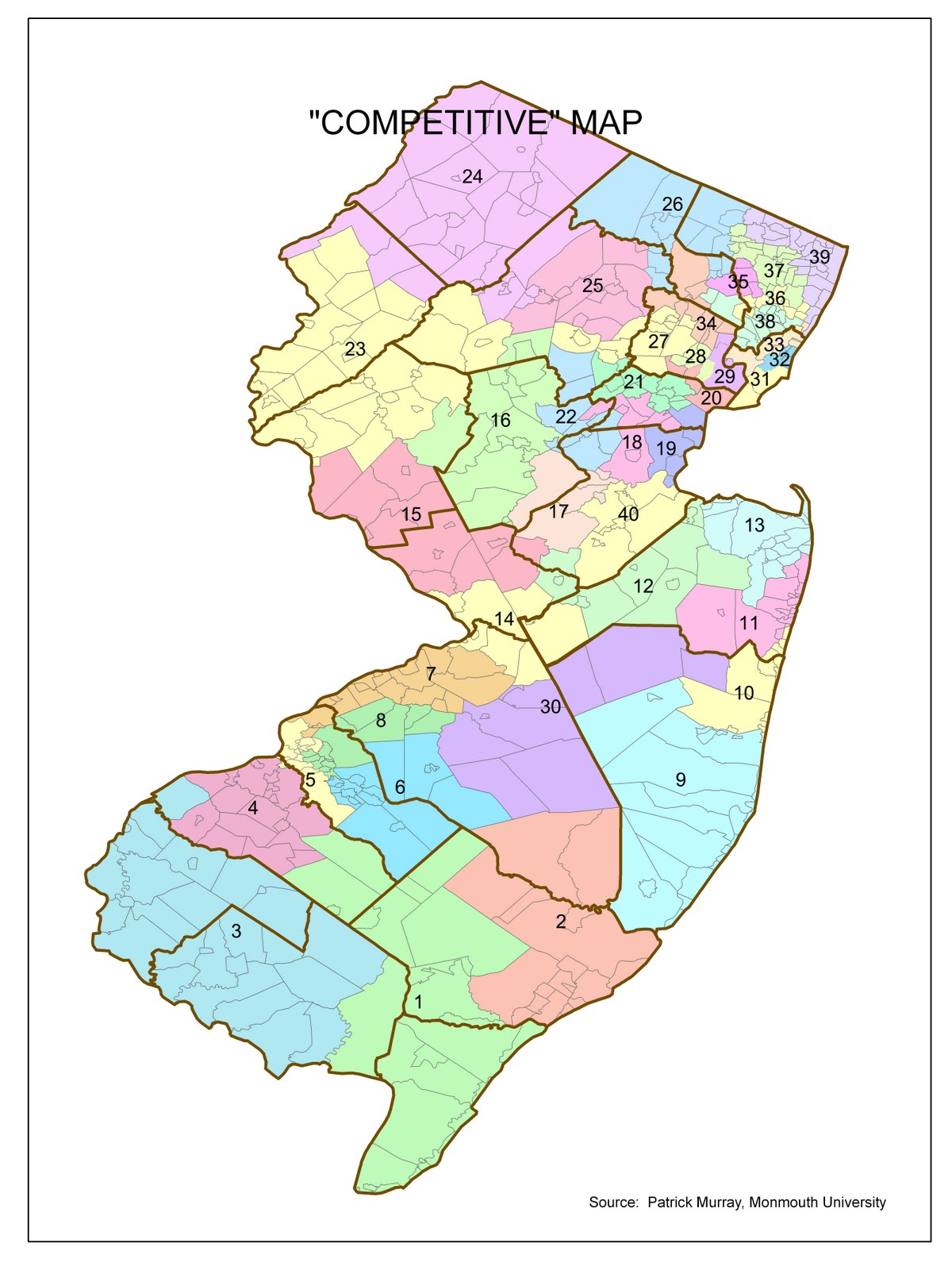
The lines are going to shift. That much we know. And once they do, it is likely that the Democrats will still control a majority of legislative districts in the state — that’s what Patrick Murray thinks, anyway.

The map he included with his latest blog entry — one based on a memo purportedly distributed by Alan Rosenthal, the Rutgers professor who will be the deciding 11th vote on the redistricting commission.

Murray says that Rosenthal has set his sights on stability, meaning that he will push the commission to avoid large-scale changes. The memo, he says, outlines five basic standards: population range, contiguity, compactness and avoiding municipal splits, and “contiguity of representation.’

Taken together, Murray says, the standards “allow for very little change to the current map.” And that, he says, is consistent with Rosenthal’s writings. He calls this believe “the money card in Rosenthal’s standards”:

Rosenthal defines this as incumbents facing a familiar electorate. In other words, incumbents should be drawn into districts where the majority of voters are already represented by them. You could also call this the de minimis rule – any change should not be consequential to the current system as a whole. Anyone who has worked with Dr. Rosenthal or read his published works on state legislatures will not be surprised by how much he values this type of continuity.

The problem, as Murray points out, is that Rosenthal has little interest in competitiveness (neither party is interested in competitiveness; they would prefer to see uncompetitive districts that protect as many of their own as they can draw). In a state with few competitive districts — the 14th, the 12th, maybe one or two others and this assumes a rather loose definition of competitive — that leave entrenched power in place.

Power shifts are rare in the state — Democrats took control in the 1970s after Watergate and Republicans took control temporarily in the early 1990s in reaction to the Florio tax hike and watched their majority slowly slipped away.

The redistricting discussion is treated as a partisan debate, but it should be viewed as a chance to improve representation, to expand democratic opportunities. If that means a shift in party power, then so be it.

Locally, it appears, the 12th, 14th, 15th, 16th, 17th and 18th districts — which cover most of central New Jersey — are likely to see significant change. South Brunswick is likely to be moved, as is Monroe, but it is unclear where they will end up. If Plainsboro stays put — and it should remain connected to West Windsor — then Linda Greenstein will be losing a large chunk of her voters. South Brunswick’s power could grow if moved to a district that includes the other Brunswicks, because it would mean most of the towns would be about the same size.

The “De Minimus” map I’ve included with this post has South Brunswick, Monroe, East Brunswick and Franklin making up a new district. What’s left of the current 14th would be filled out with East Windsor, Hightstown, Robbinsville and Millstone; the 15th would get southern Hunterdon County and so on.

The more competitive map favored by Murray (left) would pair Hamilton and Trenton in a new 14th filled out with parts of Monmouth and Burlington counties; South Brunswick would move to the 17th with Franklin and North and New Brunswick; East Brunswick, Old Bridge and Monroe would make up part of a new 40th district.

Is this better? Hard to say. It certainly shifts more bodies around, but does it create better representation? Murray thinks so.

In any case, maybe the lines mean a lot less than we think. Maybe we just need a better class of candidate.

  • Send me an e-mail.
  • Read poetry at The Subterranean.
  • Certainties and Uncertainties a chapbook by Hank Kalet, will be published in November by Finishing Line Press. It can be ordered here.
  • Suburban Pastoral, a chapbook by Hank Kalet, available here.

Overreacting and the First Amendment

Protesters from the Westboro Baptist Church are not my favorite people in the world, but they have the same First Amendment rights as the rest of us regardless of the nonsense they spew or where they spew it.

But are there limits to their rights to protest — including how close they can get to their targets?

A Maryland congressman believes the answer is yes. Dutch Ruppersberger, a Maryland Democrat, “introduced legislation that would prohibit protests five hours before and five hours after military funerals, and force protestors to gather at least 2,500 feet away from the event.”

The rules, he says, “would preserve the protestors’ right to free speech without harassing the military families.”

“I didn’t like the Supreme Court decision, but I understood it,” Ruppersberger said. “But the court has recognized the right to regulate the time and place of those protests — if it’s reasonable. And I think it’s reasonable to have these families come and go to the funeral without being impacted by the protests.”

The rules, however, would render any protest moot by pushing protesters about a half mile away from their targets and using time restrictions to delink the protests from their targets. So while restrictions might be permissible, these would seem to be extreme and designed to strip the protests of their effectiveness.

Federal law already imposes restrictions on protests at military cemeteries — one hour and 500 feet — that are far less onerous and do a better job of balancing free-speech and assembly rights against the right to privacy, which is the conflict at the heart of this debate.

Any infringement on the First Amendment must be limited and must not violate its spirit. The Ruppersberger bill goes too far.
 

  • Send me an e-mail.
  • Read poetry at The Subterranean.
  • Certainties and Uncertainties a chapbook by Hank Kalet, will be published in November by Finishing Line Press. It can be ordered here.
  • Suburban Pastoral, a chapbook by Hank Kalet, available here.