
Why I’m pro-choice

I am pro-choice. I believe women have the right to determine the future of their bodies, to determine whether they should conceive a child and whether, should they become pregnant, to bring that child to term. I believe that they have a right to contraceptives and access to abortion and that both should be treated like other healthcare options.

I also understand and can respect the arguments made by many right-to-lifers, those who are committed to the belief that life begins at conception. I respect their view, but I find their arguments wanting. They are couched in a kind of certainty that is impossible, and they show little concern for the impact on others that their arguments imply.

Any debate over abortion has to consider two issues: When life begins, and who has control over women’s bodies. The first question, for me, is impossible to answer. There tend to be three potential answers: that life begins at conception, that it begins when the fetus is viable outside the whom; and that it begins only at the moment of birth.

Science is only nominally helpful on this — we can point to scientific arguments in favor of all three options, but we do not have consensus. And we can’t. The reason is that the meaning, the definition, of life, remains in dispute, in flux. Religions disagree. Philosophers disagree. Is life a physical thing, purely of our bodies? Is it ephemeral and tied to the soul? Do we retain some kind of life outside our bodies?

This uncertainty, for me, is key. And it is why this decision has to be left in the hands of the people who are most affected: Women.

As I said, I understand the arguments: Catholics, evangelical Christians, other religious groups, may be certain of the answer here, but we do not live in a Catholic nation, or a Christian nation. We live in a nation of secular laws that are predicated on the notion that no single religion or religious tradition should hold sway. My reading? No woman should be forced to abide by rules set by a religion to which she does not subscribe, and no religious should be able to impose rules on the rest of us.

I write this today, because thousands are in Washington today at the March for Life, and because Vice President Mike Pence offered these words: “You know, I have long believed that a society can be judged by how we care for our most vulnerable – the aged, the infirm, the disabled, and the unborn.” Not the poor. Not women. Not victims of domestic or other violence. Not women and men fleeing war and economic location. Not the condemned. Just “the aged, the infirm, the disabled, and the unborn.”

Pence, of course, is a hypocrite and an extremist — as are many on the pro-life side. Pence supports the death penalty (unlike the Catholic Church, which views capital punishment as a threat to life), He is willing to attach strings to state assistance for the poor, essentially telling them that their life has less value than the rest of us. (Testing welfare recipients for drugs to get aid but not the rest of us when we get far more in government benefits than the average poor person is the height of disconcern.) He approves of discrimination against the LGBTQ+ community, has backed military interventions, and so on.

This is where my respect for many pro-lifers’ arguments comes to an end. Life is sacred, you say, but you prioritize life, you make the woman’s life less valuable than the life of those not yet born. Kill the prisoner, drop the bomb, withhold help from the drug-addicted — you are ranking lives, you are judging some to be less valuable than others. You are saying, if not explicitly, that some lives are less worthy, less sacred, or perhaps not sacred at all.

I don’t to have the answers on these questions, but I try to come to them with humility, with a sense that, maybe, just maybe, I could be wrong. And because of this, as I said, I have to let the people most affected, the ones who have to weigh the various options, have the final say.

Send me an e-mail.
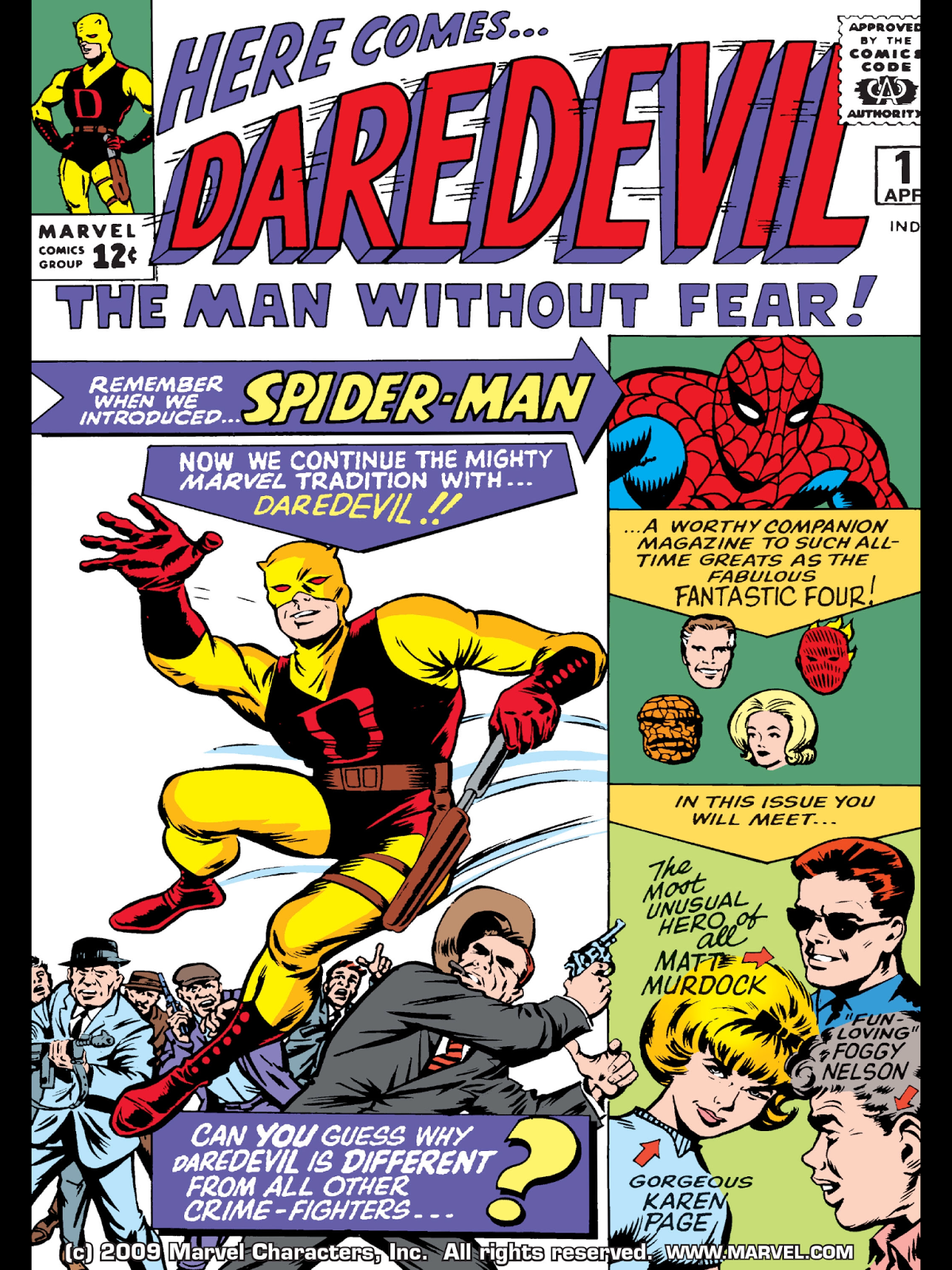
How Matt Became Daredevil

I wrote this poem several years during one of my MFA modules at Fairleigh Dickinson. We were having a discussion about prompts and topics, and my mentor Kathleen Graber mentioned something about using comic books or superheroes as a possible jumping-off point for the creative process. I honestly don’t remember the specifics, but this poem was the result:

HOW MATT BECAME DAREDEVIL
(Listen to the poem)


He knew he was more
than the shirt-tail-tucked kid

who’d stay after class
and pound erasers.

Picked last for sports,
left to watch as the kids

banged line drives deep
beyond the infield in summer.

Pressed into lockers,
beat bloody in the back of the gym.
Maybe the radioactive liquid
that blinded Matt Murdock
in the comics would spill
from a passing truck,
heighten his senses,
and he’d then scale the walls
of his apartment house,
and chase the villains
across the city’s rooftops.

The poem obviously plays off Daredevil’s origin story. Young teen Matt Murdock, living in Hell’s Kitchen, saves an old woman who is crossing the street from an oncoming truck and, in the process, injures himself and gets doused with a liquid (depending on the version, it is radioactive, or toxic in some other way). He is blinded, but also empowered. His remaining four senses take over — which is not unusual — but the extent to which his hearing and touch, in particular, are heightened are superhuman. Murdock, a brilliant student, is the son of a boxer, a real Joe Palooka-type who gets beat down often and is in bed with the mob. Some versions present the elder Murdock being violent at home, but most show a strong bond between dad and son, a father who is protective and sacrifices a measure of integrity — by throwing fights — to put food on their table. Jack Murdock is eventually killed when he refuses to throw a last fight and Matt is left on his own.

Murdock eventually develops unparalleled acrobatic and martial arts skills, which he combines with his superhuman senses (his touch and hearing give him a radar-like ability to sense what is coming) to become a crime fighter, defending the downtrodden of his low-income Hell’s Kitchen neighborhood.

The nut of the origin story, of course, is the transformation from good-hearted and altruistic, but incredibly vulnerable kid (poor, blind, eventually orphaned) to defender of the downtrodden, both in costume and as a lawyer representing tenants, the cheated and the accused.

My poem, of course, plays off this transformation in the form of a wish, of desire, and I like to think that its power (if it has any) derives from the off-page understanding that it is a dream that will be left unfulfilled.

I presented the poem to my class earlier this week. It’s a freshmen composition class that uses graphic novels to explore the questions of ethics and morality and that I use as the basis of my writing assignments. I’m not in the habit of using my work in class, but I thought this poem — and a poem tied to Spider-Man fit the thematic concerns of the class. (I will be teaching another 10 or 12 poems, including those by Sherman Alexie and Lucille Clifton.)

I projected the poem on a screen and read it aloud, which opened it up not just for my students, but for me — I saw things in the poem that had not been apparent, and they found and talked about things I’d not realized were there when I wrote it.

The big one was that the first half, the description of the bullied student, a description based partly on me (I had some experience with being the brunt of bullying, for instance, and I was never a great athlete in organized sports, though I was usually one of the captains when we’d pick sides in the park) and partly on the experience of friends. The students picked up on the bullying theme — no surprise at a time when bullying has been elevated as an issue that administrators and teachers have to take seriously.

But as I read it, I had the realization that the first half describes Peter Parker — Spider-Man’s alter ego — who was bullied until being bit by the radioactive spider. In fact, there is an element of many of Marvel superheroes’ origin myths in this poem — Murdock and Parker, but also the scientist Bruce Banner (Hulk) and soldier-wannabe Steve Rogers (Captain America). The students picked up on this and led the discussion — day one of class, mind you — and made the point that this also serves as the origin story for man super villains (and rich bad guys in other media).

The question, then, which my poem does not explore, but that is at the heart of the Daredevil, Spider-Man and Captain America origins, is how the influence of something good imposed from the outside — a parent, a friend, an aunt and uncle, a sense of patriotism and humanity — can prevent the buried rage from taking control. Daredevil and Spider-Man engage in some questionable actions — Daredevil seeks revenge — but ultimately settles on a path of good. They easily could have tipped in the other direction.

As for how this might affect my own writing: It’s a reminder that writing begins as a private act, but ultimately ends as a public one. The reader is a participant in creating meaning, and while we don’t compromise to please the reader we have to recognize the roll the reader will play when our poems, stories, reported articles make their way into the real world.

Immigration orders and the xenophobia in our hearts

Elections have consequences. If we didn’t know that before, the fist six days of the Trump administration are making it abundantly clear.

The latest salvo came today in the form of two executive orders cracking down on undocumented immigrants. The first clears the way for construction of a border wall — a colossal boondoggle that is popular with the anti-immigrant crowd, but that makes little sense from a security standpoint — not to mention the damage it will do to the environment and the potential problems it could create in our relationship with our southern neighbor. It also ends what anti-immigration groups call “catch and release,” the capture of non-criminal aliens at the border who are then released pending a court appearance.

A second order goes after so-called sanctuary cities, or municipalities that refuse to cooperate with federal immigration authorities on detainers (requests to keep someone in jail while his immigration status is reviewed) or on the sharing of information. Newark, Jersey City, Princeton, East Orange, and Maplewood have proclaimed sanctuary or welcoming city status, and other New Jersey communities are likely to follow suit. The order essentially threatens these communities with a loss of federal funds — housing, health, environmental, etc. — hoping to force them to back off and to let local police be turned into deputized immigration officers.

Seems innocuous, right? It isn’t. As Ari Rosmarin of the ACLU-NJ told me today (for a story that should run in NJ Spotlight tomorrow), it’s an underhanded way for Trump to keep his enforcement promises — which will require a massive increase in manpower — without hiring new agents. The problem, however, is that already strapped local forces will be further strapped.

And more is coming, as reported by Vox:

The four remaining draft orders obtained by Vox focus on immigration, terrorism, and refugee policy. They wouldn’t ban all Muslim immigration to the US, breaking a Trump promise from early in his campaign, but they would temporarily ban entries from seven majority-Muslim countries and bar all refugees from coming to the US for several months. They would make it harder for immigrants to come to the US to work, make it easier to deport them if they use public services, and put an end to the Obama administration program that protected young “DREAMer” immigrants from deportation.

Vox describes the six orders, taken together, “one of the harshest crackdowns on immigrants — both those here and those who want to come here — in memory.” It’s also a conservative wet-dream version of comprehensive immigration reform — all enforcement and deportation, an ugly reminder that this nation of immigrants has always also been a nation of xenophobia and racism.

Read the history of the end of the 19th and beginning of the 20th Century. Jews, Italians, Poles — all seen as dangerous parasites bringing infectious disease and dangerous ideologies, all presented in language that eerily echoes the nonsense we repeatedly hear today about Latinos and Muslims.

The reality is that Trump is not so much a crazy anomaly as a throwback. He is not the nation’s crazy uncle, so much as he’s the suppressed Id, all the ugliness of our history, all our worst instincts, the truth buried under the lies we tell ourselves in an effort to prove how great and exceptional a nation we are.

Send me an e-mail.

The alt-truth era

And it’s true we are immune
When fact is fiction and TV reality
And today the millions cry
We eat and drink while tomorrow they die
— U2, “Sunday, Bloody Sunday”

That we are in an era of double-speak — Orwell’s phrase from his novel 1984 — is not exactly a surprise. American politicians going back to at least Eisenhower have been pretty good at the presidential lie.

  • Johnson used the trumped up Gulf of Tonkin incident to widen the war in Vietnam.
  • Nixon told the world that he was not a crook, even as his administration and re-election campaign were trying to rig an election that he was going to win.
  • Reagan shipped arms to Iran in violation of an embargo, trading the arms for American hostages even as he continued to tell the American public that the United States did not negotiate with terrorists or terrorist regimes.
  • Clinton did not have sexual relations with Monica Lewinsky or inhale.
  • And George W. Bush pushed the lie that there were WMDs in Iraq so that he could invade.

In some ways, the presidential lie is an American tradition — in fact, Eric Alterman wrote an entire book about it.

None of these presidents has been quite so brazen as the 45th president has been during his first six days in office. Donald Trump has taken the presidential lie to new heights. He lies about easily verifiable facts, about the smallest and most inconsequential things. And then he — and his press team — lashes out at the media for uncovering the lies.

The presidential lie has always been dangerous to our democracy, and often it has had deadly results — millions of dead in Vietnam, Iraq, El Salvador and elsewhere, for instance.

But something about the brazenness of Trump’s lies stands out. The meme that has gone around — that Washington couldn’t tell a lie, Nixon couldn’t tell the truth and Trump couldn’t tell the difference — doesn’t really get to it. I think Trump does know the difference; he just doesn’t care. And what makes it so damaging, and potentially more damaging than what we are used to, is the sheer volume of mistruths being tossed around, the easiness with which he posits his own reality, with which he recasts the world in his distorted image. And, perhaps more chilling, it is the fact that his supporters are so willing to take him at his word.

We are entering a moment in which the sheer volume of lies is creating a new alt-truth by overwhelming those of us whose job it is to keep an eye on what politicians are doing, and by overwhelming the ability of average people to process the information that is being tossed at them. Most people do not have the time to do the hard work of verifying what they hear and read, especially if they are being subjected to information overload. Take the press out of the equation — by overloading the fourth estate AND attacking it, fostering a mistrust of the only people in our society with the time and skills to dig into the muck — and the lies get to stand.

Reality, then, becomes what the politicians, the Trump administration, say it is. We were able to battle back during the Bush era and — while I hope we can do the same today, and I plan to continue to do my part as journalist, writer, general pain in the ass to push back — I fear we are close to the tipping point.

Send me an e-mail.

Patriotism is prejudice

Here are a few sentences from today’s Charles Blow column in The New York Times:

At one point in the speech, Trump delivered the bewildering line: “When you open your heart to patriotism, there is no room for prejudice.” Patriotism does not drive out prejudice; to the contrary, it can actually enshrine it. No one was more patriotic than our founding fathers, and yet most of the prominent founding fathers were slave owners.

It perfectly encapsulates the false duality Trump and his supporters are attempting to foster. Patriotism and prejudice, as Blow points out, are not mutually exclusive. In fact, I would argue that patriotism is a form of prejudice: Patriotism posits the greatness of the nation in which one lives and implies that other nations are less vital or great. This does not mean that patriotism is a negative term, only that it carries a form of exceptionalism with it.

We often conflate the words prejudice and racism. They are related. But prejudice has a much broader definition; racism is based on hatred, while prejudice is prejudgment and can have both positive and negative connotations. I tend to be prejudiced in my response to the music of Bruce Springsteen, meaning I am likely to respond positively to new songs before fully considering whether they hold up.

Patriotism is prejudice. It starts from the assumption that your homeland, your nation, that our homeland, our nation, is exceptional, that it is great, that it has earned our pride and devotion. None of this precludes other kinds of prejudice. As Blow says, the founders were both patriotic and slaveholders. To take it a step farther — and to court controversy — Adolph Hitler could be described as a German patriot, someone who elevated love of country and a belief in its exceptional nature to its most extreme, hate-filled and violent ends. Hitler’s patriotism was the purest form of prejudice — and 6 million Jews and 5 million others were killed as proof.

What is just as troubling (I pointed this out the other day) is that Donald Trump’s false proposition — “When you open your heart to patriotism, there is no room for prejudice” — is being proffered within an “America First” framework. “America First,” remember, was the slogan of American Nazi sympathizers in the run up to World War II and is not the benign slogan that many Trump supporters seem to think it is.

Again, patriotism is not a bad thing — a love of country that is not blind to a country’s flaws, that seeks to push the country to be its best self is a positive thing, though we need to understand that there will be differing definitions of what is its best self. It’s when love of country precludes criticism of country, when it prizes unity as an end in itself, when it demands obedience to a flag or a leader that we are in dangerous territory.

Trump’s rhetoric has not taken us there — yet — which is why we have to remain vigilant.