It should surprise anyone how quick this graphic has arrived on the scene:
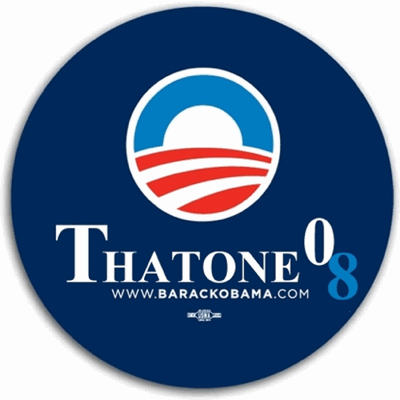 Isn’t it nice that John McCain has decided to add some levity to the campaign?
(Thanks to Bob at the Rix Mix for putting this on his site.)

It should surprise anyone how quick this graphic has arrived on the scene:
Isn’t it nice that John McCain has decided to add some levity to the campaign?
(Thanks to Bob at the Rix Mix for putting this on his site.)
I ran outside today. It was a bit chilly, but given that I wimped out yesterday and hit the treadmill I thought I’d venture into the breeze. I ran three miles — I think the cold did have an impact, which is why I cut it short.
iPod: Rachel Maddow
James Fallows, once again, gets it right in the immediate aftermath:
1) From a horse-race perspective, John McCain came in behind and losing ground, in the middle of a financial/economic panic that works against him, and therefore needing a big win. This meant either damaging and flummoxing Obama, or so outshining him in audience rapport, mastery of policy, and empathetic connection through the camera, that the debate could be presented as a turning point. None of that happened. (McCain’s best performance was at the end, rejecting a “Yes/No” question on whether Russia is an “evil empire.”) At this stage in the race, a tie goes to leader, and this was not a tie.
2) “That one.” Difficult to discuss. Unwise for Obama or his campaign ever to mention themselves. But creates an impression that may be impossible to erase.
3) The betting had been, including from me, that this Town Hall format would best suit McCain — the informality, the opportunity for jokeyness, the track record of handling such questions easily. To my eye, that betting turned out wrong, partly through McCain’s doing and partly through Obama’s.
On McCain’s side — to my eye — this meant was a range of references that collectively amounted to something like George H.W. Bush’s weary glance at his wristwatch during his own Town Hall debate with the vigorous young Bill Clinton 16 years ago. The forced and unsuccessful Bob Hope-style jokes, the repeated reference to the “overhead projector,” the prevalent allusions to an era much of the electorate considers past. Tip O’Neill, the early Reagan, the Marine disaster in Lebanon — important all, but dated-sounding in 2008.
And on Obama’s side, getting away with surprising aggression — being the first on the personal criticism, trying to shake up the format and have direct colloquy with McCain near the end, taunting McCain by talking about the “bomb bomb bomb” song, to my eye seeming physically confident in the way Bill Clinton did in that same 1992 Town Hall. A very different bearing from what we’ve seen from him in any debates this year. Also, in terms of modern stagecraft: Obama balanced his looks between the audience and the camera, so he seemed to engage both; McCain less natural in doing that. (And Obama said “you,” when speaking the audience in nearly every sentence; McCain much less frequently.)
There was a good piece by Nicholas D. Kristof in Sunday’s Week in Review section of The New York Times on the impact that race may be having on this campaign.
Kristof writes that Barack Obama’s race has probably cost the candidate about 6 percentage points in the polls, though not because of outright racists.
Such racists account for perhaps 10 percent of the electorate and, polling suggests, are mostly conservatives who would not vote for any Democratic presidential candidate.
Rather, most of the votes that Mr. Obama actually loses belong to well-meaning whites who believe in racial equality and have no objection to electing a black person as president — yet who discriminate unconsciously.
“When we fixate on the racist individual, we’re focused on the least interesting way that race works,” said Phillip Goff, a social psychologist at U.C.L.A. who focuses his research on “racism without racists.” “Most of the way race functions is without the need for racial animus.”
It’s not hate, necessarily, but a lingering distrust born of a long and terrible history of racism and discrimination. It is racism, but a racism based not on individual prejudice but on cultural attitudes.
I mention this because of a conversation my wife had tonight with a friend who said she distrusts Obama. Annie asked her why, which elicited one of those vague answers — “something about him,” “I just don’t know him,” etc. — that lacks substance, that comes from someplace other than a well-reasoned exploration of the candidates’ backgrounds or stances on the issues.
Our friend is not a racist, but I think that race is playing a part in her reaction to Obama. I fully believe that a white candidate with Obama’s resume, a white candidate named Smith or Johnson or Petty, would be getting quite a different reaction.
I’m watching MSNBC’s post-debate analysis and I’m not sure why. In general, the cable networks offer little more than facile nonsense — the kind of quick response that attempts to sound authoritative but really is just blather.
I know that, given my short missives on the blog, I could probably be accused of engaging in this kind of stuff. But I was just offering brief thoughts. I’ll wait until tomorrow to offer more substantive analysis.

