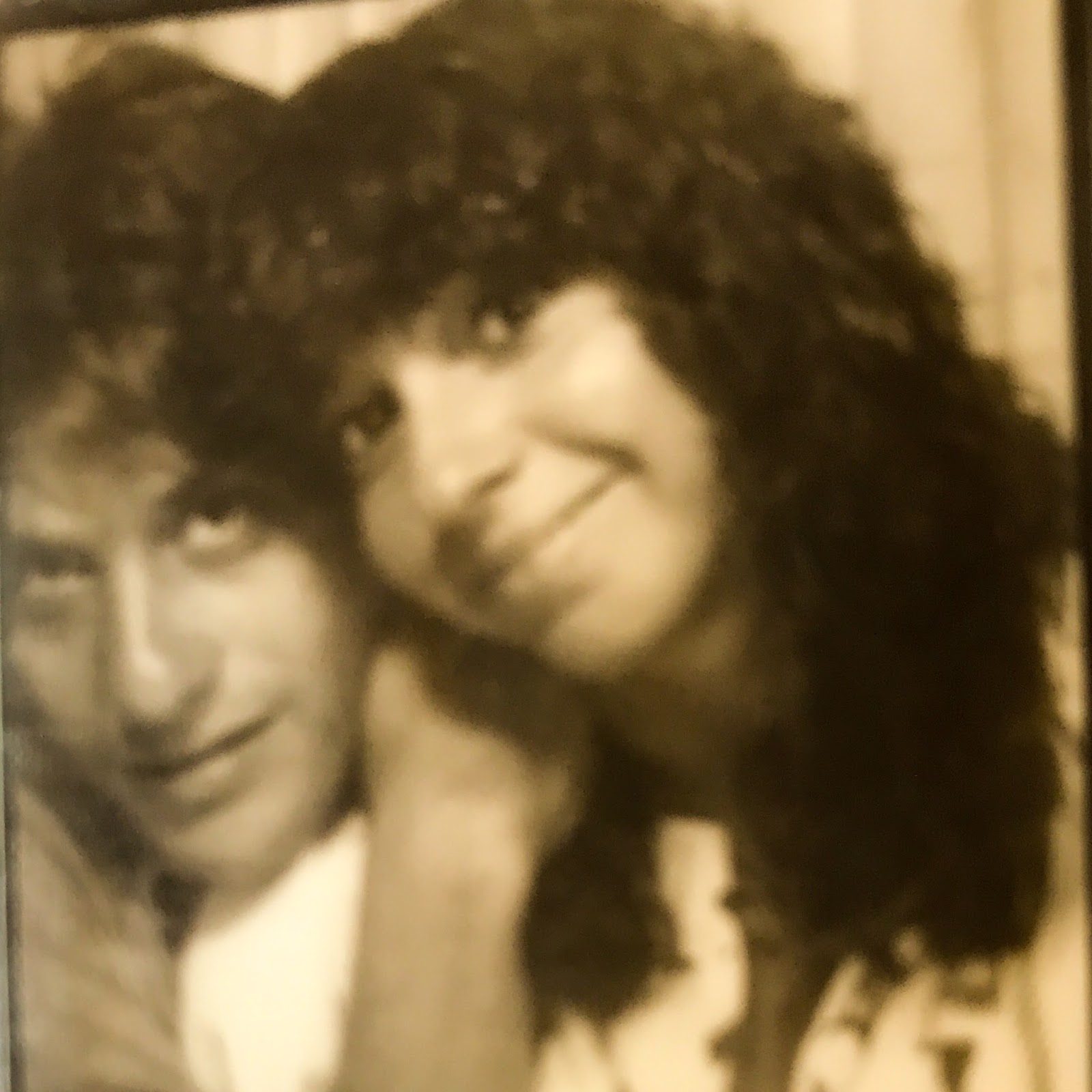
I thought I was a beat, but I was just a boy, part 6

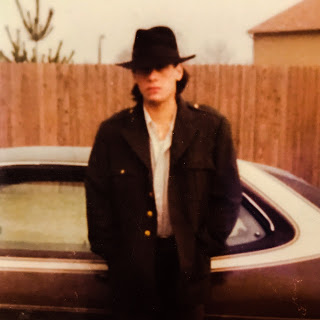
The author, circa, 1983-184, pretending he’s The Boss.

I thought I was a beat, but I was just a boy 

Notes on Re-Reading Kerouac in my 50s

 
There is an old bank building on Route 130 in North Brunswick, next to the county correction facility. It houses a dog grooming business now, but back in the 1970s, our friends Glenn and Donna rented it and lived upstairs in what likely were the corporate offices.

The building has been on my mind the last couple days for two reasons — my reteading of On the Road and our visit to the annual Carnevale Italiano with my sisters-in-law and grand nieces. The Carnevale is on land adjacent to the jail between the jail and the old bank. As we approached, Annie pointed to the dog grooming place and said to everyone in our car, “Our friends used to live there. We used to have big parties there.”

Beatnik wannabe in my Army surplus jacket.

The first one — which is the party I associate with Kerouac — was a going away party for Annie’s cousin Gerry. She had lived with Annie for several years while attending college, was now finished and was going back to Long Island. We were at Glenn and Donna’s and realized that the first floor — where the public portion of the bank used to be — would be a perfect place for a bash, except that it was full of junk. The building’s owner apparently used the bottom floor to store all manner of uselessness, including used fluorescent bulbs, shelving, paper, lots and lots of paper. There was garbage and beer bottles, lumber, broken cabinets, and so on. The place was a mess, and unusable — unless we cleared it out, which is what we did, just as Sal and his buddies did in Central City, a former mining town above Denver where Sal and friends traveled for a weekend.


Babe Rawlins “knew of an old miner’s house at the edge of town where we boys could sleep for the weekend; all we had to do was clean it out. We could also throw vast parties there. It was an old shack of a thing covered with an inch of dust inside; it had a porch and a well in back. (52)

They cleaned up the shack. Sal and Babe went to the opera and, when they returned, the party began, the night “getting more and more frantic” (54).

Our party was less frantic, but still a massive bash. I don’t know how many people attended, but it was a full house. We didn’t gave a porch or a view of the mountains, but we had a vault recently cleared of trash and a working drive-up teller booth, a massive open floor, and a keg, and we gave Gerry a great send off.

Send me an e-mail.

I thought I was a beat, but I was just a boy, part 5

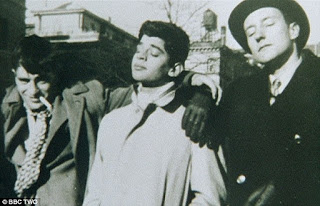
Jack Kerouac, Allen Ginsbert and William S. Burroughs in New York, before the events of On the Road.
I thought I was a beat, but I was just a boy 
Notes on Re-Reading Kerouac in my 50s


I think one of the reasons the novel is attractive to readers in their early 20s, in particular, is it’s simplistic anti-establishment bias.
https://www.theparisreview.org/interviews/4424/william-s-burroughs-the-art-of-fiction-no-36-william-s-burroughs
William S. Burroughs
Consider the section in which Sal and the fang visit Old Bull Lee. Bull — the book version of William S. Burroughs — is a libertarian-anarchist junkie who loves his guns, experiments with all manner of drugs, reads voraciously, and is an aggressive skeptic, a pessimist of the first order, who trusts no one and nothing. He did things “merely for experience” (143), had multiple personalities and a
sentimental streak about the old days in America, especially 1910, when you could get morphine in a drugstore without a prescription and Chinese smoked opium in their evening widows and the country was wild and brawling and free, with abundance and any kind of freedom for everyone. (144-145)
He hated bureaucracy, which I think is a common human feeling, but he also hated “liberals; then cops,” an all-purpose dislike of anything that might interfere with fulfilling one’s desires. Remi Boncoeur, Sal’s old prep-school buddy, has a similar world view, an ingrained antipathy toward authority. Remi’s term for authority figures who impose limits is Dostioffski — a bastardization of Dostoevski, who Sal has been reading. The Dostioffskis of the world are there to keep you down; they are “the man,” the straight world, parental. They interfere with the hedonism that drives Sal and his friends, which is all about kicks.

There is a scene in San Francisco that allows me to how my view of the book has changed over the years, perhaps more than any other. Sal is staying with Remi, who is working as a security guard. He gets Sal a job, but there is not enough money coming in so they supplement their income by stealing food and supplies from the former military camp at which they work. Sal and Remi break into the barracks cafeteria, which they do frequently to stock up on supplies. Once inside, Sal goes “to the soda fountain.”
Here, realizing a dream of mine from infancy, I took the cover off the chocolate ice cream and stuck my hand in wrist-deep and hauled me up a skewer of ice cream and licked at it. Then we got ice-cream boxes and stuffed them, poured chocolate over and sometimes strawberries too, then walked around in the kitchens, opened ice boxes, to see what we could take home in our pockets. (70)
Sal views these break-ins as risky, but justified. He doesn’t necessarily put this justification in words, but he does describe it as part of a bigger adventure, as just another necessary experience. And the younger me thrilled to this, understood implicitly the anti-establishment, anti-authority motivation. Stick it to the man, my younger self says.

My older self, my 54-year-old self, cringes at this simplistic reading. There is injustice — the camp is paying starvation wages, which makes the theft necessary — but Remi and Sal’s actions are still morally suspect, at best, and exist outside of politics when what is needed to address the issue is a political response. This individual act of rebellion, as satisfying as it may be, will do nothing to alter the broader dynamics and, in fact, may leave a worse situation for those who come after Remi and Sal are long gone.

This comes up through out the book — authority and rules exist as impediments and nothing more, without distinction, without any sense that some may be necessary. It is very much an American mode of thought, a bowdlerization of Emerson on self-reliance or Thoreau’s jeremiad in “Civil Disobedience” against immoral government power. Sal, Old Bull, Remi, Dean view authority itself as immoral, because it interferes with their pleasure or their intellectual curiosity.

Sal, for instance, walks by themselves to one of the levees of the Mississippi, near Old Bull Lee’s house.
I wanted to sit on the muddy bank and dig the Mississippi River; instead of that I had to look at it with my nose against a wire fence. When you start separating the people from their rivers what have you got? “Bureaucracy!” says Old Bull; he sits with Kafka on his lap, the lamp burns above him, he snuffs, thfump. His old house creaks. And the Montana log rolls by in the big black river of the night. “Tain’t nothin but bureaucracy. And unions! Especially unions!” (148)
This puts me in mind of Thoreau, the conservationist/naturalist, and the political rebel. Thoreau romanticizes the woods in Walden, is a narcissist of the first order. In a 2015 essay in The New Yorker, Kathryn Schulz describes Walden as
less a cornerstone work of environmental literature than the original cabin porn: a fantasy about rustic life divorced from the reality of living in the woods, and, especially, a fantasy about escaping the entanglements and responsibilities of living among other people.
It is a fanatic’s book, a “paean to living purely, with all the moral judgment that the word implies” (Schulz). Walden was published nearly a decade after Thoreau’s seminal political essay, “Civil Disobedience,” which has been used as the foundation protest movements as varied as the push for India independence to the American civil rights movement.

“Civil Disobedience” is, as I said, a jeremiad. It is harshly — and rightly — critical of the political class’ overt (in the South and among many northern bankers) and tacit (among northerners willing to compromise) support for slavery. Thoreau argues that individual conscience has greater authority than that of any government, refuses to pay his taxes, because they are used to maintain the slave regime and to wage an unjust imperial war against Mexico. This is his nonviolent protest. He goes to jail, promises to stay there, but is released after friends pay his bill.

It is a solitary protest, a personal protest. It is steeped in American individualism, and ultimately lacks the force the effect change. It is a personal complaint absent a movement, though it is built upon the same moral questioning one finds in Erich Fromm’s On Disobedience and the writings of the Rev. Dr. Martin Luther King Jr. 

The Beats constantly rage against the straight world, against the impositions of authority, but they rarely — at least in the decade after World War II — fully consider what amounts to true injustice and what it takes to push back. Small individual protests and minor criminal acts stand in for a declaration of individuality, and it is rare that Sal or Dean, in particular, consider how their actions create ripples in the universe, that they affect others in ways they do not foresee or perhaps care to see.

This is hedonism run amok. Hedonism as a philosophy seeks to maximize pleasure, but it also has an eye on the way our actions affect others. It is an extreme form of utilitarianism, which seeks to maximize good — an action is judged as positive if it creates more good than bad, if more people benefit than are hurt. Hedonism functions the same way, but the Beats, many among the Sixties generation, many of the Masters of the Universe on Wall Street, ignore the damage that can be left in their wake.

This is a young-man’s attitude, but it has infected the broader culture — think of all the dopey t-shirts available in t-shirt shops that glorify the act of getting falling down drunk or proclaiming the right to be an unmitigated asshole. 

And, to inject politics, think of the man we’ve installed as president. Donald J. Trump is a man who’s operated through out his life as a raging id, as pure desire and pure emotion.
“I’m automatically attracted to beautiful women — I just start kissing them, it’s like a magnet. Just kiss. I don’t even wait. And when you’re a star, they let you do it. You can do anything,” he said in the 2005 conversation. “Grab ’em by the pussy.”
And this sums up our current cultural moment, one in which rich and powerful men like Trump and Bill Cosby, Bill Clinton, Ben Rothlesberger, R. Kelly and so many other feel as if there are no limits, as if everything including women’s bodies and minds are their’s regardless of whether there is consent.

But I’ve gone off on a tangent — I’m not implying that Sal and/or Dean or the rest of the On the Road gang operate in this way. But we can’t ignore the selfish elements of their world view — or I can’t today.


Christie vetoes anti-poverty measures

Gov. Chris Christie speaks at a press conference on employment and the economy Thursday in North Brunswick. (Governor’s Office/Tim Larsen)

Gov. Chris Chris Christie vetoed two bills that would have increased benefits for New Jerseyans on the state’s welfare program, saying they would have “substantial budgetary impacts.”

The bills, as I reported in NJ Spotlight last week would increase benefit levels for the state’s Work First recipients by 30 percent over three years and eliminate a cap on family sizes created during the 1990s.
Assembly Bill A-31 passed the Assembly 48-24 with two abstentions and the Senate 26-14 — short of a veto-proof majority. (It takes 54 votes in the Assembly and 27 in the Senate to override a gubernatorial veto). Benefit levels under the bill rise from the current $424 per month for a family of three to $466 a month in the first year, $509 the second year, and $551 in the third. Benefits would then increase annually at the same rate that Social Security benefits increase.
Assembly Bill A-33 passed 51-20, with three abstentions, and 22-14. It ends a 25-year practice of capping family sizes under Work First. Under current law, payments are tied to the size of a family when it enrolls in the program, meaning a family of three would not see an increase in benefits if the mother had another child.
Christie cited “Responsible governance” in his veto message, saying that “any increase to program benefits be determined on an annual basis and in consideration of the costs associated with all State programs.”

Such a contemplative approach facilitates the identification of the State’s fiscal priorities and ensures that the State will meet its constitutional mandate of a balanced budget.

He said Work First is just On of numerous programs that help the state’s poor, which also include housing and food aid.
New Jersey Policy Perspective issued a statement critical of the governor, calling his action “beyond cruel.”
“These bills would’ve help to lift families and kids out of poverty, mend New Jersey’s seriously tattered safety net, and ensure that New Jersey’s poor families aren’t being left behind,” said Jon Whiten, New Jersey Policy Perspective Vice President.
According to the Office of Legislative Services, the bill would have cost an additional $10.9 million during fiscal 2018, $20.7 million in fiscal 2019, and $29.4 million in fiscal 2020. The fiscal year runs July 1 to June 30. It has been 30 years since benefits were increased under Work First.

I thought I was a beat, but I was just a boy, part 4

I thought I was a beat, but I was just a boy 
Notes on Re-Reading Kerouac in my 50s

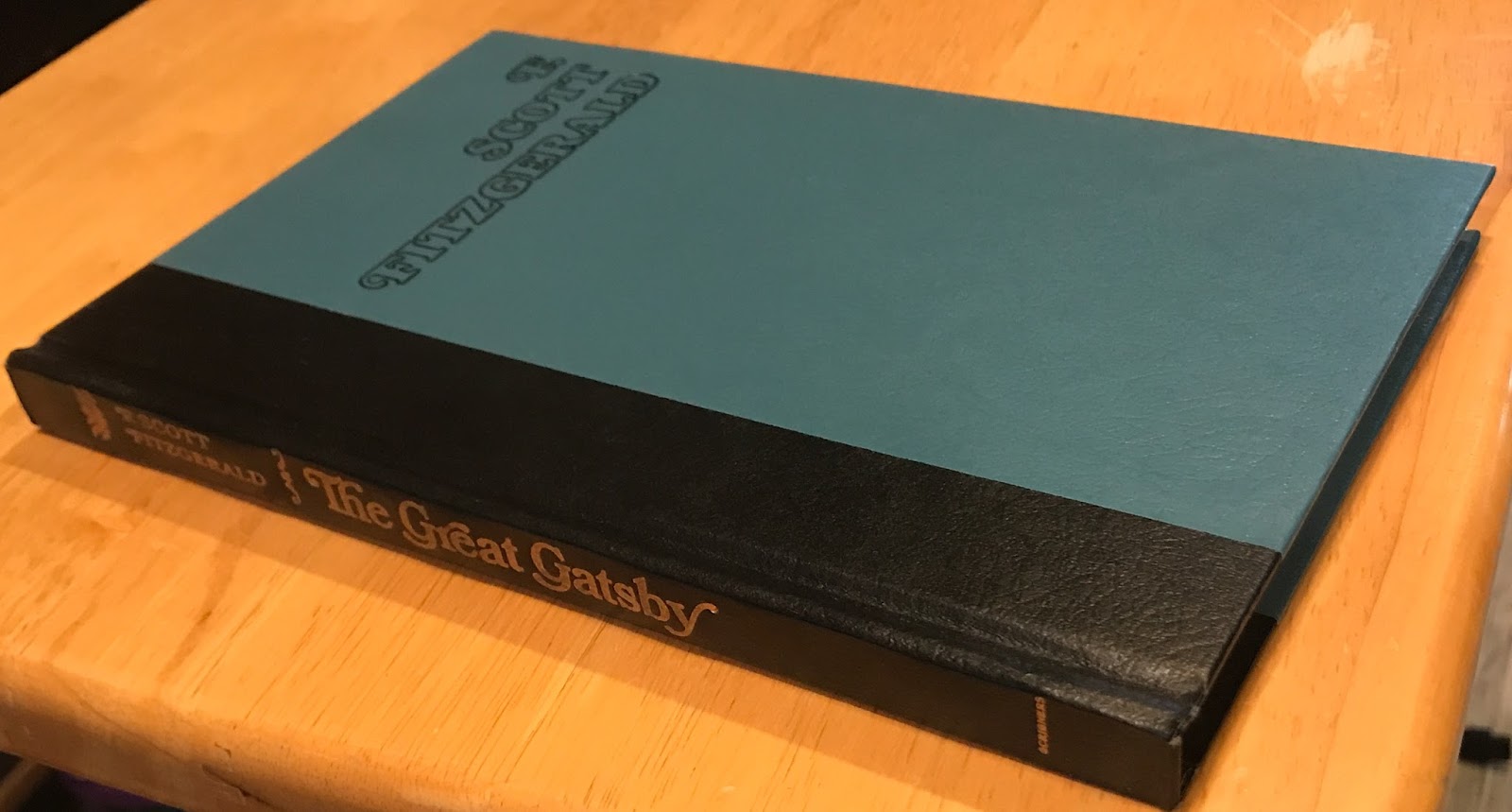
I was listening to a public radio program on The Great Gatsby, which features readings from the book by Scott Shepherd. Gatsby is taught in high schools and colleges, has been made into film (neither fully capturing its resonance), and is regarded today as not just iconic but an important step in the development of American literature.

Gatsby is a romance of America, of a moment in American history. It is the Jazz Age — a time of extreme wealth for some, of hedonism for the young and not so young. Gin flowed freely, even as Prohibition drove it underground. American was fast moving toward a finance-driven economy — a trend that would be interrupted by the Great Depression and World War II but would pick up again in the late 1960s.

Gatsby predates publication of On the Road by 30 years, the events of both novels are separated by about 25 years. Yet, they share a common bloodline, and not only because both have attained iconic status or because their authors seem to share a psychic connection. Both novels are unflinchingly American — Gatsby in its use of the Horacio Alger trope, which Fitzgerald dismantles as the novel’s greed and hedonism moves toward failure and depression (and the nation does the same).

Gatsby‘s critique is up front. From it’s beginning, there is a mix of fascination and revulsion, its narrator both a part of the scene and standing outside. It is Nick Carroway’s novel, written in the first person. It is Nick’s voice throughout, and Nick is both transfixed by and suspicious of the mysterious Jay Gatsby, his desire for the married Daisy, and the excesses their wealth and desires generate. Gatsby is a dark vision of he American Dream and of the first stages of the transformation from agrarian nation to urban/suburban one, at least as it concerns what we now call the 1 percent, and uses the romantic mythology Americans already had developed about ourselves as ironic counterpoint to the ultimate emptiness that Gatsby finds in his life. This irony gives the slim book — which critics originally viewed as lacking substance — real heft, and it’s why I think it still resonates even as the hedonism at its core makes it seem of a piece with On the Road as a young man’s novel.

On the Road lacks the ironic counterpoint and, while great sadness is a thread throughout he novel, it is a personal sadness, as opposed to a more broadly cultural one. Kerouac through Sal — it is important to note here that conflating writer and character is usually dangerous, but not in Kerouac’s novels, which are thinly veiled memoirs — remains in thrall to an American night, a “complete night that blesses the earth,” even as we can’t know what the world has in store.

It is a different vision, to be sure, than the one with which Nick leaves us, a dream already in the past, “somewhere back in that vast obscurity beyond the city, where the dark fields of the republic rolled on under the night” (159).

Send me an e-mail.

I thought I was a beat, but I was just a boy, part 3

I thought I was a beat, but I was just a boy 
Notes on Re-Reading Kerouac in my 50s
Part 3
( Read Part 2 here and Part 1 here.)

Kerouac’s hand-drawn map, posted from Pinterest (https://www.pinterest.com/pin/275845545900879627/)
I’m looking backward.

Jim had a convertible, a classic Camaro. It was a spring day, early spring. He took it out, Joe and I along for a the ride. And what a ride. Tooling around the farm roads and highways that circled the State College campus, top down, Joe and I stoned, taking turns standing and leaning into the wind. It was crazy, but the breeze was bracing. I felt like Sal. I’d just read the book, first time. Not yet 19, riding in the open air.

Several days later, Jim taxis us out to Route 80. Joe and I, back packs filled with a couple days of clothes, my notebooks tucked in with a couple of books, and such. We were heading east to spend the weekend at my house in Jersey and we were going to thumb it.

The goal on its face was Jersey, a four-plus-hour drive, but deep down I envisioned Kerouacian adventures. A disastrous first year at Penn State was coming to a close, and a summer working in a Trenton factory loomed — along with an array of concerts and a chance to hang with he guys. I needed it, I bought, a chance to put the miserable class work behind, to reconnect. School had started off well — I got A’s and B’s — but quickly saw my GPA crater. Class and class work ceased to be important. I was writing for the first time — not the journalism I did in high school, but terrible poetry and short stories. I was spending more and more time at the radio station, and bumming around State College’s record stores and head shops.

I had self-consciously gone bohemian, without really understanding what that meant, which is when I read On the Road for the first time. Something clicked, something about the book helped explain a disconnect I was feeling more and more regarding who I thought I was in high school.

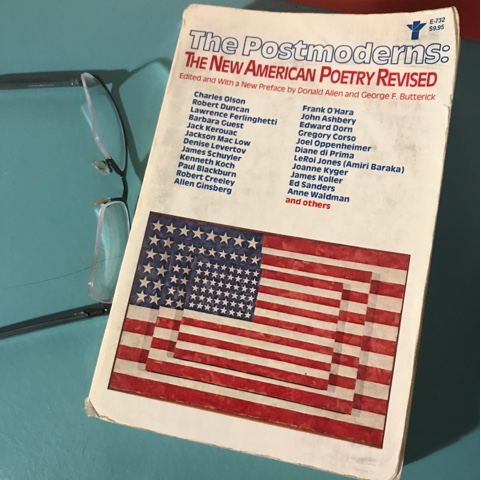
It’s too easy to say On the Road expanded my mind. It didn’t, though I think it’s fair to say it was part of a bigger intellectual awakening that included not only the Beats and an immersion in jazz, but books by Hemingway, Sherwood Anderson, the French poets (of which I feigned an understanding), Sartre and Camus, and a poetry anthology called The Postmoderns: The New American Poetry Revised that I still own and still read.

On the Road, however, did leave me with a romantic impression of the open road, which led me to suggest to Joe that we hitchhike. And the book, I think, colors my impressions of that day, which must have featured a lot of walking, a few rides, and much conversation. I honestly remember little of it, aside from two rides: One was a priest that, in my mind, has become a Russian Orthodox priest with a big beard and booming voice who told us of his congregation and his thoughts on he promiscuity of the younger generation. I want to write “great Russian priest” in the Kerouacian manner, implying a thick accent outline Boris and Natasha from of Rocky and Bullwinkle, but that seems unlikely, and in any case I remember little else from that ride. The other ride was from a hippie couple in a pickup. The let us ride in the bed in the open air with their German shepherd Cocaine, who had a Zen-like calm that neither Joe or I could muster. It was obvious the dog had ridden back their before, while the two of us were subjected to the wind ripping past as the truck burned east on Route 80 probably doing 80-plus. I remember us being exhilarated by the ride, and I’m sure that’s true, but memory is a tricky thing, especially 35-plus years later.

We hitched back, against my dad’s demands. He did drive us up to the Water Gap, which gave us a head start. The return trip was uneventful until we got off Route 80 near Penn State. Traffic died down and we did a lot of walking. It was growing dark. I walked and played harmonica, probably the one or two blues riffs I knew. I wasn’t very good, and I suspect that Joe was annoyed, but he never said a word. We eventually got a ride and made it back to the dorms, adventure over.

I hitched that route several times after, and also hitched South to the West Virginia University with a girl named Eileen. She was just a friend, but like me infatuated with the Beat/hippie ethos. Our friend Rusty and another girl (I don’t remember her name, though she and Rusty ended up a couple after our trip) also made the trip, racing us down by a different route.

I don’t remember much about the trip except that Morgantown was in the West Virginia mountains, was unbelievably hilly and the streets were lined with older houses. There were parties and a girl and the weekend was a blur and I felt as though I were inside On the Road, running around Central City in a manic state. It was all very romantic and so long ago.

I soon left school, carrying a 1.7 GPA, with few prospects, assuming I’d write my way to riches. Young and dumb and mostly too stoned to realize it. I thought I would find enlightenment through the holy grail of “kicks,” but I was wrong. Enlightenment is elusive and I’m not sure it’s truly obtainable. What I do know now is that we only come close to realizing a personal nirvana, to borrow the Buddhist term, through human connection and deep commitment. I only learned that by experiencing it, by finding ways to keep love’s flame burning across multiple decades, through challenges both big and small.

Annie and I, circa 1982.

It’s not that Annie and I are one, that our lives are perfect. We are not and our lives are not. We are individuals who are better together than apart, who are better able to battle through life’s imperfections together.


Sal has trouble seeing this in On the Road — or maybe it’s not that he can’t see it, but that his vision of nirvana involves seeking an ideal that is inconsistent with his tortured combination of hedonism and asceticism.