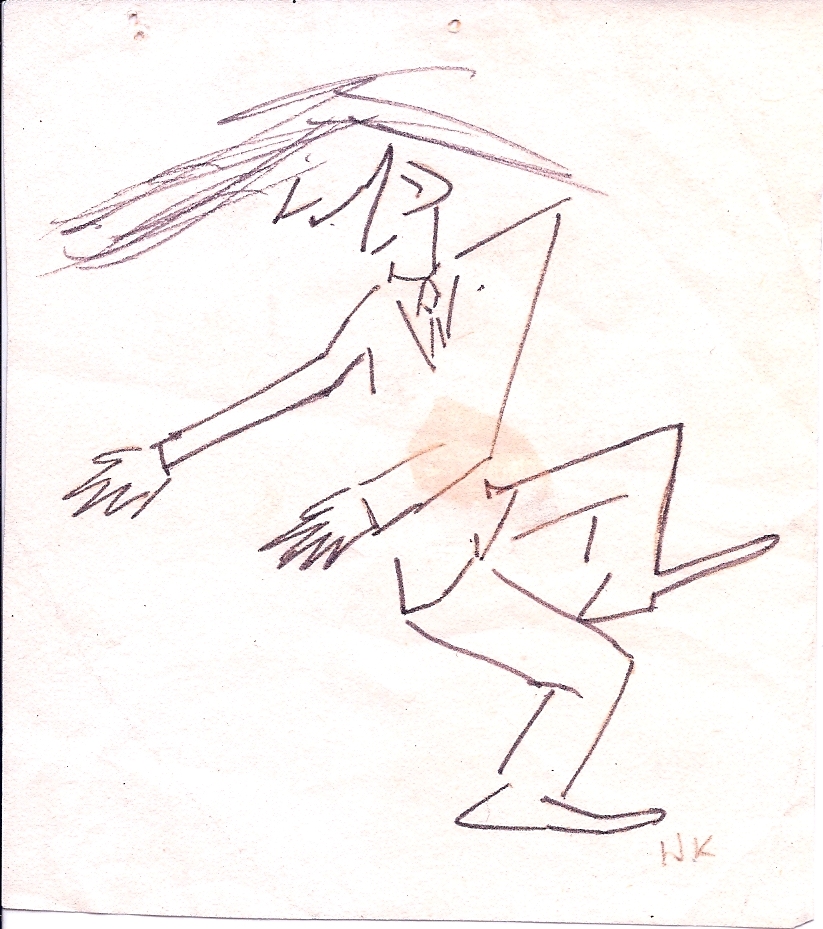
Jessica Mendoza and the privilege of the booth

Jessica Mendoza when she was on the United States Olympic softball team in 2008. She is now ESPN’s first female baseball analyst. Credit Al Bello/Getty Images

The outdated assumption that there are men’s realms and women’s realms has been a stubborn one to eradicate. It infects much of our cultural and political discourse, is at least partially responsible for the way people react to women politicians like Hillary Clinton, and have kept women from fully entering some areas — sports writing and broadcasting, for instance.

Doug Glanville addresses this in The New York Times, focusing on the sexist response to ESPN broadcaster Jessica Mendoza. Mendoza is a solid commentator, probably the best on a bad booth team, and makes a strong effort to get past the shallowness that diminishes the national approach to the game — specially when compared with the outstanding Mets’ broadcast team, and probably many other locals that live each day, each game with the teams they cover.

 Criticizing Mendoza — or any color commentator, or anyone, really — is fair. There are things she does well and things she does not. But focusing on her gender, assuming that she is disqualified from doing a good job based on her being a woman, that’s where the sexism comes in. We’ve seen this in other areas: Comics, video games, politics, television roles. The geeks — and by geeks I mean the passionate ones (anyone who thinks that hardcore sports fans are not geeks is lying to themselves) — have invested a lot of time in “things as they’ve always been”; male geeks, in particular, tend to respond as though their very passion and existence is being threatened.

The impact on politics is particularly dangerous, or course, because it re-enforces gender and race biases, grants legitimacy to the kind of ranting BS we hear from Donald Trump and his most avid supporters. They will claim that it is not about race or gender, but Trump’s language always comes back to racial and gender stereotypes, often framed as a threat, and his fans/supporters react as though these changes represent existential threats to their own lives.

But this is not about a threat to existence. It is about privilege, about defending “things as they’ve always been,” about power and who gets to claim it.

Send me an e-mail.

I thought I was a beat, but I was just a boy, part 9

I thought I was a beat, but I was just a boy  
Notes on Re-Reading Kerouac in my 50s  Part 9


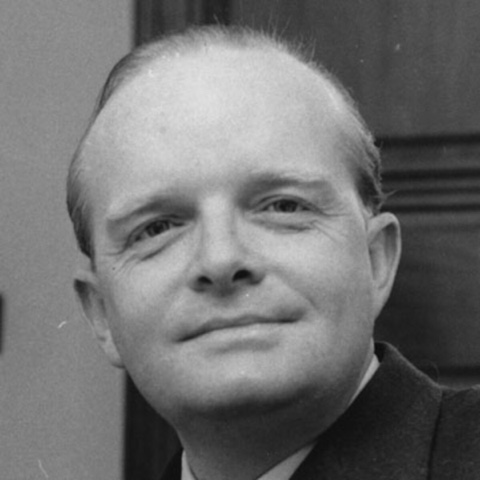
When I started posting these entries as a public journal to my blog, Truman Capote’s name came up thanks to his famous quip about Jack Kerouac. The comment takes various forms and may not have been directed at Kerouac but at the loose group of writers identified as Beat. Essentially, the various versions can be summed this way: “That’s not writing, it’s typing.”
It’s certainly a pithy remark, though I’m not sure it’s entirely fair. A writer’s style is personal, an extension of his personality. Ernest Hemingway’s terse, almost matter-of-fact syntax has been described as muscular and masculine. I’m not sure how a prose style can take on alleged gender qualities, but it does match his persona and the reticence of his characters. John Cheever writes with what can be called an urbane delivery, fitting his stories of upper class New York.
And Capote, in Breakfast at Tiffany’s and other novels, writes with a precision that reminds me most of Edith Wharton — each detail signaling something small to the reader, something perhaps imperceptible until the details accumulate. This approach serves his stories well, but slows them down, dampens the pace.
Kerouac’s style was all his own, as well, a kind of breathless lack of specificity that matched the manicness of his adventures — as if he had to rush to get it all down. This manic element reminds me most of Walt Whitman, whose long lines build from lists of nouns and accretions of prepositional phrases, something new at the time, lending a sense of bigness and inclusiveness to his poetry. Whitman read aloud becomes a race against breath, a sometimes futile effort to get each line and all of its information out in a single breath.
Kerouac’s manic episodes function the same way, though not syntactically. He builds this momentum through the use of open-ended adjectives and repetition — it’s all mad and gone and holy,  and if he stops to be more precise, well, he just might miss it. His approach to writing is similar to his attitude about jazz in that he views the act of getting everything down as being as important or even more important than the final product. And he views this act through a religious lens, as though the experiences and their recounting function as revelation. Mad. Holy. Angelic.
His depressive episodes have the same feel; they are descents into self-doubt that shift his focus — and some of his language — away from the ecstatic toward a similarly indefinite descriptive architecture that also has a religious feel.
“And for the moment,” he writes as a trip to San Francisco crashes on the rocks,
I had treacherous the point of ecstasy that I always wanted to reach, which was the complete step across chronological time into timeless shadows, and wonderment in the bleakness of the mortal realm, and the sensation of death kicking at my heels to move on, with a phantom digging it’s own heels, and myself hurrying to a void of uncreated emptiness, the potent and inconceivable radiancies shining in bright Mind Essence, innumerable lotus lands falling open in the magic mothswarm of heaven. (173)
One sentence rushing forward, no, falling into an abyss. This sounds heavier than it is, but it does give a glimpse into a mind struggling in the darkness. He tingles with bliss, as he considers the stability of what he calls “the intrinsic Mind” that created the space in which “birth and death took place.” Sal says he’d “died and had been reborn numberless times,” couldn’t remember the transitions between. They’re “so ghostly easy, a magical action for naught” — because it doesn’t matter. It’s out of our hands.
I though I ways going to die the very next moment. But I didn’t die, and walked four miles and picked up ten long butts and took them back to Marylou’s hotel room and poured their tobacco in my old pipe and lit up. I was too young to know what had happened.
And he gets lost in the food smells of the city, receding deeper into himself. It is not quite stream of consciousness, but it is crafted to have that feel. And that’s why I think Capote was not being fair. Style, in this case, matches the substance, the improvisational feel matches the argument Sal is making, matches his sense that he lives in the moment, matches the energy of the protagonists.
I’m not arguing that Sal/Kerouac’s pseudo-religiosity/philosophizing is complex or particularly well thought out. It’s a mashup of elements of his Catholicism and the Buddhism he had been dabbling in; but he’s not really getting below the surface.
That doesn’t matter. It’s the energy that matters — especially to the 20-year-olds who have long been this book’s primary audience.

I thought I was a beat, but I was just a boy, part 8

I thought I was a beat, but I was just a boy 

Notes on Re-Reading Kerouac in my 50s Part 8

 
There was a night in New Brunswick, probably in 1981, well before redevelopment remade the city. We had driven in to see The Rocky Horror Picture Show at the Art Cinema, a theater that had certainly seen better days and now was known for running XXX films and midnight showings of Rocky Horror.

We got there early, had time to kill. There were for of us. Bill was there, and Rich, I think, and Wayne. Wayne would eventually move to Colorado and take up a conservative variation of Christianity. He died about five years ago from a brain tumor.

Wayne was, at this moment, the wild one in our group. Not Dean Moriarty wild, but he certainly was the one most likely to do something reckless or stupid — like the night, also in New Brunswick, when several of us (not me) were up on the rail trestle a block from the theater and down the street from the train station. I was down below — I was and remain the cautious man. I heard the whistle/horn of an oncoming train, then Bob scream out “where’s Wayne.” then just “Wayne,” as the train barreled through and past. Silence. No answer. Then, from out of the darkness he appears, laughing. H. e’d waited until the last moment, he’d ducked off the track on the other side out of sight. It scared the shit out of us, and he found it funny.
This particular night, we ducked into a small bar called the Stagecoach (I think) a couple doors down from he theater. We were going to get a drink — though we were probably underage, and it’s likely we were already stoned. We walked in and there was a small combo playing jazz in the back. We ordered and sat at a table and just listened. We were the only white people in the place, aside from the guy playing vibes. The band was tight with a strong bottom put down by the bass and drums. Atop this rode the vibes. My wanna-be Beat, late-adolescent mind imagined sparks coloring the air, the rolling swell of notes rising and swirling like a storm.

We finished our drinks, paid the bill, and left with what, in our youthful, white-boy minds, was a great story, an adventure. And for a bunch of suburban kids, I guess it was —but I see now that this sense of adventure was based entirely on a perceived danger, on the “otherness” of the situation, its exotic nature. New Brunswick was a place of “darkness” and we went straight into its heart.

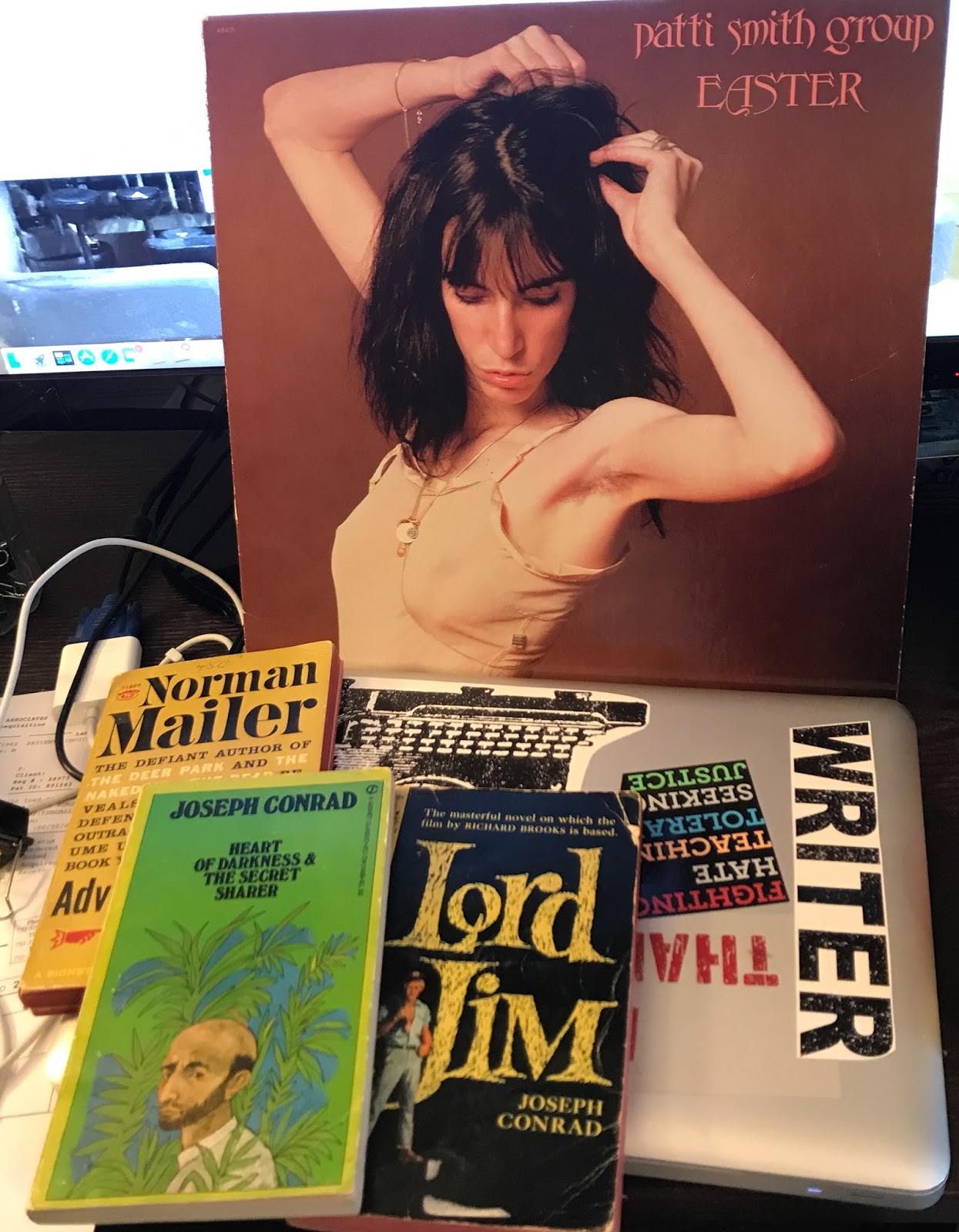
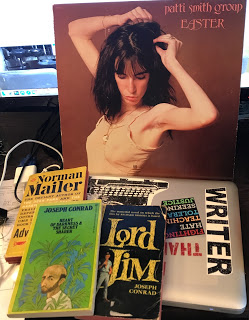
The allusion to Conrad is intentional because, as great and important a writer as he was, he also trucked in racist views like most of his contemporaries. Books like Heart of Darkness and


Lord Jim are rife with ugly stereotypes and, even when a person of color is to be presented in a positive light, it is through the dimming lens of racial typecasting. Kurtz has gone native in Heart of Darkness, which in the English mind circa 1900 was unforgivable. (See Kipling’s The Jungle Book.)


This comes across most strongly in On the Road when Kerouac writes of jazz, as I said, though there are numerous other passages in which his racial reductiveness impairs his perception of reality.

A more extreme variant of this occurs in Denver. A morose Sal “walked with every muscle aching among the lights of27th and Walton in the Denver colored section” (180). He wishes he was black, or more accurately “a Negro,” the use of a noun rather than an adjective reinforcing the sense of difference. The “best the white world had offered,” he says, “was not enough ecstasy for me, not enough life, joy, kicks, darkness, music, not enough night.”

He wants to shed his skin, to get closer to the bone, to the essence of life. To be a Negro, “a Denver Mexican, or even a poor overworked Jap, anything but what I was so drearily, a ‘white man’ disillusioned.” He wanted to shed his “white ambitions” and “exchange worlds with the happy, true-hearted, ecstatic Negroes of America.” The sadness of the passage can make it easy to overlook Kerouac’s use of racial stereotyping, especially because his intention is praise for groups he thinks somehow are more primitive and, therefore, more pure of heart and soul.

Kerouac, writing a scene that takes place in 1947 in a book that’s published in 1957 ignores the legal impediments and segregation imposed on black communities in the south and the de facto segregation of the north. The Civil Rights movement is in its infancy, but the Montgomery bus boycott is making national headlines as he moves the book toward publication. But in Sal/Kerouac’s mind, African Americans can be reduced to types, to caricatures; they are noble savages, primitives who are somehow holier and more pure, closer to a state of bliss unsullied by (white) civilization.

This is common thinking — or was — among the artistic class, especially in the 1950/. It is the central trope in Norman Mailer’s essay, “The White Negro,” in which he describes a cultural marriage between black Americans and
the American existentialist — the hipster, the man who knows that if our collective condition is to live with instant death by atomic war, relatively quick death by the State as l’univers concentrationnaire, or with slow death by conformity with every creative and rebellious instinct stifled (Mailer 304). 
Mailer is correct to describe black existence in 1950s America as living with “danger from his first day” — an observation that still holds. “(N)o experience can ever be casual to him, no Negro can saunter down a street with any real certainty that violence will not visit him on his walk” (306).

However, he then makes the leap to ugly stereotyping, painting the black American as “following the need of his body” as a survival technique and eschewing, because he has to, because he can’t afford not to, the “sophisticated inhibitions of civilization” (306).

The Negro, he writes, has therefore
kept for his survival the art of the primitive, he lived in the enormous present, he subsisted for his Saturday night kicks, relinquishing the pleasures of the mind for the more obligatory pleasures of the body, and in his music he gave voice to the character and quality of his existence, to his rage and the infinite variations of joy, lust, languor, growl, cramp, pinch, scream and despair of his organism.
The beat/hipster has bought into this essentialism, he writes, and is using his search for authenticity and spiritual purity, his efforts to become more like The Negro or Kerouac’s fedahin, to escape rather than press for social change. Mailer is far more political than the Beats — the essay originally appeared in Dissent in the fall of 1957 — about the same time that On the Road is published and rockets up the bestseller list. That Mailer ultimately is critical of this new hipster is unimportant — intention in this case does not override Mailer’s overly broad description of The Negro, who is purer in his relation to the world than the American mainstream (read white). He may want more from the new Beat Generation politically, but he still sees blacks as archetypes, as noble savages, as something apart from the rest of polite society.

We see this in Patti Smith’s “Rock ‘n’ Roll Nigger,” a song that compares the American artist, the visionary, the rebel to blacks as an oppressed group, as the principled outsider: the “black sheep,” the “whore,” are unwilling to conform, must stand “outside of society,” are a “rock ‘n’ roll nigger.”

The song, which she performs as an anthem, growling and spitting fire over a rumbling guitar-driven hard rock soundtrack, uses the pejorative ironically, of course, stripping it from its ugly history as an element of control and dehumanization beginning in slave times; it’s also meant to shock — “now that I’ve got your attention….”

The comparison here is meant to be flattering, but intention does not matter. That’s the great misconception when it comes to race issues. One can still be racist or express or hold racist ideas without having any animus toward blacks, Latinos, Asians and so on. Racism means seeing people as the embodiment of their race; it means objectifying people, robbing them of their individual agency. When Jack Kerouac wished he were a Negro because, as he believes, blacks are simpler and, therefore, closer to the essential truth, he’s engaging in racist thinking. When my friends and I transformed this accidental experience of a joyful noise, so to speak, into a white-kid adventure, when we played up the novelty and exoticness of the moment, we were engaging in racist thinking.

That’s one of the points made by Dr. Ibram X. Kendi in Stamped from the Beginning, his important book on the history of racist thinking. All of us, he says, are capable of racist thinking, and that there is a long history of it in the United States, even among those working hardest to end slavery or Jim Crow or even now in the battle against police brutality.

I have a better understanding of this than I did when I was 19 — that I did when I was 29, 39, even 49. I do my best to avoid essentialist thinking, but I’d be lying if I said I’ve rooted it completely from my thought process.

I cringe now at my naivety, at my youthful lack of understanding of this, but rereading On the Road has raised a lot of questions and it’s important that I be honest about that night, even as I try to hold on to the sensation of hearing that music.

Let’s call Trump what he is

President Donald J. Trump is a bigot.
I wasn’t going to put it so plainly, but I’m done mincing words. Trump sees the world in broad categories, and he judges individuals based on the identity tags he’s assigned. Mexicans, Muslims, Jews, “the blacks” — they all exist as types in the Trump world view. And these types dictate just how much of a citizen you might be.
That’s the context we should use to try and understand today’s announcement that transgender people will now be excluded from the military.
Forget his rationale. Like earlier opposition to gay and lesbian troops, or bebfoe that to desegregating the Armed Forces, this is not about military readiness or unity. It is about citizenship.
Being allowed to serve in the military — like being able to vote or engage in other civic activities is a sign of full citizenship. Proscriptions against gays and lesbians in the service drove them into the shadows and sent a signal to he broader culture that they were less equal as citizens than heterosexuals, a point underscored by bans on same-sex marriage.
Trump, who made the announcement of his transgender ban via a series of tweets (a gutless and disrespectful move), has signaled once again that he sees some Americans as being more equal as others. And yet, the mainstream press, much of Washington, his supporters and many others are willing to give him a pass.
Enough is enough. It’s time to call Trump what he is — a bigot, pure and simple.

I thought I was a beat, but I was just a boy, part 7

I thought I was a beat, but I was just a boy 

Notes on Re-Reading Kerouac in my 50s 
Part 7

It was On the Road that first introduced me to jazz. The book’s passages on the music are used to create an imagined soundtrack, one of explosive energy and appetite.


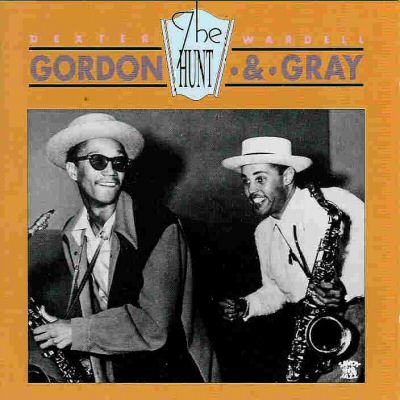
“They ate voraciously,” Sal says of Dean, Marylou and Ed, who have just raced east to find Sal, “as Dean, sandwich in hand, stood bowed and jumping before the big phonograph, listening to a wild bop record I had just bought called ‘The Hunt,’ with Dexter Gordon and Wardell Gray blowing their tops before a screaming audience that gave the record fantastic frenzied volume” (113).

And, yes, “The Hunt” is a nine-minute thrill ride. Called an extended saxophone duel by some critics, Gordon and Hunt press each other forward, the rhythm section pressing the accelerator pedal, the crowd revved and rowdy. It’s a “mad” performance, to borrow a term from Kerouac, and is every bit the wild bop Sal describes.

Later, in New York, “Dean was having his kicks; he put on a jazz record, grabbed Marylou, held her tight, and bounced against her with the beat of the music. She bounced right back. It was a real love dance” (125) — jazz as mating ritual, which is consistent with the word’s etymology. As the Online Etymology Dictionary points out, the word likely comes from the “Creole patois jass ‘strenuous activity, especially ‘sexual intercourse.'” Other potential origins are jasm, for “energy, drive,” and jazz may share the same sourcing as the slang word jism, for semen.

What’s striking to me is that in a few words, Kerouac is able to capture something essential about the music — even if he misses much of its subtext. For Sal — for Kerouac — the music offers a religious experience, a la the 12th century Sufi monks, the whirling dervishes who vow poverty and spin and dance in ecstatic rituals. The Beats — a designation applied well after the events of On the Road — saw work and money as necessary only insofar as it allowed them to chase ecstasy. Money filled the gas tank, paid the rent, kept the whiskey flowing and the tea rolled into joints. When money wasn’t available, the quest for enlightenment through kicks permitted them to beg, borrow and steal what was needed. Jazz was part of this chase, as a Sal makes clear in his description of  New Year’s weekend performance by George Shearing.
Shearing came out, blind, led by the hand to his keyboard. He was a distinguished looking Englishman with a stiff white collar, slightly beefy, blond, with a delicate English-summer’s-night air about him that came out in the first rippling sweet number he played as the bass-player leaned to him reverently and thrummed the beat. The drummer, Denzil Best, sat motionless except for his wrists snapping the brushes.
It’s all very quiet. Reverent. Then Shearing begins rocking — people are always rocking in Kerouac’s prose, as if they are davaning, lost in prayer. He starts slowly until “the beat went up”
and he began rocking fast, his left foot jumped up with every beat, his neck began to rock crookedly, he brought his face down to the keys, he pushed his hair back, his combed hair dissolved, he began to sweat. The music picked up. The bass-player hunched over and socked it in, faster and faster, it seemed faster and faster, that’s all.
Kerouac’ prose gains its own momentum, the clauses shrink in length, coming in quick bursts like Shearing’s chords, which “rolled out of the piano in great rich showers, you’d think the man wouldn’t have time to line them up.”

As they “rolled and rolled like the sea,” the crowd revs up. Dean, sweating, shouts “There he is! That’s him! Old God! Old God Shearing! Yes! Yes! Yes!” Ecstasy unleashed. The music, the tea, madness that “would lead nowhere,” and yet, “everything was about to arrive — the moment when you know all and everything is decided forever” (128-129).

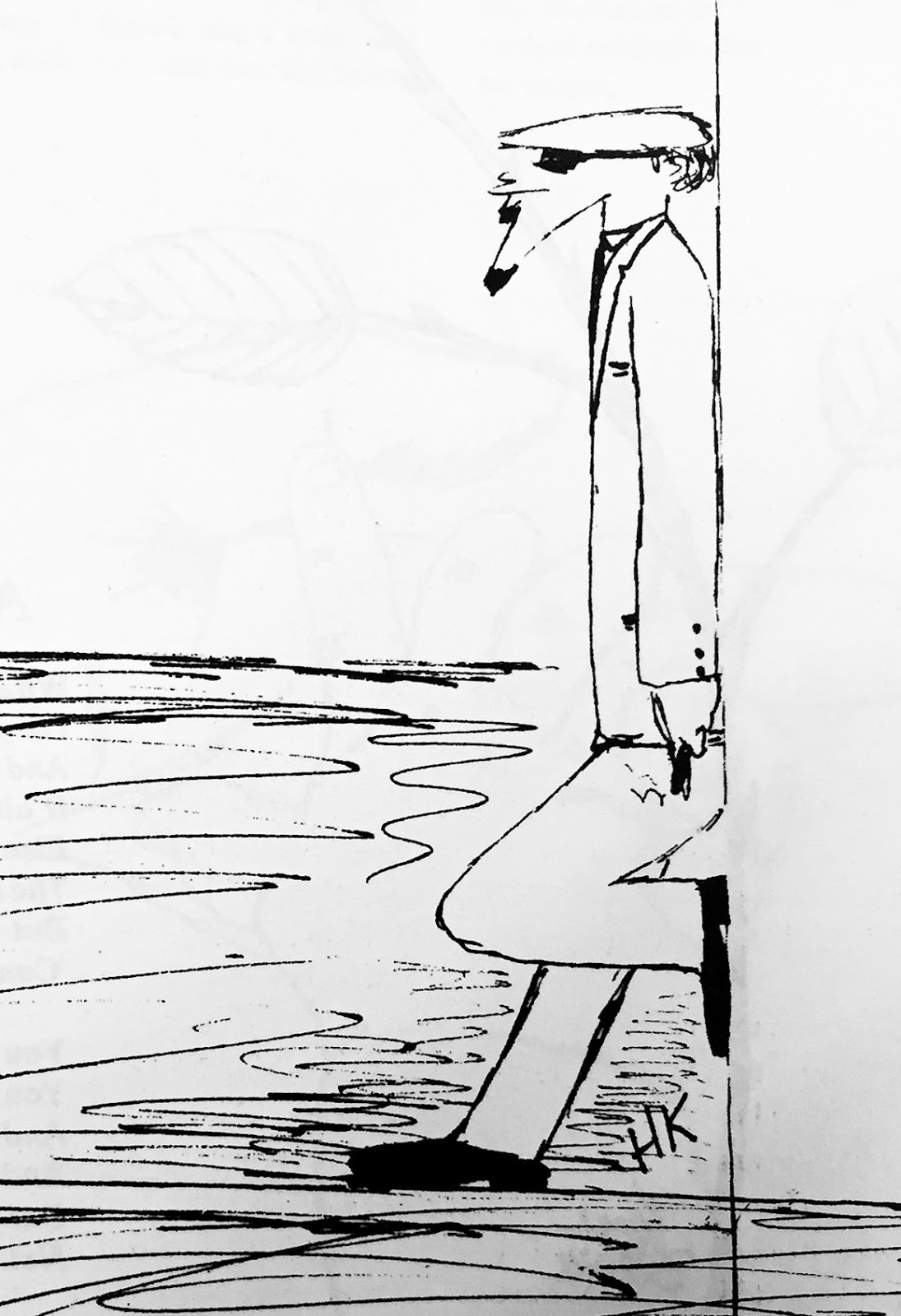
A drawing from the mid-’80s.
These passages offer Kerouac both at his best and worst, injecting the essential energy into his text, while also remaining innocent to the deeper political implications of the music. As Douglas Malcolm writes in “Jazz and African American Culture in On the Road,” Kerouac distills the music down to its individual stars, which is consistent with the Beat ethos of individual enlightenment.

Kerouac’ focus is on soloists, or musicians who derive their fame from their ability to rise up above the collective. This focus ignores the importance of band leaders and composers like Duke Ellington, whose “genius manifested itself collectively in his bands rather than as an individual performer.”
The characteristic which in Kerouac’s mind unites the historic musicians above all is their “madness”; the unavoidable implication is that he music derives not from rational thought but from visceral spontaneity. Hence Louis Armstrong springs like Adam from the “muds of New Orleans” and literally erupts playing with the “mad musicians” is hometown. Roy Eldridge’s music, although suggestive of “logic,” comes in “waves of power.” Charlie Parker was “flipped” out of his mind, and Lester Young is depicted as “the saintly goof” (Malcolm 102).
This is typical of a broader racial issue in the book, one tied to the old “noble savage” trope that has long hampered discussion of race and that has left much ethnographic study mired in stereotypes. Kerouac treats African Americans as a type — Mexicans, too, and the somewhat murky term fedaheen that he uses as an all-purpose moniker for the darker people of the world. He romanticizes them, assumes them simple and closer to the earth and god. An “old Negro couple” is described as picking cotton in California “with the same God-blessed patience their grandfathers had practiced in ante-bellum Alabama” (96), as an absurd and ahistorical observation as one can make (Malcolm cites a James Baldwin essay that criticizes the passage). Comments like this can be found through out, but they are especially noticeable when he writes about jazz.

He describes a night in San Francisco at a little “sawdust saloon” in the “little Harlem on Folsom Street.” A small combo was playing, led by a “wild tenorman” with a “bawling horn.”
The behatted tenorman was blowing at the peak of a wonderfully satisfactory free idea, a rising and falling riff that went from “EE-yah!” to a crazier “EE-de-Lee-yah!” and blasted along to the rolling crash of butt-scarred drums hammered by a big brutal Negro with a bull neck who didn’t give a damn about anything but punishing his busted tubs, crash, rattle-ti-boom, crash. (196-197)
This goes on for several pages, the music pushing the crowd to fervor, Sal and Dean and the crew in ecstasy, and the musicians pressing forward. It is describes as purely in the moment, just a set of free ideas blasted into the firmament, each individual pursuing his own sonic dynamite. No thought given to, no recognition of the tireless work out in before the players hit the stage — the composition and arrangement work, the rehearsals that allow each man to play off the other, the riffs tried and abandoned in the writing and arranging process, the plan hat is put in place before show starts. It just happens. The players are pure and operate on a direct line  creator.

This ignores both the history of the music and the deep intellectual seams from which the musical ideas are mined. No one can listen to Thelonious Monk or Charles Mingus and not hear the purpose behind every note and brushstroke, every solo and every riff.

I was listening first to Roy Eldridge and then to Coleman Hawkins with Eldridge as I wrote this. The Eldridge orchestra of the late-40s could truly swing. Eldridge’s trumpet is the driving force for much of what you hear on the records, but Bill Rowland’s work on the ivories, both as part of the rhythm section setting the foundation for the horns to blow, and then when his piano moves to the forefront, is riveting. The playing, composition and arrangement force you to hear both the unit in action and its individual parts. It resonates emotionally and intellectually. It is not accidental.

The Hawkins/Eldridge performance, recorded and originally released in 1957, can be heard as a duel, a prizefight between heavyweights, which would play into the individualist narrative Kerouac uses in describing jazz. And it’s not incorrect, though it is better heard as a dialogue between Hawkins sax and Eldridge’s trumpet, and a broader conversation among all players on the stage. Hawkins and Eldridge are the loudest, but by no means are they the most important players.

I often liken jazz to basketball, which can seem chaotic to the naked eye and driven solely by its stars. But at its best, the game mixes improvisation with a plan and even the best players — Michael Jordan, Lebron James, Magic Johnson, Wilt Chamberlain — are only as good as their sidemen, only as good as the system (i.e., the arrangement). Lebron can improvise and win because the structure is solid, the plan is well thought out, and everyone is one the same page. 

Hawkins can dive into a blistering solo only if his sidemen have laid the foundation. It is a team effort, and the spontaneity is choreographed, not each note but the framework in which each note is played.

One other thing: Reading Kerouac on jazz today reminds us that, as a music, it is more vibrant and potentially revelatory than the staid concert hall jazz or easy listening instrumentals that the word conjures for many. It’s sweaty and dynamic and full of life. Turning it into chamber music is bad for the art form and not at all true to its origin. Kerouac gets it, even if he has created its own false mythology in the process.