Initial thoughts on the State of the State

Gov. Chris Christie gave his annual state of the state speech to the state Legislature earlier today and the theme of his speech was clear: All Sandy, all the time.
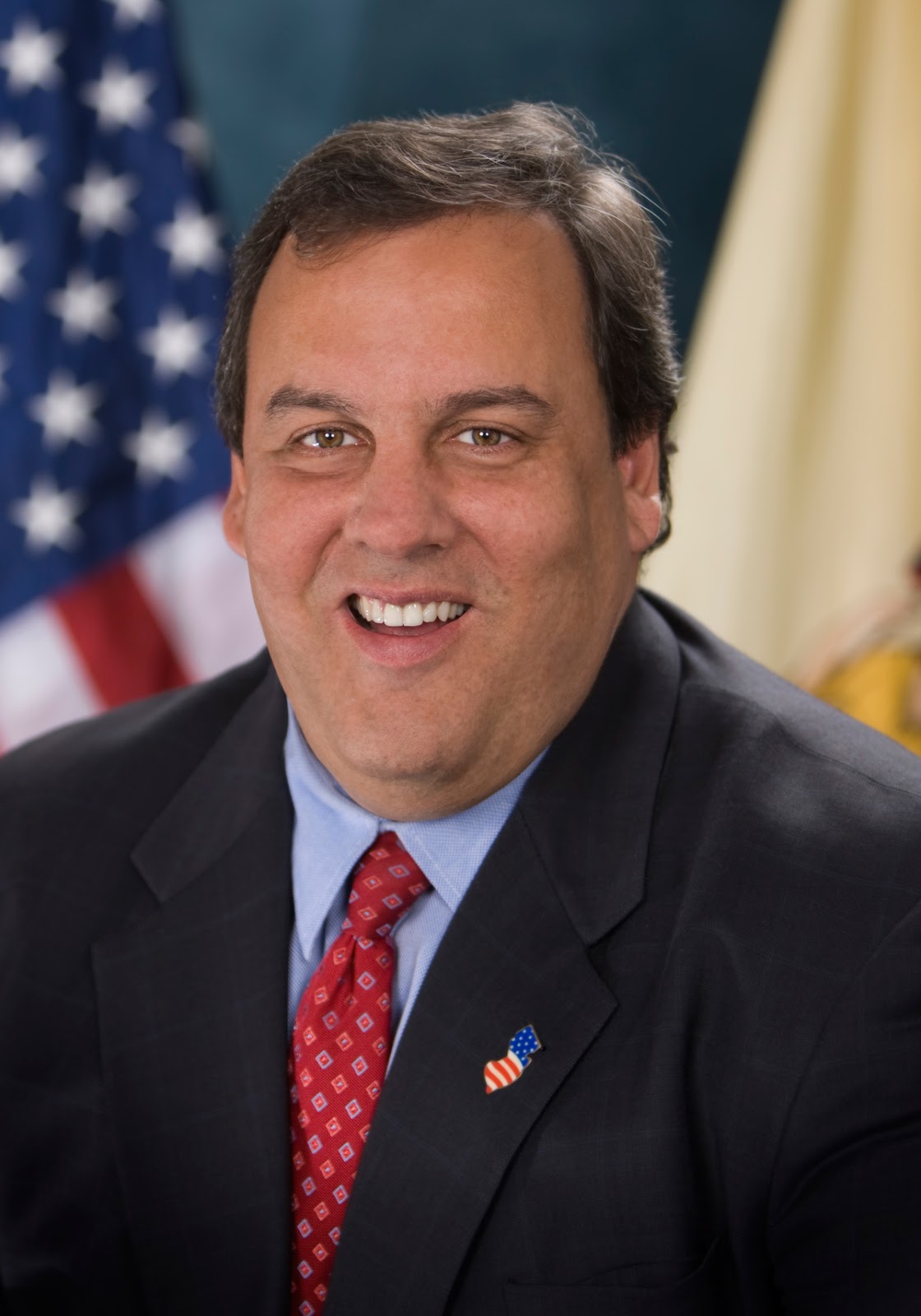
The idea under-girding his speech was that the storm may have knocked the state down, but by working together the state will get back up and get moving in the right direction.

He then offered an outline of his accomplishments — pension reform, the property tax cap, balanced budgets — that was specifically crafted to elide some of the ways in which these accomplishments were achieved. No mention of the cut in the earned income tax credit, for instance, or the fact that he willfully underfunded the pension fund or the state’s school funding law; no mention of his use of inflated or overly optimistic revenue projections to sell an unwise tax cut or to the one-shot revenues — affordable housing trust fund, the foreclosure settlement money — that makes his far less different than his predecessors than he believes.

Democrats were not shy with the criticism and, while a good amount of it was the kind of political posturing typical of opposition-party responses, there were some legitimate criticisms involved that should help structure the kind of questions asked as we move forward.

Assembly Majority Leader Louis Greenwald (D-Camden) summed these issues up:

“Rebuilding our storm-ravaged communities is of paramount concern, but we cannot ignore the problems we faced before Sandy and permit them to worsen. Rising property taxes and a continuing unemployment crisis are problems we must address, and I am hopeful the Governor will join with us in bipartisan spirit to do so.

“We need a broad approach that addresses our underlying economic crisis so that we will be better positioned to help all our citizens–whether it’s our shore towns, our struggling middle-class families, or our senior citizens.”

We need to help everyone affected by Sandy — I think everyone agrees on this point — but we also need to remember that many in New Jersey were hurting well before the storm started forming.

It as a good speech, but not a great speech, not one that will alter the political dynamics in the state.

Send me an e-mail.
Drawing lines on abortion and the budget

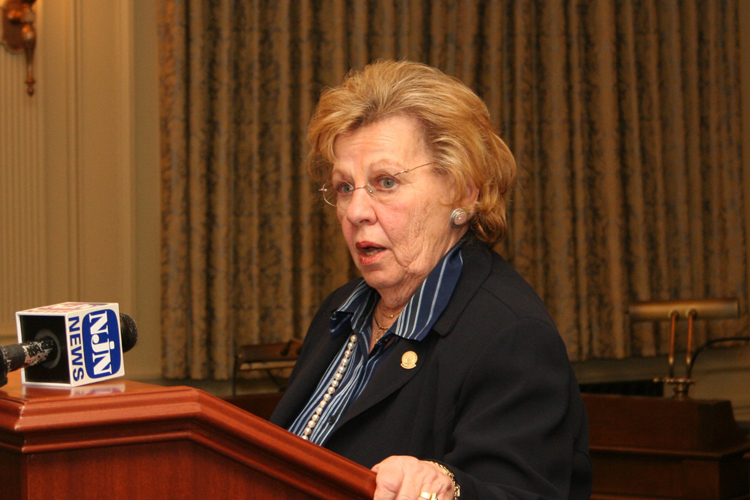
Sen. Loretta Weinberg, D-Bergen

In the context of a massive budgetary shortfall, the governor and his party push several huge tax breaks for upper-income folks and corporations. But $7.45 million in family planning — no dice, the GOP says.

Sen. Linda Greenstein, D-Middlesex/Mercer
Sen. Joseph Vitale, D-Middlesex

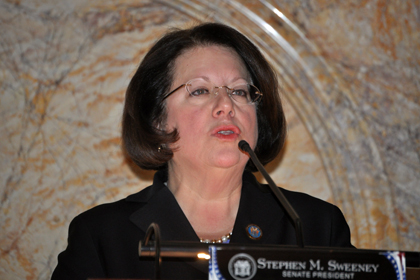
A Senate vote today on S2899 — sponsored by Democrats Loretta Weinberg, Linda Greenstein and Joe Vitale — elicited some interesting responses from Republicans, who accused Democrats of by-passing process (will they make the same argument if the governor defies the state Supreme Court?) and supporting a group (Planned Parenthood) that, in Sen. Gerald Cardinale’s words, “supports abortion at every turn.”

“This bill is not about women’s health, it’s about partisan politics,” he said.

He is right, of course. The bill was as much about drawing clearer lines between the parties on two key issues: abortion and the budget. The GOP — or at least the governor and a majority of GOP senators — is willing to toss out funding for poor women’s health to limit abortion services for poor women, even as they hand over cash to those who need it least.

Sen. Greenstein offered this statement:

“The simple fact of the matter is that the Governor’s cuts to family planning and women’s health services have left women at a disadvantage in receiving basic health care,” said Senator Greenstein, who serves as a member of the Senate Budget Committee. “With unexpected revenues coming into the State, I think it’s fiscally wise and socially conscientious to reverse cuts to women’s health care. When you consider the total savings to the State from federal matching funds, there’s simply no fiscal argument you can make against investing this money in programs that make a difference in people’s lives.”

The Democrats know that Gov. Chris Christie is going to veto the bill. They have 26 “yes” votes, one short of overriding a veto — but either way, they will have made their point. Will it matter at the polls? Probably not for the governor. But the entire Legislature is up and I suspect it will help a handful of Democrats in an election that likely was going to favor the party anyway.

  • Send me an e-mail.
  • Read poetry at The Subterranean.
  • Certainties and Uncertainties a chapbook by Hank Kalet, will be published in November by Finishing Line Press. It can be ordered here.
  • Suburban Pastoral, a chapbook by Hank Kalet, available here.

Giving states the veto is a bad idea

I would dismiss this as a joke, but given the looniness we’ve seen grow on the issue of federal power it obviously is not a joke.

The this, in this case, is an amendment that would grant state legislatures the power to repeal federal law — two-thirds of all state legislatures would need to vote for repeal. It has the backing of folks in 12 states (the story says legislatures, including New Jersey, when it needs to be made clear that full legislatures are not on board in most cases) and some in Congress — which leaves me wondering if anyone is thinking clearly out there.

The amendment is being pushed as a way to trim federal sails and force national lawmakers to consider the impact of their actions on the states, which sounds logical in theory but would create chaos in practice and do little more than further empower small states and, more ominously, make progressive reform impossible.

As with the filibuster, the threat of a repeal vote might be enough to stall action — consider what might have happened to civil rights legislation had this been in effect in the mid-1960s. The reality is that the federal government has no choice but to step in sometimes — to address questions of race, class, gender, sexual orientation, to impose regulatory rules that can act as a baseline and so on.

Giving a veto to the states will create a downward pull on all of these issues, because there will be no incentive for states with the weakest environmental regulations, those with out workplace safety laws, without a minimum wage, etc., to improve, no minimum standards to meet, etc. States with effective laws will have little choice but to gut their own regulatory apparatus to keep business from fleeing to the states of least resistance.

This craziness, of course, is brought to you by the same people who believe that democracy would be enhanced by taking the right to vote for U.S. Senators away from the people and handing it to the very state legislatures that have proven inept and corrupt. (Does anyone really think that the people we send to Trenton would do a better job picking Senators than the voters? Does anyone think that the people in Trenton will be thinking of us and not of themselves?)

  • Send me an e-mail.
  • Read poetry at The Subterranean.
  • Certainties and Uncertainties a chapbook by Hank Kalet, will be published in November by Finishing Line Press. It can be ordered here.
  • Suburban Pastoral, a chapbook by Hank Kalet, available here.

A love-hate relationship

This poll, from Eagleton, is interesting because it seems to mirror what we know about the way people feel about Congress: They hate Congress but tend to like their congressman; they hate the state, but like their little part of it.

  • Send me an e-mail.
  • Read poetry at The Subterranean.
  • Certainties and Uncertainties a chapbook by Hank Kalet, will be published in November by Finishing Line Press. It can be ordered here.
  • Suburban Pastoral, a chapbook by Hank Kalet, available here.

The dysfunction continues

The state has managed to mess up another federal education grant.

While I disagree that the grants — a Race to the Top grant and a charter school grant — have much merit, I think the failure to fill follow simple rules and follow through on grant applications does not bode well for the state.

It is easy to blame Gov. Chris Christie for this — and he deserves significant blame — but his predecessor and the entire bureaucracy at the Department of Education shouldn’t get off scott-free.

  • Send me an e-mail.
  • Read poetry at The Subterranean.
  • Certainties and Uncertainties a chapbook by Hank Kalet, will be published in November by Finishing Line Press. It can be ordered here.
  • Suburban Pastoral, a chapbook by Hank Kalet, available here.