A progressive push in the Legislature

New Jersey Democrats are flexing their more progressive muscles. The party is making two important progressive goals their top priorities — an increased minimum wage and marriage equality.

Sheila Oliver, the Assembly speaker, announced today that bumping the minimum wage to $8.50 from $7.25 an hour would be a top priority of the Assembly legislative session that starts tomorrow. She called it an “economic stimulus that doesn’t come in the form of more debt or increased spending” and “is a recognition that thousands of households in New Jersey are struggling to subsist on minimum wage jobs that do not allow them to support their families.”

The speaker’s announcement, which was endorsed by the liberal think tank, New Jersey Policy Perspective, came on the same day that state Democrats held a press conference to announce that they would introduce marriage-equality legislation when it convenes a new session tomorrow.

And yet, the Democrats are closing out a session in which they allowed business concerns to trump environmental ones — passing a bill delaying implementation of new sewer restrictions — and  approving privatization of school construction and management.

So, how exactly progressive is the New Jersey Legislature? More progressive than it has been during the first two years of the Christie administration — and just in time for a presidential election year.

  • Send me an e-mail.
  • Read poetry at The Subterranean.
  • Certainties and Uncertainties a chapbook by Hank Kalet, will be published in November by Finishing Line Press. It can be ordered here.
  • Suburban Pastoral, a chapbook by Hank Kalet, available here.

New legislative map a result of flawed goals

Democrats are happy with the new legislative map approved by the state’s redistricting commission, for no other reason than it is likely to preserve the party’s control of both houses of the state Legislature.

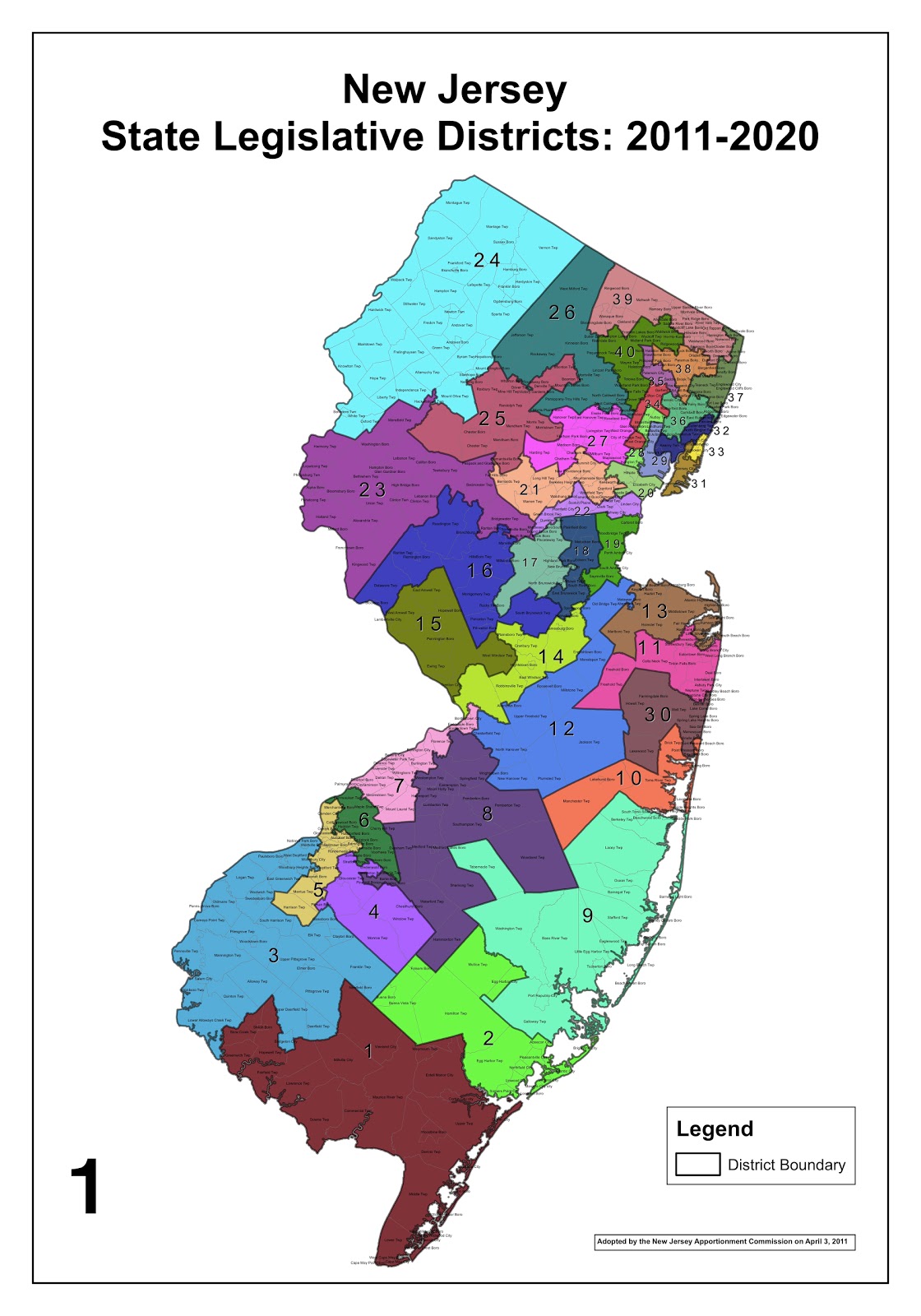
The final map, courtesy of the New Jersey Department of State

The Democrats’ attitude can be summed up pretty succinctly with this quotation from Mark Magyar’s story on NJ Spotlight:

“I’m keeping 24!” said an elated Senate President Stephen Sweeney (D-Gloucester), whose party holds a 24-16 majority.

Alan Rosenthal, the Rutgers professor brought in as the 11th member after it was clear that the two parties had deadlocked, listed his goals for the process early on, so the outcome here should not surprise anyone.

But Rosenthal’s goals — like the entire process —  were badly flawed. Rosenthal privileged continuity of representation above nearly every other goal, which meant that any map he was likely to back would be one that would safeguard incumbents.

In a state as dysfunctional as New Jersey, however, one has to wonder why anyone would want to make it easy for the majority of legislators — the people who have helped create the mess the state is in — to keep their jobs.

The result is a map, as Magyar points out,

makes it likely not only that Democrats will continue to hold their majorities in both the state Senate and the state Assembly in next November’s election, but also that 90 percent of incumbent legislators will be reelected with relatively little difficulty.

The goals should have been:

  • increased minority representation in the state Legislature
  • districts that are compact geographically (there are too many districts under the new plan in which towns — see South Brunswick in the 16th — are connected to the rest of their district by only a sliver of common border)
  • competition in as many districts as possible

These goals, however, would challenge the status quo and endanger too many sitting legislators.

Republicans, at the moment, are crying foul, but their map was only nominally better — it was designed to increase the number of Republicans and would have committed some of the same sins committed by the new map.

The effort raises some additional questions about the composition of the state Legislature and whether the static 40-district model makes sense, whether we should experiment with other forms of representation and why we have allowed the public-financing initiative to die.

New Jerseyans might be better served by a constitutional change that ties the number of legislative seats to population rather than apportioning 40 districts across a shifting population. Or, there could be a hybrid arrangement that allows for some members to be selected through proportional representation.

There are numerous possibilities. What the latest round of redistricting proves, unfortunately, is that our system of drawing boundaries is badly flawed and needs to be changed.

  • Send me an e-mail.
  • Read poetry at The Subterranean.
  • Certainties and Uncertainties a chapbook by Hank Kalet, will be published in November by Finishing Line Press. It can be ordered here.
  • Suburban Pastoral, a chapbook by Hank Kalet, available here.

Lines in the political sand

The lines are going to shift. That much we know. And once they do, it is likely that the Democrats will still control a majority of legislative districts in the state — that’s what Patrick Murray thinks, anyway.

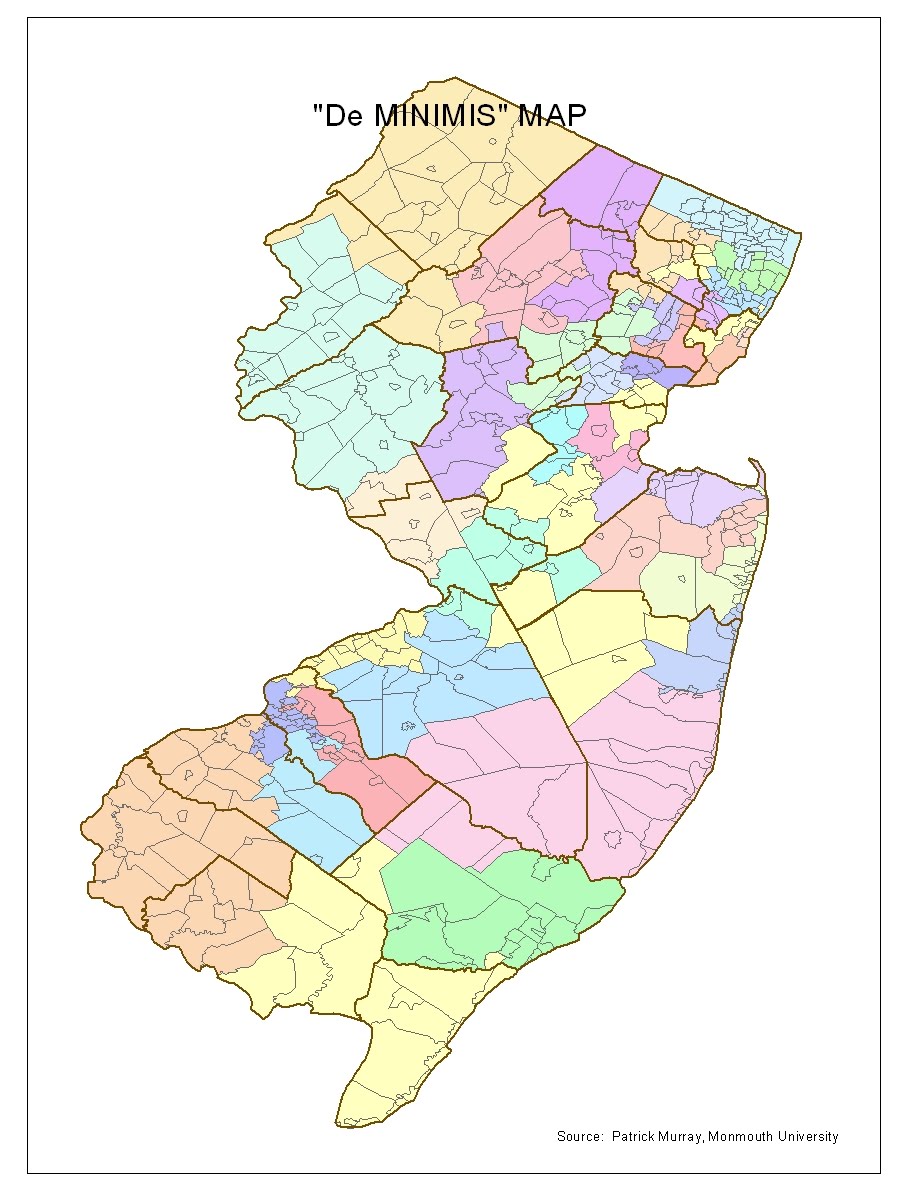
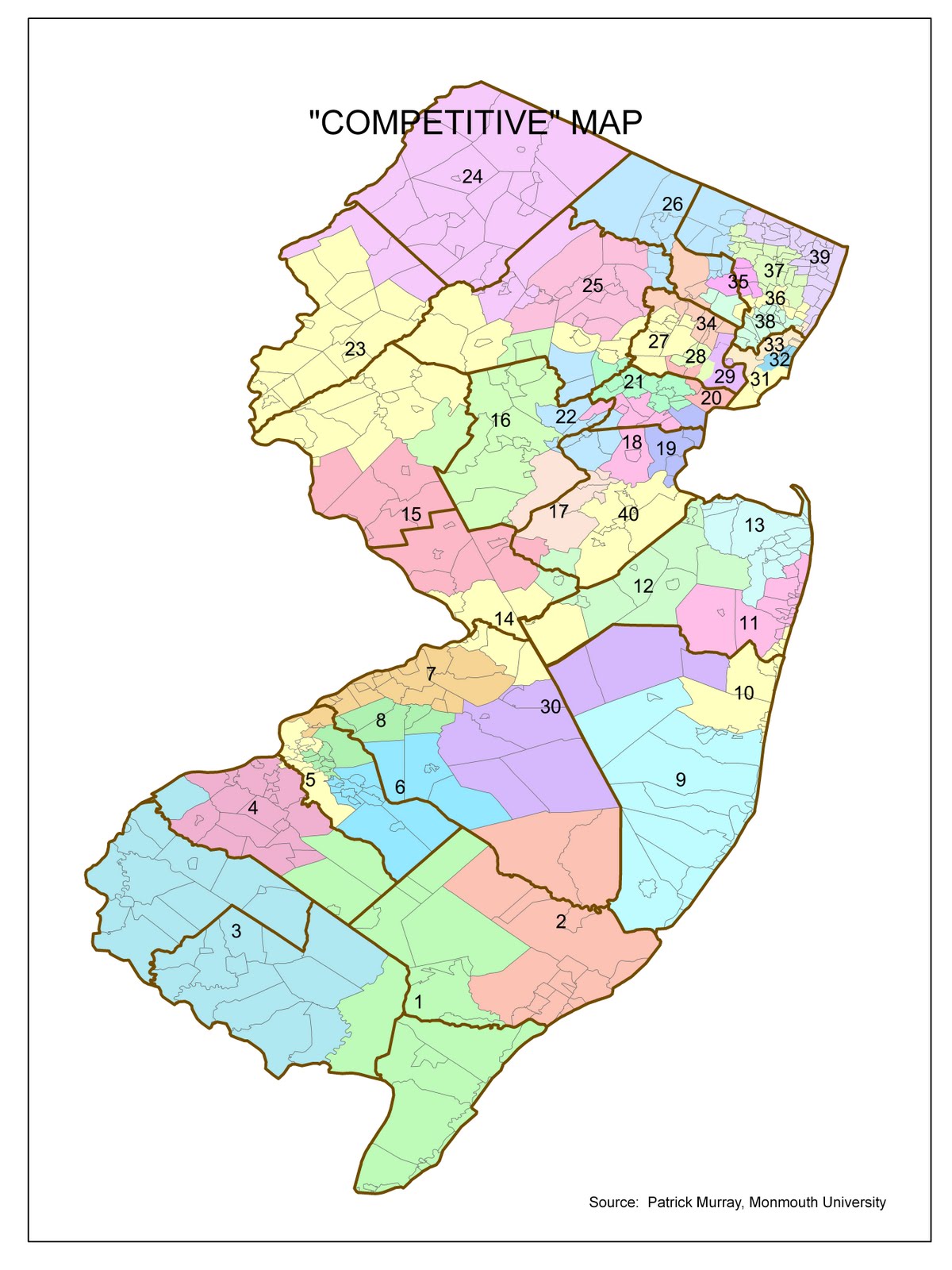
The map he included with his latest blog entry — one based on a memo purportedly distributed by Alan Rosenthal, the Rutgers professor who will be the deciding 11th vote on the redistricting commission.

Murray says that Rosenthal has set his sights on stability, meaning that he will push the commission to avoid large-scale changes. The memo, he says, outlines five basic standards: population range, contiguity, compactness and avoiding municipal splits, and “contiguity of representation.’

Taken together, Murray says, the standards “allow for very little change to the current map.” And that, he says, is consistent with Rosenthal’s writings. He calls this believe “the money card in Rosenthal’s standards”:

Rosenthal defines this as incumbents facing a familiar electorate. In other words, incumbents should be drawn into districts where the majority of voters are already represented by them. You could also call this the de minimis rule – any change should not be consequential to the current system as a whole. Anyone who has worked with Dr. Rosenthal or read his published works on state legislatures will not be surprised by how much he values this type of continuity.

The problem, as Murray points out, is that Rosenthal has little interest in competitiveness (neither party is interested in competitiveness; they would prefer to see uncompetitive districts that protect as many of their own as they can draw). In a state with few competitive districts — the 14th, the 12th, maybe one or two others and this assumes a rather loose definition of competitive — that leave entrenched power in place.

Power shifts are rare in the state — Democrats took control in the 1970s after Watergate and Republicans took control temporarily in the early 1990s in reaction to the Florio tax hike and watched their majority slowly slipped away.

The redistricting discussion is treated as a partisan debate, but it should be viewed as a chance to improve representation, to expand democratic opportunities. If that means a shift in party power, then so be it.

Locally, it appears, the 12th, 14th, 15th, 16th, 17th and 18th districts — which cover most of central New Jersey — are likely to see significant change. South Brunswick is likely to be moved, as is Monroe, but it is unclear where they will end up. If Plainsboro stays put — and it should remain connected to West Windsor — then Linda Greenstein will be losing a large chunk of her voters. South Brunswick’s power could grow if moved to a district that includes the other Brunswicks, because it would mean most of the towns would be about the same size.
The “De Minimus” map I’ve included with this post has South Brunswick, Monroe, East Brunswick and Franklin making up a new district. What’s left of the current 14th would be filled out with East Windsor, Hightstown, Robbinsville and Millstone; the 15th would get southern Hunterdon County and so on.

The more competitive map favored by Murray (left) would pair Hamilton and Trenton in a new 14th filled out with parts of Monmouth and Burlington counties; South Brunswick would move to the 17th with Franklin and North and New Brunswick; East Brunswick, Old Bridge and Monroe would make up part of a new 40th district.

Is this better? Hard to say. It certainly shifts more bodies around, but does it create better representation? Murray thinks so.

In any case, maybe the lines mean a lot less than we think. Maybe we just need a better class of candidate.

  • Send me an e-mail.
  • Read poetry at The Subterranean.
  • Certainties and Uncertainties a chapbook by Hank Kalet, will be published in November by Finishing Line Press. It can be ordered here.
  • Suburban Pastoral, a chapbook by Hank Kalet, available here.

Packing up

The redistricting committee has met just three times, but it already is entering its contentious stage with the discussion focusing on a scheme to pack minorities into unified minority districts. The plan, being pitched as a way to increase minority representation, would have the side effect of creating more suburban (read white) districts expected to vote Republican.

Some Latino groups back the plan, others oppose it and the two political parties that control our broken state government are arguing its merits (the GOP, while not endorsing it, certainly is exploring it, while the Democrats are opposed). No one, which should be obvious, is concerned with anything more than narrow parochial interests.

I hope this is not the direction this debate takes, because too much is at stake in the redistricting plan.

  • Send me an e-mail.
  • Read poetry at The Subterranean.
  • Certainties and Uncertainties a chapbook by Hank Kalet, will be published in November by Finishing Line Press. It can be ordered here.
  • Suburban Pastoral, a chapbook by Hank Kalet, available here.
Battling over bad reforms

I’ve written about this often, so I’ll just say that the battle between the governor and the state Legislature over the proposed tool kits — “I say, ‘pass mine,’ one says; ‘no, pass mine,’ the other chimes in” — is pretty meaningless. Real reforms will do more than nibble around the edges of the problem and scapegoat public workers.

  • Send me an e-mail.
  • Read poetry at The Subterranean.
  • Certainties and Uncertainties a chapbook by Hank Kalet, will be published in November by Finishing Line Press. It can be ordered here.
  • Suburban Pastoral, a chapbook by Hank Kalet, available here.