It’s still a numbers game

It’s about numbers, and the most recent number to hit the New Jersey is the registration figure released by Secretary of State Nina Wells (as reported in The Star-Ledger):

New Jersey Secretary of State Nina Mitchell Wells said the state has 5.22 million registered voters, down from 5.35 million in 2008 when the presidential race brought a registration surge.

There are still more Democrats than Republicans — 1.77 million to 1.06 million. But Republicans have closed the gap a bit, adding some 5,000 voters since last year. Meanwhile, the number of Democrats dropped by a similar amount.

Nearly half of the voters — 2.51 million — are registered as “unaffiliated.”

It’s not much of a change, especially when you consider last year’s record registration figures. And it seems pretty clear that quite a few of those still registered will be staying home next week. The question is: Which candidate benefits?

It’s about Corzine and Christie, not Obama

I’m getting tired of hearing that a Jon Corzine loss in the New Jersey governor’s race would be an indication of a loss of faith in Barack Obama.

You hear it on cable, in the blogs (especially the right-wing ones) and it pops up from time to time in print: The gubernatorial races in New Jersey and Virginia are bellwethers and can be used effectively as standins for a rerun of the 2008 presidential race or as a preview of the 2010 congressional mid-terms.

In a state where no Republican has won a statewide race in more than a decade, Mr. Christie could be a “bellwether” for a GOP revival in 2010, according to Republican National Committee Chairman Michael Steele, who stumped with the candidate in the state last month.

Mr. Christie “plays across the state unlike any Republican” in the past several election cycles, Mr. Steele told a gathering of Republican faithful in Pitman, N.J.

“You must be the next governor from this state,” Mr. Steele said. “It is a bellwether in so many ways for the future of our party and the future of our nation.”

The reality is far more complex, at least here in New Jersey, and has little to do with the president’s popularity and everything to do with Jon Corzine’s — or his lack thereof.

Consider the poll numbers and the trends:
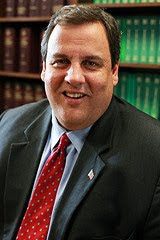
Notice anything? Chris Christie has maintained a rather consistent lead since at least April. And if you go back farther, you’ll see that the governor has managed to lead in only two polls all year: a Jan. 12-14 Monmouth/Gannett poll that had him up by 2 percentage points and a Jan. 2-7 Fairleigh Dickinson poll that had him up by 7. Once we hit February, it’s been all Christie.

At the same time, Obama continues to have approval ratings in the 50s (aside from a Rasmussen poll that puts him at 49 percent) nationally and much higher in New Jersey.
Corzine, on the other hand, has some pretty horrid approval numbers — in his case, it might be better to call them disapproval numbers: 37 percent positive and 52 percent negative among registered voters 34-58 among likely voters) in a Monmouth University poll released Sunday.

The evidence, it would seem, just doesn’t support the bellwether meme. But the bellwether meme has nothing to do with New Jersey; it is a national construct that makes good fodder for cable television, which has difficulty getting past their narrow focus on Washington.

The New Jersey governor’s race has played out and will continue to play out on state issues. In the end, it will not be a referendum on Obama, but a referendum on Jon Corzine. The Washington media and the cable TV cranks are just too removed from the ground to understand that.

Green issues not likely to be on gubernatorial table

Environmental issues are likely to get short shrift in this gubernatorial race — and not only because the two leading candidates appear stuck in attack mode and willing to focus on the smallest of alleged ethical lapses.

It’s not only because property taxes and the economy are front in center in voters’ minds.

It has to do with a lack of real interest in the environment by either Gov. Jon Corzine or Chris Christie.

Corzine does not have a good environmental record. He has done some good things — boosting alternative fuels, for instance — but his larger record is far from green, as this report issued by the EPA (which is led by his former environmental commissioner) shows.

Christie has some interesting (if vague and modest) proposals on his Web site, but has said little about green issues on the stump — except to slam Corzine for failing to win the endorsement from the Sierra Club (which Christie also failed to earn).

A second group last week also withheld its endorsement — this time of all candidates:

One of New Jersey’s leading environmental groups announced today it will withhold an endorsement in this year’s governor’s race because its leaders have yet to hear substantive environmental plans from the candidates.

“We really think the candidates thus far have done a poor job crafting environmental positions and showing where they stand on the environment,” said Dena Mattola Jaborska, executive director of Environment New Jersey. “Before people go to the polls this fall, we want them to be educated on the candidates positions.”

Basically, neither of these guys has much of a record to stand on when it comes to green issues and neither is going to go out of his way to talk about it.

Consolidating power

http://www.nj.gov/governor/news/video/jw/player-viral.swf
Much of the focus of yesterday’s corruption bust in New Jersey has been on the ugly behavior of the officials involved, the scope of the sting and the bizarre nature of some of the offenses.

But the governor said something yesterday that deserves more attention than it’s been getting. It wasn’t part of the prepared remarks; rather, it came afterward and registered little more than two paragraphs at the end of this story in The Asbury Park Press:

And he said the solution is to reduce New Jersey’s sprawling government — the state and its many authorities and commissions, 21 counties, 566 municipalities, 603 school districts, fire districts and local and county utility authorities.

“We have layers upon layers upon layers of government. And you in the press corps who follow this know how difficult is it to get to consolidation and shared services,” Corzine said. “If there were ever an example of a need to seek some element of consolidation in the efforts of how we deliver government, I think this is testimony. There are so many targets of opportunity for individuals who want to test somebody’s credibility in this state.”

This year’s gubernatorial election is being waged over Corzine’s record and the palpable sense that the state has run off the road and into a massive ditch. There has been a lot of talk about property taxes and the Republicans have talked about cutting government — without much in the way of specifics.

But the ability of this state to function efficiently and ethically is severely compromised by the shear number of government entities — about 1,400 taxing agencies. There may not be another issue as important. We know the governor thinks it’s important, though he has done very little so far to change it. We know little about where Christie stands on the issue.

My questions to the candidates are:

  1. Do the number of municipal governments, school boards and other taxing districts help or hurt the state?
  2. How?
  3. Assuming there are too many, how would you reduce them?

Their answers should be considered when everyone in the state goes into their voting booths in November.