Political World: Pain at the pump may have benefits

Political World, my twice-weekly Patch column is up (here is the East Windsor link).

  • Send me an e-mail.
  • Read poetry at The Subterranean.
  • Certainties and Uncertainties a chapbook by Hank Kalet, will be published in November by Finishing Line Press. It can be ordered here.
  • Suburban Pastoral, a chapbook by Hank Kalet, available here.

Fill ‘er up

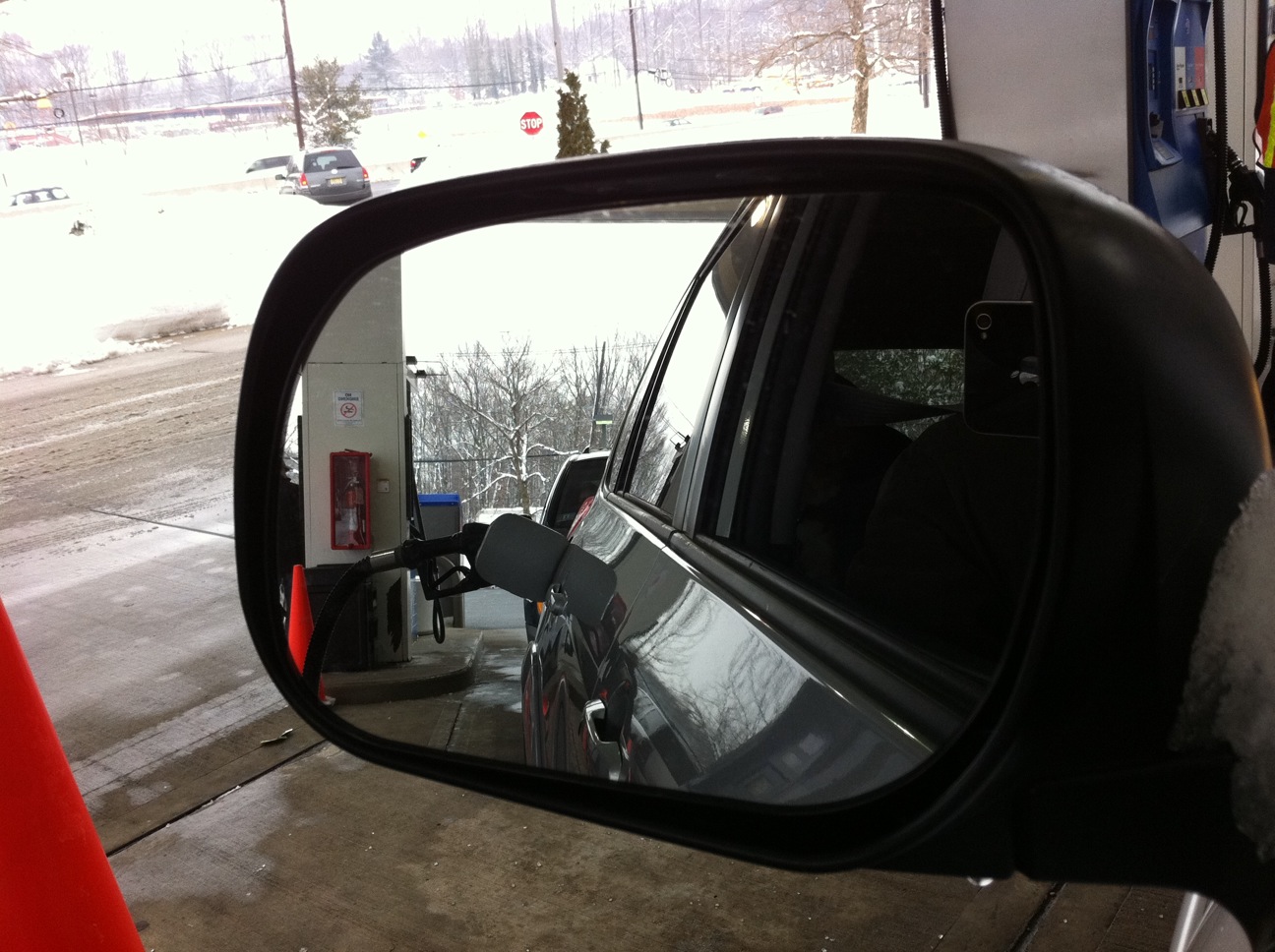
I stopped to fill the gas tank on my RAV4 this morning and, cough, it cost me $39.14, or $2.999 a gallon. That’s a lot of pocket change to keep the rubber on the road, as they say. But is it too much?

I don’t think so.

Like everyone else, I hate to pay high gas prices — and high prices for anything — but the question is whether higher gas and energy prices are bad for society as a whole.

I’m going to go out on a limb and say no. Free-marketers should agree (though, I suspect they won’t), because higher energy prices in theory should alter behavior, lead people to drive less, conserve, invest in alternative energy or high-mpg cars, etc.

There are problems — higher energy costs will hit the middle class and the poor to a greater degree — that need to be addressed by government, including subsidies to energy users to encourage the move to efficiencies and use of alternative power, an end to oil company subsidies (as the president has proposed), planning and zoning rule changes, etc

The point is, we cannot expect not to see gas prices rise. It is inevitable, especially given how scarce gasoline is and how damaging its use is to the environment. We are going to pay for this scarceness and damage, either in money or in something more vital (resource wars will be bloody).

  • Send me an e-mail.
  • Read poetry at The Subterranean.
  • Certainties and Uncertainties a chapbook by Hank Kalet, will be published in November by Finishing Line Press. It can be ordered here.
  • Suburban Pastoral, a chapbook by Hank Kalet, available here.

Climbing fuel prices shouldn’t surprise

Drivers may wonder why gas prices are on the rise again, given that the factors that usually drive cost — demand, the commodities market — would seem to favor lower prices.

That wonder, however, would be misplaced. While the recession helped drive prices down from their record levels of last summer, December and January fuel prices were artificially low.

AAA Mid-Atlantic, in a press release, hints at this:

Gasoline refiners have been severely cutting back their output of gasoline either by design or due to “maintenance and operational issues”. Which has industry watchers who trade gasoline futures expecting that OPEC and US refiners will be able to cut output enough to bring supply and demand into balance over the next few months.

Which implies that supply and demand have been out of balance — leading to the wild swings we’ve experienced over the last year or so.

Balance, however, is an elusive quality and, like beauty, in the eye of the beholder. Drivers obviously desire that “balance” lead to low fuel prices, while the oil companies have a different sense of what it means.

The reality is that we have lived for a long time with artificially low fuel prices that have encouraged an unsustainable style of living that will have to change — both for environmental and longterm economic reasons.

Supply, demand and gas prices

Just as an FYI about my earlier post on gas prices — from AAA’s Fuel Gauge Report: Prices are falling fast.

AAA Mid-Atlantic says the dropoff is due to a falloff in demand:

Gasoline consumption is down again, according to the U.S. Department of Energy. The rolling four-week average is nearly 3% below the same time last year. Demand has fallen every month from March through September and vehicle-miles-traveled have dropped for 11 straight months, falling 4.4% in September.

The drop in price is straight out of Econ 101 — it is about supply and demand. The failihng economy

If there is more supply than demand, then prices fall. The GOP — more specifically, the McCain campaign and the Bush administration — view the supply side as the more important one, with the idea being to increase the supply of crude oil. More crude oil, which in turn means more gasoline for drivers, would then force prices down.

In theory, this makes sense. In practice, it ignores limitations on supply — crude oil is a finite resource that is becoming increasingly expensive to obtain — and burgeoning demand. As anyone who drives on New Jersey’s crowded highways knows, there is no shortage of drivers.

As the last six months have shown, the key is to reduce demand. The most current shrinkage in demand, however, is tied to the economy, with people cutting ack on their driving to save money. I would hope this would lead to a permanent change in driving habits, but we all know that’s unlikely.

The reality is that, as gas prices fall (or the economy improves), people will start driving more and more and prices will level and start to rise. If we want to do something about gas prices — and, more importantly, about the damage that fossil fuels do to the environment — we need to do more than talk about reducing demand. We need to boost fuel economy standards and create alternative fuel sources, while also encouraging consumers to opt for more fuel-efficient cars (hybrids, plug-ins, etc.) through tax incentives.

While conservatives are pointing to the economic meltdown as a reason to scrap some of President-elect Barack Obama’s environmental plans (in favor of, yes, you guessed it, tax cuts), the reality is that the kind of changes in thinking his plans would entail (including research and development into fuel-efficiency and new fuels) fit nicely with the kind of stimulus needed to get things going.

The false promise of falling gas prices

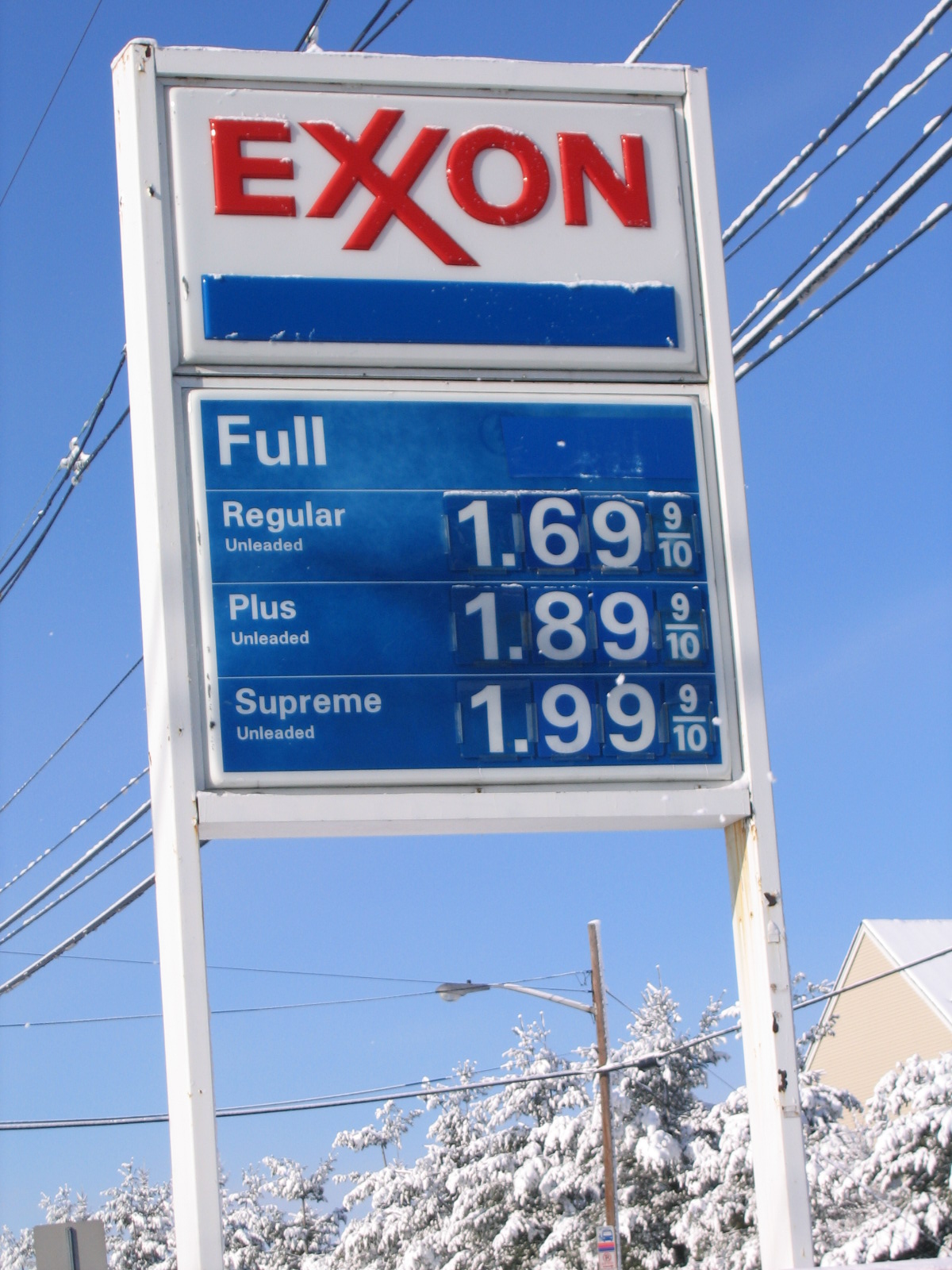
The Valero station at the Cranbury circle on Route 130 is selling unleaded regular for $1.71 a gallon cash — a figure that is shockingly low compared to the sometimes $3-plus a gallon we were paying in central New Jersey over the summer. And the other stations on Route 130 appear to be in the same $1.70-$1.75 range.

That is creating a false sense of security, an assumption that fuel efficiency is not an important consideration when looking for a new car.

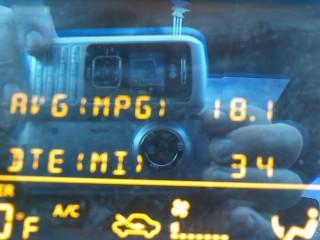
I learned this on Friday, talking to my brother-in-law about my leased Nissan Murano. The lease runs out in February and Annie and I already are thinking about what we need to do. Both of us have come to the realization — something we should have understood three years ago — that fuel efficiency has to be a part of our discussion. We can’t afford a hybrid, nor are we prepared to go with a car small enough to get us 30-plus mpg, but we have to improve on the ridiculous 18 mpg we get now.

I told my brother-in-law this, saying we weren’t sure what we wanted to replace the Murano with.

“Why,” he said. “Gas prices are down.”

True enough. But for how long? The reality is that anything below $2 is artificially low (even $2.50 is optimistic) and when the economy stabilizes gas prices will start climbing again.

So, the best course of action is to understand this and rethink our response. It is no longer good enough to say gas prices are too high. We have to find ways to lessen our use, and the only way to do this is to cut down on our driving and to boost fuel-efficiency standards.

As a driver, I have to consider this when I buy (or lease) my next car. It is irresponsible — both economically and environmentally — not to.