
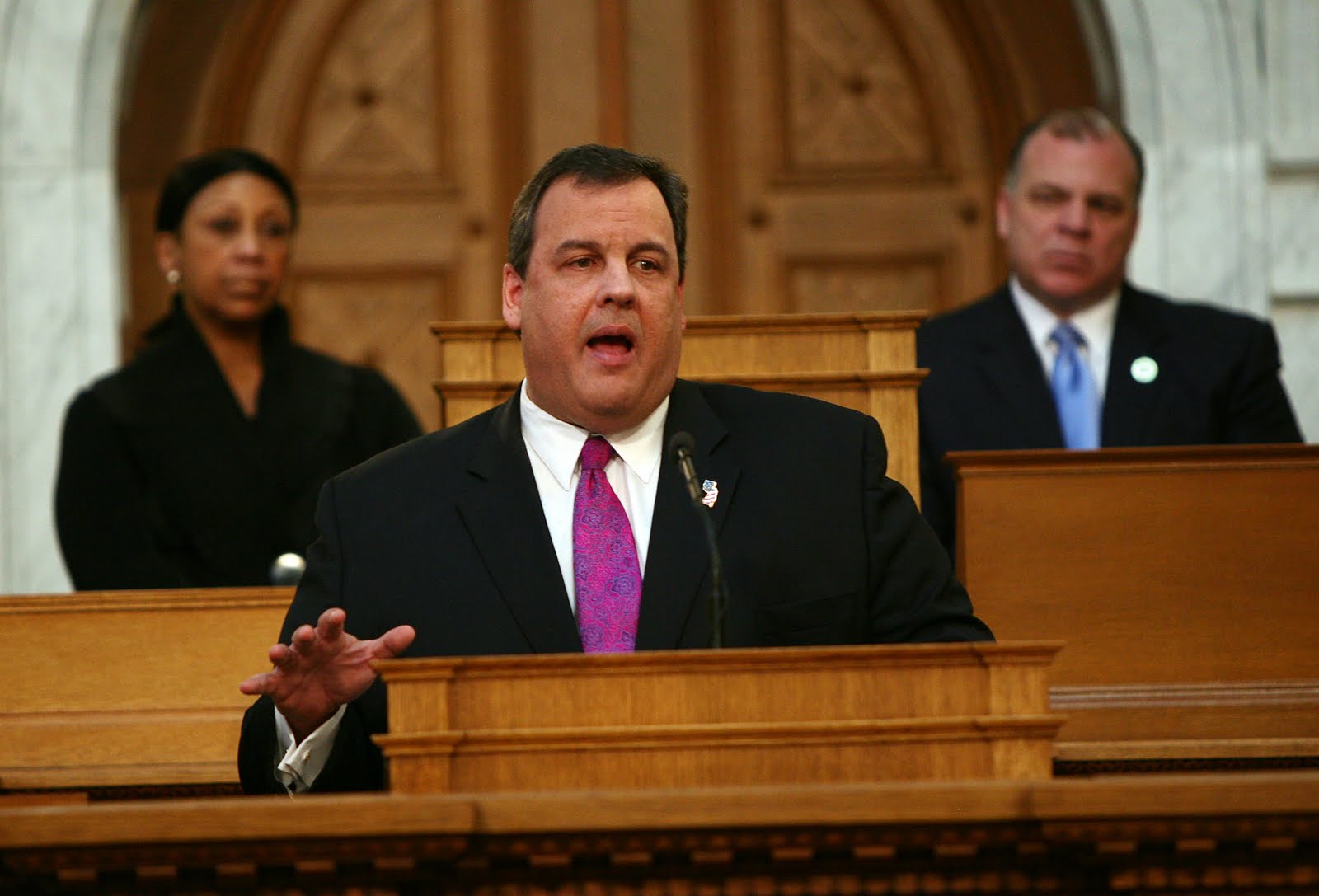
It ain’t easy being green, when all you are is mean

In October 2009, the New Jersey Environmental Federation did something it had never done: It endorsed a Republican for governor.

Four years after endorsing Democrat Jon Corzine, the NJEF concluded that Corzine’s environmental record was a disaster — an accurate assessment — but rather than sit out the election or back the third party candidate, Chris Daggett, it opted to back the conservative Republican based on a set of promises.

Christie won the election, of course, and has made the NJEF look foolish, running up the worst environmental record in memory — worse than both Corzine and Christie Whitman.

The New York Times today, placing his most recent assault in a larger context, offers us the list:

Running for governor in 2009, Chris Christie vowed to become “New Jersey’s No. 1 clean-energy advocate.” That was a hollow promise. As governor, Mr. Christie proceeded to cut all the money for the Office of Climate and Energy. He raided $158 million from the clean energy fund, meant for alternative energy investments, and spent it on general programs. He withdrew the state from an important lawsuit against electric utilities to reduce emissions.

On Thursday, he took the worst step of all: He abandoned the 10-state initiative in the Northeast that uses a cap-and-trade system to lower carbon-dioxide emissions from power plants. The program has been remarkably successful, a model of vision and fortitude. Lacking that, Mr. Christie has given in to the corporate and Tea Party interests that revile all forms of cap and trade, letting down the other nine states trying to fight climate change.

The governor also eliminated the office of the public advocate and has slashed DEP funding, but those seem minor given the entire green — or should I say antigreen — record.

It should be noted that Christie’s 2009 campaign featured another important element — an attack on Corzine for breaking promises made during the Democrat’s 2005 campaign. Someone should play those attacks back to Christie and remind him that the promises he has been breaking carry no less weight.

  • Send me an e-mail.
  • Read poetry at The Subterranean.
  • Certainties and Uncertainties a chapbook by Hank Kalet, will be published in November by Finishing Line Press. It can be ordered here.
  • Suburban Pastoral, a chapbook by Hank Kalet, available here.

Christie doubts the science of global warming (But he’s not running for president)

Chris Christie was considered a green-friendly Republican when he ran for governor, winning the NJ Environmental Federation’s endorsement in 2009 and praise from other groups that remained neutral in the governor’s race.

A year later and it is clear that Christie is not only not green, but he is downright dismissive of the environmentalists who helped him win the Statehouse by giving him credibility on green issues last year.

He has done some positive things — signing wind farm legislation, for instance — but on the whole he has been a disaster for the environment, gutting funding for alternative energy programs, reorganizing the state Department of Environmental Protection while making it more business-friendly and so on.

And now, with rumors flying that he will be on the national ticket in 2012 — rumors he denies, sort of, maybe, sort of — he is moving to ensure that his green credentials are in keeping with the wacko fringe of the Republican base that he will need on is side in a primary.

Here is a brief report issued by the Associated Press and posted on NJ.com:

Gov. Chris Christie says he’s skeptical that humans are responsible for global warming.
The governor, a new darling of the Republican Party, made the remark at a town hall meeting he hosted in Toms River Tuesday afternoon.

Asked by a man attending the event whether he thought mankind was responsible for global warming, Christie says he’s seen evidence on both sides of the argument but thinks it hasn’t been proven one way or another.

Christie says “more science” is needed to convince him.

More science? Really? Despite the consensus that exists within the scientific community on the issue, he wants more — which should make the fringe happy, but will leave us here in New Jersey dealing with the fallout.

  • Send me an e-mail.
  • Read poetry at The Subterranean.
  • Certainties and Uncertainties a chapbook by Hank Kalet, will be published in November by Finishing Line Press. It can be ordered here.
  • Suburban Pastoral, a chapbook by Hank Kalet, available here.

Carrots and sticks and the high cost of going green

The nation’s energy debate is a nonstarter.

While most people, according to the polls, believe we need to do something to slow global warming, there is no agreement on how. And, just as importantly, our reliance on the market is making it impossible to address the problem. As The New York Times makes clear, the high upfront costs of renewables places them at a disadvantage in the marketplace.

Even as many politicians, environmentalists and consumers want renewable energy and reduced dependence on fossil fuels, a growing number of projects are being canceled or delayed because governments are unwilling to add even small amounts to consumers’ electricity bills.

Deals to buy renewable power have been scuttled or slowed in states including Florida, Idaho and Kentucky as well as Virginia. By the end of the third quarter, year-to-date installations of new wind power dropped 72 percent from 2009 levels, according to the American Wind Energy Association, a trade group.

The Times explains that

Electricity generated from wind or sun still generally costs more — and sometimes a lot more — than the power squeezed from coal or natural gas. Prices for fossil fuels have dropped in part because the recession has reduced demand. In the case of natural gas, newer drilling techniques have opened the possibility of vast new supplies for years to come. 

Left undiscussed is the infrastructure of incentives that supports the oil and natural gas businesses, with government subsidies for exploration and drilling dwarfing the small change provided to the green energy sector.

Government policy can address this — first, by ending the tax breaks given to gas and oil companies, plugging loopholes and then by shifting the money to green programs in the form of consumer credits and development subsidies for green companies.
 The cost to society of burning one gallon of fossil fuel needs to be reflected in the price we pay at the pump, which is not happening now. An increase in the national gas tax, with the proceeds going to green investment (along with state level taxes that would pay for roads and mass transit) is good public policy that will save us money in the long run by preventing the costly impacts of climate change and other pollution-related problems.

Basically, we must use energy tax policy as a carrot and stick to alter the competitive field in the energy business.

NJ not so green these days

New Jersey had been one of the greener states. But with the economy mired in recession, the state’s legislators have retreated from their strong defense of environmental planning and rules.

The result is a somewhat less-than-stellar report card from Environment New Jersey, a green advocacy group. From the Associated Press:

A new report gives New Jersey lawmakers poor marks as stewards of the environment.

Environment New Jersey’s biannual report shows the average state legislator’s score dipped to 55 percent, a drop of 20 percent from the prior report.

The group released scorecards today for the state Senate and Assembly, ranking eight environmental votes.

Four lawmakers — Sens. Bob Smith and Shirley Turner and Assembly members Linda Greenstein and Peter Barnes — achieved perfect scores. Four others — Assembly members Alison McHose, Gary Chiusano, Jay Webber and now-retired Rick Merkt — scored zeros.

Environment New Jersey ranked votes on solar energy, development and energy savings bills.

More to come on this when I get a copy of the report card.