
The Valero station at the Cranbury circle on Route 130 is selling unleaded regular for $1.71 a gallon cash — a figure that is shockingly low compared to the sometimes $3-plus a gallon we were paying in central New Jersey over the summer. And the other stations on Route 130 appear to be in the same $1.70-$1.75 range.
That is creating a false sense of security, an assumption that fuel efficiency is not an important consideration when looking for a new car.
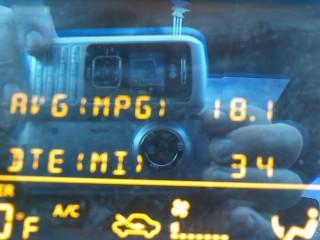
I learned this on Friday, talking to my brother-in-law about my leased Nissan Murano. The lease runs out in February and Annie and I already are thinking about what we need to do. Both of us have come to the realization — something we should have understood three years ago — that fuel efficiency has to be a part of our discussion. We can’t afford a hybrid, nor are we prepared to go with a car small enough to get us 30-plus mpg, but we have to improve on the ridiculous 18 mpg we get now.
I told my brother-in-law this, saying we weren’t sure what we wanted to replace the Murano with.
“Why,” he said. “Gas prices are down.”
True enough. But for how long? The reality is that anything below $2 is artificially low (even $2.50 is optimistic) and when the economy stabilizes gas prices will start climbing again.
So, the best course of action is to understand this and rethink our response. It is no longer good enough to say gas prices are too high. We have to find ways to lessen our use, and the only way to do this is to cut down on our driving and to boost fuel-efficiency standards.
As a driver, I have to consider this when I buy (or lease) my next car. It is irresponsible — both economically and environmentally — not to.
 Hank Kalet