
The dangers of austerity

Dear policy makers:

The world economy remains in a funk, as does our economy here at home. What little growth we have seen is anemic and unemployment remains an nearly unheard of levels. We need an infusion of government money into our economies to help offset the massive amounts we have seen evaporate.

And yet, in Greece, in Italy, in Ireland, here, we have politicians talking about cutting their way out of the morass. That is a mistake.

Consider Portugal.

Unlike Greece, Portugal is a debtor nation that has done everything that the European Union and the International Monetary Fund have asked it to, in exchange for the 78 billion euro (about $103 billion) bailout Lisbon received last May.

And yet, by the broadest measure of a country’s ability to repay its debts, Portugal is going deeper into the hole.

The ratio of Portugal’s debt to its overall economy, or gross domestic product, was 107 percent when it received the bailout. But the ratio has grown since then, and by next year is expected to reach 118 percent.

That’s not necessarily because Portugal’s overall debt is growing, but because its economy is shrinking. And economists say the same vicious circle could be taking hold elsewhere in Europe.

Two other closely watched countries on the debt list, Spain and Italy, also have rising debt-to-G.D.P. ratios — even though they, like Portugal, have adopted the budget-slashing and tax-raising measures that the European officials and the I.M.F. continue to prescribe.

Portugal, as the Times points out, is the poster boy for austerity.

Vitor Gaspar, the Portuguese finance minister who came to power as part of a new government last summer, is highly regarded by European economic and finance officials. He has reduced the government’s budget deficit by more than one-third so far, through tough measures that include cuts in spending and wages, pension rollbacks and tax increases.

But many economists say those moves are also a reason Portugal’s economy shrank by 1.5 percent in 2011 and is expected to contract by 3 percent this year.
“Portugal’s debt is just not sustainable,” said David Bencek, an analyst at the Kiel Institute for the World Economy, a research organization in Germany. “The real economy does not have the structure to grow in the future and thus will not be able to pay back its debt in the long run.”

Without growth, there can be no reduction in debt —

It is akin to trying to pay down a large credit card balance after taking a pay cut. You can slash expenses, but with lower earnings it is hard to set aside money to pay off debt.

And it puts average workers in a painful bind, as they end up paying the price of poor decisions by government officials and bankers. Portugal is watching this play out as Europe and Greece debates how to address the Greek debt problem.

Pedro Lains, a Portugese economic historian, said
wage contraction throughout the country was prompting increasing numbers of Portuguese to leave the country, even as their government labors to prove it is worthy to remain part of the euro zone.
Why, Mr. Lains asks, should he and his fellow citizens suffer while the bondholders get their money back?  “It’s not the fault of the Portuguese people,” he said. “The fault lies with the structure of the euro.” 

And, I would add, an economy built for the banks.

  • Send me an e-mail.
  • Read poetry at The Subterranean.
  • Certainties and Uncertainties a chapbook by Hank Kalet, will be published in November by Finishing Line Press. It can be ordered here.
  • Suburban Pastoral, a chapbook by Hank Kalet, available here.

Anti-capitalist corporate Republicans, or something like that

Ted Rall’s piece today on Common Dreams is a brilliant dissection of our economic moment and the disjointed uses to which the Republican anybody-but-Romney brigade is attempting to use it, along with a rejoinder to a Democratic Party that has refused to really challenge the corporate order.

  • Send me an e-mail.
  • Read poetry at The Subterranean.
  • Certainties and Uncertainties a chapbook by Hank Kalet, will be published in November by Finishing Line Press. It can be ordered here.
  • Suburban Pastoral, a chapbook by Hank Kalet, available here.
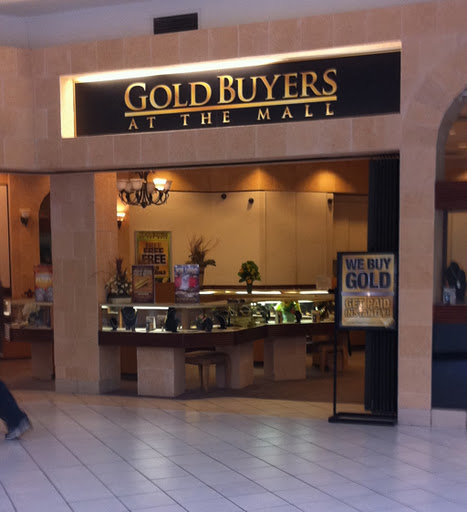
A sluggish Friday at the mall

Quaker Bridge Mall is rather empty this morning.

On a normal Friday, that might not be unusual, but today is Dec. 23, two days before Christmas and, based upon past experience, this place should be hopping.

Part of the problem is the all itself, which needs — and is about to get — a long-overdue makeover. But the big issue is the economy.

While we keep hearing about signs of modest growth and easing unemployment, it is difficult to see these supposed improvements on the street (or at the mall).

In fact, the reality is more complex — as this piece in The New York Times makes clear:

Many retailers entered the season “with pretty optimistic plans” that shoppers would rush into stores and pay full price, Mr. Bassuk said. But that did not pan out, and the final days before Christmas have retailers being “much more aggressive in terms of promotions being offered,” he said.

Shoppers are filling their holiday lists against the backdrop of an uncertain year, with stubbornly high unemployment, increased food prices, volatile gas prices and unpredictability for stocks and Europe’s debt crisis. The government on Thursday said that third-quarter economic growth had not been as brisk as it previously estimated, because of a drop in consumer spending on services like health care.

and so, as the story says, everything is on sale. Sitting on a bench on the second floor, I can see sale signs in the windows of Perfumania, Piercing Pagoda, The Gap an d Justice. Kay Jewelers is offering 20 percent, Wet Sesl 40 percent and The Limited 40 percent.

This is good for last-minute shoppers like me, but not the retailers, and certainly not for the larger economy.

We continue to live with the fall out from the financialization of the economy and the bubble created by what essentially was a massive Ponzi scheme (making money on money without returning anything of value to the economy).

In the process, we have allowed large chunks of public infrastructure to decay and our industrial base to collapse. Now, most of work with the expectation that we are at best a few paychecks from being outsourced and left to earn our living in a service sector that also is in decline.

On the first floor of the mall, near the food court and escalators is a store that buys gold, a business based on our need for quick cash. A few people make their way in, hand their necklaces and earrings to the clerks for appraisal. And who can blame them.

These personal liquidators may just be the symbol of America’s 21st Century economy.

Deconstructing Clinton envy

There remains in the media a love for the Clinton years that should be belied by the facts. Yes, the economy was doing far better then than it is now, but much of its greatness was based on the acceleration of a shift to a financial services economy that was impossible to sustain.

Clinton’s policies — deregulation of the financial industry, including the demolition of the commercial/investment bank wall — created a financial free-for-all that sent Wall Street on a gambling spree that first blew up the tech bubble and, when it finally popped, turned to the housing market, which went crazy and then collapsed.

The destruction of the American economy, which had been years in the making, was a bipartisan effort. But this history, as Dean Baker pointed out yesterday in a post on Clinton’s new book, seems to have been forgotten. Here is Baker’s take:

Clinton promoted both the growth of the stock bubble and the over-valuation of the dollar. The latter came about when his administration organized the “saving” of East Asia following its financial crisis in 1997. The harsh terms of the bailout required the countries of the region to run huge trade surpluses in order to meet their payments. This meant raising the value of the dollar against their own currencies.

Other developing countries wanted to avoid ever being in this situation so they too began to accumulate reserves at a huge pace after 1997 by keeping down the value of their own currencies against the dollar. This led to the huge run-up in the dollar and therefore the large trade deficit that we saw in the last decade and continue to see today.

The demand gap created by the trade deficit was filled by the housing bubble in the last decade. With the bubble now burst it can only be filled by government budget deficits until the dollar falls enough to bring trade closer to balance. Given the enormous disaster that resulted from his economic mismanagement (which could have been reversed had anyone in the Bush administration been awake), it is highly ironic that President Clinton would write a book offering economic advice to the nation.

Ironic, perhaps, but typical. War hawks, so wrong about Iraq, remain the dominant voices in the foreign policy debate, so why should we expect the mainstream media to listen to critics of the capitalist system or banish the men (and yes, it was primarily men) who tanked the economy.

  • Send me an e-mail.
  • Read poetry at The Subterranean.
  • Certainties and Uncertainties a chapbook by Hank Kalet, will be published in November by Finishing Line Press. It can be ordered here.
  • Suburban Pastoral, a chapbook by Hank Kalet, available here.

#OccupyWallStreet is about more than reform; it’s about reformation

This essay from the Slovenian political philosopher Slavoj Žižek, which ran today in the Guardian and on Common Dreams (where I saw it), fairly sums up the failed readings of the #OccupyWallStreet protests by the traditional media and political classes.

The expectation among the power elite is that the challenge to power will coalesce into a traditional reform agenda, one that tunes up the system and makes it a bit more fair without challenging its core assumptions.

But there is something else going on here, a desire not for nominal reform but for reformation. As Žižek makes clear:

The problem is not corruption or greed, the problem is the system that pushes you to be corrupt. The solution is not “Main Street, not Wall Street”, but to change the system where Main Street cannot function without Wall Street.

The ultimate solution is not a half-measure jobs bill, like the one being pushed by President Obama — or even a much more robust, New Deal-like bill such as the one being proposed by U.S. Rep. Dennis Kucinich (which I support in the interim) — but a dismantling of our failed economic system.

Capitalism, as it now exists, commodifies everything and makes it subservient to profit. Consider health care. Rather than focus on health, our system is focused on cost; the power is held corporate health firms (insurers, drug companies, hospital chains) and all decisions are viewed through the lens of minimizing costs — even if it means denying legitimately needed care. And rather than overthrow the system, our elected representatives — who get their campaign money from the industry — opted to leave it in place with some minor tweaks.

The same dynamic holds when dealing with the financial system, the manufacturing sector, the provision of gas and electric — and the use of the commons. Visit a mall — our new main streets — or a planned community like Twin Rivers in East Windsor, where homeowner rules supersede decisionsof the general voting public.

What is important about the protests is the protesters’ sense of “the commons,” the sense that there is something that binds us all together and something that we all hold as important.

They are not communists, if communism means the system that deservedly collapsed in 1990 – and remember that communists who are still in power run today the most ruthless capitalism. The success of Chinese communist-run capitalism is an ominous sign that the marriage between capitalism and democracy is approaching a divorce. The only sense in which the protesters are communists is that they care for the commons – the commons of nature, of knowledge – which are threatened by the system.

So forget the calls from people like Bill Clinton and Barney Frank to come up with some kind of detailed plan (or in the case of Franks, the odd accusations that the protesters were somehow to blame for the failure of the political classes to do the right thing). Clinton and Frank — and Obama and most of the Democrats — have no interest in revolution. Minor changes that might ameliorate the pain of capitalism while leaving the financial classes whole are what they are after.

The protesters know that even if the politicians and pundits don’t.

  • Send me an e-mail.
  • Read poetry at The Subterranean.
  • Certainties and Uncertainties a chapbook by Hank Kalet, will be published in November by Finishing Line Press. It can be ordered here.
  • Suburban Pastoral, a chapbook by Hank Kalet, available here.