Happy X-mas War is Over

http://www.msnbc.msn.com/id/32545640

Visit msnbc.com for breaking news, world news, and news about the economy

The end is near, finally, but only after thousands were killed in Iraq, civilians and soldiers both, the nation’s standing was damaged and our democracy was irreparably damaged.

The end of the war in Iraq, however, does not end the American imperial project. We remain entrenched in Afghanistan, with that war bleeding — literally — into Pakistan, and new military efforts taking place in Africa.

So, the president might deserve applause for ending the Iraq War, but let’s not fool ourselves into believing he has suddenly transformed into a peacenik. Bring the rest of the troops home and then we can talk.

  • Send me an e-mail.
  • Read poetry at The Subterranean.
  • Certainties and Uncertainties a chapbook by Hank Kalet, will be published in November by Finishing Line Press. It can be ordered here.
  • Suburban Pastoral, a chapbook by Hank Kalet, available here.

The big news is no news

Photo Tim Larsen, Governor’s Office

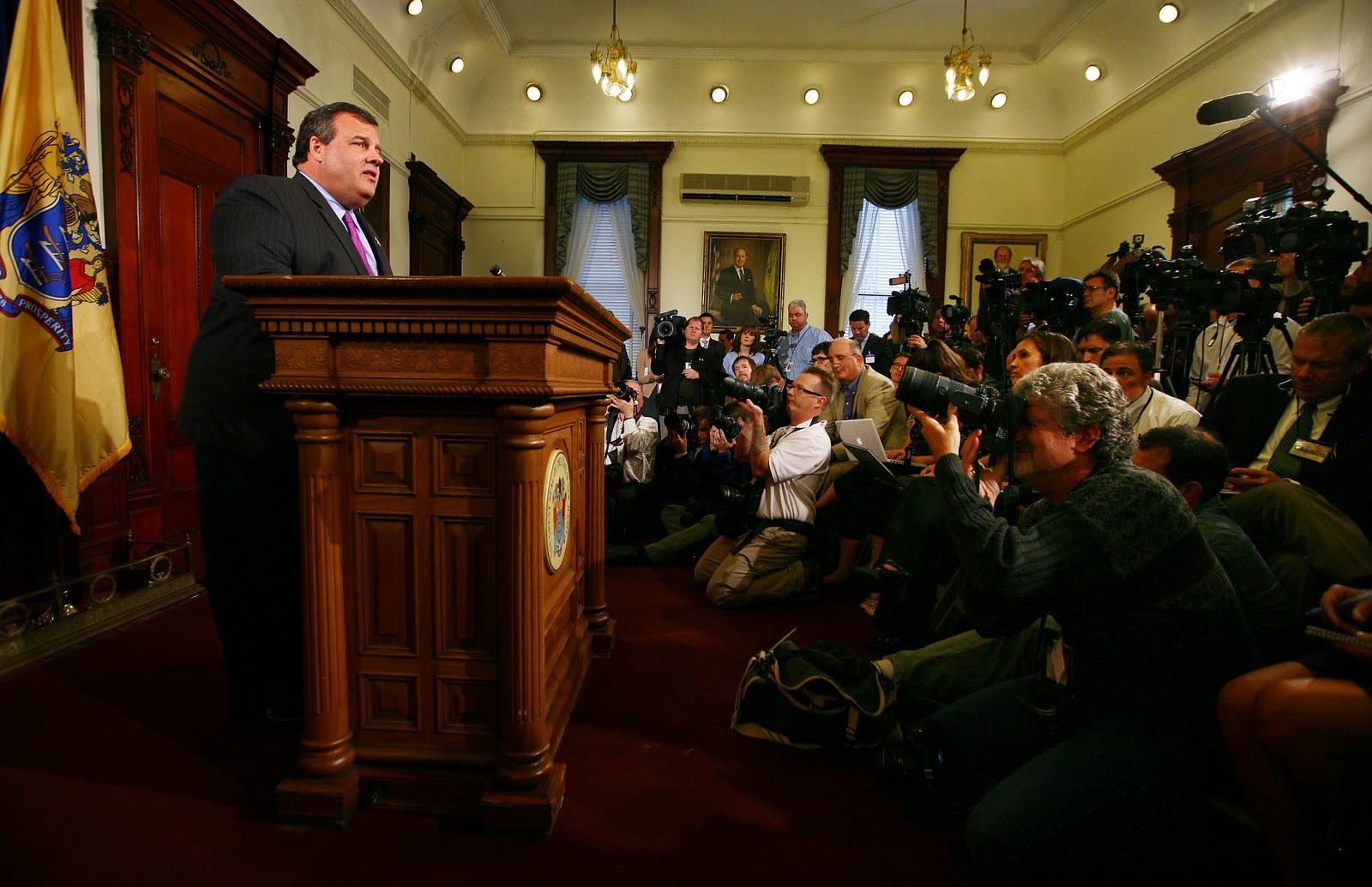
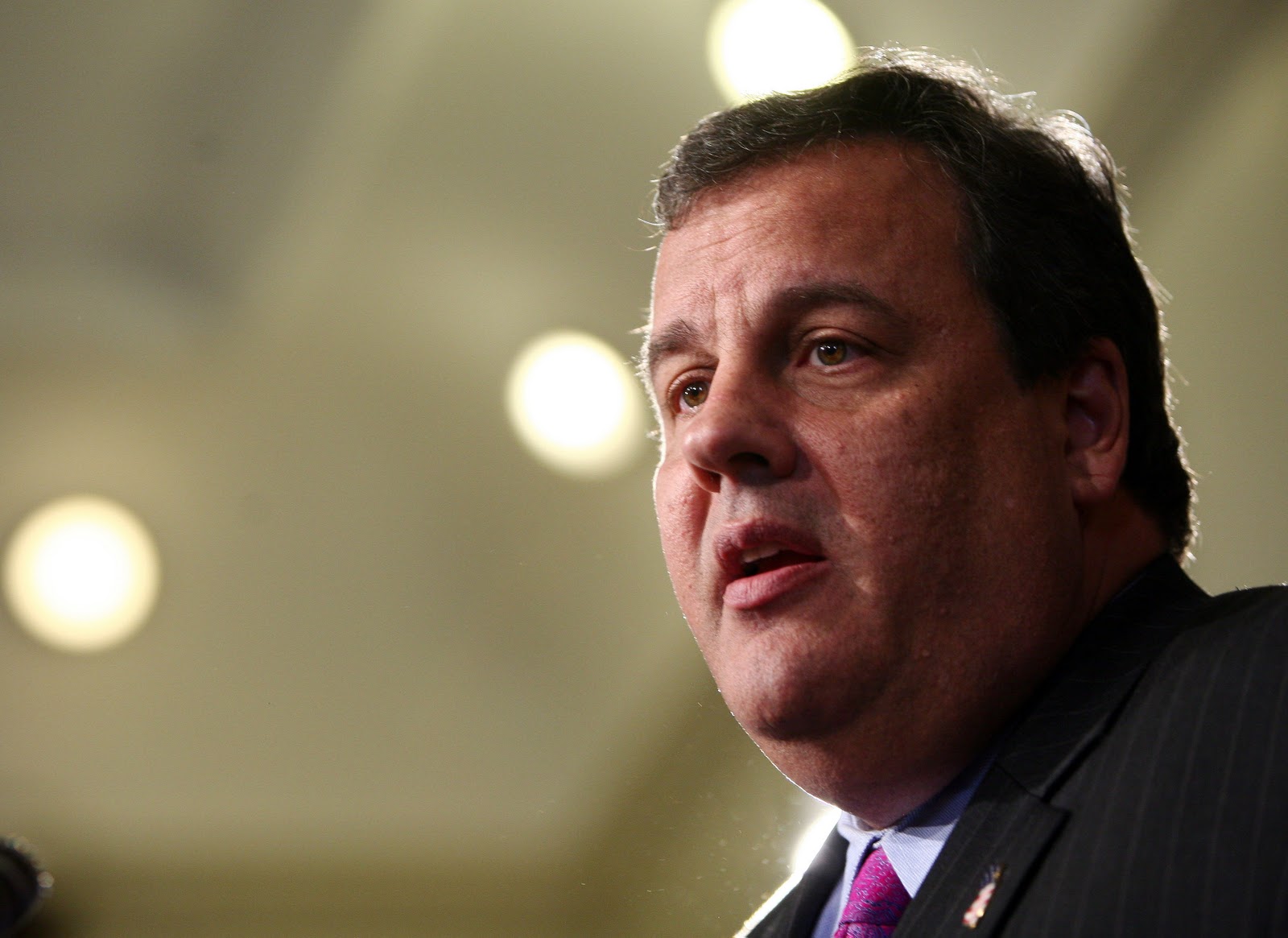
Gov. Chris Christie is officially not a candidate.

But the recent dance he has been doing with the Republican Party and its donors says quite a bit about the dissatisfaction that exists within the GOP with the motley crew that has been chasing the nomination.

Photo Tim Larsen, Governor’s Office

The front-runners remain Mitt Romney, whose career has taken him all over the political map and who was rejected by the GOP in 2008, and the absolutely loony Texan Rick Perry. Herman Cain, Michelle Bachman, Ron Paul and the long list of minor players, continue to chase the brass ring, as well.

My question is this: Does it matter? Can any of these guys beat the incumbent at a time when the incumbent is vulnerable? And if they can, shouldn’t that scare the hell out of us?

Barack Obama’s spotty record and his continuation of Bush policies on torture and the terror war have left him without a real base and have deflated the enthusiasm that swept him into office in 2008. He has earned our dissatisfaction and anger and probably should be facing a primary challenge from someone like Russ Feingold.

The protests on Wall Street are as much a reaction to the Obama presidency as they are to Wall Street greed — Obama, like Bush and Clinton before him, has colluded with the big banks and financial firms to save them from serious regulation or reform.

But my prediction is that the prospects of a Perry or Romney presidency ultimately will draw enough liberals to the polls to allow Obama to squeak by and win a second term. Do not underestimate how much of a motivating factor fear can be.

  • Send me an e-mail.
  • Read poetry at The Subterranean.
  • Certainties and Uncertainties a chapbook by Hank Kalet, will be published in November by Finishing Line Press. It can be ordered here.
  • Suburban Pastoral, a chapbook by Hank Kalet, available here.
Waiting for a socialist in the White House

The Republicans may think that the president is a socialist, but to paraphrase Lloyd Benson all those years ago: I know socialists (happen to consider myself one) and, Mr. President, you’re no socialist.

Read what John Nichols has to say.

  • Send me an e-mail.
  • Read poetry at The Subterranean.
  • Certainties and Uncertainties a chapbook by Hank Kalet, will be published in November by Finishing Line Press. It can be ordered here.
  • Suburban Pastoral, a chapbook by Hank Kalet, available here.
A shift in focus on the economy?

President Barack Obama may be taking his economic team in a different direction.

Alan Krueger, the Princeton University economist who is viewed as having a pro-labor focus, is expected to be named chairman of the White House Council of Economic Advisors, replacing the more conservative, corporate-friendly Austan Goolsbee.

Such an appointment would be good news, but cannot undo the damage caused by the president’s early ties to the Lawrence Summers crowd. Summers, Goolsbee, Treasury Secretary Timothy Geithner and the rest of the crowd he assembled have been far too committed to the financial system and maintaining the status quo. Krueger alters that mix, but may not have enough juice to offset the Ben Bernanke/Geithner axis.

What we need is an economic team comprised of Krueger, Dean Baker, Paul Krugman and Joseph Stiglitz — which would move the president in a more progressive, pro-labor direction.

  • Send me an e-mail.
  • Read poetry at The Subterranean.
  • Certainties and Uncertainties a chapbook by Hank Kalet, will be published in November by Finishing Line Press. It can be ordered here.
  • Suburban Pastoral, a chapbook by Hank Kalet, available here.

Manufactured crisis v. real crisis

The American government is barrelling foward into an abyss in which the nation’s credit-worthiness will be called into question and its economic well-being badly damaged.

And yet, the crisis we face is one created in Washington having little to do with the way our economy functions.

The federal government — specifically, the president and the two houses of Congress — has until next week to raise the national debt ceiling or face the shutdown of government programs, the inability to send out government checks and default on some of our debt.

The crisis is real, if contrived, and the solution is actually rather simple: eliminate the debt ceiling. The ceiling, as The New York Times points out in a useful Q&A today, is a relic of an earlier time:

The system goes back to World War I, when Congress first put a limit on federal debt. The limit was part of a law that allowed the Treasury to issue Liberty Bonds to help pay for the war. The law was intended to give the Treasury greater discretion over borrowing by eliminating the need for Congress to approve each new issuance of debt. Over the years the limit has been raised repeatedly, to $14.3 trillion today from roughly $43 billion in 1940. But outside observers have noted that the failure to make increases in the debt limit part of the regular budget process can be risky. The G.A.O. concluded that it would be better if “decisions about the debt level occur in conjunction with spending and revenue decisions as opposed to the after-the-fact approach now used,” adding that doing so “would help avoid the uncertainty and disruptions that occur during debates on the debt limit today.”

It is an arbitrary limit that treats all debt the same way and strips legislators of their responsibility to consider the long-term implications of their budgeting decisions. Removing our multiple wars from the budget, as was done by President George W. Bush, makes it seem as though the budget is responsible, that we have the revenues to pay for what we want to spend. But the billions that are being tossed down the rabbit hole of our wars in Afghanistan and Iraq (and Pakistan and Libya and South America) come from somewhere. So we borrow.

The same goes for the Bush tax cuts, which were described by the president at the time as stimulative to the economy and, therefore, a revenue generator. The absurdity of the claim was obvious at the time, and has only grown more ridiculous as time has passed.

So, what might we consider good debt? Spending on roads and bridges, for instance, because the result is something with a long shelf life. Basically, you are paying off the use of the roads, bridges, solar grids, rail lines, etc., over the length of their lives. And, this is a philosphical point, you are asking future generations to contribute to the cost of infrastructure that they will be using.

Education would fall under good debt, because it adds value to the workforce (I hate looking at education in this way, but from a budget and debt standpoint, I think we have to). The same goes for R&D and weatherization programs, upgrades to public housing and affordable housing, environmental enforcement (because it maintains a long-term societal good), and so on.

The issue is not debt, but the kind of debt we are dealing with (we have reached a point where we are borrowing to pay off previous debt, a problem that will not be aided by a failure to raise the debt ceiling). And it is a problem with revenue — let the Bush-era tax cuts expire on everyone.

Revenue, of course, is the key issue here. Beyond the Bush tax cuts, we face a serious drop-off in revenue caused by the recession. With unemployment approaching 10 percent and about one in six Americans either unemployed or underemployed, by most estimates, the amount that the middle class can contribute to the federal budget is in decline. The only way to address this is to put Americans back to work. And the only way to do this is for the federal government — i.e., the entity empowed by the American people to act on their behalf — to step in with public works projects, aid to states (to avert public worker layoffs), etc.

And we should eliminate the debt ceiling and leave it to the market to determine whether the United States is a creditable risk.

  • Send me an e-mail.
  • Read poetry at The Subterranean.
  • Certainties and Uncertainties a chapbook by Hank Kalet, will be published in November by Finishing Line Press. It can be ordered here.
  • Suburban Pastoral, a chapbook by Hank Kalet, available here.