
This can’t be serious, right? It can’t. But it is. Just another example of how the rightwing fringe has fallen off the edge of the wingnut cliff.

I’m getting tired of hearing that a Jon Corzine loss in the New Jersey governor’s race would be an indication of a loss of faith in Barack Obama.
You hear it on cable, in the blogs (especially the right-wing ones) and it pops up from time to time in print: The gubernatorial races in New Jersey and Virginia are bellwethers and can be used effectively as standins for a rerun of the 2008 presidential race or as a preview of the 2010 congressional mid-terms.
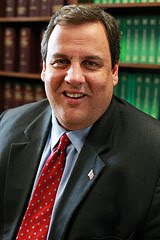
In a state where no Republican has won a statewide race in more than a decade, Mr. Christie could be a “bellwether” for a GOP revival in 2010, according to Republican National Committee Chairman Michael Steele, who stumped with the candidate in the state last month.
Mr. Christie “plays across the state unlike any Republican” in the past several election cycles, Mr. Steele told a gathering of Republican faithful in Pitman, N.J.
“You must be the next governor from this state,” Mr. Steele said. “It is a bellwether in so many ways for the future of our party and the future of our nation.”
The reality is far more complex, at least here in New Jersey, and has little to do with the president’s popularity and everything to do with Jon Corzine’s — or his lack thereof.
Consider the poll numbers and the trends:
 Notice anything? Chris Christie has maintained a rather consistent lead since at least April. And if you go back farther, you’ll see that the governor has managed to lead in only two polls all year: a Jan. 12-14 Monmouth/Gannett poll that had him up by 2 percentage points and a Jan. 2-7 Fairleigh Dickinson poll that had him up by 7. Once we hit February, it’s been all Christie.
At the same time, Obama continues to have approval ratings in the 50s (aside from a Rasmussen poll that puts him at 49 percent) nationally and much higher in New Jersey.
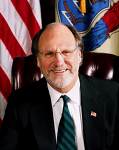 Corzine, on the other hand, has some pretty horrid approval numbers — in his case, it might be better to call them disapproval numbers: 37 percent positive and 52 percent negative among registered voters 34-58 among likely voters) in a Monmouth University poll released Sunday.
The evidence, it would seem, just doesn’t support the bellwether meme. But the bellwether meme has nothing to do with New Jersey; it is a national construct that makes good fodder for cable television, which has difficulty getting past their narrow focus on Washington.
The New Jersey governor’s race has played out and will continue to play out on state issues. In the end, it will not be a referendum on Obama, but a referendum on Jon Corzine. The Washington media and the cable TV cranks are just too removed from the ground to understand that.
I don’t want to use the word disappointment — and not just because it is still early in his presidency. I don’t want to use the word because it implies that the president somehow is letting down liberals. The reality is, of course, that he’s only doing what he told us he’d do — tack as much to the center as he could, while substituting bipartisanship for a principled commitment to a political philosophy.
So, as Ian Welsh says on Open Left, “no one” should have “expected anything else,” and those who continue to expect Obama to be a liberal lion, a la Ted Kennedy or Paul Wellstone are “the living definition of denial.”
He remains better than most of the alternatives, but he’s still not a lot different than the leaders who have come before him.
There was a lot of talk back in January when President Barack Obama took over that he was likely to follow in Franklin Delano Roosevelt’s footsteps. The times, many argued, demaned bold vision and a rebirth of New Deal liberalism, and Obama’s combination of smarts, charisma, eloquence and popularity would allow him to be aggressive in fixing our national problems.
 Perhaps, we were foolish to expect so much. Not only do we live in different times, Obama is not FDR. And, perhaps more importantly, it is not FDR’s presidency that Obama should study, but that of Lyndon Baines Johnson.
I’ve written before about Johnson’s style — his willingness to twist arms and break skulls helped push through some of the more important, but unpopular initiatives (civil rights, fair housing and immigration legislation, Medicare and other parts of the Great Society) of the last century.
That stands in stark contrast to Obama, who fancies himself a bipartisan great conciliator. The problem with his approach, of course, is that bipartisanship cannot be an end unto itself. It is only useful when tied to a specific legislative target. Unfortunately, what we have seen so far from the Obama presidency has been a willingness to compromise away important pieces of the progressive agenda; on health care, “Don’t Ask, Don’t Tell,” climate change, the stimulus — he’s allowed a small number of Republicans and conservative Democrats to rein in his agenda.
 It is not only on domestic policy that the president could learn from LBJ, however. Obama needs to reread his history of the era — in particular, David Halberstam’s The Best and the Brightest, which recounts the slow and deadly descent into quagmire in Vietnam. To Johnson, Vietnam was the line in the sand over which the communists could not be allowed to cross and he was willing to bet everything to keep them from crossing.
The result, of course, was more than 50,000 dead American soldiers, a badly damaged international reputation, division at home and– most importantly, for the purposes of this argument — the gutting of his own ambitious domestic agenda, especially his “war on poverty.”
The war not only sapped the budget, but it angered a portion of what should have been his base — the antiwar left — at a time when working class whites were beginning their flight from the party, angry over accommodations being made to African Americans. It was the beginning of a long era of insignificance for the Democratic Party, which lost five of the next six presidential elections (the sixth, the Carter win, was in many ways an anamoly caused by the Watergate scandal).
Fastfoward to the Obama presidency, which is a little more than seven months old. Obama’s commitment to the war in Afghanistan, as The Nation points out in an editorial in its Sept. 14 issue ($), will have a delitirious impact on the rest of what he wants to do. And Americans are starting to understand this.
(A) majority is increasingly aware that the more blood and treasure we pour down the Afghan drain, the less we’ll have to spend on economic recovery, healthcare reform and building a green economy at home.
If we want to avoid this, if we want to “protect Obama’s reform agenda,” we have to “seek alternatives to a militarized strategy in Afghanistan” that must include a timeline for withdrawal (as proposed by Sen. Russ Feingold, D-Wisc., and U.S. Rep. Jim McGovern, D-Mass.) and a focus on diplomacy, targeted policing and an international commitment of money and other resources needed to rebuild the country.
Think about this: We are eight years into this war and we’ve just witnessed its bloodiest month. The national government is connected by a thread, with voter fraud being alleged and chaos outside the main cities. And al-Qaida has shown that it can get to high-level Afghan officials. And we’ve been relying to a disconterting degree on contractors and public support for the war is falling.
And yet, there are signals being sent that indicate we’ll be increasing our troop presence, rather than cutting it back.
Parallels with other moments in history are difficult and generally specious. Afghanistan is not Vietnam and Obama is not LBJ. But the history of LBJ adminstration and the Vietnam war does have relevance to our current moment. President Obama ignores it at his — and the nation’s — peril.
Robert Johnson — not the blues singer — makes a compelling case that the failure of the Obama administration to stand up to the banks and Wall Streeters in the administration’s earliest months is costing him dearly now, as he tries to pass major healthcare legislation and could cost him greatly down the road.
He writes that the bailout of the financial sector, a bailout that lacked any strings, may have “made sense in isolation,” but lacked “an awareness of the historic context and opportunity” that called out for bolder action.
Free markets had profoundly failed. Government had been given another chance by the electorate that was inspired by candidate Obama. A chance to do some good
for the general interest and regain the reputation of a productive public sector after thirty years of disparagement. Yet by refusing to stand up to the oligarchs and set proper boundaries in defense of society, they fed the cynics and dissipated the magic that Obama had created for real change. The Administration seemed closer to Jamie (Dimon) and Goldman Sachs than to us. The lesson: if you fail to defend society once, people lose faith. The loss of faith carries a high price, and we’re paying that price now in the arena of healthcare reform.
The point is, Johnson says, that we are in times of “great danger”; the Obama administration needs to act decisively or risk losing the moment.
Today, the new US administration can disown responsibility for its inheritance; tomorrow, it will own it. Today, it can offer solutions; tomorrow it will have become the problem. Today, it is in control of events; tomorrow, events will take control of it. Doing too little is now far riskier than doing too much. If he fails to act decisively, the president risks being overwhelmed, like his predecessor. The costs to the US and the world of another failed presidency do not bear contemplating.
It is still early, of course, but we already are witnessing the seeds of a new narrative being born, with elections in Virginia and New Jersey that are turning on state issues being recast by the national media as referenda on the president. This is absurd, of course. The New Jersey vote will be about Gov. Jon Corzine and not about the president, who remains popular here.
But Obama’s decision to buy into the financial status quo — Summers, Geithner and Bernanke — and his raising of bipartisanship above policy on healthcare and the stimulus (not to mention his selling out of workers on card check and the auto bailout) are making it that much harder to generate the kind of change we thought we could believe in.
 Hank Kalet