Time for a change, Knicks fans

Mike D’Antoni is out, following Donnie Walsh out the door. D’Antoni’s record was mixed — he only had short spurts in which he was lucky enough to coach a club built around his strengths as a coach.

The presence of Carmelo Anthony, a superstar no doubt, ground D’Antoni’s offense to a halt and left Amar’e Stoudamire unmoored. This should be Stat’s team, with him being first option in a pick and roll run by Jeremy Lin. Melo never fit into that — he is neither an Adrian Dantley post-up SF or a good three-point shooter. He’s great in the isolation, of course, but that shuts his teammates our, kills ball movement and makes for boring and mediocre play

So now we see where Melo leads — and whether this crew can find a more consistent identity and winning approach under Mike Woodson.

Democracy’s end

President Barack Obama opposes the new campaign finance era of unlimited giving by men of unlimited means. But he’s going to play by the new rules, nonetheless.

And even with his newfound willingness to take six- and seven-figure checks, the Democrat apparently is concerned that he won’t be able to keep pace.

With the general election campaign just a few months away, Mr. Obama’s allies are under growing pressure to raise money rapidly for Democratic-leaning independent groups, warning his supporters that the huge cash advantage mustered by Republican groups could prove decisive this fall, overwhelming Mr. Obama despite his own formidable fund-raising apparatus.

It’s a Faustian bargain, selling what little soul he has for the cash reserves he needs to compete with the wealthy Republican PACs. The president argues that it’s a necessary bragging to keep the country moving forward. But the chill it imposes on our democracy will linger, the lesson being that large bank accounts are the price of admission to a political process that is supposed to be open to all.

I can’t blame Obama for playing by the rules that exist, but I think we should criticize him for a lack of commitment to tearing down the system of legalized bribery that passes for campaign finance. The reality is that the two major parties benefit from the existing system, as do our corporate overlords. The only people who don’t are the people our government is supposed to represent.

A joke to make you think

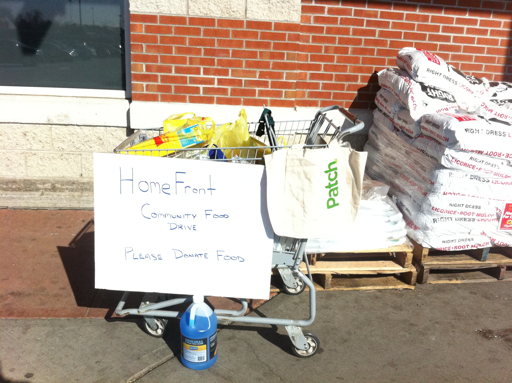
A man approached me this morning as we were trying to drum up food donations during our Lawrenceville Patch-Homefront food drive and asked us, quite sincerely: “If I have enough food and money to support myself, why should I help others?”

I wasn’t expecting the question and probably seemed flustered.

He laughed. “It was a joke,” he said. He had dropped off food yesterday and had clothing he wanted to donate, as well. Then he dropped a $20 bill into our donation can and left.

It was a wonderful gesture and it made me realize that, while I know why I do this, I needed to be ready to answer the ugly questions we might get asked.

Remember, we are immersed in a political season in which the work ethic of capitalism’s victims is constantly being questioned.

So, what is the answer? Simple. Any of us at any time might find ourselves without work or without enough work. There are no guarantees. And, given that our governments — federal, state and local — refuse to make aiding those in need a priority, we have a responsibility to help while we can.

So, stop by the Shop-Rite in Mercer Mall this morning with some food for your neighbors.

Christie budget math does not add up

Gov. Chris Christie rode into office promising to put the state’s fiscal house in order. According to him, it’s mission accomplished.

According to everyone else — including one of the nation’s most influential bond rating agencies — the state fiscal house remains a mess.

S&P, the first major credit-rating agency to analyze Christie’s proposal, found little to praise: The budget relies on more one-shot revenue sources than last year; the $300 million surplus is too small; the hole in the pension fund is still too big; tax cuts are expected to drain $530 million, and revenue-growth estimates of more than 7 percent defy the conventional wisdom among economic analysts, especially since the state is under target for the first half of the current fiscal year.

“We believe revenues could rebound significantly in a strong economy,” an S&P analyst, John Sugden-Castillo, said. “(But) some of these revenue assumptions have been optimistic given the current growth the state has been experiencing. That could put pressure on the budget.”

 Christie, portrayed by most as a straight-talking, no-nonsense leader, is really no different than the governors who have preceded him in office. While he slashed the budget, he also has relied on a tried and trued New Jersey budget-balancing trick: one-shot revenue/spending cut.

Remember, the governor has withheld paying money into the state’s pension funds (a short-term saving that will bite us on the ass down the road), used money set aside for climate change efforts to balance his budget and raided urban enterprise money.

This year’s sleight-of-hand involves a shockingly positive revenue outlook, based on the notion that the state is out of the woods even as it deals with a 9 percent unemployment rate and towns continue to lose tax ratables.

But they are necessary to his larger political and policy agendas — the proposed income tax cut (which will primarily benefit the rich) and a generally positive message designed to buttress his re-election campaign next year.

The state needs tax reform, but the income tax is not the problem, or not in the way Christie paints it. What we need is property tax reform that shifts away from property and sales taxes to income taxes along with an aggressive reorganization of local and county government to reduce the number of taxing entities in New Jersey.

Putting that on the table would take real courage. Promising a tax cut and pretending the recession is over for budgetary purposes does not.

  • Send me an e-mail.
  • Read poetry at The Subterranean.
  • Certainties and Uncertainties a chapbook by Hank Kalet, will be published in November by Finishing Line Press. It can be ordered here.
  • Suburban Pastoral, a chapbook by Hank Kalet, available here.