
The market for war

This was supposed to be the good war, the one most connected to the terrorist attacks on the Twin Towers 11 years ago. It was a war with support from both sides of the aisle, one built on an allegedly legitimate rationale. But no war is a good war. That is the lie that has allowed us to engage in an 11-year farce of deadly proportions.

Roger Cohen, who supported the war in its infancy, tries to explain the failure today

The untruths have been almost too numerous to chronicle, beginning with the great untruth that Saddam Hussein had weapons of mass destruction that justified the war in Iraq (where more than 4,480 U.S. service members died); and sliding into the smaller, no less lethal untruths about how Pakistan was an ally in the Afghan struggle, and global terrorism beatable on the battle field, and nation-building feasible in Afghanistan, and sacrifice in the cause reasonable when half of the United States was off at the mall shopping, and victory always — always — within reach
Afghanistan is a country where President Obama appointed an able envoy, the late Richard Holbrooke, only to emasculate him; where the president, Hamid Karzai, has long manipulated Western succor to his private ends; and where the greatest emergent threat comes from Afghans in the uniforms of the security forces America and its allies are training to take over from them in 2014. The country is a bottomless pit of hypocrisies.

Cohen reminds us that the numbers — 2,000 Americans dead in this war — seem small by historical proportions, but that is only because “We have sanitized war.”

It is kept at a distance, hardly more real than a video game. The shopping continues (although less of late). When a milestone is reached — 2,000 dead — attention flickers up

But otherwise the war seems far away unless you are from a military family. Pilotless drones do ever more of the killing. The thing about robotic warfare is you can watch Afghans get vaporized on a screen near Las Vegas and then drive home for dinner with the kids.

The new mode of war has allowed us to go about our days without giving thought to what has been happening on the other side of the world. News of the war has fallen from the lead pages of the nation’s increasingly unread newspapers. It has little place in our televised news coverage or even on news Web sites.

And it has been nothing more than an asterisk in the 2012 presidential race, a time when we should be debating the major issues of importance to the nation. In 2008, then-candidate Barack Obama cited his support for the Afghan war to prove he was not soft on terror, even as he reiterated his original opposition to the war in Iraq. His criticism of Iraq separated him from his chief Democratic opponent, Hillary Clinton, and from the Republicans, and encouraged the liberal wing of his party. And he has followed through in Iraq, essentially ending that debacle.

But in Afghanistan, he has held firm. His plan for disengagement there is a farce that foresees significant American involvement well into the 2020s, and he has aggressively pushed to expand the so-called Af-Pak theater with drone strikes. He sent planes into Libya without Congressional approval and it remains unclear how he will respond as Syria unravels or whether he will keep “all options,” including military intervention, on the table regarding Iran.

Mitt Romney is worse, but it is only a matter of degree when it comes to foreign policy. The dirty little secret is that there is no debate when it comes to foreign policy and Washington and its corporate sponsors prefer it that way. The men and women who fight have become literal pawns to be sacrificed on the alters of natural resources and markets; democracy has become a buzzword without meaning, whether we are talking about the United States or elsewhere.

The situation in Europe, seemingly unrelated, is a case in point. The central bankers refuse to budge in their imposition of austerity reforms, regardless of what the people in Greece, Italy, Spain and elsewhere want, regardless of what austerity might do to the average working person.

In the meantime, the Afghan war grinds on, we continue our courtship of those authoritarian regimes that embrace markets or buy into our anti-terror meme (see Ethiopa), and the public keeps its head planted firmly in the sand.

  • Send me an e-mail.
  • Read poetry at The Subterranean.
  • Certainties and Uncertainties a chapbook by Hank Kalet, will be published in November by Finishing Line Press. It can be ordered here.
  • Suburban Pastoral, a chapbook by Hank Kalet, available here.
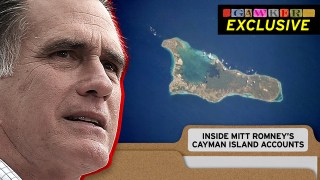
Forced opening of a closed campaign

Graphic from Gawker

The Romney campaign has been among the most unforthcoming in memory, so Gawker’s release of what The Huffington Post is calling “a treasure trove of leaked documents” is big news in the political world.

The documents were obtained and posted online by Gawker at a time of unusually high interest in Romney’s finances. Though they are not nearly as revealing as the years of tax returns he refuses to release might be, they still have enough information and detail to make Romney uncomfortable. They show he has money indirectly invested in companies on which the Mormon church might frown and also highlight the lengths to which his complicated investments are shielded from taxes.

Given that he has refused to release his tax returns and that he now is telling reporters what questions he’ll answer before talking with them, this has got to have him apoplectic (or as apoplectic as he can get).

  • Send me an e-mail.
  • Read poetry at The Subterranean.
  • Certainties and Uncertainties a chapbook by Hank Kalet, will be published in November by Finishing Line Press. It can be ordered here.
  • Suburban Pastoral, a chapbook by Hank Kalet, available here.

Poverty Project: Another uptick in state unemployment rate

Latest on the uptick in New Jersey unemployment from my latest project, the New Jersey Poverty and Economic Reporting Project.

  • Send me an e-mail.
  • Read poetry at The Subterranean.
  • Certainties and Uncertainties a chapbook by Hank Kalet, will be published in November by Finishing Line Press. It can be ordered here.
  • Suburban Pastoral, a chapbook by Hank Kalet, available here.

Social Security going broke? Hardly

The Washington Post today criticized Vice President Joe Biden for making a “dumb” and “uncalled for” comment and Republican Presidential candidate Mitt Romney for his over-the-top response.

And yet, in the same editorial, the Post engages in the same kind of inane hyperbole as it pushed to fix a Social Security system that is not broken. The Post editorial board proclaimed that “Social Security is going broke,” and defended its statement this way:

Is “going broke” too strong? Well, let’s ask the experts — the trustees of the Social Security Trust Fund, who include President Obama’s Treasury, labor, and health and human services secretaries. In their annual report in April — delivered, as it happens, to Mr. Biden, in his capacity as Senate president — the trustees noted that the disability portion of the trust fund “becomes exhausted in 2016, so legislative action is needed as soon as possible.” The overall fund, combining retirement and disability, will “become exhausted and unable to pay scheduled benefits in full on a timely basis in 2033.” That leaves Congress with four choices, the trustees explained: raise the payroll tax, reduce benefits, devote other revenue to Social Security or some combination of the above.

There is no doubt that the program needs to be tweaked. But we are 21 years away from any potential failure to pay benefits — far from being broke.

  • Send me an e-mail.
  • Read poetry at The Subterranean.
  • Certainties and Uncertainties a chapbook by Hank Kalet, will be published in November by Finishing Line Press. It can be ordered here.
  • Suburban Pastoral, a chapbook by Hank Kalet, available here.

Not-so-straight talk on revenues

Gov. Chris Christie has prided himself on having an open administration. At least that’s what he says.

But one has to wonder how he defines openness, given that it has withheld a state revenue report even as it is “suggesting New Jersey collected more tax revenue in July 2012 than it did in July 2011,” according to a blog post by John Reitmeyer of The Record.

The governor says July revenues are up, though for the moment we’ll have to take his word for it because

the governor’s office did not release the full revenue report for July 2012, and neither did the state Department of Treasury – the agency that traditionally collects and disseminates data on tax collections.

Last year, the department released a July revenue report on Aug. 12.

The full report for July 2012 would show how revenue collections during the month compared to the budget projections included in the $31.7 billion spending plan Christie signed into law in late June. That budget, which increased spending by $2 billion, called for roughly 7 percent growth through the end of June 2013 to help sustain the spending hike.

Budget projections are important because they are used to set spending in the budget. If tax collections surpass projections, the state builds its surplus. But if collections fall short, that can eat into surplus or bring on mid-year cuts as was experienced when the recession hit during then-Gov. Jon S. Corzine’s tenure.

The timing is disturbing, because the governor and Legislature just concluded a very public fight over his budget projects and the governor is scheduled to give the keynote speech at the Republican convention later this month.

As long as the Christie administration withholds the full July 2012 report, it’s impossible to say definitively whether the state is in a position to responsibly dip into surplus to fund the tax cut right now.

And it also preserves Christie’s ability to go to Tampa and proclaim economic growth — the “New Jersey Comeback” he regularly talks about – even if it’s really a mixed bag back home.

So much for the straight talk, I guess, Mr. Governor.

  • Send me an e-mail.
  • Read poetry at The Subterranean.
  • Certainties and Uncertainties a chapbook by Hank Kalet, will be published in November by Finishing Line Press. It can be ordered here.
  • Suburban Pastoral, a chapbook by Hank Kalet, available here.