
Obama likely to appoint Treasury nominee with troubling sense of history

Timothy Geithner’s tenure as treasury secretary is ending, which is good news. The likely identity of his replacement — Jack Lew, if Bloomberg News is correct — is not. Here’s why (from Business Insider):

9. He doesn’t believe deregulation of Wall Street led to the financial collapse.

During his 2010 confirmation hearing before the Senate Budget Committee, Lew told the panel that he did not believe Wall Street deregulation played a major part in the financial crisis. He said he doesn’t “personally know the extent to which deregulation drove it, but I don’t believe that deregulation was the proximate cause.”

The comment — and the eventual follow-up “clarification” from the White House to the Huffington Post in 2010 (that “Mr. Lew gave a nuanced and thoughtful answer to a question on a matter on which he, admittedly, is not an expert”) — is troubling because Lew will be the face of the Obama administration’s relationship with Wall Street and the banking industry.

And his belief is dead wrong.

From the conclusion of the Financial Crisis Inquiry Commission’s final report:

Despite the expressed view of many on Wall Street and in Washington that the crisis could not have been foreseen or avoided, there were warning signs. The tragedy was that they were ignored or discounted. There was an explosion in risky subprime lending and securitization, an unsustainable rise in housing prices, widespread reports of egregious and predatory lending practices, dramatic increases in household mortgage debt, and exponential growth in financial firms’ trading activities, unregulated derivatives, and short-term “repo” lending markets, among many other red flags. Yet there was pervasive permissiveness; little meaningful action was taken to quell the threats in a timely manner

The prime example is the Federal Reserve’s pivotal failure to stem the flow of toxic mortgages, which it could have done by setting prudent mortgage-lending standards. The Federal Reserve was the one entity empowered to do so and it did not. The record of our examination is replete with evidence of other failures: financial institutions made, bought, and sold mortgage securities they never examined, did not care to examine, or knew to be defective; firms depended on tens of billions of dollars of borrowing that had to be renewed each and every night, secured by subprime mortgage securities; and major firms and investors blindly relied on credit rating agencies as their arbiters of risk. What else could one expect on a highway where there were neither speed limits nor neatly painted lines?

As the commission states, this was a man-made crisis precipitated and made dramatically worse by the lack of regulation and by regulatory negligence. There were “widespread failures in financial regulation and supervision” that”proved devastating to the stability of the nation’s financial markets,” the report states.

The sentries were not at their posts, in no small part due to the widely accepted faith in the self-correcting nature of the markets and the ability of financial institutions to effectively police themselves. More than 30 years of deregulation and reliance on self-regulation by financial institutions, championed by former Federal Reserve chairman Alan Greenspan and others, supported by successive administrations and Congresses, and actively pushed by the powerful financial industry at every turn, had stripped away key safeguards, which could have helped avoid catastrophe. This approach had opened up gaps in oversight of critical areas with trillions of dollars at risk, such as the shadow banking system and over-the-counter derivatives markets. In addition, the government permitted financial firms to pick their preferred regulators in what became a race to the weakest supervisor

Yet we do not accept the view that regulators lacked the power to protect the financial system. They had ample power in many arenas and they chose not to use it. To give just three examples: the Securities and Exchange Commission could have required more capital and halted risky practices at the big investment banks. It did not. The Federal Reserve Bank of New York and other regulators could have clamped down on Citigroup’s excesses in the run-up to the crisis. They did not. Policy makers and regulators could have stopped the runaway mortgage securitization train. They did not. In case after case after case, regulators continued to rate the institutions they oversaw as safe and sound even in the face of mounting troubles, often downgrading them just before their collapse. And where regulators lacked authority, they could have sought it. Too often, they lacked the political will—in a political and ideological environment that constrained it—as well as the fortitude to critically challenge the institutions and the entire system they were entrusted to oversee.

Changes in the regulatory system occurred in many instances as financial markets evolved. But as the report will show, the financial industry itself played a key role in weakening regulatory constraints on institutions, markets, and products. It did not surprise the Commission that an industry of such wealth and power would exert pressure on policy makers and regulators. From 1999 to 2008, the financial sector expended $2.7 billion in reported federal lobbying expenses; individuals and political action committees in the sector made more than $1 billion in campaign contributions. What troubled us was the extent to which the nation was deprived of the necessary strength and independence of the oversight necessary to safeguard financial stability.

There were other causes, to be sure, but the mix of weakened financial regulations and a compromised regulatory apparatus were toxic. Lew’s appointment will mean that we have failed to learn from our mistakes, increasing the likelihood that we will repeat them.


Send me an e-mail.
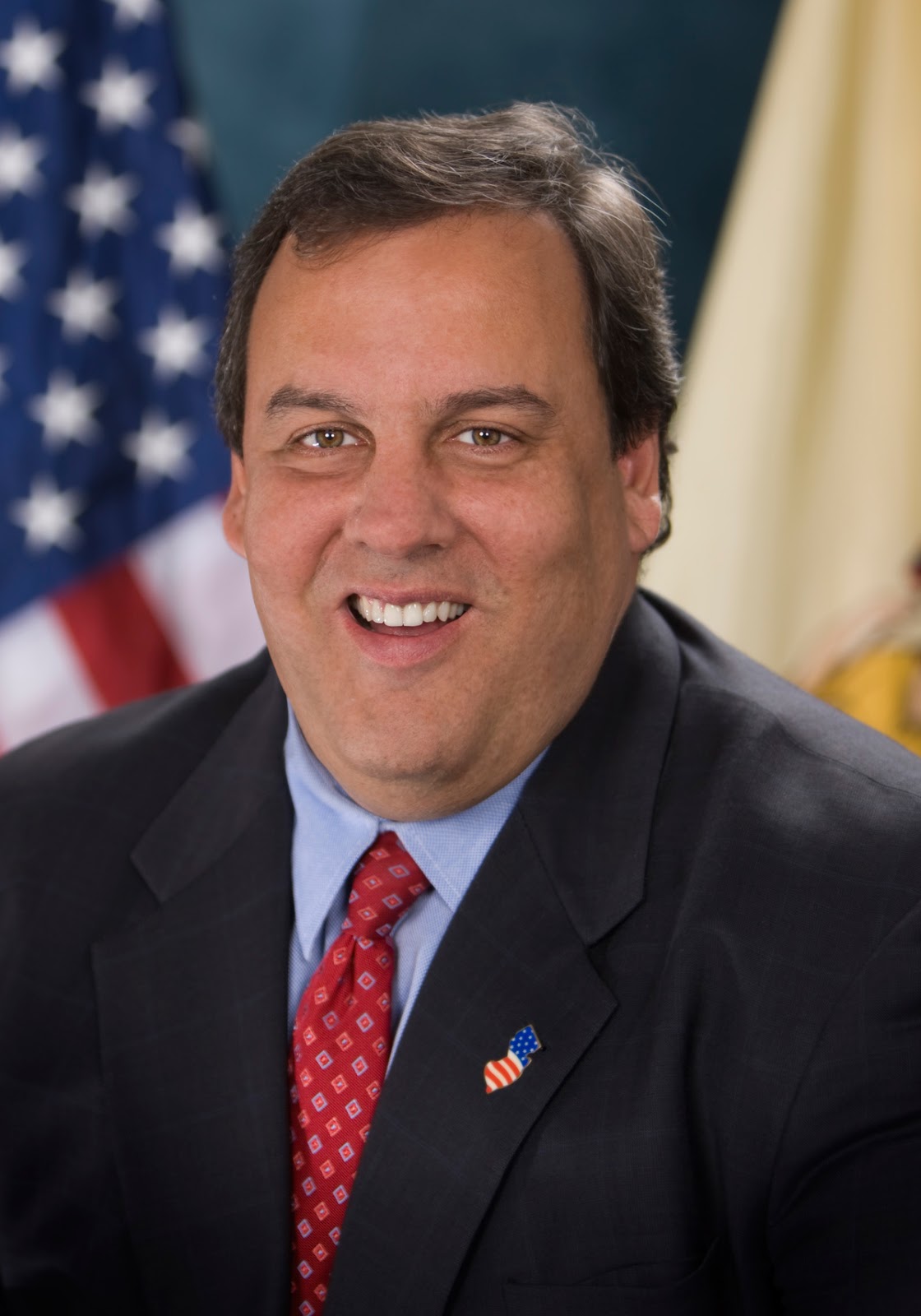
Gov. Christie: Public relations expert

Charles Stile in The Record offers as good an explanation of Gov. Chris Christie’s generally high levels of support in the state as I’ve seen. The governor is a master of public relations, someone who can turn every image to his advantage even as he fosters a sense that he is unconcerned with how he is viewed by the public.

Christie has shown an uncanny ability to stay one step ahead of any voter resentment, mainly by staying on the offensive — and out of Trenton. Christie promotes his own, unfiltered messages with carefully edited YouTube videos, sent via email to voters, supporters and media around the country. Christie’s staff carved up the speech into seven Christie-glorifying videos, packaged with headlines like this one, “Governor Christie: Sandy Did Not Destroy Our Spirit.”

He also turns “town hall meetings” into de facto campaign rallies packed with friendly audiences who rarely ask him pointed questions. Christie will also reprise the image of his management of the storm, when cameras followed Christie touring storm-battered sites. This time, he will be there as the governor leading recovery. He is scheduled to visit Belmar today to mark the reconstruction of the town’s boardwalk.

This media strategy is central to Christie’s success. It is why he enjoyed strong approval ratings despite the stubbornly weak economy that stalked his agenda before the storm.

The strategy fosters an image of Christie leading, taking charge, confronting problems head on. It banks on the belief that most people don’t care too much about the details. They just want a sense that an “adult” is in charge.

Send me an e-mail.

Initial thoughts on the State of the State

Gov. Chris Christie gave his annual state of the state speech to the state Legislature earlier today and the theme of his speech was clear: All Sandy, all the time.

The idea under-girding his speech was that the storm may have knocked the state down, but by working together the state will get back up and get moving in the right direction.

He then offered an outline of his accomplishments — pension reform, the property tax cap, balanced budgets — that was specifically crafted to elide some of the ways in which these accomplishments were achieved. No mention of the cut in the earned income tax credit, for instance, or the fact that he willfully underfunded the pension fund or the state’s school funding law; no mention of his use of inflated or overly optimistic revenue projections to sell an unwise tax cut or to the one-shot revenues — affordable housing trust fund, the foreclosure settlement money — that makes his far less different than his predecessors than he believes.

Democrats were not shy with the criticism and, while a good amount of it was the kind of political posturing typical of opposition-party responses, there were some legitimate criticisms involved that should help structure the kind of questions asked as we move forward.

Assembly Majority Leader Louis Greenwald (D-Camden) summed these issues up:

“Rebuilding our storm-ravaged communities is of paramount concern, but we cannot ignore the problems we faced before Sandy and permit them to worsen. Rising property taxes and a continuing unemployment crisis are problems we must address, and I am hopeful the Governor will join with us in bipartisan spirit to do so.

“We need a broad approach that addresses our underlying economic crisis so that we will be better positioned to help all our citizens–whether it’s our shore towns, our struggling middle-class families, or our senior citizens.”

We need to help everyone affected by Sandy — I think everyone agrees on this point — but we also need to remember that many in New Jersey were hurting well before the storm started forming.

It as a good speech, but not a great speech, not one that will alter the political dynamics in the state.

Send me an e-mail.

Debt deal phase II: Tell Democrats to protect Social Security, Medicare and Medicaid

The line of demarcation between Republicans and Democrats on the next phase of budget and debt negotiations appears to have been set by Sen. Minority Leader Mitch McConnell:

“[T]he tax issue is finished, over, completed,” said the Kentucky Republican, during an appearance on ABC’s “This Week.” “That’s behind us. Now the question is, what are we going to do about the biggest problem confronting our country and our future? And that’s our spending addiction. It’s time to confront it. The president surely knows that.

I mean, he has mentioned it both publicly and privately. The time to confront it is now.”

McConnell, having conceded on the tax issue during the first phase, now appears ready to go down swinging. The question is whether the Democrats plan to fight with the same passion. That is a difficult one to answer. Consider this description of the president’s stance from Sam Stein:

The president has said that he will not make major entitlement reforms or spending cuts during those negotiations unless it is part of a balanced approach.

Read that closely and consider the latter phrase — “unless it is part of a balanced approach” — and tell me that the Democrats have taken Social Security and Medicare off the table.

And read this, from the transcript of the president’s remarks yesterday:

I believe we can find more places to cut spending without shortchanging things like education, job training, research and technology all which are critical to our prosperity in a 21st century economy. But spending cuts must be balanced with more reforms to our tax code. The wealthiest individuals and the biggest corporations shouldn’t be able to take advantage of loopholes and deductions that aren’t available to most Americans.

More places to cut, he says. And he won’t shortchange education, job training, research and technology. Not a word about Social Security. Nothing on Medicare and Medicaid. Well, not this week. Go back a week — to Tuesday, when he signed legislation the much-lauded tax deal:

I want to make this point: As I’ve demonstrated throughout the past several weeks, I am very open to compromise. I agree with Democrats and Republicans that the aging population and the rising cost of health care makes Medicare the biggest contributor to our deficit. I believe we’ve got to find ways to reform that program without hurting seniors who count on it to survive. And I believe that there’s further unnecessary spending in government that we can eliminate.

The president has shown a willingness in the past to put the major entitlement programs on the table — most recently when he signaled a willingness to enact a “chained” consumer price index (this allows for the substitution of cheaper products and slows cost-of-living increases for seniors, which essentially would be a cut in benefits).

The president is a natural conciliator, a compromiser to his core. Unless it can be made clear that his legacy will be damaged by entitlement cuts and unless Democrats more generally are made to fear reprisals, there is a good chance that they will do the wrong thing. Obama has said as much, challenging his base on more than one occasion, using the quotation often attributed to FDR, to make him do it. The left needs to be louder than the Tea Party. It needs to make it clear that Social Security, Medicare and Medicaid should not be touched — unless it means that all three programs are expanded.

Budget gimmicks continue to plague New Jersey

At yesterday’s hearing on the state budget, a nonpartisan legislative budget analyst confirmed what we all knew back when the budget initially was approved: The governor’s economic growth estimates were unrealistic.

Gov. Chris Christie had been depending on revenue growth of 8.4 percent in the current $31.7 billion budget, but actual growth has been less than one percent in the first five months of the fiscal year, David Rosen, the budget officer for the nonpartisan Office of Legislative Services, told the Senate Budget and Appropriations Committee today.

At the current pace of revenue growth, the budget will have a $2 billion revenue shortfall, Rosen said. He cautioned that he was not predicting such a devastating outcome, but did say the shortfall was likely to be higher than the $700 million hole the state currently faces.

“As a result of revenue underperformance to date the state would need a spectacular revenue acceleration to hit the executive’s budget targets,” Rosen said. “Where revenues have grown at .02 percent for the first five months, they would need to grow by 11.9 percent over the remaining seven months.”

Rosen was pressed on the possibility of such a robust rebound, and he replied, “it’s extremely unlikely.”

Republicans called yesterday’s hearing “political” — and it was. The Democrats were looking to undercut a very popular governor at the beginning of his re-election campaign.

But that does not diminish the import of Rosen’s testimony. New Jersey’s economy has not recovered and shows little sign of doing so to a degree that will allow state revenues to rebound and meet the budget estimates. That means we are facing a potentially huge shortfall and the need for more budget cuts. Those cuts will further depress the state economy, tamping down revenue and continuing the cycle.

The governor was elected on a promise to end the budget shenanigans of previous administrations. He has not done so. Nor has the Democratic majority in the Legislature. One-shot revenues and inflated growth estimates continue to the be the order of the day. Until the political class in the state can be honest with itself and with voters, these will remain the facts of New Jersey budgeting to our peril.