My latest column from The Progressive Populist is my take on the slow demise of Patch — my former employer — and the larger question of news deserts.
Send me an e-mail.

My latest column from The Progressive Populist is my take on the slow demise of Patch — my former employer — and the larger question of news deserts.
Send me an e-mail.
I posted this in response to a friend’s Facebook post the other day.
The corporate capitalist state is designed to create big profits for a small group, create both human (homelessness, mass joblessness) and environmental waste and force a large middle to pay the cost. The middle, rightly, gets pissed; the bottom gets further ground into invisibility and the tiny minority sit in their counting houses counting coins and laughing.
I think it fairly sums up my thinking about the issue of homelessness (and probably explains why I ended up in a counterproductive and unnecessary flame war on Twitter earlier today after I criticized a TV report on homelessness on Channel 9’s “Chasing New Jersey”), my own long poem “As an Alien in a Land of Promise,” my friend Jack Ballo’s film Destiny’s Bridge and Sherry Rubel’s fine photos. We began working together on the project almost 18 months or so ago, not being particularly sure where it might take us.
For me, the experience made clear my basic beliefs about how American corporate capitalism operates, which is to generate profits for a small number while finding ways to push costs onto others. The costs, as I’ve written, manifest in waste, which take the form not only of trash and pollution, but also create a kind of human waste — what we call homelessness is actually a byproduct of a system that disposes of what it cannot use. In this regard, homelessness is only partially about a lack of housing and low wages and, as a story in The New York Times earlier this week shows, not really about a lack of jobs. More jobs will not mean less homelessness, though it will help. Higher wages will help. More housing will help.
But as long as we continue to allow the system to be rigged so that it only values investment at the top and views those who are damaged as useless, the tent city phenomenon will continue.
Send me an e-mail.
Michele Alexander, an activist on prison issues, meditates in the current issue of The Nation on the legacy of the Rev. Dr. Martin Luther King Jr. Her focus — on incarceration — has been too narrow, she says. She has not been “connecting the dots.” That, she says, has to change.
In my view, the most important lesson we can learn from Dr. King is not what he said at the March on Washington, but what he said and did after the march.
King, whose legacy has been narrowed by a mainstream political order to a single important speech, was more than just a civil rights leader. He was a committed radical, a critic and activist looking not only to end segregation, but to end racism, war and to drastically alter capitalism. He spoke out vociferously against the Vietnam War and stood with black trash haulers in Memphis who were fighting for better treatment and better wages. It was during a visit to Memphis, following one of his most blistering speeches, that he was assassinated.
That sense of justice, Alexander now realizes, means that she must move beyond the narrow lane in which she has been working and that she must become committed to every piece of the fight.
I am still committed to building a movement to end mass incarceration, but I will not do it with blinders on. If all we do is end mass incarceration, this movement will not have gone nearly far enough. A new system of racial and social control will simply be erected in its place, all because we did not do what Dr. King demanded we should: connect the dots between poverty, racism, militarism and materialism.
Here in New Jersey, our major cities are crumbling. Police are being laid off and the schools are a wreck. It is no accident that those cities are majority black and Latino. It is no accident that the major employers have left for the suburbs (or overseas). We encouraged businesses to flea the cities by providing subsidies in the form of both tax breaks and shiny new infrastructure in the new suburbs. And when the businesses fled, seeking better facilities and more space but also starving the cities of funding, we blamed the cities and left them to fester, leaving their residents to deal with failing schools and rising crime.
As the nation celebrated the 50th anniversary of King’s most famous speech, eliding the most radical parts of it and focusing on a very narrow definition of colorblindness as we patted ourselves on the back for the progress we’ve made, the president began consideration of another bombing campaign and the city of Trenton was in the throes of a murder spree.
We talked of King and equality, but we avoided real discussion of King’s larger vision, of his economic demands and his call to end our military addiction. King knew, as Alexander points out, that all of this is interrelated, and that we must take all of them on if we are to create a more just world.
Send me an e-mail.
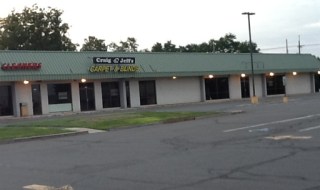 |
| The Marketplace on Route 27 in Franklin. Most of the aging shopping center is vacant. |
shows that the top 1 percent of earners took more than one-fifth of the country’s total income in 2012, one of the highest levels recorded in the century that the government has collected the relevant data.
The top 10 percent of earners took more than half of all income. That is the highest recorded level ever.
The figures underscore that even after the recession the country remains in a kind of new Gilded Age, with income as concentrated as it was in the years that preceded the Great Depression, if not more so.
And yet, we’re still hearing from politicians like Michael Bloomberg and Chris Christie that it’s the rich who drive America’s economic bus. Even if they are right — and I don’t believe they are — our economy has not been set up to ensure that the rich doing the driving will let the rest of us on the bus.
And, every time someone proposes doing just that — whether it is the extension (forget expansion) of food stamps or a tax hike for the wealthy to pay for preschool for the poor — we’re told we can’t afford it. They are right. We — meaning the 99 percent who the bus passes by — can’t afford it. The 1 percent can, as the above referenced report shows. It’s time for them to pay their fair share.
Send me an e-mail.

