
Black eye and bloody nose for the Scarlet Knights

I remember a conversation with a fellow graduate English student in 1988. She had entered the graduate program the same year I did (I didn’t finish), coming in from Brown — an Ivy League school. She asked me where I had gotten my bachelor’s degree and I responded “Rutgers.” Her answer? “Wow, that’s impressive.” It’s a conversation I recount all the time, when people ask me about the university.

Rutgers is a top-notch school, often ranked among the better public institutions*. As a graduate and now a part-time faculty member, I’m aghast that this reputation could be damaged by the failings of its athletic program and a president brought in to manage a merger that is not nearly as popular with students or faculty as it is with the governor.

Let’s start with the beginning — or the public beginning — of this sordid affair.

First, the news leaks that basketball coach Mike Rice had been channeling the worst of Bobby Knight (without the wins), bullying his players both physically and verbally, and university administration did nothing more than suspend him.

Once the news leaked, Rice gets fired, along with popular Athletic Director Tim Pernetti, while university President Robert Barchi apologizes for not being in the loop when the Rice allegations first came to light. Barchi remains working, while the school’s chief attorney John Wolf, a good man whom I’ve know for more than 20 years from my time covering the South Brunswick school board, is run through the public-relations mill.

Barchi announces an investigation and the school undergoes what was supposed to be a very public search for Rice and Pernetti’s replacements. The school hires former Rutgers guard Eddie Jordan, who played for the undefeated 1976 team that lost in the Final Four. In touting the hire, they describe him as having graduated with a degree — a lie that undercuts what could have and should have been a public relations victory.

Then comes the hiring of Julie Hermann to replace Pernetti, which has now blown up into a fresh scandal. Hermann, according to various press reports, apparently has a rather nasty past that includes the bullying of her players and coaching staff, sexual harassment charges and an apparent willingness to sacrifice ethical and legal niceties for the so-called good of the school. I have no idea whether any of these accusations are true, though they are starting to pile up, but they should have been red flags for an administration already reeling.

It is, as Dave Zirin writes, mindboggling:

In looking to move the school forward following the scandal that cost bullying former basketball coach Mike Rice and athletic director Tim Pernetti their jobs, school president Robert Barchi hired former Louisville assistant athletic director Julie Hermann. After the homophobic, misogynistic invective that will define the Mike Rice era, appointing an extremely competent woman must have seemed savvy. Unfortunately, in aiming to get beyond a bullying scandal, the school hired an athletic director with a history of bullying. In attempting to show that the athletic department is not a haven for misogynists, they hired someone with a history of misogyny. And worst of all, in boasting about the depths of their research into Hermann’s past, they missed a series of incidents that a Google search followed by ten minutes of follow-up phone calls could have revealed.

That, Dana O’Neil on ESPN.com writes, is why the school has become a “trainwreck.”

The real problem here, as it has been since March when the news first broke about Rice, is Rutgers and, more specifically, the people in charge at the State University of New Jersey.

After the firestorm surrounding Rice’s exodus and the dismissal of athletic director Tim Pernetti, the university had one charge: To get these searches right. To find people beyond reproach, with careers built on integrity and decency. And while that sounds oxymoronic in the land of college athletics, those people actually do exist.

Instead, Rutgers took a flier on a woman with two lawsuits filed against her and a team that accused her of the same horrific cruelty that got Rice rightfully canned. Then it hoped no one would notice or, if they did, no one would care.

For Ian O’Connor at ESPN.com, the failure of leadership goes to the top — and does not stop with Barchi. Writing about Gov. Chris Christie, he wonders how “the same outsized figure who has come to personify Jersey strength and stubbornness and resilience” could fail to force Barchi’s ouster. Christie, he said,

should’ve leaned hard on the university’s Board of Governors to dismiss Barchi along with Rice and Pernetti and install someone who would see how vital it was for Rutgers to get this one right. Someone who would’ve ordered the search committee to take an extra two weeks to examine Hermann’s career head to toe, to interview administrators, coaches and players from every corner of the candidate’s past.

But he didn’t. And Barchi survives, even though a Christie spokesman questioned the school’s leadership in April. He survives, even though Barchi’s “staggering inaction” — in O’Connor’s words — “had diminished his school’s prominent academic standing.”

Barchi and the merger and reorganization of the state’s higher education programs he was brought in to oversee are the roots of this problem. The merger, as Zirin points out, “was approved by the state legislature without the funding to see it through.” That has left the school chasing money, Zirin writes.

“Many of us have been horrified since he arrived,” said Professor Beryl Satter, who teaches at the school’s Newark campus. “The scandals in the athletic department are the logical outgrowth of his indifference to both students and the community. President Barchi came here with no interest in the student body and no interest in research. What does that leave? Money. He has been profoundly blinded by the corporate process, a fact that’s been obvious to us from the very beginning. Someone indifferent to the welfare of students should have no place running a university.”

As part of this process, he has proven deaf to the concerns of students and faculty — especially those at the Newark and Camden campuses, which have a higher percentage of minority and low-income students. The goal, it would appear, is to attract a greater number of out-of-state students to a school with an overwhelmingly in-state focus — which is among its greatest strengths, I would argue.

This is not about sports, the Big 10, which the school is about to join, or even Hermann. It is about the integrity of one of the great public educational institutions in America. For that reason, this debacle needs resolution. Gov. Christie, the ball is in your court.

* Correction made — ranking number removed.

Send me an e-mail.
Well wishes for Tim Curry

I’m not sure why this is being reported now, but USA Today reports that the great Tim Curry suffered a stroke in July. He apparently is doing well.

While he is best known for The Rocky Horror Picture Show, it is his wonderful 1978 album Read My Lips with which I associate him most.

Released when Curry was 32, his debut record was a pastiche of show-style tunes –“Birds of a Feather,” “Harlem on My Mind” — and stylized rock — “Wake Nicodemus” and “Brontosaurus.” While all nine of the songs are real good, three in particular stand out — “Sloe Gin,” ‘Anyone Who Had a Heart” and the album’s best, “Alan.”

Sadly, the album is out of print and the label, A&M, hasn’t released it digitally.

Here’s wishing the good Dr. Furter a speedy recovery.

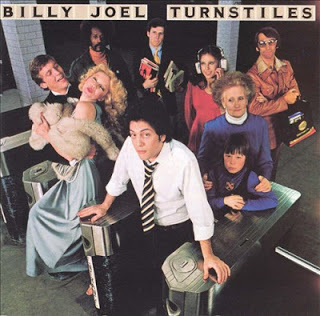
Saturday playlist: Billy Joel’s best, Turnstiles

I’ve been listening repeatedly this week to what I think is Billy Joel’s best album, Turnstiles. I know this may not be the consensus view — most would probably go with The Stranger or Piano Man — but the thing that strikes me about Turnstiles is both its consistency and the fact that this consistency occurs at an extremely high level.

Its eight songs veer from the kind of pop love songs that could have been hits in a different era to political statements and the tension in the studio during the recording seems to have upped the ante in a way that benefited the final product. Eight great songs. Eight great performances, culminating with the angry, pointed political epic “Miami 2017 (Seen the Lights Go Out on Broadway).” It is a leap forward from the good, but flawed, Streetlife Serenade, while also offering everything that The Stranger and 52nd Street offered.

Steven Thomas Erlewine on Allmusic.com described the album like this:

There’s little question that the cinematic sprawl of Born to Run had an effect on Turnstiles, since it has a similar widescreen feel, even if it clocks in at only eight songs. The key to the record’s success is variety, the way the album whips from the bouncy, McCartney-esque “All You Wanna Do Is Dance” to the saloon song “New York State of Mind”; the way the bitterly cynical “Angry Young Man” gives way to the beautiful “I’ve Loved These Days” and the surrealistic apocalyptic fantasy “Miami 2017 (Seen the Lights Go Out on Broadway).” No matter how much stylistic ground Joel covers, he’s kept on track by his backing group. He fought to have his touring band support him on Turnstiles, going to the lengths of firing his original producer, and it was clearly the right move, since they lend the album a cohesive feel.

It is, as Erlewine says, Joel’s most satisfying album — a precursor to the smash hits to come that captures Joel at his best and powerful.

Send me an e-mail.

Plagiarism, citation and art

Publishers and magazines have been working to take down poems and suspend sales of collections by David R Morgan after the American poet Charles O Hartman realised Morgan’s poem “Dead Wife Singing” was almost identical to his own, three-decades-old “A Little Song”.

Assiduous digging by the online poetry community, led by the poet and academic Ira Lightman, then discovered that Morgan, a British poet and teacher, had lifted lines and phrases from a host of different writers. One of Morgan’s poems, “Monkey Stops Whistling”, won him an award. Opening: “Stand to attention all the empty bottles, yes … // the long-necked beer bottles from the antique stores, / the wine bottles and pop bottles left on beaches; / steam off the labels and line the bottles up, the green ones / with the brown, black, yellow and clear ones,” it was found to be virtually identical to a 1981 poem by Colin Morton, “Empty Bottles”.

“When an American poet spotted his own poem under David R Morgan’s name on a website that blogs new work, he contacted its editor, and its editor contacted me. Within around one hour, I’d found a dozen more. Everything online by David R Morgan that I could find since Jan 2011 I could trace 90% of to another person’s poem,” said Lightman, who also discovered an alleged plagiarism of Roger McGough by Morgan dating back to 1982.

The case follows that of Christian Ward, another prize-winning poet found to have lifted work from other writers earlier this year.

The issue here seems pretty straightforward — passing of someone else’s work as your own is the textbook definition of plagiarism. But what of the poet who relies on citation and open and honest appropriation? I am thinking about poets as diverse as C.D. Wright, Martha Collins and T.S. Eliot, Ezra Pound, William Carlos Williams and so many others, poets who take outside material and reshape it for their own purposes.

I raise this issue because it hits close to home. The impact that citation and the blending of outside sources or others’ words have on a poem — often a long poem like Collins’ brilliant Blue Front — was the subject of my master of fine arts thesis and is a technique I use often. The book-length manuscript I recently finished (and am actively shopping) makes use of the technique, as does a number of other poems that I’ve written. And I’ve struggled with how and how much to put in end notes.

In Collins, for instance, newspaper accounts and post cards allow for the competing voices necessary to create competing narratives that raise questions about the accuracy of the history being rediscovered and rewritten. Mark Nowak does something similar, banging his sources up against each other in a way that makes each quoted work comment on the other (see Coal Mountain Elementary and Shut Up, Shut Down). Eliot and Pound reach back to earlier, classical writing in English, Latin and other languages to reclaim and reaffirm a sense of tradition. The notes provided in each case, however, fall far short of what one might find in an academic work. In some cases, there is nothing more than a bibliography listing sources.

Citation is a form of collage and the use of outside sources has significant historical precedent that goes back to the Greeks and is a significant component of contemporary music (what is sampling, after all, if not audio citation). Borges, in “Pierre Menard, Author of the Quixote,” addresses the most extreme form of this kind of textual appropriation, anticipating the post-modern theory that it is the audience and not the text — and certainly not the text’s author — that creates meaning. From a 1997 essay by Martin Johnston on Jacket:

Borges, not believing — quite consistently — in the intrinsic value of any work of art, has said that writing gains its justification through endless dialogue between writer and reader.

It is important to note, I think, that Menard in Borges’ story is an overt appropriator whose goal is to create a dialogue between a historical work and the modern world. The narrator/reviewer believes the passing of 300-plus years creates new contexts and therefore new meaning. (In this, as numerous critics have pointed out, Borges anticipates post-modern theory.) This dialogue can only be created, of course, if the appropriation — whether on a small or large scale — is announced as such; it must be overt and the reader must be clued in to the larger project.

Morgan and Ward were not seeking this dialogue, but claiming others’ work as their own, which makes what they are accused doing theft. Of major concern is the danger that citational poetics may be swept up in any dragnet designed to root out plagiarizing poets.

What Morgan and Ward have been accused of is intolerable and unacceptable, but the potential fallout is far greater than any of us may realize. What they have done has the potential to undercut a venerable poetic technique.