Missouri may create state-run pharmacy — but only to keep killing prisoners

Missouri Attorney General Chris Koster thinks he’s hit upon a novel way around some of the problems plaguing the death penalty these days. He wants the state to create its own death-penalty pharmacy.

That’s right. The AG for a state that has refused to participate in the Affordable Care Act — it has refused a state-run insurance exchange and expansion of Medicaid on the grounds that it expands government’s reach too far — now wants the medical establishment to create a state pharmacy, but only to make the drugs needed to kill prisoners.

This would address both the lack of drugs available and the call for more transparency in the death penalty system. What it also does is underscore in bod colors the skewed values of our political system. We remain more committed to revenge than we are to taking care of those in need.

Send me an e-mail.

What would Neil Postman say about social media?

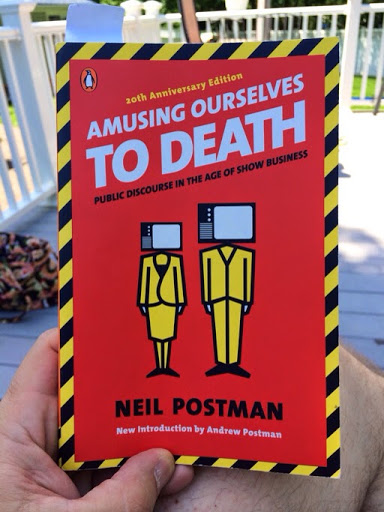
I posted the other day about Neil Postman’s important book, Amusing Ourselves to Death, and his argument (made in the mid-1980s) that the structural imperatives of television were responsible for a formal shift in discourse, turning news and debate into entertainment and eliminating context. TV, he says, flattened the informational world, making all information equal and stripping it of real meaning. A home invasion in the Bronx would be treated the same as a New York Rangers playoff game and the same as a Memorial Day parade in northern New Jersey, regardless of where the viewer lived.

I witnessed this shift first hand as a local journalist, often having to explain to my readers why the Bronx home invasion or the fire in New Rochelle were not important stories in South Brunswick, especially when the Township Council might be considering reduced library hours or the school board wanted to renovate many of its buildings.

The paradigm shift that Postman describes, however, has accelerated in the digital age with new platforms that allow us to pick and choose the material we see and to respond instantaneously — and with little thought — to the disparate and often irrelevant events. It was just two weeks ago, or thereabouts, that everyone was talking about a viral video that showed a cat saving a kid from a dog attack — a news item that perfectly fit Postman’s notion of decontextualized information — entertaining, but without real impact and divorced both in time and space from most of our lives.

Why bring this up again? Because I think Postman would have something to say about the impact that Twitter and other social media have had on our discourse. If television decontextualized and turned everything into entertainment, then what has Twitter wrought. I am thinking in particular of the dust-up — am I minimizing it? — that pitted Hollywood icons Judd Apatow and Seth Rogan on one side and the feminist film critic Ann Hornaday on the other pointed me back to it. Hornaday offered a nuanced consideration of the cultural atmosphere created by Hollywood, referencing Apatow’s films as a factor that contributes to a not-so-subtle culture of misogyny. I don’t want to weigh in on her essay, aside from saying it deserves a close reading (a good overview of the essay and the debate can be found on Salon in an essay by Andrew O’Hehir). What strikes me is the way in which our discourse has become little more than one-off shouts of outrage.

Consider Rogan’s tweets:

I don’t mean to pick on Rogan, but his responses seem pretty typical of discourse in the social media era — short, without context and lacking nuance. They exist as pure outrage and do not address — aside from being dismissive of — the basic argument made by Hornaday that a “sexist movie monoculture can be toxic for women and men alike.” Hornaday says very specifically that “Movies may not reflect reality.” However, she adds, “they powerfully condition what we desire, expect and feel we deserve from it.”

The myths that movies have been selling us become even more palpable at a time when spectators become their own auteurs and stars on YouTube, Instagram and Vine. If our cinematic grammar is one of violence, sexual conquest and macho swagger — thanks to male studio executives who green-light projects according to their own pathetic predilections — no one should be surprised when those impulses take luridly literal form in the culture at large.

Is that assigning blame? Perhaps. But it also is making a much larger point about the culture. Rogan’s response, again, does not attempt to address the specifics (as O’Hehir points out), but instead expresses his anger that someone would raise these issues and connect them to his movies That is his prerogative.

Rogan’s responses, however, are pretty typical of the discourse one might find on Twitter and other social media outlets — a discourse that features short snarky comments, a premium on speed of response, a lack of introspection and a decidedly insular sensibility.

Consider this tweet from a conservative, gun rights Twitter user:

Or this from The Huffington Post:

Both cast information into the Twitterverse with the goal of altering the larger political discourse, but neither offers much in the way of context or nuance.

I need to be clear here: I am a regular user of social media, of Facebook and Twitter in particular, but also Instagram and other platforms, and I am an advocate of social media use in journalism. Social media offer significant benefits to the journalist — hell, to anyone with a story to tell — and not just because they allow for mass democratic distribution of content. As I tell my students, social media offer alternative ways of telling stories, especially when multiple platforms can be combined.

But we should not pretend that social media — and Twitter and Instagram, most notably — are not altering the way our discourse works. If television turned everything into entertainment and shortened the attention spans of news consumers, then what about Twitter and its 140-character limit? What about the ease with which we can distribute hastily crafted graphics — usually photos with some kind of text, known as memes to the digital world — and the fact that we now, to a greater degree than ever before, self-select what we want to hear and with whom we wish to debate? In an environment in which we keep our thoughts to 140 characters — 15-20 words, say — there is no room for historical or geographical context. There is no room for nuance. Everything is reduced to its most basic element, while also having to be dressed up in the flashiest language. This changes the basic contours of discourse and creates a new grammar for debate that vastly expands the dangers to our democracy that we first saw in cable television’s noxious stew of logical fallacies and muddled ahistoricism.

Send me an e-mail.

Obama negotiates with himself again

President Barack Obama is delaying administrative efforts on deportation — because he fears he’ll anger House Republicans and doom immigration reform.

You know, the same House Republicans who have been accusing him of abusing executive power and have vowed to kill any efforts that would would do anything more than close the border. This is absurd — another example of Obama negotiating with himself and letting the GOP dictate the terms.

As I wrote earlier on Facebook, the president has shown an unwillingness to use the power of his office and has, instead, consistently given in to Republicans and stymied efforts for even the most modest of reforms.

On immigration, his record is mixed. Deferred Action for Childhood Arrivals has helped, but Obama has been deporting immigrants at record levels. He can slow the pace and use the bully pulpit to change the conversation, but his efforts to date have been tepid, splitting immigrant groups along age lines and making it look like Democrats are taking Latinos for granted.

Comcast, Time Warner and oligarchy

The New York Times’ headline — “A Cable Merger Too Far” — sums up the dangers that a merger of Comcast and Time Warner pose to consumers. The proposed merger, which is under federal review would

concentrate too much market power in the hands of one company, creating a telecommunications colossus the likes of which the country has not seen since 1984 when the government forced the breakup of the original AT&T telephone monopoly.

It’s not just costs, which are far too high as it is and which are likely to be the focus of many consumers’ ire once the merger, if approved, goes into effect. I’ve had conversations about the cost issue, but few about the other implications — but it is these other threats we need to be discussing.

As the Times writes,

By buying Time Warner Cable, Comcast would become a gatekeeper over what consumers watch, read and listen to. The company would have more power to compel Internet content companies like Netflix and Google, which owns YouTube, to pay Comcast for better access to its broadband network. Netflix, a dominant player in video streaming, has already signed such an agreement with the company. This could put start-ups and smaller companies without deep pockets at a competitive disadvantage.

There are also worries that a bigger Comcast would have more power to refuse to carry channels that compete with programming owned by NBC Universal, which it owns. Comcast executives say that they would not favor content the company controls at the expense of other media businesses.

These are democratic implications. We too often view free speech issues only through the lens of government control and we ignore the dangers posed by corporate concentration and control. But as the Times makes clear, the danger of further corporate influence — whether for commercial or political reasons — is great.

As it is, we live in a time of false choices — hockey or basketball, Castle or Criminal Minds, Fox or MSNBC. We’ve come to believe that our consumer choices are equivalent to political choice and action. These are limited choices, of course, dictated by the medium and the commercial decisions of programmers or the political preferences of the extremely rich.

Our choices are narrowed before they get to us –a situation likely to be made worse by any merger. The point is that any merger that would “fundamentally change the structure of this important industry” — as the Times says of the Comcast/Time Warner consolidation — and that would “give one company too much control over what information, shows, movies and sports Americans can access on TVs and the Internet” will be bad for our already neutered democracy, moving us even closer to oligarchy.

You can read it in the Sunday paper

What we blame on the Web really goes back to the telegraph and other mass-communications tools, as Neil Postman points out in 1985:

(Most) of our daily news is inert, consisting of information that gives us something to talk about but cannot lead to any meaningful action. This fact is the principal legacy of the telegraph: By generating an abundance of irrelevant information, it dramatically altered what may be called the “information-action ratio.”

Information, he writes, was divorced from context, creating a flow of disconnected headlines that carry equal weight, regardless of geography or political impact. Think of the cat recently that fought off the dog attack. What relevance does it hold for most of us beyond acting as a conversation starter?

(The) situation created by telegraphy, and exacerbated by later technologies, made the relationship between information and action both abstract and remote.

Rather than reading about crime in our own neighborhoods, we now read about crime everywhere, which distorted crime’s impact and stripped us of a sense of agency or “potency.”
The “whole world became the context for news,” Postman writes. “Everything became everyone’s business.” And ultimately nothing was our business, leaving us feeling politically neutered.