My latest column at the Progressive Populist — on the limits of pragmatic politics.
Send me an e-mail.

My latest column at the Progressive Populist — on the limits of pragmatic politics.
Send me an e-mail.
I’m working on a script for a presentation I’ll be giving on alternative methods of storytelling and hybrid forms for the Middlesex County College Arts and Sciences Fair. The focus will be on how images and words work together to create a meaning that is greater than the meaning of the individual parts. This post is part of my thinking out loud in public about how this presentation may ultimately be structured.
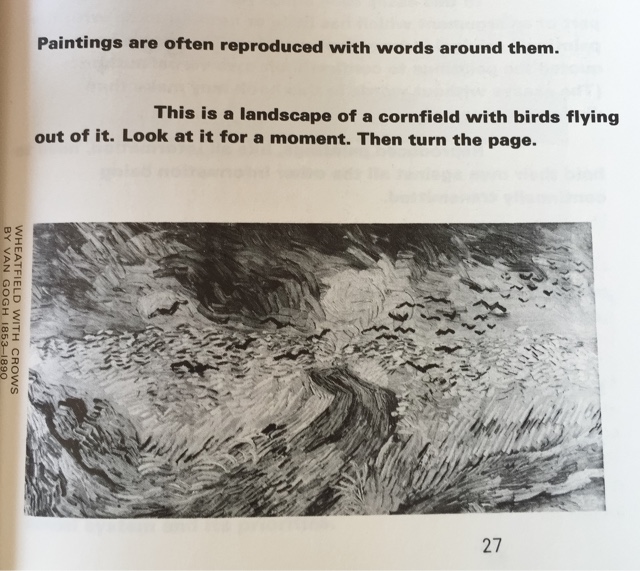

This competition of images, words and informational elements creates new meanings.
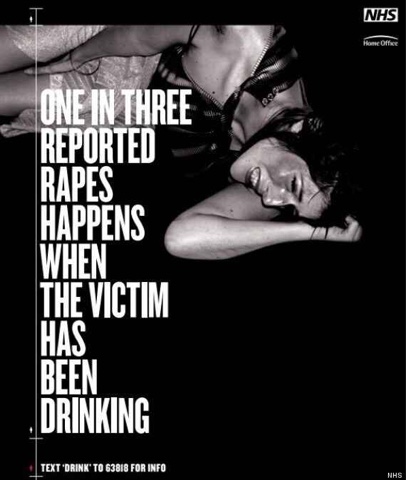
I wrote about this a couple of years ago and have used this poster in some classes to discuss how words and images work together, creating new meaning and obscuring the meaning of the individual parts.
In this case, let’s break the above poster into its individual components — image and words.
What does the image show? This seems pretty obvious — it is a woman in distress, likely after a sexual assault. She is in pain, crying — and she is alone. This may be accurate — the rapist has left the scene — but it also makes her the focus of the image.
By itself, we can read the image as one designed to create empathy or even outrage at what has been done to her.
But — and here is my point — this image is not being presented by itself. It is inexorably linked to the legend imposed upon it, an legend expressed in passive voice and with the authority that the use of statistics brings.
Let’s break down the legend: “One in three reported rapes happens when the victim has been drinking.” First, as I said, it is written in the passive voice. The passive voice — which can be a useful tool in writing — removes agency. The subject — the actor or doer in the sentence — is the rapes. The action — the verb, here the unfortunate “happens” — is connected to the subject. Stripped to its core, this sentence says “rape happens,” an echo of the throw-your-hands-in-the-air expression “shit happens,” which makes it sound as though the action is something that occur as a matter of course without it being tied to a specific source.
Consider, as well, the prepositional phrase that serves as the sentence’s object “when the victim has been drinking”: Here we have agency — the victim is doing something, is taking action and, in doing so, it implies the victim has some responsibility for the action in the sentence.
Combine these written elements with the image of the distraught woman and the agency in the poster is shifted from rapist to victim. Remember, the only person present in this poster is the woman. The only action tied to a subject here is the drinking. So. while the intent of the message may have been to warn women of the dangers that are out there and to ask them to consider their vulnerabilities, it ends up placing the blame on the victim.
This conclusion, if my earlier experience with this debate is any indication, may generate significant disagreement. That is OK. I think it is important to debate what makes this poster fail or possibly what makes it effective. I also want to make clear that there is nothing wrong with warning women to be careful, to take precautions, to understand what may make them more vulnerable.
My argument here is that the creators of the poster may not have been conscious of how the elements can work together to create new meanings, and that we have to be cognizant of how this works. I also want to make clear that this failed poster offers a way for us to look at storytelling and to ask ourselves how we can bring together genres to create something greater than the individual elements might offer.
I’ll have more to say about this as I work through some of the new hybrid forms. Stay tuned.
I have a question for my conservative friends and readers: How would you define your beliefs?
History always constitutes the relation between a present and its past. Consequently fear of the present leads to mystification of the past.
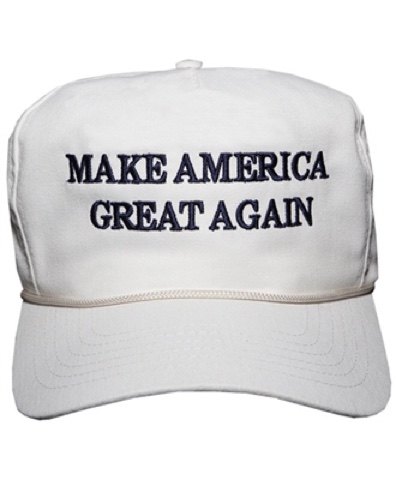
Berger’s analysis offers a window into the 2016 election, which has been one of the more myth-based in recent memory. The use of the phrases “taking America back” and “make America great again” — by both sides (see my Progressive Populist column from a few months ago — plays on a mythical American past of equality, economic justice, and moral certitude, based on a distorted history that excludes large swathes of the American population. America’s greatness, in this narrative, is the greatness of military prowess and industrial might, a narrative tied to a very narrow window starting with World War II and ending during the 1960s, one that consigns the struggles of African Americans and other disenfranchised groups to footnote status.
The Trump phenomenon, which is the defining story of the 2016 race is based on class and race resentment, a sense that something has been taken away and given to others who are less deserving. It is a false narrative, a myth, that grants dispossessed (mostly) whites a target for their resentment. Trump’s backers are situating themselves within the myth, which distorts their vision of the past and prevents them from pointing their anger at the real culprits for their current state.
Whatever gains were made by (mostly) white, (mostly) male workers during the middle of the 20th Century were made because the labor movement had gained traction. Business — and government — seeking peace at a time of relative prosperity — agreed to a truce and let (mostly male and white) workers have a seat at the table. But this truce was built on a foundation of segregation. Roosevelt’s New Deal needed the votes of Southern Jim Crow Democrats to make it through Congress, meaning many of its provisions were designed not to apply to African Americans. Up north, as Ta-Nehisi Coates pointed out in his important “The Case for Reparations,” a variety of laws and business practices conspired to keep prosperity from flowing beyond white neighborhoods.
An American history that does not acknowledge these wounds is not an honest history and does not allow us to situate ourselves properly. A myopic American history, therefore, is a mystified American history that leaves those who see the past with these blinders vulnerable to snake oil salesmen like Trump.
Mr. Trump is directing our anger for less than noble purposes. He creates scapegoats of Muslims and Mexican immigrants. He calls for the use of torture. He calls for killing the innocent children and family members of terrorists. He cheers assaults on protesters. He applauds the prospect of twisting the Constitution to limit First Amendment freedom of the press.
This is the very brand of anger that has led other nations into the abyss.
Here’s what I know. Donald Trump is a phony, a fraud. His promises are as worthless as a degree from Trump University.
He’s playing the members of the American public for suckers. He gets a free ride to the White House and all we get is a lousy hat.
This is the issue of this election: Whether we believe in our capacity for self-government or whether we abandon the American revolution and confess that a little intellectual elite in a far-distant capitol can plan our lives for us better than we can plan them ourselves.
 Hank Kalet