New Jersey cities are prepared to “just say no” to President Trump’s efforts to enlist local and state governments and police to help round up undocumented immigrants – efforts which were outlined Tuesday in a set directives issued by the U.S. Department of Homeland Security.
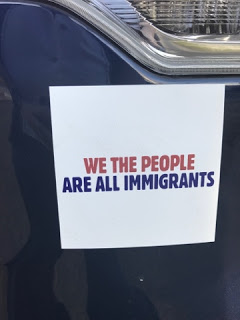 Newark and Jersey City – the state’s largest cities – had already declared themselves as sanctuary cities prior to the election, and have since restated their commitment to protect undocumented residents. Other cities and towns have since joined what is a growing list of communities in New Jersey and around the country who have essentially declared their resistance to working with the federal government on immigration issues.
At the same time, two state bills have been introduced – one, sponsored by Sen. Brian Stack (D-Hudson), providing state aid to communities that lose federal aid because of their sanctuary or welcoming policies and the other, sponsored by Sen. Nia Gill (D-Essex), prohibiting all New Jersey government officials from acting in concert with immigration officials unless a violent crime was involved.
Trump has criticizes so-called sanctuary cities for harboring what he called dangerous criminals and, during the campaign he promised to cut off funding. His Jan. 26 executive order called for just that, along with stepped up enforcement actions and an expansion of local involvement. Tuesday’s DHS directives are an effort to put teeth into the executive order. As The New York Times reported, Homeland Security has issued “a set of documents translating President Trump’s executive orders on immigration and border security into policy, bringing a major shift in the way the agency enforces the nation’s immigration laws.” Those changes include a broader definition of which immigrants are viewed as priorities for deportation, an expansion of expedited removals, the hiring of new enforcement agents, and the recruiting of “local police officers and sheriff’s deputies to help with deportation, effectively making them de facto immigration agents.”
The recruitment effort, called the 287g program, was scaled back under the Obama administration when it met resistance from local communities, though it remained in effect. Three New Jersey counties – Hudson, Monmouth and Salem – have signed memorandums with the U.S. Immigration and Customs Enforcement. Hudson’s agreement is with its corrections department, which manages the county jail, which also serves as an ICE detention facility. The Monmouth and Salem agreements are with the sheriff’s departments, which are responsible for prisoner transfer. The Essex County corrections facility also serves as an ICE detention facility, but it has not signed a 287g memorandum.
President Trump declared during the 2016 campaign that he would expand the 287g program. His Jan. 26 executive order, which stated the administration’s intention to penalize sanctuary or welcoming communities, was the first step in doing so. The DHS directive unveiled Tuesday made it clear that the administration views the 287g program as a significant element of its immigration enforcement strategy.
The Gill and Stack bills are meant to put the state on record as opposing that strategy. The Gill bill, S-3005, would prohibit state, county or local law enforcement from complying with “voluntary requests for information, transfers or detainers at the request of ICE on the basis of an immigration notification,” unless the subject of the request has been convicted of a violent crime. Republican support for the legislation seems unlikely, with Gov. Chris Christie having criticized sanctuary cities both during his own presidential campaign and more recently on his radio program. In addition, Sen. Steven Oroho (R-Sussex) has introduced S-2945, which would prohibit local governments from passing ordinances declaring themselves sanctuary cities and making it “an ethics violation for state or local employees to refuse to comply with a federal immigration enforcement request.”
Gill, however, says efforts to recruit local law enforcement would damage relationship’s between police and immigrant communities and drive those here illegally into the shadows. This, she said, would endanger entire communities because residents would be less likely to report crimes or work with government officials.
“We know this leads to racial profiling and targeting the immigrant community and is not what we are paying law enforcement for,” she told me recently. “This will make them less likely to report crimes, which then makes the community less safe.”
Sen. Michael Doherty (R-Warren) described the “targeting of so-called ‘sanctuary cities’” as “long overdue.”
“By refusing to work with federal authorities, those cities provide safe havens for violent criminals who otherwise would be deported to continue their illegal acts,” he said in a Jan. 26 statement. “It’s about time the elected leaders of these cities are held accountable for the unnecessary harm they cause.”
Officials in the approximately dozen communities that either have or plan to adopt sanctuary or welcoming ordinances say they are prepared. In addition, to Newark and Jersey City, towns as diverse as Princeton, East Orange, Maplewood, Prospect Plains, Union City, Madison and South Orange have issued resolutions either explicitly using the word “sanctuary” or the less controversial “welcoming” tag, and Trenton, Highland Park is poised to do the same. While they have opted for differing language, they all have declared that municipal officials – whether police or court officers, or members of the civilian bureaucracy like health inspectors, clerks, tax collectors and others – will not act as immigration enforcement agents or comply with federal immigration detainer requests. There are exceptions – the identity of immigrants accused or convicted of violent crimes or driving while under the influence would provided to federal officials – but these exceptions are few in number.
Maplewood Mayor Victor DeLuca, whose community passed a resolution on Jan. 17 declaring itself a welcoming community, made it clear that the resolution was both a message to its residents and a direct rebuke of the Trump agenda on immigration.
“If we are threatened with defunding, we will go to court and fight it,” he told me, adding that Maplewood also plans to fight any attempt to force the township to “implement a practice we don’t want to do,” whether to act as ICE agents or a requirement to register immigrants and refugees.
He called it a constitutional issue.
“We want to protect the people in this state, in the country, in our community and we are going to stand up and say what we want this country to be going forward,” he said.
Gill also views the issue through a constitutional lens. Her bill would prohibit state, county or local law enforcement from complying with “voluntary requests for information, transfers or detainers at the request of ICE on the basis of an immigration notification,” unless the subject of the request has been convicted of a violent crime. The agencies still would be required to comply with federal criminal detainers, which are court-issued and warrant-based.
The distinction, Gill said, is important. Court-issued detainers are consistent with due-process requirements, require a warrant and the identification of probable cause. Voluntary detainers, she said in a press release, lack these protections and could leave local police liable for damages. She said efforts to recruit or deputize local law enforcement essentially redirect police resources from their normal “law enforcement duties” without providing added money to offset the new responsibilities.
“You are telling states and towns to shift resources,” she said. “ You are not getting any more money, but we want you to take police off the streets in Montclair, for instance, and we want those police officers to go door to door and undertake enforcement of immigration laws.”
The South Orange effort was spearheaded by a local grassroots group, SOMA Action and ultimately backed by the Village board of trustees. The village opted to call itself a Sanctuary City, rather than a welcoming city, to send a message to Trump and other communities.
“Technically speaking, there is no definition of what a sanctuary city is,” said Anita Gundanna, a SOMA member who helped lead the effort. And there are few differences, aside from the semantics, between a sanctuary or welcoming community. Trump and those who oppose immigration have crafted their own definition of sanctuary “as harboring criminals.
“That is utter nonsense, and I’m not sure where it comes from,” she told me. “But legally untrue,” which is why South Orange activists view the village’s sanctuary city resolution as an effort to take back the term from immigration hardliners.
“Terminology matters,” Gundanna said. “’Sanctuary’ felt empowering.”
“Sanctuary,” she added, “means protection, which is what we are resolving to do. If you say sanctuary, people will know what you mean.”
Ultimately, she said, the focus was on declaring that South Orange does not “want to be arm of federal immigration enforcement.”
“There is no harboring of criminals, no breaking of laws, as of yet,” she said. “There is a strong sentiment about this in South Orange, and as a result it causes us to state that, if the federal government asks us to do things on immigration, our answer will be no.”
Princeton is just as committed, Councilwoman Heather Howard said. Princeton opted not to call itself a “sanctuary city” because it felt that the term was ill-defined. They opted for the “affirmative language of welcoming community” and affiliation with the national Welcoming America organization.
“That language seemed to be more in line with our actual approach,” said Howard, a former Health and Senior Services commissioner under Gov. Jon Corzine. “We welcome immigrants and recognize that diversity is what makes our town so great. We are celebrating it, recognizing it, and we are recognizing that law enforcement is enhanced when immigrants feel welcome.”
The broader effort – in New Jersey and around the country – is an example of “progressive federalism,” Howard told me, a phrase that turns the more traditionally conservative interpretation of federalism around. Federalism prioritizes local and state action above federal action and is often associated with opposition to the civil rights movement and federal anti-poverty efforts. Progressive federalism, she said, uses the same underlying theory – but applies it in a progressive way. In this case, to use local autonomy to challenge federal efforts to enlist local law enforcement to engage in federal priorities.
“In the past, federalism meant states wanting to deviate down, and it reminds people of civil rights era when states didn’t want to enforce federal civil rights laws,” she said. “But now we are seeing states and localities pushing back against reactionary federal policies.”
It is, she said, a larger movement that makes use of local communities to build grassroots opposition.
DeLuca views the efforts through the same lens.
“This is an important issue for us to be united on as elected officials,” he said. “We’re the ones closest to the ones on the ground and we know who our neighbors are, and we want to make them feel comfortable.”
Send me an e-mail.


 Hank Kalet