Here is the full text of the governor’s address to the Joint Special Legislative Session from his Web site (I offer it in full now and will offer some thoughts on it later):
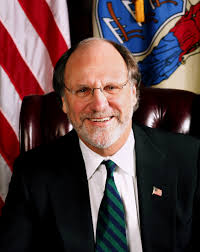 Good Morning.
Is it me or does it seem like we were just here yesterday?
Although I must say, it’s nice to get started at eleven instead of nine.
Twenty-two days ago, we met in this chamber under somewhat different circumstances.
There was a sense of urgency for all of us brought on by the human and economic costs of the shutdown and the need to create a secure financial foundation for our state.
Today, there is just as much urgency to act.
Our people face a crisis – a real crisis with regard to property taxes and its burden.
So let us join together and agree that before the end of this calendar year, we must have in place comprehensive property tax relief and reform to truly address this crisis.
It will take years to fully correct the situation, but it is imperative – absolutely imperative – we begin today.
I have no desire to bring new words or new slogans to this well-worn discussion.
It is all too clear to everyone, the property tax burden is simply overwhelming our citizens and their economic well-being.
We know the metrics, the rate of growth and the painful impact all too well.
Our business model for delivering and paying for government and school services is broken.
If we were a business, we’d be bankrupt.
In our case, middle-class families and seniors bear the brunt of the failure to meaningfully address the root causes of this problem.
Our citizens pay through the roof for a tax that is imposed without any regard to income or ability to pay.
The New Jersey system of property taxes is haunted by its own “four horsemen of the apocalypse.”
First, we have an over-reliance on this regressive tax to disproportionately fund government and school costs.
Second, we have failed to control spending at all levels of government or to give the public a meaningful voice in budget decisions.
Third, we have far too many layers of government delivering too many similar services.
And fourth, the fragile foundation of state finances has prevented the state from increasing aid to local school districts and governments.
This particular failure has been compounded by inequitable aid formulas, particularly with respect to education.
There are multiple strands to each of these issues; but taken together they slowly strangle our state.
The total property tax levy today is $20 billion. Without action, it will double to nearly $40 billion within a decade.
With the weight of these circumstances in mind, I want to commend the legislative leadership – President Codey and Speaker Roberts – for calling this special session.
Working with them and Minority Leaders Lance and DeCroce, I know we will use this opportunity to bring real change.
As the public knows, ideas to reform and reduce property taxes have been debated ad infinitum.
The public has a right to ask – what is the difference with this effort?
What do we hope to accomplish?
Let me tell you – action, action, action – now, before the end of the year.
This cannot be a special session to study consolidation or review existing programs. There’s been enough of that.
Talking isn’t going to reduce anyone’s property tax bills – comprehensive and transformative action will.
The system is broken beyond the point of minor adjustments. Tinkering around the edges isn’t going to cut it.
Second, we must address both relief and reform in a sustainable manner.
These two words – relief and reform – are often used interchangeably in property tax discussions.
Now, I’m not Noah Webster, but in the Corzine lexicon, relief is direct assistance brought quickly to reduce what someone actually pays.
And reform means changes that over the long term will reduce cost factors that drive up spending and keep increasing the tax burden.
The blueprint I lay down today is a set of recommendations that will provide sustainable relief and reform.
This special session is an extraordinary opportunity to bring lasting change to the system.
We cannot let this moment pass. We must make history.
Our opportunity has been enhanced by the difficult, but ultimately responsible outcome of the recent budget settlement.
We have established a much improved fiscal foundation for state finances and provided $600 million per year in pre-funding for our property tax efforts.
We all know too well the painful reality that the health of state finances is inextricably linked to our ability to meaningfully address property taxes.
We can’t have one without the other.
We can’t increase school aid, municipal aid, charity care or anything else while we grapple with structural deficits.
As long as we can’t increase state aid, we force communities to rely more and more heavily on the regressive property tax to fund services.
We have to move away from this tax, not increase our reliance on it.
The property tax provides 46 percent of all tax revenues in New Jersey.
The national average is roughly 30 percent.
Frankly, I’ve never in my life wanted so much to be average.
The property tax must become less and less a portion of the total funding pie.
Keeping the foundation of the state budget on the right track is a prerequisite for sustainable property tax relief.
And within the state budget, we must acknowledge that many of our aid formulas, especially school aid, are outdated, ineffective and outright unfair.
Anytime you change a formula, there are inevitably winners and losers.
There is, however, a greater good that we must achieve by doing what is right for the state, and that means we must revise these formulas.
Commissioner Davy is already working on ways to reform school aid.
A new formula must:
One – recognize the needs of every child regardless of zip code.
Two – live within the realities of our state finances.
And three – meet the obligations of our Constitution.
Beyond the formulas and foundation of the state budget, there are several steps we need to take to provide sustainable relief and reform.
First – to the relief.
We all have to acknowledge that the reforms we implement will take time before the public feels the results.
That said, we must provide relief – now.
Currently, we send rebate checks to the public as a means to lighten the burden and dampen the regressivity of property taxes on seniors and middle-income families.
We call this property tax relief, but I think many of you would agree that few people outside of Trenton actually make the connection.
If we want to lower people’s property tax bills, then we ought to do just that.
Replace the checks with direct credits that will lower the bill someone pays.
My administration will have the technology in place to do this by July 1, 2007.
I propose that we take $350 million of the dedicated sales tax revenue and combine it with the existing funding for rebates.
This will create a credit program of more than $1.6 billion to lower tax bills for senior citizens and middle-class familias and to potentially double the credit for tenants.
That’s the relief part of the blueprint.
Reform is admittedly a much more difficult challenge.
It will take more time to realize the benefits, and it will take special efforts to measure the results.
Few of the reform efforts will win any popularity contests, but results are what matters.
We must address the root causes of the problem that drive up property taxes every year. And we must achieve economies of scale and other efficiencies to reduce costs.
Everything must be on the table – sacred cows, third rails, 800-pound gorillas – all the issues that government for too long has been unwilling to address.
Property taxes have been going up by an average of 6.5% a year for the past 20 years and at 6.9% since 2001, a period of time when, not surprisingly, aid to municipalities and schools was essentially held flat.
Enough is enough.
I see five broad areas of reform that will drive down expenses and stop property taxes from increasing every year at truly ridiculous levels.
Our first challenging step in addressing reform will be pension and benefit arrangements for our public employees at every level of government.
As we can all appreciate, the $1.3 billion cash payment we made to the pension funds this year was long overdue.
That payment by itself, even in combination with changing how we manage investments, will fall short of solving the long-term pension funding problem.
Today, we face an $18 billion unfunded pension liability that is one of the factors that limits our ability to provide meaningful local aid.
The outlook on the health care front is even more daunting and more limiting.
Over the next four years, we can expect costs for the State Health Benefits Program to grow by more than 70 percent to over $3.6 billion.
And we face an unfunded health care liability of at least $20 billion.
Senate President Codey deserves credit and our thanks for starting a serious dialogue about these issues last year.
Now, it is time for us to act in our respective capacities.
The Murphy report contains sensible reforms for us to consider.
That said, I don’t believe we have the legal or moral authority to break a deal or take away non-forfeitable rights.
We also have a collective bargaining process that I respect, and it is through that process that these challenging reforms should be addressed.
To this end, I am prepared to start the next round of contract negotiations with State employees as early as the middle of September.
Reality dictates we must consider two-tiered systems in all benefits for new and recently hired employees.
In these negotiations and your deliberations we must address broad changes to the retirement system, including the potential introduction of means-tested defined contribution plans.
We must also look at increasing the retirement age for new hires.
The negotiations must also bring important changes to health care by negotiating alternate plans such as PPOs, eliminating outdated coverages and most importantly employee cost sharing.
Most of these initiatives are areas the Administration must deal with through collective bargaining, but some of them must be initiated or confirmed by the Legislature through statute.
Outside of the collective bargaining process, the Legislature can act immediately to eliminate the practices and loopholes that allow professional service providers, political appointees and people who barely work to enjoy the benefits of a system intended for career public employees.
Eliminating these items – a.k.a. padding, boosting, and tacking – is a no-brainer.
Changes addressing these abuses were proposed in my budget, and they should be enacted in this special session.
The second area of reform is shared services.
Let’s admit what we all know: Our citizens enjoy home rule.
I grew up in a small town, I know the pride and sense of community it creates, and no one has any desire to undermine it.
But home rule cannot be used to justify the costly and ineffective delivery of county, municipal and school services.
Communities can achieve greater savings and potentially better services – in everything from tax assessment, to trash collection, to school administration – through cooperative efforts.
We know in every walk of life that economies of scale increase productivity and reduce costs.
Why would we not seek to replicate that in a significant way in our local governments and schools?
In the past, we’ve created programs to encourage consolidation and shared services.
But the fact is, insufficient will power and the structural budget deficit have always prevented real money from supporting these ideas.
In this year’s $31 billion budget, there is only $15 million for shared services.
That just doesn’t cut it.
Consolidating or sharing services understandably presents emotional, political and governmental challenges.
Change always does.
To make shared services work, we have to provide a substantial budget carrot or nothing of scale will happen.
I propose that we use $250 million per year of the dedicated sales tax to create an unprecedented Reengineering Fund.
The goal is to provide financial incentives so powerful that towns, counties and school districts will have little economic choice but to share services and reduce costs.
I support ideas like those put forward by Speaker Roberts in the CORE plan to use counties, schools and townships to provide more regional services.
We need more creative thinking along these lines.
To implement this effectively, we will need objective standards, independent analysis and a means to verify results.
We need to create a financial control board to measure and assure progress.
We have to make certain that what we say is what we do.
As a part of this effort, we should review our archaic, overly complex civil service laws that are often roadblocks to shared service agreements and effective management at all levels of government.
To be blunt, if we don’t find a way to drive down costs through shared services, we will never get real reductions in spending.
It’s that simple.
The third area of reform is debt reduction and reducing principal and interest payments.
Years of postponing tough choices through more borrowing have left us with the third highest debt burden in the nation – over $3,200 per person.
This year our state budget carries $2.3 billion in debt service and will expand by more than 25 percent in just four years.
Every dollar we spend on interest is one less dollar for school or municipal aid.
Within three months, my Administration will present an asset and liability study with recommendations on the sale, lease or monetization of assets, the use of naming, development and air rights as well as other public-private partnerships to raise capital and reduce debt payments.
With this plan, we will reduce the debt load in New Jersey and release billions in free cash flow over the next four years.
The fourth area of reform is modernization of the tax structure.
Now I can already hear the spin machines starting to warm up.
But we are kidding ourselves if we pretend we can fundamentally alter the property tax equation entirely on the spending side.
We’ve already acknowledged that we need to shift resources by dedicating one half of the sales tax increase to this effort.
In this context, we have to examine how the economy has changed and see whether our tax code should be changed accordingly.
The goal of modernization is to capture revenues that can be used to provide local aid and reduce property tax pressures without causing undue harm to our economy.
We also have to take a serious look at whether we should give local communities a limited right to raise new revenues, including the right to impose impact fees.
If local citizens choose other revenue sources to lessen their property tax burden, then who are we in Trenton to tell them they don’t have the right to an alternative course.
The fifth element of reform is possibly the most important and, undoubtedly, the most difficult. That is achieving sustainability for our actions.
We have to make these reforms stick.
We have to create mechanisms to contain spending that will stand the test of time.
I know firsthand from my efforts with the Sarbanes-Oxley reforms that transparency and oversight through regular auditing are the most effective ways to provide basic financial accountability.
Audit oversight exists in almost every facet of our economy.
And as I have repeatedly argued, we need an independent and properly staffed State Comptroller to systematically and regularly review financial activities of all governmental units and authorities.
I am prepared to work with the Legislature to create an appointed Comptroller with a term of six years to ensure the office’s independence.
Disastrous breakdowns with the internal controls at UMDNJ and the Schools Construction Corporation make this need obvious and mandatory.
In addition to regular audits of all governmental financial activities, we need to make it easier for the public to participate in budget decisions.
Public participation can be a check on spending, as we saw with this spring’s school budget elections.
Budget elections should be more democratic and potentially held at the same time as general elections.
We should also look at what actions other states have taken to broaden voter participation.
Oregon has done some particularly interesting things in this regard.
Finally, let me bring all these elements of relief and reform together with a final suggestion that goes to the heart of sustainability.
We need to cap the annual increase in the property tax, not a new cap on spending, but a cap on the increase in the property tax bill itself.
We can fashion provisions to cope with inflation, population growth and changing needs.
But no homeowner, no property owner, should have an increase in their annual property tax bill greater than 4 percent.
This cap would cut the recent spiraling rate of increases by more than a third.
We should also include a four-year sunset provision so that we can evaluate the cap’s impact.
By sharing services and reforming pension and health care costs, we are taking big steps to help towns, counties and schools reduce costs.
By creating a sound fiscal foundation and reducing debt payments, we are putting the state in a better position to provide more local aid.
By allowing communities to decide to utilize other revenues, we are giving them additional options aside from the property tax.
With these tools in place, we need a cap to protect the savings.
After all these efforts, there is no way we can let New Jersey’s property taxes keep rising at 6.5 percent to 7 percent a year.
Absolutely no way.
So let me review the major elements of the blueprint:
First – sound state finances;
Second – lower tax bills with a credit program;
Third – reform pension and health care benefits;
Fourth – incentivize shared services and consolidation;
Fifth – reduce debt to free state resources;
Sixth – modernize the tax structure and authorize limited local revenues;
Seventh – establish a State Comptroller; and
Eighth – sustain relief and reform by capping property tax increases at 4 percent.
Now, let me close by observing what most of you know: I would have preferred a Citizens’ Constitutional Convention.
That said, if we do our work, we should never need one.
My Administration will work day and night to provide the support, the data, and whatever else you need to facilitate your deliberations.
Treasurer Abelow and Commissioner Levin will be the point persons for your legislative working groups and committees.
Additional staff will be made available to each working group.
The full support and resources of my Administration are behind this effort.
If we fail to take the necessary steps to achieve sustainable relief and reform by January 1st, then I will call and press for a Citizens’ Convention to be on the ballot in 2007.
But I know that working together, we will act to bring real change.
What I have laid out is a blueprint of principles and the elements of a plan.
It is not the final design. We should build that together.
Let’s make these deliberations on property taxes different than the ones before.
They are already different.
For one, the fiscal foundation established in the recent budget has pre-funded $600 million per year to finance the best relief and reform ideas.
No generation has ever started a discussion on property tax relief and reform with money in the bank.
Ultimately, however, we will be judged by what we do and what actions we take.
Solutions to the property tax problem aren’t easy.
That much, we all know.
The tough decisions are at our doorstep.
What we have been doing doesn’t work.
We’re going to have to break the mold to get different results.
To paraphrase Albert Einstein – something I’ve always wanted to do, but never had the nerve: “We can’t solve problems by using the same thinking we used to create the problems.”
I know what lies ahead of us will be extremely hard on many levels.
I suspect we’ll hear more than one complaint about what I have proposed or what we do.
But it is the needs of the property taxpayers that must drive our decisions.
If we keep in mind who we serve, we’ll end up in the right place.
Let’s make history.
Thank you.


 Hank Kalet