
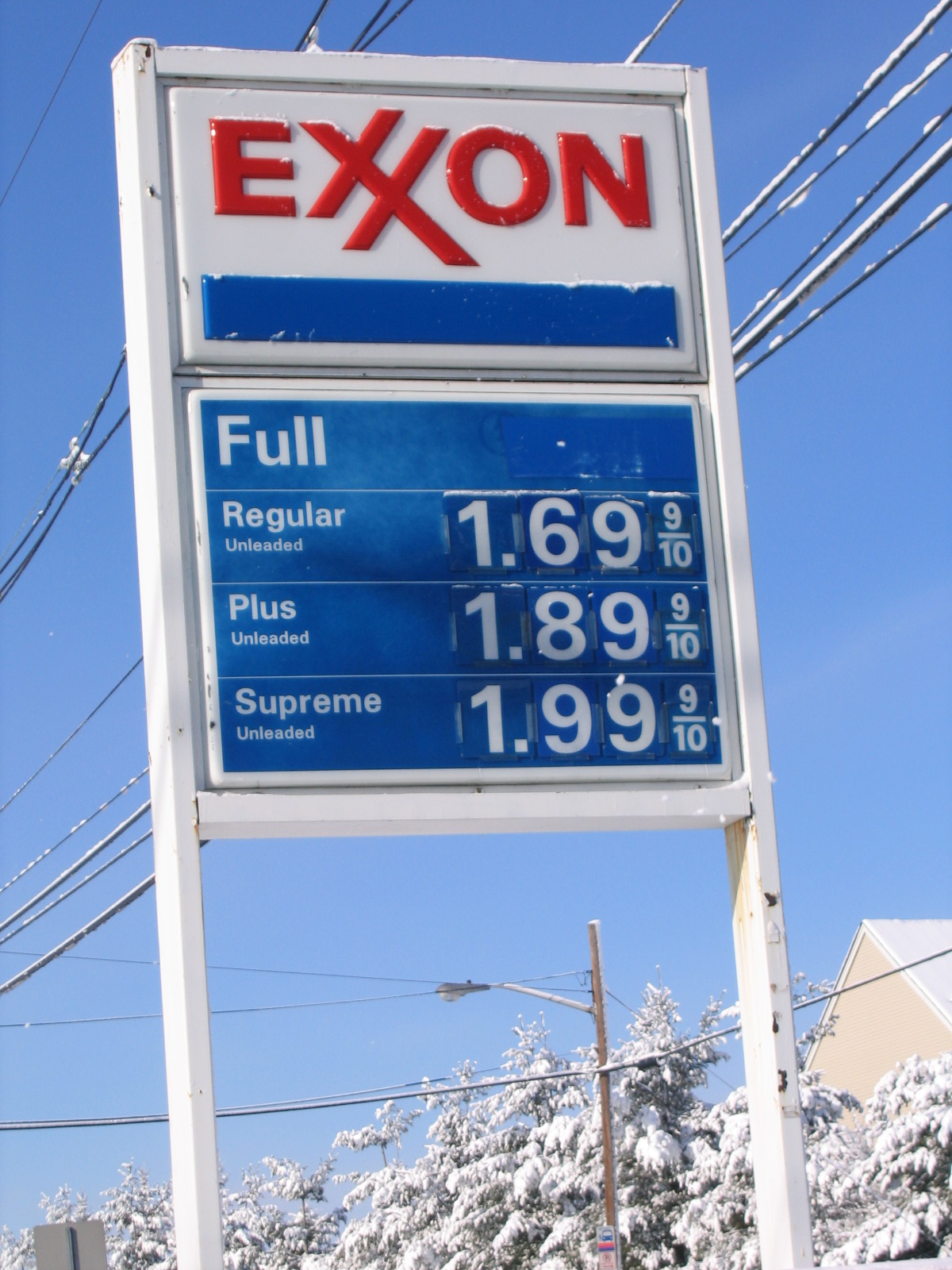
Climbing fuel prices shouldn’t surprise

Drivers may wonder why gas prices are on the rise again, given that the factors that usually drive cost — demand, the commodities market — would seem to favor lower prices.

That wonder, however, would be misplaced. While the recession helped drive prices down from their record levels of last summer, December and January fuel prices were artificially low.

AAA Mid-Atlantic, in a press release, hints at this:

Gasoline refiners have been severely cutting back their output of gasoline either by design or due to “maintenance and operational issues”. Which has industry watchers who trade gasoline futures expecting that OPEC and US refiners will be able to cut output enough to bring supply and demand into balance over the next few months.

Which implies that supply and demand have been out of balance — leading to the wild swings we’ve experienced over the last year or so.

Balance, however, is an elusive quality and, like beauty, in the eye of the beholder. Drivers obviously desire that “balance” lead to low fuel prices, while the oil companies have a different sense of what it means.

The reality is that we have lived for a long time with artificially low fuel prices that have encouraged an unsustainable style of living that will have to change — both for environmental and longterm economic reasons.

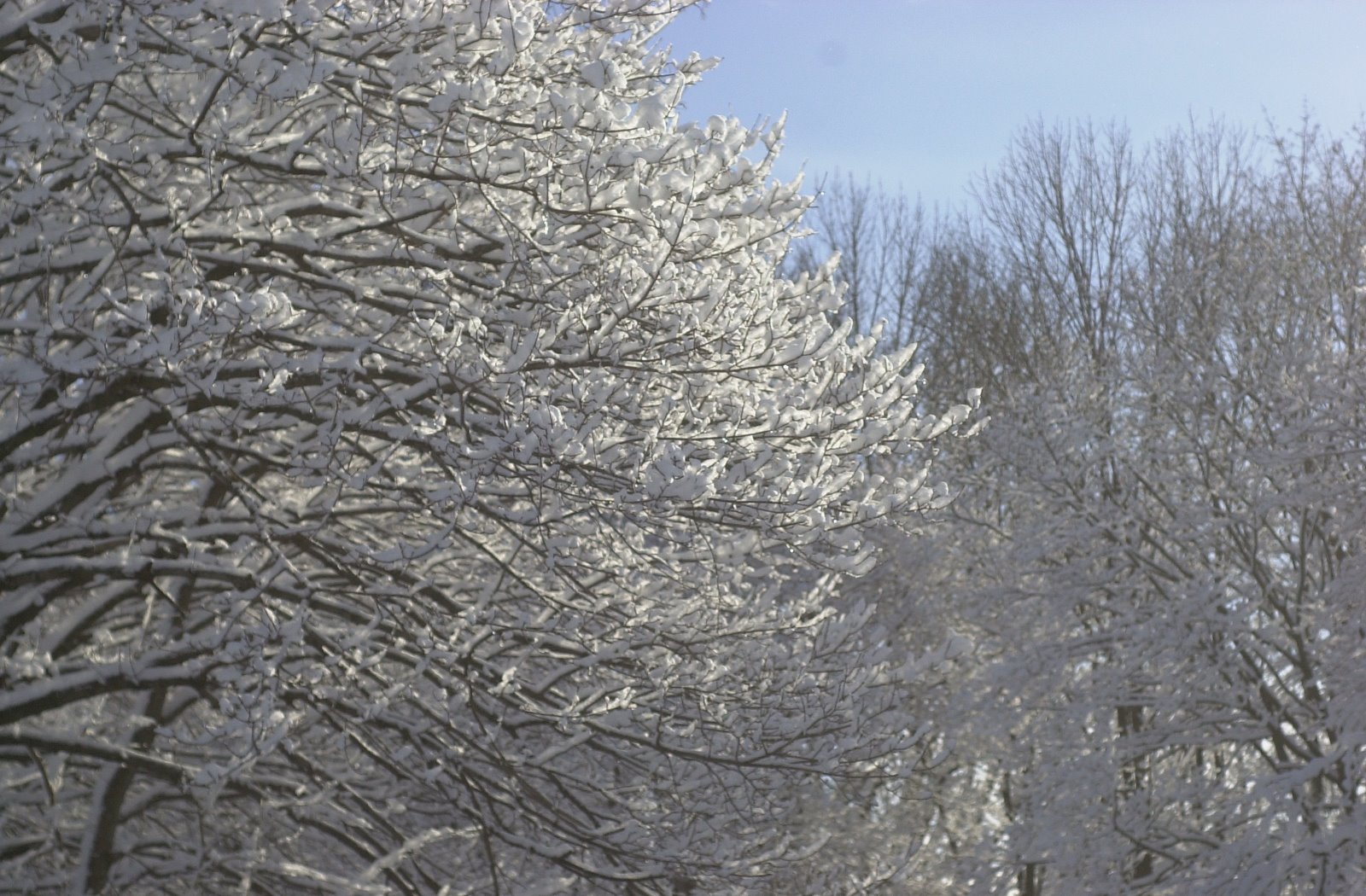
Winter wonder

I have a love-hate relationship with winter, as I suspect most people do. I hate the bone-chilling cold, the black ice that makes driving hazardous, hate shoveling snow from the driveway and sidewalk and brushing it from the car.

And yet, there are things about winter that are rather spectacular and spiritual, those small moments when we catch the light filtering through the snow-covered trees reminding us that beauty lurks in the most mundane of places, that our focus on just finding a way to get by day to day can obscure the wonders of what surround us.

These wonders, for me, are an indication that there is something much greater than us in the world — god, perhaps, something that ties all of this together beyond biology and chemistry and physics.
Don’t misunderstand me, though. I do not subscribe to the so-called “intelligent design” theory, which posits an overarching plan for the world as if god (I am being deliberate in my use of the lower-case) were an architect with a pencil and T-square, taking pains to map out each little movement forward toward perfection.
I believe, as readers of many of my poems might have noticed, in randomness and imperfection, in the notion that things are as they are at any given moment and that change occurs either by accident or because we actively seek it. There is no utopia toward which the human race and the planet move, only the now, which is the only time we have.
So what of god, then? It is in he acceptance of this imperfection and impermanence, the pushing ahead, loving, living, creating, working to improve the lot of man and beast, despite the chaos, maybe because of the chaos, it is in this that the connection, the awareness of a greater entity outside of the self, what Buber calls “Thou” and others call god, can be found.
(Photos: Hank Kalet)

Daschle’s out — time to turn left on healthcare czar

I never thought Tom Daschle was a great choice for health secretary or President Barack Obama’s so-called “healthcare czar” — too many ties to too many lobbyists and too much time spent on Capitol Hill maintaining the status quo.

But I wasn’t opposed to the nomination, either, viewing his access to his former colleagues as something that might allow him to grease the wheels of reform.

Then came the tax problems and that limo and now he’s out. The problem is that his appointment was part of a larger ideological inertia in the Obama camp, one that has resulted in far too many Clinton hands making their returns at the expense of more populist Democrats.

David Sirota nails it with this post today on Leo Hindery, a business leader and Democratic fundraiser that was “one of the few business leaders to use his wealth to challenge deregulation, corporate trade deals and anti-worker policies.” Sirota says he “was blacklisted by the Obama administration”

because he dared to clash with the same Wall Street Democrats whose corporate-backed policies destroyed the economy.

Sirota goes on to remind us that

the Hindrey scalping is only one chapter in what has been one long narrative arc whereby economic progressives have been deliberatelyy shut out of top administration jobs. Amid a stable of eminently qualified and well-respected progressives like James Galbraith, Robert Reich, Joseph Stiglitz, Paul Krugman and Larry Mishel, Obama has chosen Rubin sycophants like Larry Summers and Tim Geithner to run the economy – the same Larry Summers who pushed the repeal of the Glass-Steagal Act, the same Geithner who masterminded the kleptocratic bank bailout, the same duo whose claim to fame is their personal connections to Rubin, a disgraced Citigroup executive at the center of the current meltdown. Indeed, the only movement progressive in a top economic position is Jared Bernstein, and he was relegated to an amorphous job in the Vice President’s office.

And now we see that’s not an accident. Though Obama won states like Ohio, Pennsylvania and Indiana on promises to challenge Wall Street and reform our trade policies, there has been a deliberate and calculated effort to stack the administration with the very Wall Street Democrats who created the problems he lamented, and shun those who have been fighting the good fight.

This may explain the president’s seemingly incomprehensible strategy on the stimulus, one that has him coddling Rrepublicans when he should be getting in their face and spending his political capital. After all, he is the guy with the high approval ratings.

But then, the approach he outlined in his campaign and the months since his victory does not match with the philosophy espoused over the years by Larry Summers.

The Daschle resignation offers Obama a chance to right (actually, to left) the ship, giving him an opportunity to appoint someone committed to a single-payer healthcare plan and not the noodling around the edges proposals being pushed.

Library money a hot potato

The odd manner in which New Jersey funds its libraries has some communities up in arms. But the fixes on the table all seem to fall short of what needs to be done to protect public libraries while addressing the concerns of smaller towns like Jamesburg.

Current state law is tied to property value. Municipal libraries — those created by referendum and funded through local property taxes — get a minimum of one-third of a mill, or about 33 cents on every thousand dollars of equalized assessed property value in a municipality. Few had been concerned with the formula until the last decade, when property values across the state skyrocketed, driving up library funding at a time when the public has hit the wall on property tax hikes.

A tax levy cap imposed a few years ago exacerbated this conflict — towns saw their taxable value grow due without their real tax base increasing, which forced them to increase library spending; however, they were limited in how much they could increase their tax levy, meaning that library spending was eating into other programs.

Keep in mind, however, that the same towns spent much of the ’90s with stagnant tax bases. They took advantage of the lack of growth by keeping library spending static (or making cuts) and boosting spending in other areas, such as on police.

Obviously, towns like Jamesburg face difficult questions and it does seem that changes need to be made in how libraries get their money. But cutting the minimum in half, as the League of Municipalities is proposing, is foolish, especially with property values declining in many areas of the state.

A better solution would be to tie funding to population and to encourage the creation of larger regional libraries, such as the Mercer and Somerset County systems, but leaving the decision on whether to regionalize in the hands of individual communities.

Another solution would be to remove library funding from the municipal budget altogether. Municipal governments not only have little discretion over how much is spent on the library, they have little input into personnel decisions and day-to-day operations, aside from making appointments to an independent board of trustees. Make the library a separate line item on the tax bill that is tied to a formula and allow the libraries to raise additional money — as many do now — through the creation of foundations and friends groups.

The difficulties faced by municipal governments are real. But so are the concerns raised by library officials. A more creative solution has to be put on the table.

The fame game

I always find these hall-of-fame things a bit subjective and not very relevant, aside from those focusing on sports. Sports like baseball and basketball have statistics that allow for measurement of impact, though there are significant variables that have to be considered.

New Jersey kicked off its Hall of Fame last year with an interesting class that included Bruce Springsteen and Toni Morrison. This year’s class includes Walt Whitman, Paul Robeson, F. Scott Fitzgerald and William Carlos Williams.

The Fitzgerald induction seems odd, given his short tenure in the state — and given that Philip Roth who, in the end, may be the more important writer and who certainly is a Jersey boy.

My own list of great New Jersey writers would include Whitman, Williams, Stephen Crane, Roth, Robert Pinsky, Amiri Baraka, C.K. Williams and Gerald Stern and Allen Ginsberg. Fitzgerald, Morrison and Yusel Komanyakaa, who spent time in Princeton, all deserve mention, as well, as do Tom Perotta and Junot Diaz.

Sports figures must start with Yogi and the Scooter, but also include Al Leiter, Rick Barry, Shaq, Deron Cherry, Eddie Jordan, Pete Carrill, Kelly Tripucka, Mike O’Koren, the Hurley family, Eric Young, Roy Hinson, Jason Kidd — and there are a number of others. I don’t have the hockey background, so I know I’m missing Devils players. And Althea Gibson and Carl Lewis, of course.

This list could go on — Eddie Murphy, Joe Piscopo, Jack Nicholson, John Travolta, Danny DeVito, Bruce and the E Street Band, Bon Jovi, the Smithereens, the Feelies, Debbie Harry, Southside Johnny, Patti Smith, Frankie Valli — the list seems endless.