
What if there were school districts that had no schools?

The logic of having a school board in a community without schools has always escaped me. Think about it: A district might have 60 or 70 kids, which it ships to another district, paying tuition and transportation. It has little say on how much any of this costs, but it still has to put its budget before the voters. None of this makes any sense, but then, this is New Jersey where the number of taxing entities — state, county, municipal, school, fire, other — numbers more than 1,400.

So, the bill signed by Gov. Jon Corzine the other day eliminating what are called “non-operating school districts” seems like a no-brainer. Unless, of course, you are one of the districts involved.

The legislation clarifies a process that began two years ago, but still has detractors — like Rocky Hill Mayor Ed Zimmerman or Frank Chilson, school board secretary for Rocky Hill and Millstone, two local districts facing extinction:

“It seems it would be very difficult for a Millstone or Rocky Hill resident to be elected to the receiving districts’ schools based on population,” said Frank Chilson, secretary for both school boards.

An injunction was expected to be filed Wednesday on behalf of the Rocky Hill and Millstone school boards in an attempt to stop the shut down, he said. Among its objections, the injunction states that the community was not given the opportunity to vote on the issue, he said.

“It’s really taxation without representation,” Mr. Chilson said.

Borough Mayor Ed Zimmerman said he also is concerned about the disenfranchisement of Rocky Hill voters.

“The biggest issue here is we’ve got nine months of an appointed person over there and then we’ll never have a say in education again, or taxes,” he said.

It is a legitimate concern, though the reality is that the boards in those districts have always had little say. And they have few alternatives.

Rocky Hill is bounded on three sides by Montgomery, with whom it will merge, and Franklin to its north. Milltsone is bounded by Hillsborough, with whom it will merge, and Franklin. The choices would seem to be to merge with one of their neighbors or build a school of their own — which would be absurd.

The reality is that this must be the first step in a longer process of reducing the number of government entities in the state, a process that should slash the number of school districts significantly, as well as the number of municipal governments and eliminate fire districts completely.

There are going to be a lot of angry municipal and school officials as we move forward, but I believe that, in the end, we’ll see tax savings and for some an increase in services.
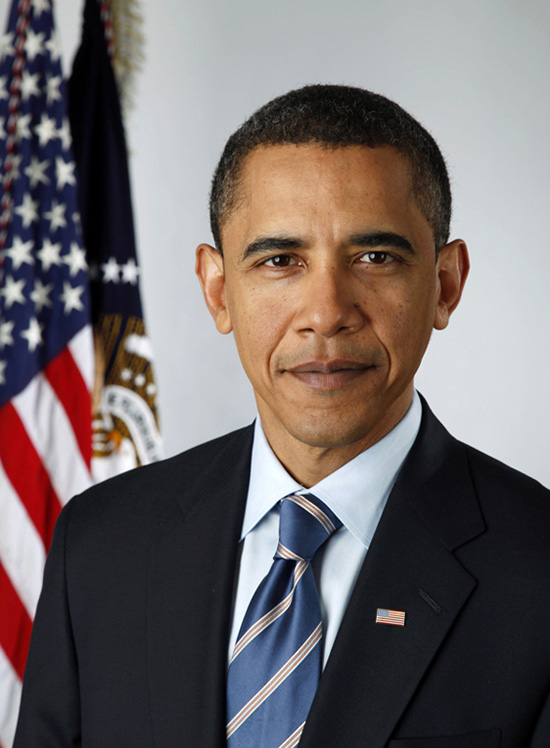
Health debate: The president takes it to the streets

Barack Obama may be willing to go to the mat on his healthcare plan, after all. While I remain dubious that his approach will work in the end — I remain committed to a single-payer plan — it is clear that he is offering the best of what is possible.

The question has been whether he would defer to Congress, allowing them to weaken reform — to remove the public option, to eat away at other necessary reforms — or make it clear that there are elements of his plan that are non-negotiable.

Having just listened to the healthcare forum, I find myself a bit more optimistic about reform’s chances. The president repeatedly talked of the need for a public option, of regulation of the insurance industry and a focus on preventative care — pieces that must be included in any non-single-payer reforms.

Basically, he has decided to take his approach to the public so that the public can then take his fight to Congress. Or so it seems.

Here is what The Caucus blog at The New York Times reported shortly before the town hall started:

The White House is working to intensify a grass-roots push for its health care plan. With Congress on recess this week, the event here in Annandale is one of several intended to highlight the president’s urgent call to reduce costs to the health care system and lower the number of uninsured Americans.

“One of the reasons the president is out there today is for people to get a better understanding of what his health plan will do,” said Robert Gibbs, the White House press secretary, briefing reporters back at the White House on Wednesday afternoon.

He pushed off the suggestion that a single-payer plan would work best by saying that it “works well in some countries” but was “not appropriate in the United States” due to the existing employer-based system. His alternative is a “government-run ‘public option’ to compete with private insurers,” which “would provide ‘competition and choice’ and ‘keep insurers honest.'”

The event, like all of these, featured what I’ll call an “Oprah moment” — the president hugged a cancer patient who had broken down in tears as she asked about her own coverage — designed to humanize the issue and Obama. And there were questions from doctors (about malpractice caps — Obama is against them) and small business owners (about the unaffordability of coverage) and advocates (Health Care for America Now, which is supported by the president).

What was missing were any questions from hardcore critics — whether from the left or the right. But this wasn’t a debate, or intended as a balanced presentation. This was a presidential sales job intended to get the grassroots out and working.

And it was long overdue.

Time to get out

The sentiment here is noble, and a shift from a pure war-footing would be important, but I just don’t buy that we’re cranking down the volume on the military effort, let alone extricating ourselves from the Afghan quagmire.

We’ve already boosted the number of troops and have made a commitment to the war, so talking about this shift seems, well, too little, too late.

The key to success, both in Iraq and Afghanistan, is to get out.