Doggie diary: The story of Rosie and Sophie Chapter in which they become mud

This is an after photo — as in after their romp in the mud in the back yard.

A heavy, if short-in-duration, storm blew through, leaving a brown puddle about 3 inches deep near our fence. The dogs, of course, loving water, had a puddle party. They refused to come in, so I had to go out with the leashes.

They then tracked mud all over the kitchen.

If they weren’t so cute, I’d probably kill them.

This message was sent using the Picture and Video Messaging service from Verizon Wireless!

To learn how you can snap pictures and capture videos with your wireless phone visit www.verizonwireless.com/picture.

Note: To play video messages sent to email, QuickTime� 6.5 or higher is required.

Gates-gate: Race, class and status in America

Eugene Robinson’s take on the Henry Louis Gates arrest — a media firestorm that deserved far less coverage than it got — is race-based, but not in the usual way. Most of the focus has been on the notion of profiling, which never seemed right to me.

Robinson, however, makes it clear how race functioned in this absurd little morality play:

Apparently, there was something about the power relationship involved — uppity, jet-setting black professor vs. regular-guy, working-class white cop — that Crowley couldn’t abide. Judging by the overheated commentary that followed, that same something, whatever it might be, also makes conservatives forget that they believe in individual rights and oppose intrusive state power.

He says the confirmation hearings for Judge Sonia Sotomayor shared some of the same characteristics — a white male judge with a sharp tongue would never had his temperment questioned, while “the idea of a sharp-tongued ‘wise Latina’ making nervous attorneys, some of them white male attorneys, fumble and squirm,” sent up a red flag for the GOP.

Robinson cuts to the chase, asking the operative question and then answering it:

Is a man of Gates’s station entitled to puff himself up and remind a police officer that he’s dealing with someone who has juice? Is a woman of Sotomayor’s accomplishment entitled to humiliate a lawyer who came to court unprepared? No more and no less entitled, surely, than all the Big Cheeses who came before them.

Yet Gates’s fit of pique somehow became cause for arrest. I can’t prove that if the Big Cheese in question had been a famous, brilliant Harvard professor who happened to be white — say, presidential adviser Larry Summers, who’s on leave from the university — the outcome would have been different. I’d put money on it, though. Anybody wanna bet?

Cautious pols choke healthcare reform to death

Visit msnbc.com for Breaking News, World News, and News about the Economy

To paraphrase Joseph Conrad: Healthcare reform, it dead.

I know, the reform effort continues to move forward, but the goal has shifted from transforming the system to tweaking it, from expanding access and improving care to creating a bureaucratic maze that sort of looks like universal coverage but that protects the very people who have made such a mess of things in the first place.

Real reform — otherwise known as single-payer — was never on the table. The politics, everyone agrees, made it impossible. Of course, the politics — otherwise know as the conventional wisdom — is self-perpetuating.

But even without single-payer, we had a chance to make major changes in the system that would have forced the insurance companies to play ball — a public option that would have competed for customers.

Already, the group of six has tossed aside the idea of a government-run insurance plan that would compete with private insurers, which the president supports but Republicans said was a deal-breaker.

Instead, they are proposing a network of private, nonprofit cooperatives.

The public option was no panacea — but with requirements in place preventing the insurance companies from gaming the system as they do now (they would not be able to deny coverage for a pre-existing condition, cap payments or kick people off their rolls), it would have made a huge impact on the way the healthcare system runs.

Howard Dean, the former Vermont governor and a physician, told Rachel Maddow last night that the bill that latest proposal “is insurance reform but it‘s not health reform.”

It‘s not going to—what it will do, I assume there is guaranteed issue and so forth in there, and if that‘s true, if the guaranteed issue is in there and community rating, then it‘s insurance reform.

It‘s not going to do anything to curb expenses. It‘s not going to change the health care system. It‘s not going to insure anybody extra. That‘s what I call the fake public option.

He continued:

This bill is going to cost a lot of money and isn‘t going to do anything if this compromise, this so-called compromise is true. This compromise does nothing except it will reform insurance. That‘s a good thing to do, but they ought to strip the money out of it because we reformed insurance like this in Vermont 15 years ago. It‘s a fine thing to do, but it doesn‘t insure more people.

There is this sense now that it is more important to get something — anything — done and that it have some Republican support. That kind of thinking is similar to one of the great failed football strategies — the late-game use of the so-called prevent defense, which is all about caution, all about playing not to lose (which is not the same thing as playing to win).

What we are witnessing is a Democratic majority more concerned about the insurance lobby and its campaign cash while also being able to share the blame in case their reforms fail to function as advertised, rather than going hard at the end zone — which would require an aggressive reconstruction of the healthcare system in the United States.


Let the jury hear all the evidence

The judge in this case appears to have ruled correctly, but the law as it exists creates an imbalance. The defendant, Franklin Township resident John Ray Wilson, who suffers from multiple sclerosis, cannot testify about his disease — even though doing so would show jurors that the marijuana crop at issue was not grown for sale. By preventing such testimony, as his lawyer points out, the jury “could readily speculate that he was operating an illegal commercial grow operation and must have done so for years to develop a market for the marijuana.”

Omitting Wilson’s disease would keep him from addressing the issue of continuous use, one of the elements of operating a production facility. He would not be able to testify this was the first and only crop he has tried to grow, Wronko said.

Barring the medical-use argument, “is basically tying our hands unfairly,” Wronko said in court.

The court, however, was concerned that introducing the ailment would create a level of empathy that could lead to jury nullification — a jury ruling in favor of the defendant despite the law because it perceived the law to be unfair.

Jury nullification, however, is not a bad thing. Juries are the people’s representatives in the court, and should be given as much information as possible, allowing them to review mitigating circumstances and to not only judge the specific case at hand but whether the law itself achieves a public good.

Jury nullification in this case, rather than being a usurpation of the legislative function by the court, would act as a voice of the people, and possibly spur the Legislature to legalize so-called medical marijuana.

Instead, the judge has removed an important piece of the narrative, leaving Mr. Wilson to look like just some random drug producer, making it more difficult than it should be for him to defend himself.

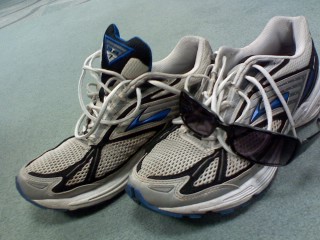
Runner’s diary Tuesday

The humidity today is brutal. I did my three outdoors and can only say I'm thankful for the occassional breeze because without I'm not sure I could have finished.

iPod: music mix featuring Bikini Kill, Blitzen Trapper, Frightened Rabbit, The Gaslight Anthem, The Kills, Mink DeVille and Art Brut

This message was sent using the Picture and Video Messaging service from Verizon Wireless!

To learn how you can snap pictures and capture videos with your wireless phone visit www.verizonwireless.com/picture.

Note: To play video messages sent to email, QuickTime� 6.5 or higher is required.