Sweating the small stuff

Here is a story that demonstrates why budgets matter. Governments need money to perform basic services — like cutting the grass that grows in the median strips along highways like Route 130, or fix potholes or replace bulbs in streetlamps or any of the dozens of other minor functions we take for granted.

We forget that someone has to sweep the floors in the state’s school buildings, inspect apartment complexes, restripe roads and that the people who do these jobs deserve to get paid a living wage.

Government may not be popular, but it is necessary.

Empire v. Empire

This gets old pretty quickly. A Celtics-Lakers matchup in the finals — feels like we’ve been here before.

The teams have matched up 11 times, with the Celtics winning nine. Boston has won 17 titles, the Lakers 15 — for a total of 32 of 63 titles overall. The Celtics dominated in the ’50s and ’60s, winning 12 of their championships; the Lakers have been more dominant more recently first behind Magic Johnson and Kareem Abdul Jabbar and more recently behind Shaq and Kobe.

So, here we have another go.

This should be a good series. Kobe Bryant is the league’s dominant big-game player and he has an able supporting cast led by Pau Gasol in the paint. The Celtics are deep, boast one of the best young guards in the game (Rondo) and feature a trio of superstar veterans with varied talents.

I’m going to pick the Celtics because they can play suffocating defense, but this thing is going seven.

And I’m going to root for both teams to lose. As a Knicks fan, I have no other choice. If this were “Star Wars,” both of these teams would be the Evil Empire.

Kyleigh becomes political football in 14th

Legislation passed by a near-unanimous Legislature last year and signed by then-Gov. Jon Corzine has become the political football in this year’s 14th District state Senate race.

Sen. Tom Goodwin, the Republican appointed to fill Bill Baroni’s seat until November’s election, has been pushing hard for repeal of a decal provision of regulations passed to protect teen drivers. The law, known as Kyleigh’s Law, went into effect May 1 and requires first-year, probationary drivers younger than 21 to display a red decal on their front and rear license plates. The law also bars young drivers from operating vehicles between 11:01 p.m. and 5 a.m., prohibits more than one passenger in vehicles driven by first-year drivers and bans the use of any hand-held or hands-free electronic device.

The law was written and then passed in response to the death of Kyleigh D’Alessio, a 16-year-old from Washington Township in Morris County, who was killed in a car accident involving another teen driver in 2006.

The law was rather uncontroversial at the time of its passage — it passed 78-0 in the Assembly and 36-3 in the state Senate — but has raised some concerns among parents since taking effect. In particular, parents and young drivers worry that the decal provision makes younger drivers easy prey for pedofiles and scammers and could make it easier for police to profile.

In response, several bills have been proposed, some good, others less so, with Sen. Goodwin being aggressive in his push for change.

Both Sen. Goodwin and Assemblywoman Linda Greenstein, the Democrat running for the Senate seat, are seeking revisions to the larger law. But the folks backing Goodwin are seeking to cast Greenstein as out of step, blaming her for sponsoring bad legislation (she was an early cosponsor, though her name was not attached to the legislation that passed) and making it appear as though Sen. Goodwin is the only one standing up for average parents.

I don’t wish to weigh in on which repeal bill is better. What I find interesting, however, is the way that the 2008-2009 discussion of the bill has been recast in political terms. As I said, 78 Assembly members voted in favor of the bill, including Assemblywoman Greenstein; 36 Senators did the same, including Sen. Baroni. No one can say how Goodwin would have voted were he in the Senate at the time, but it seems unlikely to me that Goodwin — who is running as the new Baroni — would have voted any differently.

It is convenient for supporters — you will see letters from two of them in this week’s South Brunswick Post — to attack a sitting Assembly member for her vote, especially when they know that their candidate can’t be tied to any previous action on the same legislation.

If this is how the race is going to unfold in the district, then 14th District voters might be better off staying home.

Tea Party seeks to disinvite voters

It was a chief demand of the Populists, an effort to cut corrupt state legislatures out of the national discussion by having voters elect each state’s senators.

Remember, the U.S. Constitution, as originally drafted, left the selection of each state’s senators to the states’ respective legislatures, an effort designed to cool political passions and lessen the hold that the rabble might have on the federal government.

The states, however, were universally corrupt, beholden to the money interests of the day — to the railroads and big tobacco — and the small farmers in the South and Midwest who made up what became known as the Populist Party found themselves frozen out of the decisionmaking and feeling fleeced.

So the movement began, the Farmers Alliance and People’s Party, calling for monetary reform, regulation of the banks and railroads, and political reform, including the direct election of senators.

While much of the reforms sought by the Populists failed to become law, the party had an impact as the Progressives, a more urban, middle-class movement, altered the way we think about government, instituting an array of regulations and restrictions we now take for granted (bans on child labor, the 40-hour week, health and safety inspections, etc.) and some basic changes in the electoral process — including the 17th amendment, which forced senate candidates onto a popular ballot.

It was a victory for democracy, giving the American people another opportunity to choose for themselves people who are supposed to act on their behalf in matters of war, taxes, etc.

Flashfoward nearly a century and we have today’s most notable populist movement, the rightwing Tea Party, advocating for repeal of the 17th amendment “convinced that returning to the pre-17th Amendment system would reduce the power of the federal government and enhance state rights.”

Senate candidates have to raise so much money to run that they become beholden to special interests, party members say. They argue that state legislators would not be as compromised and would choose senators who truly put their state’s needs first.

The argument is an interesting one, if a bit backward looking and anti-democratic. It acknowledges the Founders’ concerns, which included the desire to have a house of elites to offset the people’s house — similar to the arrangement in Great Britain.

To Madison, Hamilton and most of the other authors of the Constitution, allowing states to appoint the Senate was the linchpin of the entire federalist system and the real reason there are two houses of Congress. It may be true that appointed senators, accountable only to state legislators, would never approve of many useful federal mandates designed to put the national interest above local parochialism — including everything from the minimum wage to the new health care reform law.

That in itself should be an argument against repeal (though, I admit, small-government types will not agree), but there is a better one that has nothing to do with political philosophy or ideology. Should New Jersey voters trust the folks who have made such a mess of the state to pick the people who represent us in Washington? Should the people in Albany, who have become national laughingstocks in their dysfunctionality, get to pick which New Yorkers should head south? Would these ethically compromised men and women do a better job than we do?

Do I need to answer?

Do it myself? You’ve got to be kidding

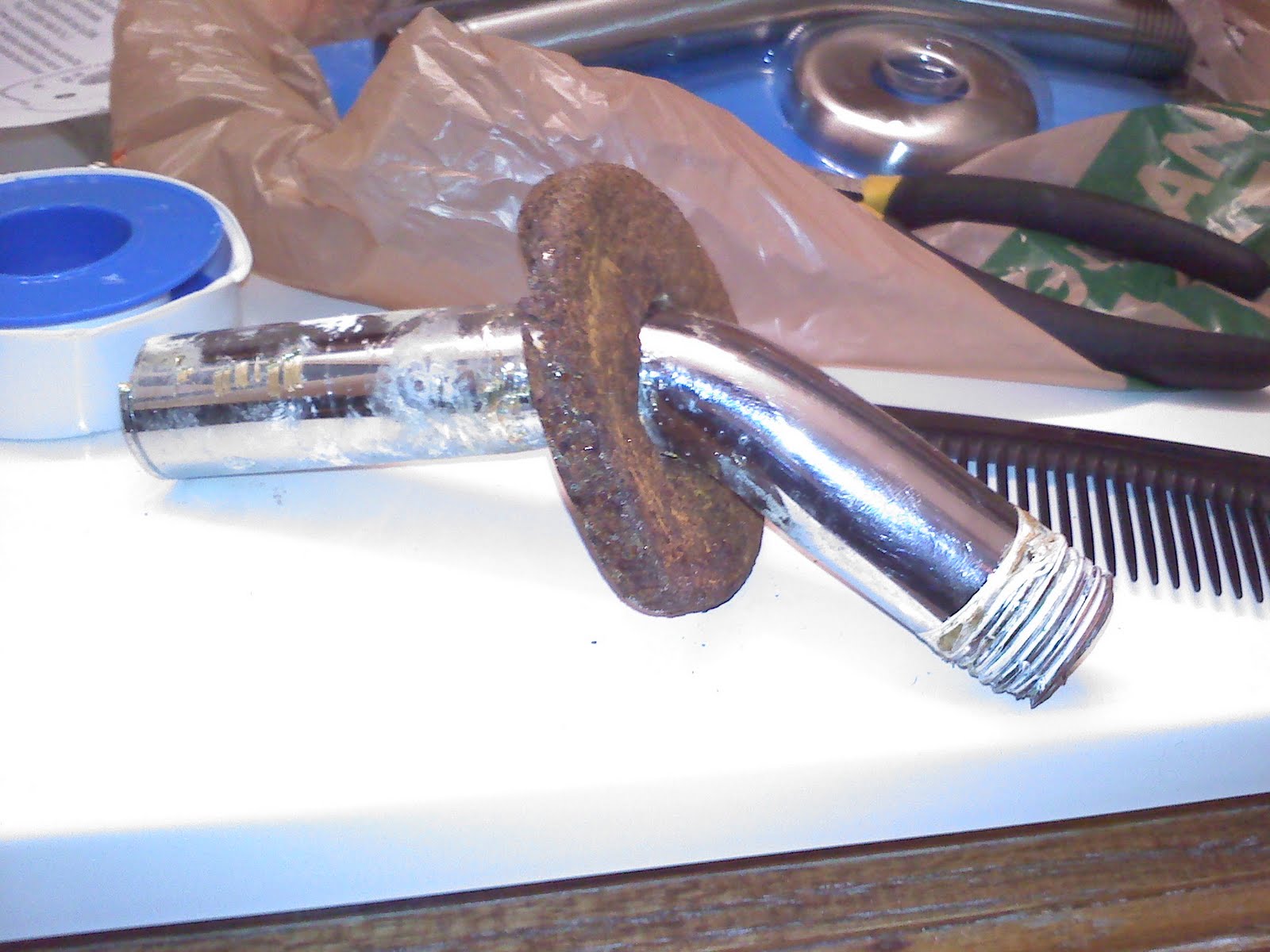
It seemed like simple job: Replace our old shower head with a nee one. Seemed, unfortunately, was the operative word.

I managed to get installed petty quickly, but I may have overtightened one of the connections, causing a small leak.

When I disconnected the new shower head, I found that the shower arm — which connects the main water pipe in the wall to the shower head — had a sizeable chip in it. That meant that I’d have to replace it. After a last-minute trip to Home Depot, I attempted to remove the old, chipped shower arm — which had fused to the pipe and then snapped.

Now I have to bring someone in who actually knows what he’s doing, like my friend Ryk, and our main shower is now off-limits until we can get it taken care of.

This should be no surprise to anyone who knows me. I am home-repair challenged, especially when it comes to plumbing, this despite having some good teachers on this (Annie’s brother and dad). In better economic times, I try to bring the experts in, but with money being tight, we go for the savings, which ultimately costs more.

So, we are left with a busted shower and my busted pride. Then again, what else is new.