Call them the White Dashes?

Bands come and go, but it is still tough to swallow when a great band splits. The news today that Jack and Meg have called it quits leaves me feeling like one of Jack’s harsher guitar runs has been cutting a hole in my ear.

  • Send me an e-mail.
  • Read poetry at The Subterranean.
  • Certainties and Uncertainties a chapbook by Hank Kalet, will be published in November by Finishing Line Press. It can be ordered here.
  • Suburban Pastoral, a chapbook by Hank Kalet, available here.

Political World: Pain at the pump may have benefits

Political World, my twice-weekly Patch column is up (here is the East Windsor link).

  • Send me an e-mail.
  • Read poetry at The Subterranean.
  • Certainties and Uncertainties a chapbook by Hank Kalet, will be published in November by Finishing Line Press. It can be ordered here.
  • Suburban Pastoral, a chapbook by Hank Kalet, available here.
Change in the Middle East: The people choose a different model

There appears to be a wave of change rushing across the Middle East. Tunisia, Egypt and now Jordan have faced or are facing massive demonstrations, with governments falling and change being forced upon calcified regimes.

Neocons had made the case back in 2003 that the toppling of Saddam Hussein by the American military would lead to a sea change in the region, but that sea change never came.

Suddenly, in response to the suicide of a fruit seller in Tunis, the revolution appears to be happening.

What the Bush administration and his neocon allies never understood back in 2003 was that democracy cannot be created at the point of a gun, that change would only happen from below. Now, with Hosni Mubarak’s regime teetering on collapse and Jordan having dismissed its cabinet, we are faced with the prospect of a change we cannot control — and it scares us, because we see a remake of the Iranian revolution in the offing.

But what if what we are witnessing is not Iran-redux, but a remake of the 1989 collapse of the Iron Curtain? Jonathan Schell, in his 2003 book, The Unconquerable World, talked of the power of people movements, as opposed to the use of force.

Violence is the means, as all dictators have known, whereby the few dominate and exploit the many. Nonviolence is the means by which the many can reclaim their rights and advance their interests. Peace begins, someone has said, when the hungry are fed. It is equally true that the hungry will be fed when peace begins. Equality and nonviolence–peace and justice–are inextricably linked, and neither can flourish in the absence of the other. Peace, social justice and defense of the environment are a triad to pit against the imperial triad of war, economic exploitation and environmental exploitation.

The Eastern Europeans, he said, along with others who have broken away from dictatorial regimes and managed to set up free and open societies, eschewed violent revolution for the force of human connectedness. Where violence was the means to the end, the overthrow of the strongman was followed by the creation of a new authoritarian regime (as with the former Soviet Republics that border on Asia and many of the former colonial holdings in African and Latin America).

Violence begets violence, which is why our wars in Iraq and Afghanistan led to civil wars in those countries and has yet to bear democratic fruit. It is why we are more likely to see democracy grown in Tunisia and Egypt than in Iraq and Afghanistan, at least in the short term.

  • Send me an e-mail.
  • Read poetry at The Subterranean.
  • Certainties and Uncertainties a chapbook by Hank Kalet, will be published in November by Finishing Line Press. It can be ordered here.
  • Suburban Pastoral, a chapbook by Hank Kalet, available here.

Pay attention to IMF’s track record

Dean Baker wants us to remember that the International Monetary Fund tends to fly blind — a useful reminder given the IMF’s attempts to involve itself in U.S. budget discussions. Here is his post:

The Washington Post ran an article highlighting warnings about the budget deficit from the International Monetary Fund (IMF). It would have been helpful to inform readers that the IMF completely missed the $8 trillion housing bubble, the collapse of which collapsed the U.S. economy, leading to the worst downturn since the Great Depression.

This background would be helpful to readers in assessing the importance of the IMF’s warnings.

We should listen to what Baker has to say.

Fill ‘er up

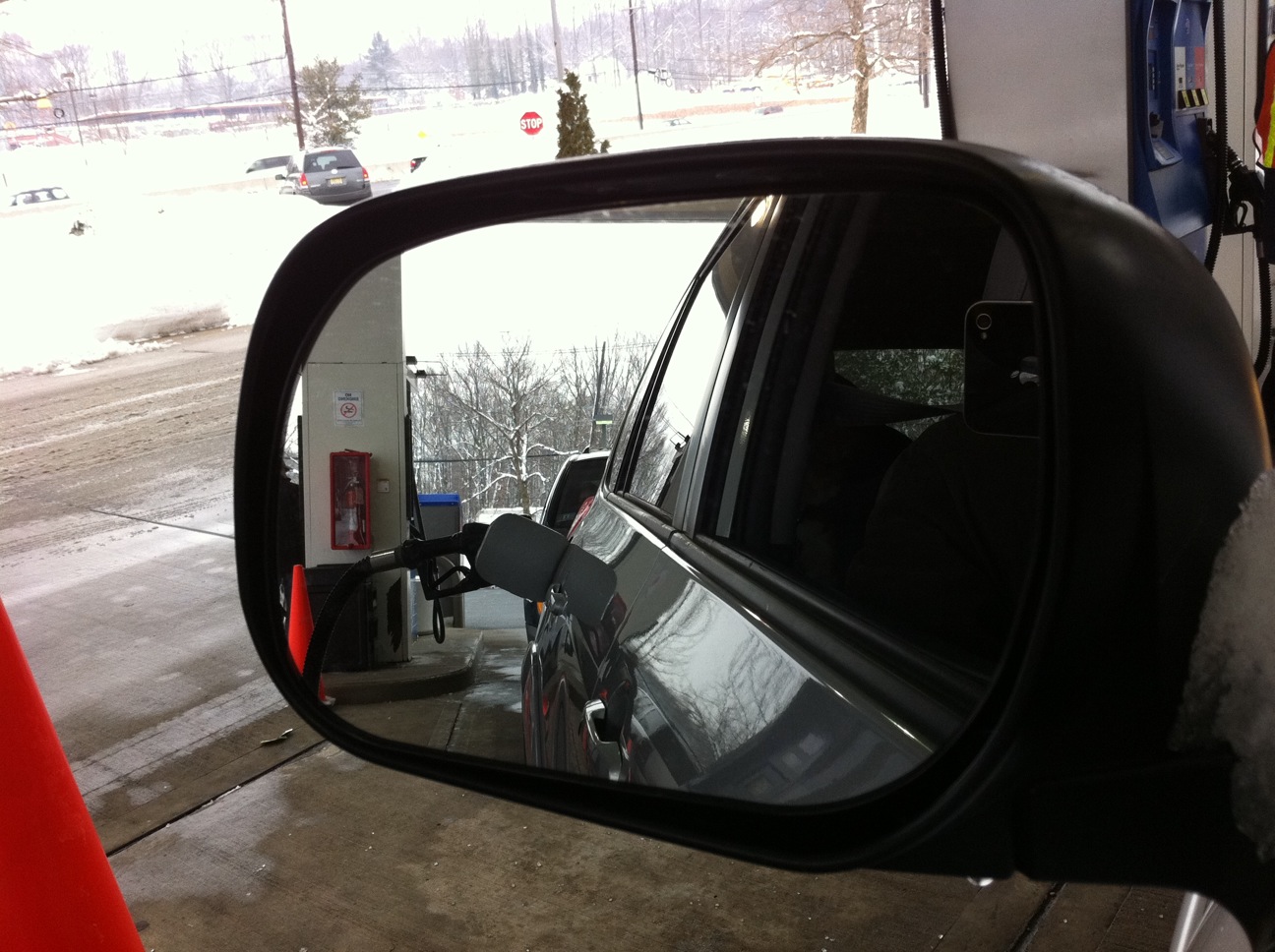
I stopped to fill the gas tank on my RAV4 this morning and, cough, it cost me $39.14, or $2.999 a gallon. That’s a lot of pocket change to keep the rubber on the road, as they say. But is it too much?

I don’t think so.

Like everyone else, I hate to pay high gas prices — and high prices for anything — but the question is whether higher gas and energy prices are bad for society as a whole.

I’m going to go out on a limb and say no. Free-marketers should agree (though, I suspect they won’t), because higher energy prices in theory should alter behavior, lead people to drive less, conserve, invest in alternative energy or high-mpg cars, etc.

There are problems — higher energy costs will hit the middle class and the poor to a greater degree — that need to be addressed by government, including subsidies to energy users to encourage the move to efficiencies and use of alternative power, an end to oil company subsidies (as the president has proposed), planning and zoning rule changes, etc

The point is, we cannot expect not to see gas prices rise. It is inevitable, especially given how scarce gasoline is and how damaging its use is to the environment. We are going to pay for this scarceness and damage, either in money or in something more vital (resource wars will be bloody).

  • Send me an e-mail.
  • Read poetry at The Subterranean.
  • Certainties and Uncertainties a chapbook by Hank Kalet, will be published in November by Finishing Line Press. It can be ordered here.
  • Suburban Pastoral, a chapbook by Hank Kalet, available here.