
When job growth is not job growth

Dean Baker explains what the national business press is unwilling to explain: Why Friday’s announcement that the U.S. economy created 216,000 jobs does not feel like the good news the media is making it out to be.

Those who know arithmetic were a bit more sceptical. If the economy sustained March’s rate of job growth, it will be more than seven years before we get back to normal rates of unemployment.

Furthermore, some of this growth likely reflected a bounceback from weaker growth the prior two months. The average rate of job growth over the last three months has been just 160,000. At that pace, we won’t get back to normal rates of unemployment until after 2022.

That’s a long time to make ordinary workers suffer because the folks who run the economy are not very good at their job.

In addition to the job growth numbers, the March data also showed that the unemployment rate slipped down by another 0.1 percentage point. It now stands at 8.8%, almost a full percentage point below its year ago level of 9.7%. This, too, was treated as cause for celebration. While that may sound like progress, a more careful look at the data makes this number less impressive. The percentage of the population that is employed has actually fallen by 0.1 percentage point over the last year.

In order to be counted as unemployed, you have to say that you are looking for work. The unemployment rate did not fall because the unemployed had found jobs; rather, the unemployment rate fell because people have given up looking for work. Only in Washington would this be hailed as good news.

Consider this evidence that the major media and the political classes live in a very different world than the rest of us.

  • Send me an e-mail.
  • Read poetry at The Subterranean.
  • Certainties and Uncertainties a chapbook by Hank Kalet, will be published in November by Finishing Line Press. It can be ordered here.
  • Suburban Pastoral, a chapbook by Hank Kalet, available here.
Budgets and priorities: A GOP assault on the middle class (UPDATED)

And so you have it, a Republican budget plan that would roll back the clock to a time when society’s most vulnerable had nowhere to turn.

The budget plan would change the existing Medicaid program — which guarantees minimum health care for poor and disabled Americans — into loosely supported block grants to states. it would kill Medicare and shift its responsibilities onto the private health insurance industry, a prescription for higher costs and abuse.

At the same time, it lowers upper-end tax rates — money that will land in the hands of those who already have it. And it increases defense spending — though it does so by recategorizing spending to make it look like a decrease.

Budgets are blueprints of priorities. The winners and losers in budget battles are not the political parties — despite what the Washington chattering classes have to say — but the American people. The rich, the military sector, the corporate classes — they get a lot from the GOP budget proposal. The middle class and the poor — our benefits are going to be slashed. We lose badly.

***
Here is a statement from U.S. Rep. Rush Holt (D-12):

Budgets are moral documents. They reflect, in dollars and cents, our real priorities. Republican priorities are clear: abandoning the most vulnerable in our society by destroying Medicare and Medicaid in order to cut taxes for the wealthiest Americans.  They would further shift the cost of government onto the middle class and force students, medical researchers, and small businesses to fight over the remaining scraps. These are not my priorities. My priorities are making smart investments that create jobs and strengthen American competitiveness and reducing the deficit by avoiding wasteful and unnecessary spending and costly tax expenditures.

If the new majority was looking for a formula that would bring back the ‘misery index’, they have succeeded.

  • Send me an e-mail.
  • Read poetry at The Subterranean.
  • Certainties and Uncertainties a chapbook by Hank Kalet, will be published in November by Finishing Line Press. It can be ordered here.
  • Suburban Pastoral, a chapbook by Hank Kalet, available here.

Can the threats and debate the budget

Before anyone gets too hot under the collar, isn’t the threat of cuts being pushed by the Christie folks on a par with the same kinds of extortion pushed at other levels of government? Christie says the school money will have to come from somewhere — which is logical. The question is where and the Christie administration has its ideas — none of which are good or helpful for the state.

We need to discuss our options — a millionaires’ tax, further service cuts, a rewrite of the tax code, etc.

  • Send me an e-mail.
  • Read poetry at The Subterranean.
  • Certainties and Uncertainties a chapbook by Hank Kalet, will be published in November by Finishing Line Press. It can be ordered here.
  • Suburban Pastoral, a chapbook by Hank Kalet, available here.

New legislative map a result of flawed goals

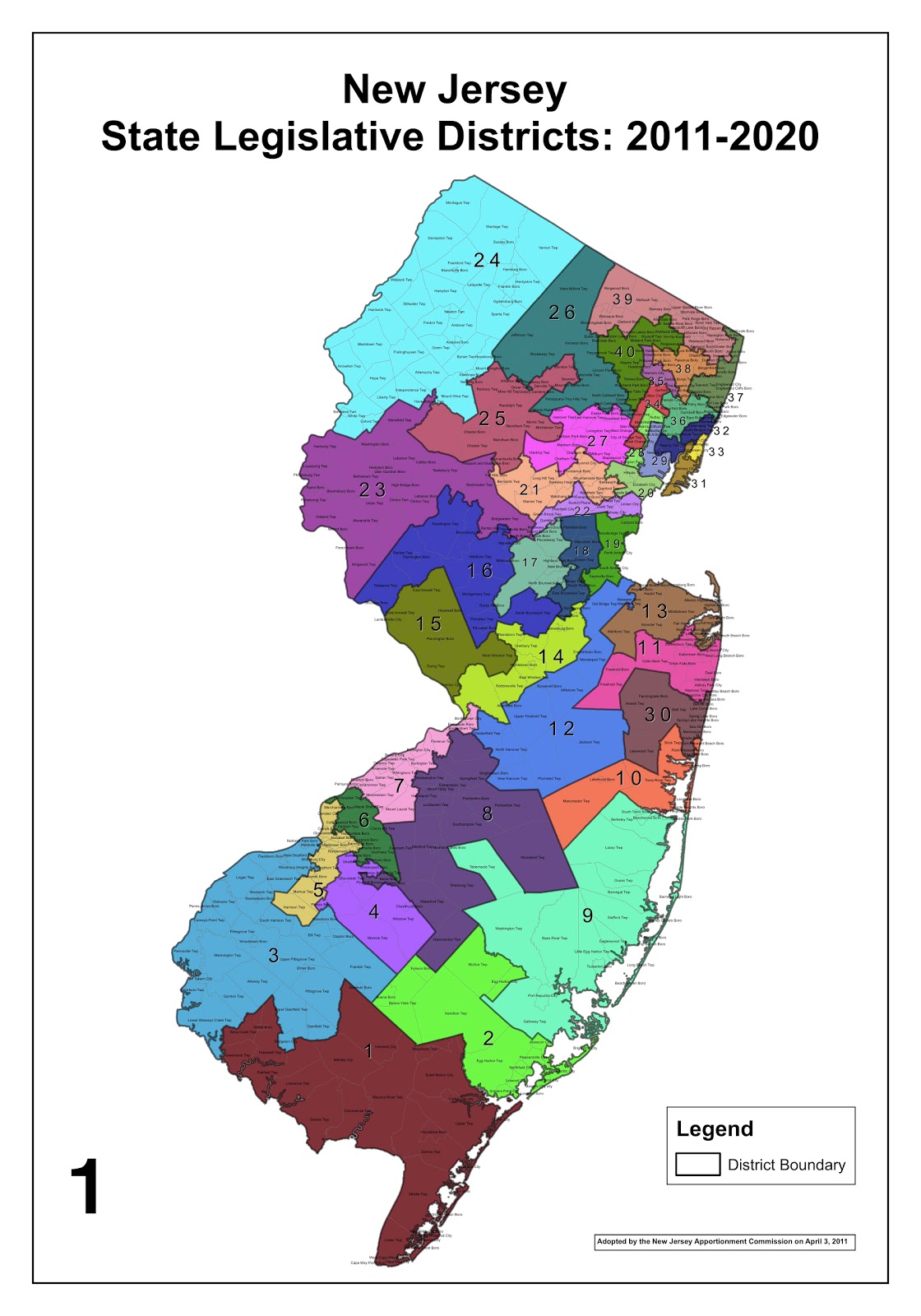
Democrats are happy with the new legislative map approved by the state’s redistricting commission, for no other reason than it is likely to preserve the party’s control of both houses of the state Legislature.

The final map, courtesy of the New Jersey Department of State

The Democrats’ attitude can be summed up pretty succinctly with this quotation from Mark Magyar’s story on NJ Spotlight:

“I’m keeping 24!” said an elated Senate President Stephen Sweeney (D-Gloucester), whose party holds a 24-16 majority.

Alan Rosenthal, the Rutgers professor brought in as the 11th member after it was clear that the two parties had deadlocked, listed his goals for the process early on, so the outcome here should not surprise anyone.

But Rosenthal’s goals — like the entire process —  were badly flawed. Rosenthal privileged continuity of representation above nearly every other goal, which meant that any map he was likely to back would be one that would safeguard incumbents.

In a state as dysfunctional as New Jersey, however, one has to wonder why anyone would want to make it easy for the majority of legislators — the people who have helped create the mess the state is in — to keep their jobs.

The result is a map, as Magyar points out,

makes it likely not only that Democrats will continue to hold their majorities in both the state Senate and the state Assembly in next November’s election, but also that 90 percent of incumbent legislators will be reelected with relatively little difficulty.

The goals should have been:

  • increased minority representation in the state Legislature
  • districts that are compact geographically (there are too many districts under the new plan in which towns — see South Brunswick in the 16th — are connected to the rest of their district by only a sliver of common border)
  • competition in as many districts as possible

These goals, however, would challenge the status quo and endanger too many sitting legislators.

Republicans, at the moment, are crying foul, but their map was only nominally better — it was designed to increase the number of Republicans and would have committed some of the same sins committed by the new map.

The effort raises some additional questions about the composition of the state Legislature and whether the static 40-district model makes sense, whether we should experiment with other forms of representation and why we have allowed the public-financing initiative to die.

New Jerseyans might be better served by a constitutional change that ties the number of legislative seats to population rather than apportioning 40 districts across a shifting population. Or, there could be a hybrid arrangement that allows for some members to be selected through proportional representation.

There are numerous possibilities. What the latest round of redistricting proves, unfortunately, is that our system of drawing boundaries is badly flawed and needs to be changed.

  • Send me an e-mail.
  • Read poetry at The Subterranean.
  • Certainties and Uncertainties a chapbook by Hank Kalet, will be published in November by Finishing Line Press. It can be ordered here.
  • Suburban Pastoral, a chapbook by Hank Kalet, available here.

3 players who won’t be Mets when the season ends

Jose Reyes was supposed to be, along with David Wright, the long-term face of the New York Mets. But with the franchise in disarray and a last-place finish likely, and with Reyes’ due a new contract that the team may not be willing to sign, Jose tops the list of Mets whose days appear numbered.

Here’s my list:

1. Jose Reyes
2. Francisco Rodriguez. Why keep a premiere closer when you’re not going to use him like you should?
3. Carlos Beltran. If he proves he can hit, he can help a contending team.

Keep in mind that I’m not advocating any of these moves, but we have to acknowledge the realities.