Dramatic, yes, but missing the point

http://www.hbo.com/bin/hboPlayerV2.swf?vid=1175400

I just watched HBO’s Too Big to Fail and I have to say that, dramatically, it lives up to the hype. The story moves along at a brisk pace and the star-studded cast turns in a collection of powerful performances.

And yet, Too Big to Fail fails in the same way that historical recreations often fail: It simplifies the 2008 financial disaster, turns a massive systemic derailment into a story of individuals. Hank Paulson and Timothy Geithner and Ben Bernanke and the leaders of the big banks and investment houses — these are the players, the decision-makers and the men (almost exclusively) who nearly drove the nation off a cliff and then, at the last minute, righted it.

This makes for great cinema and storytelling, but it is lousy history. The 2008 financial crisis had far deeper roots than the film implies. They go far deeper than just the Clinton-era financial reforms that turned the Street into a casino, deeper than the deregulatory mania of the Carter and Reagan years. The problem is capitalism itself, which is prone to boom-and-bust cycles and demands profits at all costs.

Too Big to Fail is, in the end, insider baseball, the story of how Washington insiders averted a crisis of their own making.

  • Send me an e-mail.
  • Read poetry at The Subterranean.
  • Certainties and Uncertainties a chapbook by Hank Kalet, will be published in November by Finishing Line Press. It can be ordered here.
  • Suburban Pastoral, a chapbook by Hank Kalet, available here.
It ain’t easy being green, when all you are is mean

In October 2009, the New Jersey Environmental Federation did something it had never done: It endorsed a Republican for governor.

Four years after endorsing Democrat Jon Corzine, the NJEF concluded that Corzine’s environmental record was a disaster — an accurate assessment — but rather than sit out the election or back the third party candidate, Chris Daggett, it opted to back the conservative Republican based on a set of promises.

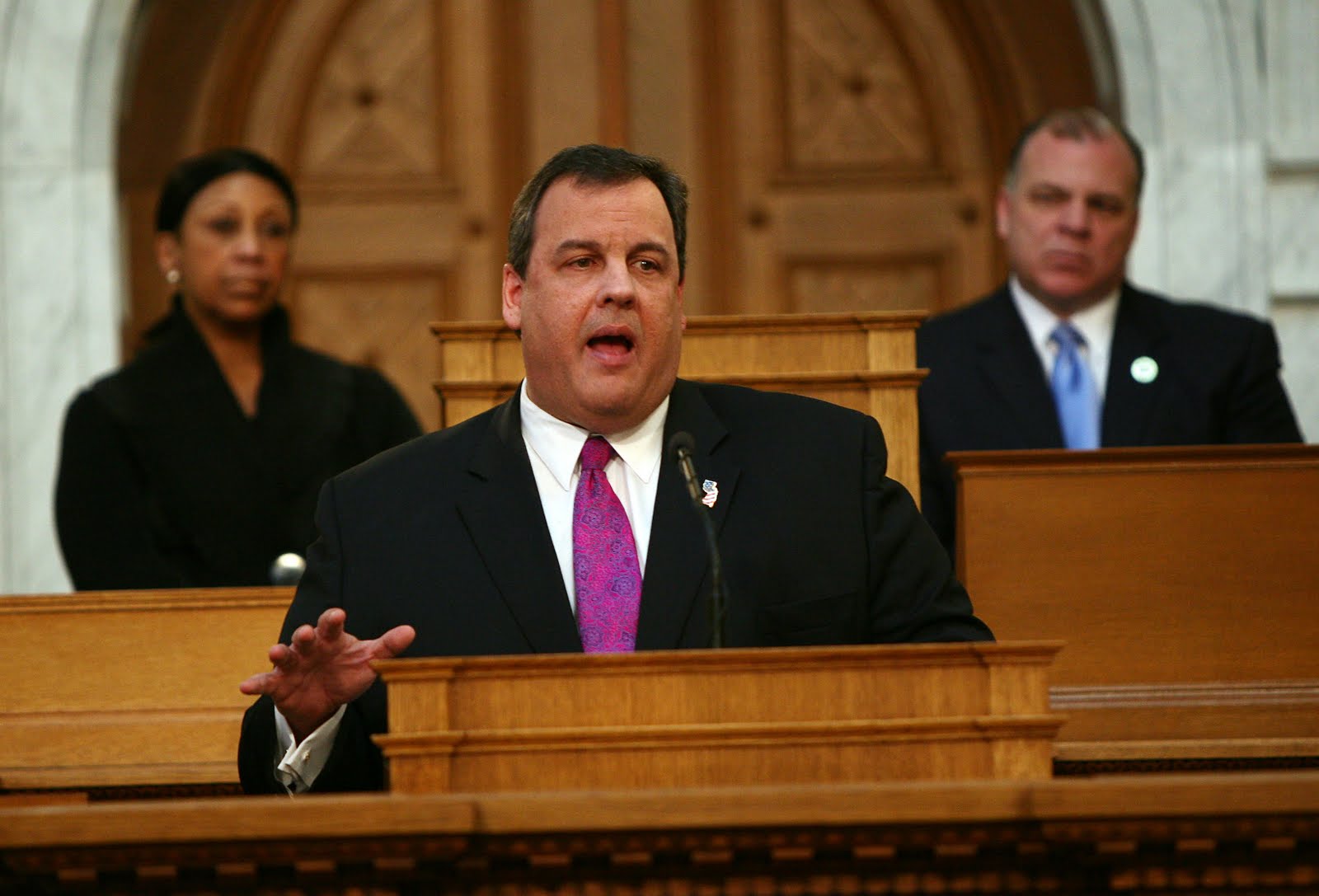
Christie won the election, of course, and has made the NJEF look foolish, running up the worst environmental record in memory — worse than both Corzine and Christie Whitman.

The New York Times today, placing his most recent assault in a larger context, offers us the list:

Running for governor in 2009, Chris Christie vowed to become “New Jersey’s No. 1 clean-energy advocate.” That was a hollow promise. As governor, Mr. Christie proceeded to cut all the money for the Office of Climate and Energy. He raided $158 million from the clean energy fund, meant for alternative energy investments, and spent it on general programs. He withdrew the state from an important lawsuit against electric utilities to reduce emissions.

On Thursday, he took the worst step of all: He abandoned the 10-state initiative in the Northeast that uses a cap-and-trade system to lower carbon-dioxide emissions from power plants. The program has been remarkably successful, a model of vision and fortitude. Lacking that, Mr. Christie has given in to the corporate and Tea Party interests that revile all forms of cap and trade, letting down the other nine states trying to fight climate change.

The governor also eliminated the office of the public advocate and has slashed DEP funding, but those seem minor given the entire green — or should I say antigreen — record.

It should be noted that Christie’s 2009 campaign featured another important element — an attack on Corzine for breaking promises made during the Democrat’s 2005 campaign. Someone should play those attacks back to Christie and remind him that the promises he has been breaking carry no less weight.

  • Send me an e-mail.
  • Read poetry at The Subterranean.
  • Certainties and Uncertainties a chapbook by Hank Kalet, will be published in November by Finishing Line Press. It can be ordered here.
  • Suburban Pastoral, a chapbook by Hank Kalet, available here.
Zirin’s perspective on Noah: ingrained rhetoric and the need for change

Dave Zirin at The Nation places Joachim Noah’s words in context — linking them to other recent NBA/LGBT collisions, some good and some bad — and reminds us the Noah is one of the NBA’s more progressive players.

That Noah “got caught up” and shouted an anti-gay slur in the heat of the moment only shows how endemic the problem is in the league. Homophobia is the norm, not the exception.

Drawing lines on abortion and the budget

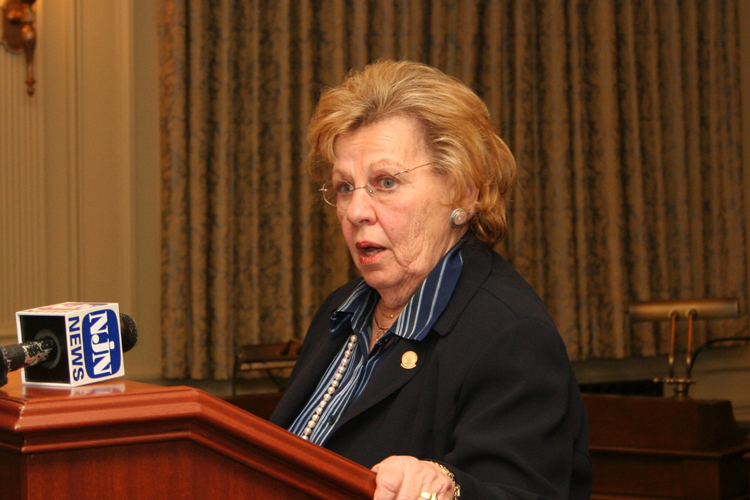
Sen. Loretta Weinberg, D-Bergen

In the context of a massive budgetary shortfall, the governor and his party push several huge tax breaks for upper-income folks and corporations. But $7.45 million in family planning — no dice, the GOP says.

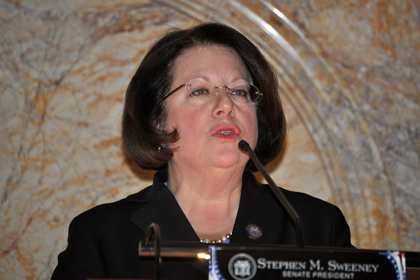
Sen. Linda Greenstein, D-Middlesex/Mercer
Sen. Joseph Vitale, D-Middlesex

A Senate vote today on S2899 — sponsored by Democrats Loretta Weinberg, Linda Greenstein and Joe Vitale — elicited some interesting responses from Republicans, who accused Democrats of by-passing process (will they make the same argument if the governor defies the state Supreme Court?) and supporting a group (Planned Parenthood) that, in Sen. Gerald Cardinale’s words, “supports abortion at every turn.”

“This bill is not about women’s health, it’s about partisan politics,” he said.

He is right, of course. The bill was as much about drawing clearer lines between the parties on two key issues: abortion and the budget. The GOP — or at least the governor and a majority of GOP senators — is willing to toss out funding for poor women’s health to limit abortion services for poor women, even as they hand over cash to those who need it least.

Sen. Greenstein offered this statement:

“The simple fact of the matter is that the Governor’s cuts to family planning and women’s health services have left women at a disadvantage in receiving basic health care,” said Senator Greenstein, who serves as a member of the Senate Budget Committee. “With unexpected revenues coming into the State, I think it’s fiscally wise and socially conscientious to reverse cuts to women’s health care. When you consider the total savings to the State from federal matching funds, there’s simply no fiscal argument you can make against investing this money in programs that make a difference in people’s lives.”

The Democrats know that Gov. Chris Christie is going to veto the bill. They have 26 “yes” votes, one short of overriding a veto — but either way, they will have made their point. Will it matter at the polls? Probably not for the governor. But the entire Legislature is up and I suspect it will help a handful of Democrats in an election that likely was going to favor the party anyway.

  • Send me an e-mail.
  • Read poetry at The Subterranean.
  • Certainties and Uncertainties a chapbook by Hank Kalet, will be published in November by Finishing Line Press. It can be ordered here.
  • Suburban Pastoral, a chapbook by Hank Kalet, available here.
Now he should apologize for the apology

http://espn.go.com/videohub/player/embed.swf

“I just got caught up.”

Joakim Noah offered his apology, saying he “just got caught up.” That, of course, is nonsense. We all say things in anger, but not all of use slurs like the one Noah used — or others harmful to other groups.

For a word like that to pop out of Noah’s mouth in anger means it is part of his working vocabulary. He needs to own up to that and not just apologize for saying it.

But this post is not just about Noah’s comments and apology. It also is about the quick shift made by ESPN’s hosts, who focused not on what Noah said but on his possible lack of focus. He shouldn’t have let the fans get to him — which may be true, but it is beside the point here.

Noah — and Bryant and the 358 others who play this kids’ game for a living — need to look at themselves and ask themselves why words like those used last night by Noah come so easily to their lips.

  • Send me an e-mail.
  • Read poetry at The Subterranean.
  • Certainties and Uncertainties a chapbook by Hank Kalet, will be published in November by Finishing Line Press. It can be ordered here.
  • Suburban Pastoral, a chapbook by Hank Kalet, available here.