
Political disintegration, Ron Paul and the 1 percent

The right is fractured, unwilling or unable to reconcile its many disparate and untamable parts. The left, mostly marginalized in a media landscape controlled by the 1 percent, is in the same boat.

Just as it did during the Clinton years, it has fractured upon the shoals of a centrist Democratic presidency enthrall to the money men of Wall Street.

Here is what we are looking at:

  • The Democratic president, Barack Obama, has played nice with Wall Street — see Glenn Greenwald’s column today — when it should have taken the financial industry out behind the woodshed.
  • A Republican frontrunner, Mitt Romney, who picks his position based on the position of the sun and is even closer to Wall Street than Obama.
  • The anybody-but-romney contingent of the GOP — Gingrich, Santorum, Perry — that plays the populism card but has no critique of American capitalism, nor has any interest in pushing one.
  • And Ron Paul. Paul is the only candidate of either party who opposes the wars in Iraq and Afghanistan and has from the beginning. He offers a critique of crony capitalism and has been as powerful an opponent of the Bush/Obama assaults on civil liberties.

Paul, as I wrote earlier, is no progressive. His history on race and comments on the Johnson civil rights legislation, hardline position on border security, antiabortion views and his opposition to unions, regulations and the social safety net cannot be overlooked.

In a year, however, when there are no Democrats on the ballot other than the centrist president and in a media culture that freezes out third-party challengers, Paul is being used as a stand-in for the missing critique of the system — a needed and legitimate critique. And his presence — and the lack of any kind of similar personality on the Democratic side — has raised the cracks in the left-liberal contingent.

Paul’s presence keeps elements of the left critique on the table, but he is an awful salesman for what so desperately needs to be sold. A Paul presidency would not achieve progressive goals — far from it — but it likely would prevent us from traveling a path we have too often traveled.

What the Paul phenomenon shows — as Obama-mania did in 2008 — is the desperate hunger on the left for someone to talk about the break down of the American system. And what it proves is that a single candidate offers little. What is needed is a movement, one focused on the corruption of our government and the corporate order, the dangers of the imperial project and the environmental cataclysm we face.

This need will remain in place 11 months from now, no matter who wins the election, regardless of who ends up winning the White House.

  • Send me an e-mail.
  • Read poetry at The Subterranean.
  • Certainties and Uncertainties a chapbook by Hank Kalet, will be published in November by Finishing Line Press. It can be ordered here.
  • Suburban Pastoral, a chapbook by Hank Kalet, available here.
Romney’s weak sweeps

The mainstream media is portraying tonight’s Romney win in New Hampshire as a big one and saying he swept the first two contests. Technically both are true. He won by double digits and won in Iowa.

But let’s be real here. Romney won Iowa by 8 votes over a guy — Santorum — who was polling in the low single digits just a couple of months ago and appears not to have cracked 40 percent in a state that was a foregone conclusion (he lives there and was governor next door, has huge name recognition and a massive organization).

Rather than showing his strength, the results demonstrate that Romney still has not won over his party and is likely vulnerable to a unified effort by the anyone-but-Romney group. Ron Paul, who is a special case, is at around 24 percent, but John Huntsman, Newt Gingrich and Rick Santorum totaled 37 percent together — almost exactly the same figure Romney collected.

If Romney was going to be a real presidential contender, wouldn’t have had distinguished himself better from the pack than he has? Especially when his opponents have been Mo, Larry and Curly Joe.

  • Send me an e-mail.
  • Read poetry at The Subterranean.
  • Certainties and Uncertainties a chapbook by Hank Kalet, will be published in November by Finishing Line Press. It can be ordered here.
  • Suburban Pastoral, a chapbook by Hank Kalet, available here.

Tin ears of the Romney-bot

http://cdnapi.kaltura.com/index.php/kwidget/wid/0_4tmgizvl/uiconf_id/6501231
George H.W. Bush (i.e, 41) professed amazement at supermarket scanners during a trip to a food store to attempt to show how much of a regular guy he was. The fallout badly damaged what little credibility he had left, proving to an electorate weary of recession that he was tone deaf on economic matters. End result: Bill Clinton wins the presidency.

Examples of presidential candidates failing to understand the tenor of the times are legion — Nixon on the beach in dress pants, Dukakis in the tank, Kerry windsurfing, McCain suspending his campaign — and they almost always end badly for the candidate.

Enter Mitt Romney. The former Massachusetts governor already had credibility problems due to his every evolving positions on social issues like abortion and gay marriage, and he has on more than one occasion proven that he has a tin ear worthy of the first President Bush (offering to make a $10,000 wager as though that were normal behavior, chanting “Who Let the Dogs Out” at a Martin Luther King Day parade in Florida).

And yet, he somehow found a way to top himself Monday:

Republican front-runner Mitt Romney stumbled down the homestretch of the New Hampshire primary on Monday, declaring, “I like being able to fire people who provide services to me” as his rivals intensified already fierce criticism.

Romney has attempted to defend himself, saying the full context of the comment would show that he did not mean he likes to fire people but that he likes having the ability to jettison service workers who do a bad job. And while everyone of us takes this ability for granted — fire the plumber if he can’t fix the leak — it’s not like we enjoy doing it. It was a foolish comment, a tone deaf one that underscores that Romney is the scion of a very wealthy family and has little in common with the average voter — and everything in common with the 1 percent at the top of the economic heap.

Romney is the elite the Tea Party and Occupy movements have warned you about, and it is going to be difficult for him to portray himself as anything else.

  • Send me an e-mail.
  • Read poetry at The Subterranean.
  • Certainties and Uncertainties a chapbook by Hank Kalet, will be published in November by Finishing Line Press. It can be ordered here.
  • Suburban Pastoral, a chapbook by Hank Kalet, available here.

A progressive push in the Legislature

New Jersey Democrats are flexing their more progressive muscles. The party is making two important progressive goals their top priorities — an increased minimum wage and marriage equality.

Sheila Oliver, the Assembly speaker, announced today that bumping the minimum wage to $8.50 from $7.25 an hour would be a top priority of the Assembly legislative session that starts tomorrow. She called it an “economic stimulus that doesn’t come in the form of more debt or increased spending” and “is a recognition that thousands of households in New Jersey are struggling to subsist on minimum wage jobs that do not allow them to support their families.”

The speaker’s announcement, which was endorsed by the liberal think tank, New Jersey Policy Perspective, came on the same day that state Democrats held a press conference to announce that they would introduce marriage-equality legislation when it convenes a new session tomorrow.

And yet, the Democrats are closing out a session in which they allowed business concerns to trump environmental ones — passing a bill delaying implementation of new sewer restrictions — and  approving privatization of school construction and management.

So, how exactly progressive is the New Jersey Legislature? More progressive than it has been during the first two years of the Christie administration — and just in time for a presidential election year.

  • Send me an e-mail.
  • Read poetry at The Subterranean.
  • Certainties and Uncertainties a chapbook by Hank Kalet, will be published in November by Finishing Line Press. It can be ordered here.
  • Suburban Pastoral, a chapbook by Hank Kalet, available here.

Ron Paul is not a progressive

Ron Paul was right on both wars, on the bailout of the banks and continues to be right about the need for transparency at the fed. He is right about gay marriage and he is right on most civil liberties issues and the drug war.

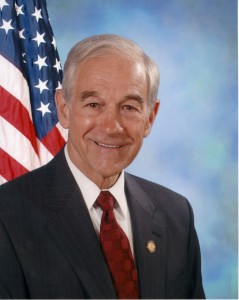
Ron Paul, in a photo on his web site: http://www.ronpaul2012.com

But Ron Paul is not a progressive. Ron Paul is not anti-corporate. He believes that empowering business is the best way to accomplish all good things and that government has no role to play in ensuring a level playing field. It was Paul’s dismissal of a government role in health care that elicited the shout of “let him die” during the Republican debates.

He is hardcore on immigration, opposing “amnesty” and “birthright citizenship”; seeks the end to the welfare state; and wants to approve offshore oil drilling.

Forget the ugly racism of his newsletters — which do reflect either his own past racism or a remarkable willingness to allow racists to speak in his name — his opposition to crony capitalism (which the otherwise sane Robert Scheer lauds) is more about freeing capital than addressing the widening chasm of inequality or aiding those in need.

Pat Buchanan’s opposition to free trade comes to mind here, because it was an issue on which the rabid social conservative was able to make common cause with the left. The same thing is happening here. Paul is a libertarian conservative who happens to be right on a couple of issues and not a legitimate standard-bearer for progressives.

It would be better for the left to sit out the 2012 election than vote for Paul.

  • Send me an e-mail.
  • Read poetry at The Subterranean.
  • Certainties and Uncertainties a chapbook by Hank Kalet, will be published in November by Finishing Line Press. It can be ordered here.
  • Suburban Pastoral, a chapbook by Hank Kalet, available here.