Donnelly and Fitzgerald to read at the library on Sunday

    For South Brunswick native Adam Fitzgerald, Sunday’s poetry reading at the South Brunswick Library will be a homecoming.

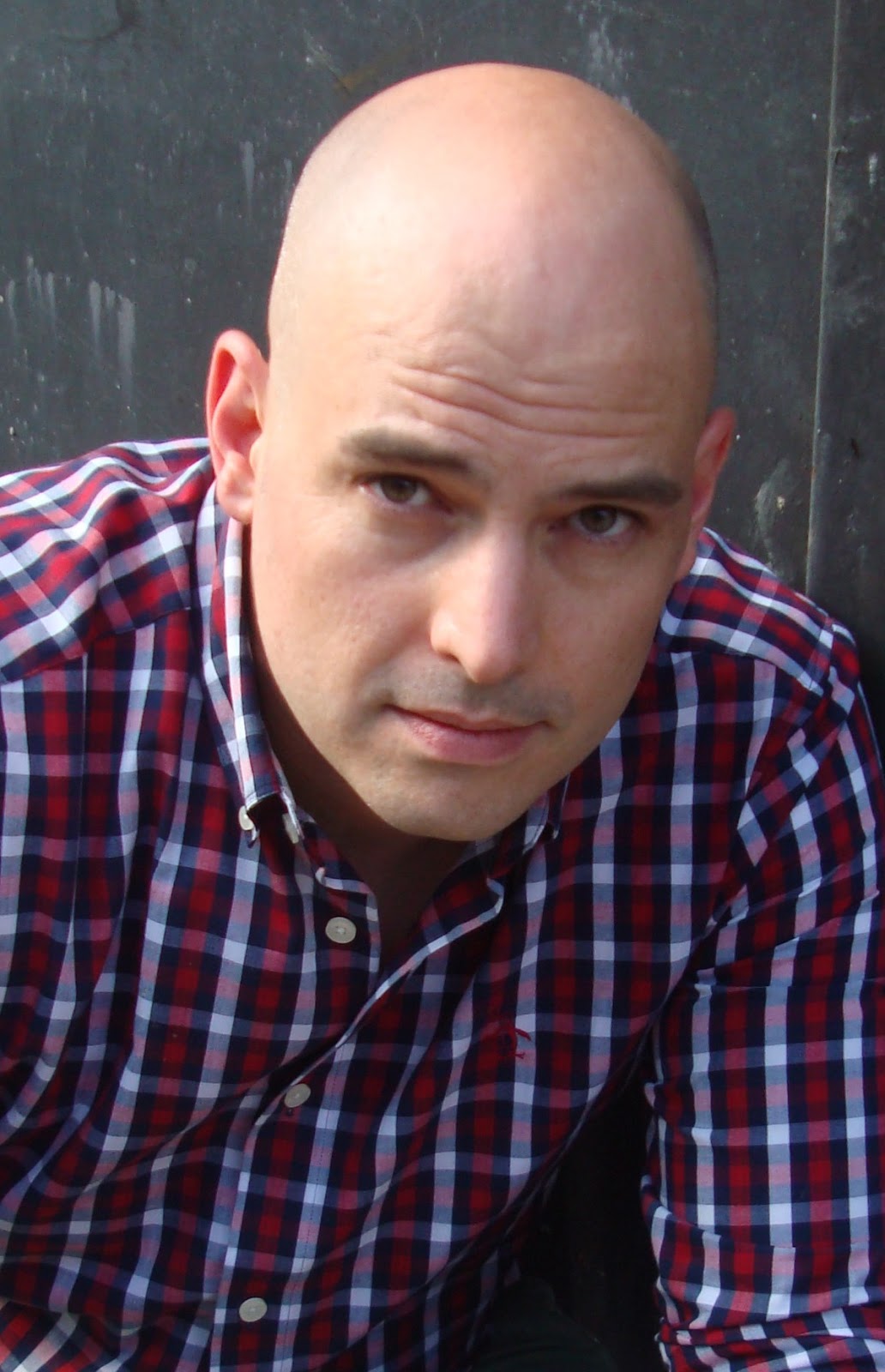
    Adam Fitzgerald

    Fitzgerald, who lives in New York, was born in Staten Island, but grew up in New Jersey, graduating from South Brunswick High School in 2001. He tries to do readings as often as he can “as a way to ambush the poems with the consciousness foremost of other people hearing them.”

    Performing them live – and hearing them, himself, helps him try “to get a hold on their oral shape, but also the shape of their specific enunciation—which varies, shifts and evolves (even when the words never change).”
    “Then again: small, improvised, inexplicable changes usually happen between what’s on the paper and what I read aloud,” he said. “If some of them feel to me revelatory, I try to incorporate them into the poem, permanently.”

    Timothy Donnelly

    Fitzgerald, 28, will be reading with Timothy Donnelly, the poetry editor of The Boston Review, on Sunday, Dec. 9, at 2 p.m. The reading is part of the monthly series at the South Brunswick Library sponsored by the South Brunswick Arts Commission. It is free, though a donation of a nonperishable food item to the South Brunswick Food Pantry is appreciated.

    “I’ve known Adam for quite a while, probably since he was in high school” said poet Hank Kalet, who organizes the reading series. “And I’ve seen his work grow to the point where he is one of the freshest new voices in American poetry. He has a strong sense of form and a deep reverence for language. I think people are going to enjoy his reading.”
    It was Fitzgerald, editor of the journal Maggy, who suggested that Donnelly read in South Brunswick.
    Donnelly, who is a 2012 Guggenheim fellow and the recipient of the prestigious Kingsley Tufts Poetry Award, lives in Brooklyn. He teaches at Columbia University and has taught at Princeton.
    His work can be describes as an effort both to re-imagine the language and to reclaim it from the bureaucratic morass into which it has been driven in our political times.
    In his most recent book – The Cloud Corporation – he works within categories that “suggest a kind of re-dreaming, re-inhabiting, or re-appropriating of the bureaucratic, the ‘corporate,’ of prefab language, discourse, and thought,” according to the poet Maureen N. McLane, who interviewed Donnelly for The Boston Review in April 2011.
    Donnelly, in the same interview, described poetry as “answer(ing) a need to dramatize complex inner states. To externalize them.”
    “There’s a sentence in Wallace Stevens’s ‘This Solitude of Cataracts‚’ one of my favorite of his poems‚ that’s always on my mind: ‘There was so much that was real that was not real at all.’ If I can use a phrase like “the life of the mind” without it sounding like rubbish or me like a kind of rube‚ and if it can be admitted that a life of the mind participates only partly in what we usually mean by reality‚ which is to say that mental life isn’t of the same order of reality as a tree or an apple or any manifest thing‚ then I’d like to say that a poem stands to make manifest that other part of our reality‚ that life of the mind‚ and to give it some fixity‚ some solidity. Poetry‚ it seems to me right now‚ serves to reveal the reality of what appears—compared to a mountain‚ say‚ or to an armchair—not very real at all‚ and yet which has often seemed the surest reality we can know of‚ even as we experience it slipping away.”
    Donnelly, 43, has been writing poetry since he was 19 but said he did not become “comfortable” calling himself a poet until he “was hired by Columbia to serve on the faculty of the Writing Program as a poet per se.“
    “I somehow felt more at ease with the term ‘poet’ used for myself as a professional title—probably because to refer to oneself as a poet without a good practical reason seems mostly boastful, and also a little nuts,” he said. “It’s more or less like calling oneself a genius, a mystery, a marvel, a witch, a chosen creature, or someone special.”
    Fitgerald, for his part, is awaiting publication of his first full-length collection, The Late Parade, which is due from W. W. Norton / Liveright in June. He cites as his primary influences “Yeats, Hart Crane, Rimbaud, John Ashbery, Dickinson, Keats, Bernadette Mayer.”
    “Describing one’s work is a trap,” he said. “But then again, so can not describing one’s work. I think of my work, sometimes, as ambient drone music, drug-induced hallucinations, hard-to-recall dreams, deviously intricate architecture that intimates some sense of neverendingness.”
    He says that New York City itself is a tremendous influence, as well.
    “Living in the legacy that is New York City forces one to take into consideration the potential for being involved in a community larger than poetry, or just poets,” he said. “This is a good, though hard to track thing. Most specifically, I find great inspiration in a certain kind of music, ambient drone, as well as the kind of displaced soundtrack you find in a David Lynch film; the paintings of Henri Rousseau and de Chirico; and even, dare I say it, a specific heightening of architecture: for instance, there’s a giant commercial building on Astor Place, whose basement/first floor areas house Kmart, but whose top floor are portico-like windows, and a pronounced roof—somehow the effect is of a Renaissance Palazzo: supersized, Americanized, which means a kind of imported Europeanism on steroids, to create the inflated grandeur that I find downright poetic.”
    Timothy Donnelly and Adam Fitzgerald will read Sunday, Dec. 9, at 2 p.m. at the South Brunswick Library, 110 Kingston Lane, Monmouth Junction. The reading is sponsored by the South Brunswick Arts Commission.
    For more information, contact Hank Kalet at otherhalf@comcast.net or call the Arts Commission at 732-329-4000, ext. 7365.
    The schedule for the rest of the 2012-2013 series:
    Sunday, Jan. 20: Princeton residents James Arthur, author of a new collection from Copper Canyon Press, and Jean Hollander
    Sunday, Feb. 10: Maxine Susman, of Kingston, and Daniel Harris, of Princeton
    March 17: Richard O’Brien and Mark Hillringhouse
    Sunday, April 21: Kathe Palka and Linda Artzenius
    Sunday, May 5: National Book Award finalists Kathleen Graber, nominated in 2011 for The Eternal City, and Princeton professor Susan Wheeler, nominated in 2012 for Meme.

      Hedges on Sandy: Failed systems

      This is from Chris Hedges’ column on Monday, an apt description of the what Sandy actually represents and what it portends:

      Hurricane Sandy, if you are poor, is the Katrina of the North. It has exposed the nation’s fragile, dilapidated and shoddy infrastructure, one that crumbles under minimal stress. It has highlighted the inability of utility companies, as well as state and federal agencies, to cope with the looming environmental disasters that because of the climate crisis will soon come in wave after wave. But, most important, it illustrates the depraved mentality of an oligarchic and corporate elite that, as conditions worsen, retreats into self-contained gated communities, guts basic services and abandons the wider population.

      Sheepshead Bay, along with Coney Island, the Rockaways, parts of Staten Island and long stretches of the New Jersey coast, is obliterated. Stores, their merchandise destroyed by the water, are boarded up and closed. Rows of derelict cars, with the tires and license plates removed and the windows smashed, line the streets. Food distribution centers, most of them set up by volunteers from Occupy Sandy Recovery, hastily close before dark every day because of the danger of looting and robbery. And storm victims who remain in their damaged homes, often without heat, electricity or running water, clutch knives against the threat of gangs that prowl at night through the wreckage.

      This storm—amid freakish weather patterns such storms will become routine—resulted in at least $71.3 billion in property damage in New York and New Jersey. Many of the 305,000 houses in New York destroyed by Sandy will never be rebuilt. New York City says it will have to spend $800 million just to repair its roads. And that is only the start. The next hurricane season will most likely descend on the Eastern Seaboard with even greater destructive fury. A couple of more hurricanes like this one and whole sections of the coast will become uninhabitable.

      This is the new America. It is an America where economic and environmental catastrophes converge to trigger systems breakdown and collapse. It is an America divided between corporate predators and their prey. It is an America that, as things unravel, increasingly sacrifices its own.

      Why is this happening? The disregard with which the corporate power structure treats the poor is part of it. But so is our false sense that we can engineer our way out of any crisis. We are smug, lazy, and we have shown little willingness to change our ways to avert disaster.

      We can build sea walls and flood tunnels, but that won’t prevent the disaster — only move it further up the road. Ask the folks in Manville what happened when Bound Brook was protected. We have to change at a more basic level, alter our ways of living, refocus, end our reliance on carbon-based energy, our willingness to pave over everything in sight. We really have no choice.

      Media misogyny and the Petraeus scandal

      The end of Gen. David Petraeus both as an important member of any political administration and as a military tactician is not something anyone should mourn. The general was, as Lucian Truscott IV put it in The New York Times, a “phony hero for a phony war.”

      But we should not revel in the way this whole thing came down — the uncovering of an affair through the use of the police state and the calling in of personal favors and political animus. The use of the FBI in this way, as numerous commentators have said, leaves us all vulnerable.

      What has not been discussed, however, is overt sexism that underpins so much of the coverage and discussion of this tawdry scandal.

      Petraeus remains, for many, an honorable but flawed hero. His part in the story is the part played by the hero of so much Greek tragedy, the man brought down by his own hubris.

      But the casual — and seemingly acceptable — way with which we have denigrated the women involved in the scandal through the use of sexually charged, gender-specific language makes clear that we view them as far more culpible.

      Consider this wholly gratuitous phrase from Truscott’s otherwise trenchant analysis. Petraues, he says, had his head turned by “a West Point babe in a sleeveless top,” as though his behavior was expected and that it was Paula Broadwell — Petraeus’ biographer — who was asking for it. This language comes pretty close to the kind of blame the victim arguments we’ve historically heard in rape cases (even though, there are no victims in this one, just men and women being men and women).

      Then there is this from Joe Nocera, the otherwise sane and rational columnist for the Times:

      Let’s go back to the scene of the so-called crime, to Tampa, Fla., where Kelley, an attractive wannabe socialite, gets some unsettling e-mails from an anonymous sender. If she had any sense, she would block the e-mail address and be done with it. But because she knows that men will bend the rules for her — after all, high-ranking military officers granted her unfettered access to MacDill Air Force Base — she goes to her (male) F.B.I. friend, who advocates with his superiors for an investigation. They agree.

      Like Truscott, Nocera gets personal in a way that has the potential to undercut his otherwise powerful argument about FBI overreach. His description, for the most part, is factual. Kelley used her connections to get the FBI involved (though, the apparent decision by an FBI agent with a political animus for the Obama administration and who apparently kept pushing this to the top has been left out of the narrative).

      But Kelley is more than someone with access. She’s a “wannabe socialite” who lacks “sense,” and who “knows that men will bend the rules for her.” This apparently makes her more worthy of denigration than, say, the K Street lobbyist who also traffics in access or even someone as preening and desirous of publicity as Petraeus himself.

      These are just two examples of what has been a river of gendered criticisms of Broadwell and Kelley. And both ran in The New York Times, the supposed paragon of journalistic virtue. If the Times engages in this kind of nonsense, what does that say about the rest of the media?

      None of this is to excuse the questionable behavior of either woman. No one involved — not the general, not his biographer, not Jill Kelley, not the FBI — come off very good in this.

      But only Broadwell and Kelley have come in for the nasty opprobrium, the gratuitous dismissals and demeaning language. What else are we to make of that, if we are unwilling to call it sexism and misogyny?

      Big fines, but little justice in BP settlement

      Yesterday’s news that BP will plead guilty to one of the largest criminal penalties in history had environmentalists quite pleased. After all, the 2010 BP oil spill was one of the worst environmental catastrophes in history.

      The $4 billion in penalties are supposed to be a marker, an indication that the kind of shortcuts and willful negligence that apparently led to the spill will not be tolerated.

      So why is Robert Reich unhappy? Yes, he is

      appalled by the carelessness and indifference of the BP executives responsible for the disaster in the Gulf of Mexico that killed 11 people April 20, 2010, and unleashed the worst oil spill in American history.

      And yet, he says,

      it defies logic to make BP itself the criminal. Corporations aren’t people. They can’t know right from wrong. They’re incapable of criminal intent. They have no brains. They’re legal fictions — pieces of paper filed away in a vault in some bank.

      Reich, however, is not shilling for BP. He’s not asking that they be let off the hook, only that we realize that

      Punishing corporations as a whole almost always ends up harming innocent people – especially employees who lose their jobs because the corporation has to trim costs, and retirees whose savings shrink because their shares in the corporation lose value.

      And that it is the men at the top who should be facing criminal proceedings. As things stand, three high-level employees — but not those at the very top, the men who created an environment in which the only question was how much money could be earned, all else be damned — are facing charges.

      That, says Reich, is “loony.”

      (T)he people responsible for BP’s deaths and oil spill weren’t BP’s rank-and-file employees or its shareholders. They were the executives who turned a blind eye to safety while in pursuit of their own rising stock options, and who conspired with oil-services giant Halliburton to cut corners on deep water drilling when they knew damn well they were taking risks for the sake of fatter profits.

      They’re the ones who should be punished. Failure to punish them simply invites more of the same kind of criminal negligence by executives more interested in lining their pockets than protecting their workers and the environment. (Today brought another tragedy in the Gulf when an oil rig exploded off Louisiana — killing at least two workers and sending four others to hospitals Friday; two others were believed to be missing.)

      But the Justice Department’s criminal settlement with BP gives these top executives a free pass — allowing the public to believe justice has been done.

      The men being charged, Reich says, are just “the schleps who got caught up in the mess” and the Justice Department’s “$4 billion criminal settlement with BP isn’t big enough to affect the oil giant” in any meaningful way.

      So, what is Reich arguing for? The stripping of “personhood” from corporations.

      Holding corporations criminally liable reinforces the same fallacy that gave us Citizens United v. Federal Election Commission, in which five justices decided corporations are people under the First Amendment and therefore can spend unlimited amounts on an election.

      Take that away and the bogus immunity that corporate officers are given by virtue of what Reich calls “legal fictions — pieces of paper filed away in a vault in some bank” — falls apart and we can go after the real culprits.

      The long debate over housing continues

      The issue of affordable housing in New Jersey has a long and controversial history. Beginning with the challenge to Mount Laurel’s exclusionary zoning practices in the late-1960s, which went all the way to the state Supreme Court, the questions of how much affordable housing should be built and where have divided the state.

      Suburban communities have balked at state mandates for housing since the court ruled in 1975 in the first Mount Laurel decision that every municipality had a responsibility to provide housing for low- and moderate-income residents. They have claimed — with some justification — that the housing system leads to sprawl and they have won numerous battles over the years to weaken the court’s second Mount Laurel ruling establishing the notion of fair share.

      Despite this, the state managed to make progress on the housing question for about 15 years — until the Council on Affordable Housing attempted to change its approach. The new growth-share formula, which is supposed to peg need to development, has been criticized by housing activists as an amorphous and unenforceable mess that will allow towns to skirt their obligations.

      Suburban communities view growth-share — if not the exact formula devised — as an improvement over earlier approaches.

      Housing advocates are right, I think, but it remains to be seen where the court comes down on this. I spent the day Wednesday listening to arguments — see my piece in NJ Spotlight recounting the court hearing — and only one thing is clear to me: reading the justices based on their questions is a fool’s errand.

      My suspicion is that the court is going to craft a narrow ruling that will leave the Mount Laurel doctrine in place, but could force the Legislature to act. That seems a prescription for further delay, given Gov. Chris Christie’s dislike of the Mount Laurel doctrine and COAH — something the court also will be ruling on at a later date.

      Lost in the scuffle, unfortunately, is the rationale for the Fair Housing Act, which is both the construction of affordable housing and the desegregation (by both race and class) of New Jersey. The courts have been clear over the years that the notions of municipal obligations and regional need are meant to spread the housing around and give minorities and low-income New Jerseyans a chance to move to the suburbs.

      That must remain the goal whatever happens with the growth-share challenge.