Seniors in chains, liberals in pain

So much for political capital. President Barack Obama once again thumbed his nose at his progressive base, proving that he is the second coming of Dwight Eisenhower and not Franklin Roosevelt as he moves to the right with his offer in negotiations over the so-called fiscal cliff.

The offer, according to the Huffington Post,

would allow the payroll tax holiday to expire, meaning middle-class workers will see smaller paychecks in 2013. It also proposes a Social Security reform known as “chained CPI” that would reduce the benefits senior citizens receive through Social Security.

Additionally, Obama’s latest offer would permanently extend the Bush tax cuts for incomes of less than $400,000. Previously, the president had insisted that taxes increase on families with income above $250,000.

The offer comes two weeks after liberal groups expressed optimism that Obama and Congressional Democrats would hold firm, protect Social Security and push to have those that can best afford it pay the cost of balancing the budget.

An array of liberal and labor groups are currently running pressure campaigns out of longstanding concerns that the White House will cede too much ground in a deficit deal. And while they aren’t planning on disarming anytime soon, several activists told TPM that they’re cautiously optimistic that Democrats are heading into battle with the right goals and the leverage to obtain them.

“I think most people are buoyed by the fact the president seems intent on sticking with his demand that taxes go up on the top 2 percent even if it means going over the cliff,” Bob Borosage, president of the Institute for America’s Future, told TPM. “He’s been stronger than I might have anticipated.”

At the time, it did appear he was holding steady, which is what makes this rightward drift seem such a disappointment. And yet, progressive supporters of Obama should have expected this — and not just because he has shown himself to be a weak negotiator. Obama has avoided making a clear defense of Social Security — he has supported tweaks to an essentially sound program, he has said, while also saying he and Republican Mitt Romney had similar positions on the retirement program. He has endorsed raising the payroll tax ceiling — the amount an individual worker can pay into the system in a given year is capped — but has only agreed (twice) to unnecessary changes on the benefit side in an effort to appease Republicans.

In the end, of course, the only thing that matters is the actual alterations he puts on the table.

The year in music, A to Z

My top album of 2012.

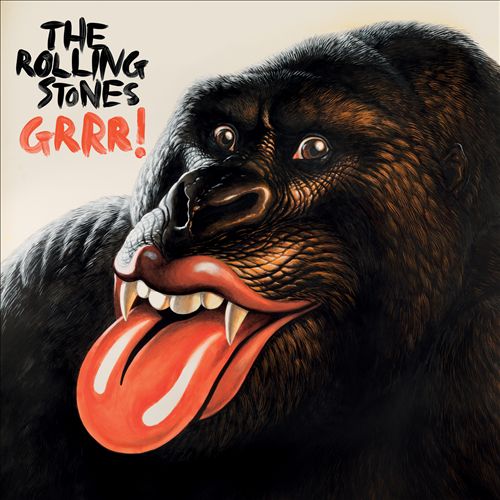
A is anniversary and there has been no bigger anniversary than Mick and the Boys celebrating 50 years as a band. To celebrate, The Rolling Stones issued Grrrr, one of the better greatest hits/best of compilations around. The mix of songs is wonderfully quirky and worth the price of admission, but you may want to buy it just to get the fiery “Doom and Gloom” single.

Golden Stones.
Bruce is no. 5 on the Kalet charts.

B is for Bruuuuuce. Not only did he release Wrecking Ball, a tremendous set of songs that marries the sound of the E Street Band to the work he did with the Session Band, he has been touring tirelessly and playing at a level that few musical acts half his age can hope to attain.

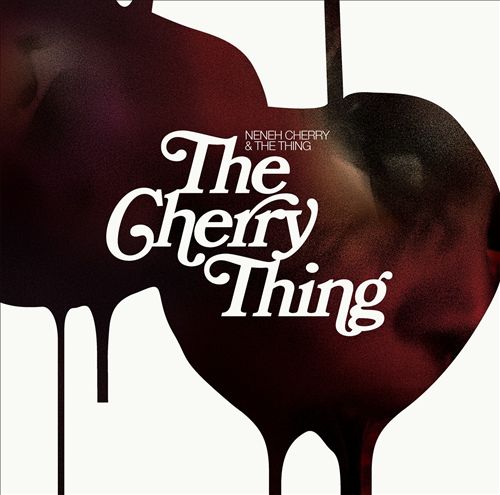
C is for The Cherry Thing, Neneh Cherry’s return to recording and — for my money — the album of the year. One part hip-hop, two parts jazz, a smidgeon of R’n’B, some old-school rock and pop — if she never records another album, her place in the pantheon has now been secured.

D is for disappointment, led by Mumford & Sons thoroughly unimpressive sophomore disc. Also on the disappointment list: Alicia Keys, Neil Young, No Doubt, Rihanna, The Shinns, Gary Clarke, Jr., P!nk and Green Day.

E is for enigmatic, the best word to describe Neil Young. Young issued two discs this year and a highly acclaimed autobiography. The first disc, Americana, reimagines classic folk through the prism of Crazy Horse and is a classic; the second, Psychedelic Pill, is why Young finds himself listed under D (see above).

F is for film soundtrack. Adele’s Bond theme — “Skyfall” — is easily the best Bond song in years, and possibly decades.

Album no. 3 on the Kalet hit list

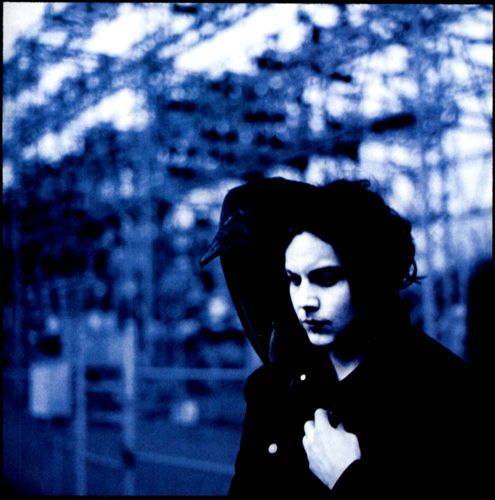
G is for genius, which is the best word to describe Jack White. Anyone who had not been convinced as to White’s brilliance by his work with The White Stripes, the Raconteurs or Dead Weather just has to listen to Blunderbuss, his fabulous solo album and one of the year’s five best.

H is for hip-hop, thanks to strong discs by Killer Mike, El-P and Lupe Fiasco.

I is for In tandem, which is a good way of saying that the Buddy Miller-Jim Lauderdale pairing produced one of the better roots-rock/country albums of the year.

J is for junk. Soundgarden, why bother putting out a record after all these years if it is going to be as bad as King Animal?

K is for konsistent (for the spelling challenged), and consistency is the hallmark of Alejandro Escovedo and Chuck Prophet, both of whom continued to put out worthy recordings this year.
 L is for live — as in live albums, of which there were many good ones this year, including from Toots and the Maytals and the Pogues.

M is for McCartney. While his CD of old-timey tunes was a bit of a snooze, his performance at the 121212 Concert reminded everyone what Sir Paul can do — especially during his performance with Nirvana.

N is for newcomers. The Alabama Shakes, JD McPherson, Allen Stone, Nick Waterhouse, The Lumineers, Frank Ocean, Father John Misty, all released outstanding debut discs in 2012.

O is for overrated, which is how I would describe Lana Del Ray. Her debut album was surrounded by a level of buzz that is rare for newcomers, creating a sense of expectation that was impossible to meet. While it features a few good tunes, Born to Die does little for me. Also on this list: Gotye, Grizzly Bear, Smashing Pumpkins and Fun.

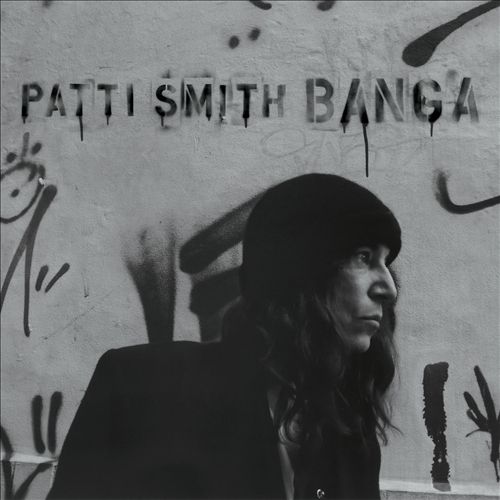
Patti Smith is no. 2 on the Kalet charts.

P is for Patti Smith, whose Banga takes down No. 2 on my top albums list — though not by much. Banga is intoxicating and maybe her best work since Horses — and, yes, I know that includes Easter, Radio Ethiopia and Wave.

Q is for questionable pairings, as in the Lou Reed-Metallica pairing that ended up producing not only the year’s worst record but one of the worst in recent memory.

R is for reggae and the return of Jimmy Cliff. In a year in which Snoop Dogg attempted to reinvent himself as a reggae artists, Cliff issued the best pure reggae album in decades. Rebirth certainly lives up to its name.

S is for super sophomore sets: Avette Brothers, The Carpenter; Bruno Mars, Unorthodox Jukebox; Tame Impala, Lonerism.

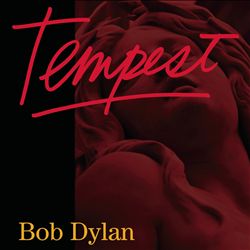
Dylan hits no. 4 in 2012.

T is for Temptest, Bob Dylan’s latest late-career renaissance work. Rank it No. 4 on the year’s best.

U is for unexpected, i.e., Bill Fay’s first album in 41 years, the bittersweet Life is People, and Bobbie Womack’s comeback album, The Bravest Man in the Universe.

V is for Van. Van Morrison’s Born to Sing: No Plan B is both aptly named and one of his most soulful records.

W is for women. Along with Neneh Cherry and Patti Smith, Bonnie Raitt’s Slipstream and Brandi Carlisle’s Bear Creek and Kelly Hogan’s I Like to Keep Myself in Pain hit my top 10. Also putting out stellar albums: Santigold,

X is for extra work (OK, this is a stretch) — or side projects. See The Divine Fits.

Y is for Yoakam — meaning Dwight Yoakam and his genre-busting 3 Pears.

Z is for zero, which is the number of reasons I can count for why the Who are still performing live.

    Roosevelt gave us the New Deal; Obama is poised to offer the Bad Deal

    Interesting math from Sam Stein in a story on the latest offer from President Barack Obama in negotiations over the so-called fiscal cliff. The president now

    proposes $800 billion in savings, including $290 billion in interest savings, $100 billion in defense cuts, and $130 billion in savings that would come from an adjustment to the inflation index for Social Security benefits. The administration insisted that there would be “protections for most-vulnerable populations” perhaps by indexing the changes so that they don’t affect those with low-income.

    That leaves $280 billion in cuts unremarked upon.

    The answer probably lies with the across-the-board cuts to social programs already included in the sequestration plan approved last year — cuts to heating assistance, food aid, Head Start, housing aid, etc., that will leave the nation’s most vulnerable in an even more precarious position.

    Any deal that leaves these cuts on the table cannot be called a good deal, even if it ends up generating some revenue from higher taxes on the better off.

    Forget for a second the humanitarian reasons for providing a sturdy safety net; there is an economic reason, as well, for protecting it. Social safety spending, which tends to rise during recessions, has a stimulative effect because it puts money in the pockets of the people who will spend it.

    Rather than cutting these programs, we should be expanding them, while treating investment income like regular income, returning the inheritance tax to its earlier, higher rate, and letting the Bush tax cuts expire for those making more than $250,000 (I could live with $400,000)

    Instead, however, we are focused on marginal tax rates and are ready to let European-style austerity wreak further havoc on our economy.

    Buddy, can you spare a jail cell?

    Crossposted from The Tent City Project:

    Brian Eastman wanted to spend the night in jail; instead, he faces a fine for drinking in public and still must find away to deal with the cold.

    As reported by nj.com, police approached the 46-year-old Eastman as he was “drinking a 24-ounce can of Mike’s Hard Iced Tea in front of Macho Nacho restaurant at 66 Morris St. at about 2:12 a.m. Wednesday, police said.”

    As O’Brien approached Eastman, the homeless man put down the can, police said.

    “You got me. I’ll take the ticket. I want to go to jail because it is getting cold out here,” Eastman told O’Brien, according to the police report.

    Instead of arresting Eastman, O’Brien gave him a ticket for drinking in public and threw out the alcoholic beverage without incident, police said.

    The incident — presented as a brief item in a police blotter — offers a glimpse into our failed economy and the lack of seriousness with which we are approaching its natural byproduct.

    The American economy has been rigged to generate massive wealth for a small subset of the population, who has managed to take the profits off the top while pushing the cost of the economic byproduct (as in a chemical equation) onto the public. Se we have homelessness and poverty and economic instability, pollution and health problems, shattered urban areas and devastated rural towns — all created by the actions of corporate America, but ameliorated through the auspices of federal, state and local governments with the cost being shared by each and everyone of us.

    Perhaps, this is logical. We get some of the benefits, so why shouldn’t we share in the cost? The problem is that we are paying on both ends: We pay in higher prices and waning workplace power on the one side and then again through our taxes — and rising crime, dirtier air and water, etc. — on the other side. And people like Brian Eastman remain on the streets, and going so far as to commit a petty offense to get himself a warm space for the night.