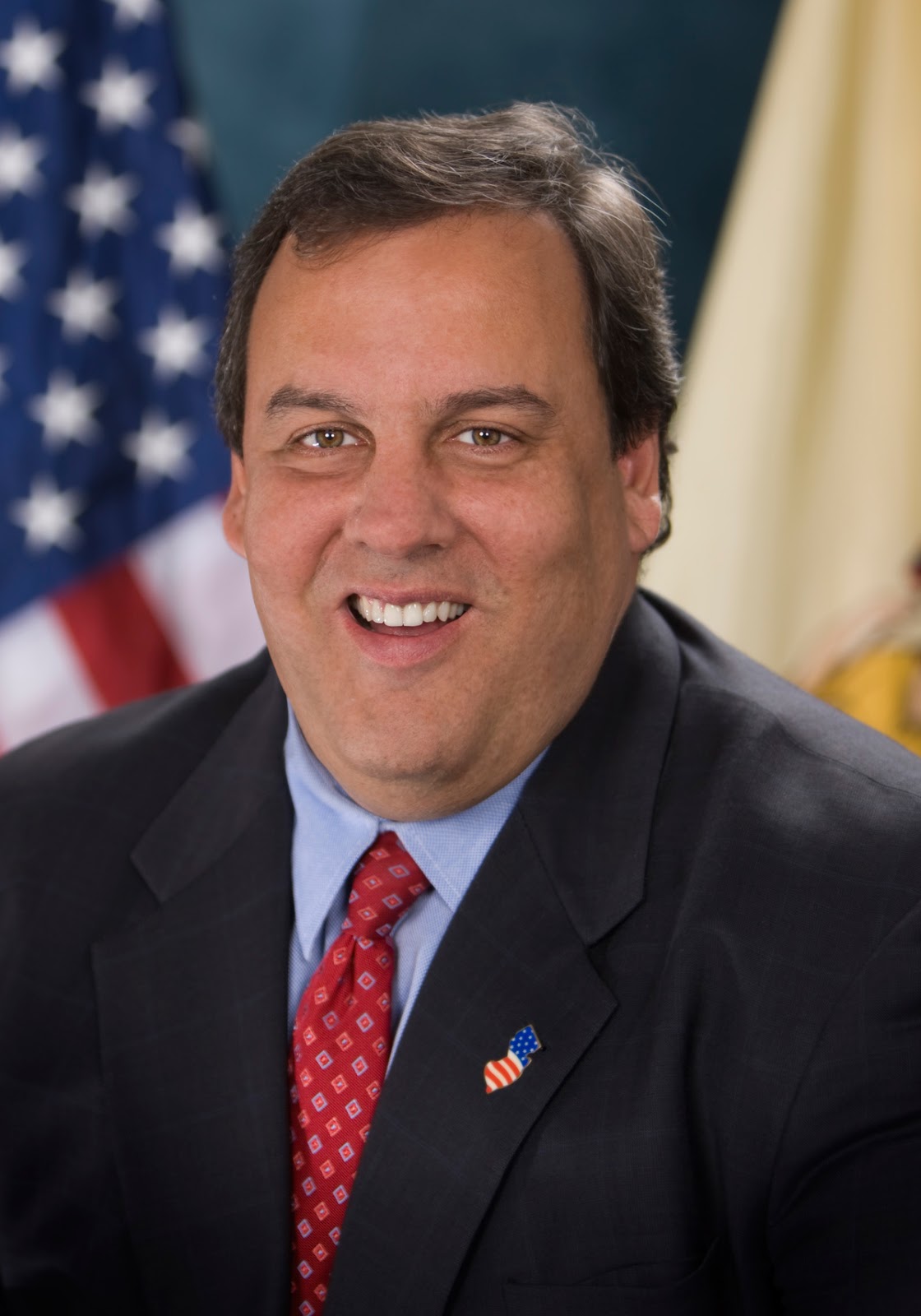
Gov. Christie: Public relations expert

Charles Stile in The Record offers as good an explanation of Gov. Chris Christie’s generally high levels of support in the state as I’ve seen. The governor is a master of public relations, someone who can turn every image to his advantage even as he fosters a sense that he is unconcerned with how he is viewed by the public.

Christie has shown an uncanny ability to stay one step ahead of any voter resentment, mainly by staying on the offensive — and out of Trenton. Christie promotes his own, unfiltered messages with carefully edited YouTube videos, sent via email to voters, supporters and media around the country. Christie’s staff carved up the speech into seven Christie-glorifying videos, packaged with headlines like this one, “Governor Christie: Sandy Did Not Destroy Our Spirit.”

He also turns “town hall meetings” into de facto campaign rallies packed with friendly audiences who rarely ask him pointed questions. Christie will also reprise the image of his management of the storm, when cameras followed Christie touring storm-battered sites. This time, he will be there as the governor leading recovery. He is scheduled to visit Belmar today to mark the reconstruction of the town’s boardwalk.

This media strategy is central to Christie’s success. It is why he enjoyed strong approval ratings despite the stubbornly weak economy that stalked his agenda before the storm.

The strategy fosters an image of Christie leading, taking charge, confronting problems head on. It banks on the belief that most people don’t care too much about the details. They just want a sense that an “adult” is in charge.

Send me an e-mail.

Initial thoughts on the State of the State

Gov. Chris Christie gave his annual state of the state speech to the state Legislature earlier today and the theme of his speech was clear: All Sandy, all the time.

The idea under-girding his speech was that the storm may have knocked the state down, but by working together the state will get back up and get moving in the right direction.

He then offered an outline of his accomplishments — pension reform, the property tax cap, balanced budgets — that was specifically crafted to elide some of the ways in which these accomplishments were achieved. No mention of the cut in the earned income tax credit, for instance, or the fact that he willfully underfunded the pension fund or the state’s school funding law; no mention of his use of inflated or overly optimistic revenue projections to sell an unwise tax cut or to the one-shot revenues — affordable housing trust fund, the foreclosure settlement money — that makes his far less different than his predecessors than he believes.

Democrats were not shy with the criticism and, while a good amount of it was the kind of political posturing typical of opposition-party responses, there were some legitimate criticisms involved that should help structure the kind of questions asked as we move forward.

Assembly Majority Leader Louis Greenwald (D-Camden) summed these issues up:

“Rebuilding our storm-ravaged communities is of paramount concern, but we cannot ignore the problems we faced before Sandy and permit them to worsen. Rising property taxes and a continuing unemployment crisis are problems we must address, and I am hopeful the Governor will join with us in bipartisan spirit to do so.

“We need a broad approach that addresses our underlying economic crisis so that we will be better positioned to help all our citizens–whether it’s our shore towns, our struggling middle-class families, or our senior citizens.”

We need to help everyone affected by Sandy — I think everyone agrees on this point — but we also need to remember that many in New Jersey were hurting well before the storm started forming.

It as a good speech, but not a great speech, not one that will alter the political dynamics in the state.

Send me an e-mail.

Debt deal phase II: Tell Democrats to protect Social Security, Medicare and Medicaid

The line of demarcation between Republicans and Democrats on the next phase of budget and debt negotiations appears to have been set by Sen. Minority Leader Mitch McConnell:

“[T]he tax issue is finished, over, completed,” said the Kentucky Republican, during an appearance on ABC’s “This Week.” “That’s behind us. Now the question is, what are we going to do about the biggest problem confronting our country and our future? And that’s our spending addiction. It’s time to confront it. The president surely knows that.

I mean, he has mentioned it both publicly and privately. The time to confront it is now.”

McConnell, having conceded on the tax issue during the first phase, now appears ready to go down swinging. The question is whether the Democrats plan to fight with the same passion. That is a difficult one to answer. Consider this description of the president’s stance from Sam Stein:

The president has said that he will not make major entitlement reforms or spending cuts during those negotiations unless it is part of a balanced approach.

Read that closely and consider the latter phrase — “unless it is part of a balanced approach” — and tell me that the Democrats have taken Social Security and Medicare off the table.

And read this, from the transcript of the president’s remarks yesterday:

I believe we can find more places to cut spending without shortchanging things like education, job training, research and technology all which are critical to our prosperity in a 21st century economy. But spending cuts must be balanced with more reforms to our tax code. The wealthiest individuals and the biggest corporations shouldn’t be able to take advantage of loopholes and deductions that aren’t available to most Americans.

More places to cut, he says. And he won’t shortchange education, job training, research and technology. Not a word about Social Security. Nothing on Medicare and Medicaid. Well, not this week. Go back a week — to Tuesday, when he signed legislation the much-lauded tax deal:

I want to make this point: As I’ve demonstrated throughout the past several weeks, I am very open to compromise. I agree with Democrats and Republicans that the aging population and the rising cost of health care makes Medicare the biggest contributor to our deficit. I believe we’ve got to find ways to reform that program without hurting seniors who count on it to survive. And I believe that there’s further unnecessary spending in government that we can eliminate.

The president has shown a willingness in the past to put the major entitlement programs on the table — most recently when he signaled a willingness to enact a “chained” consumer price index (this allows for the substitution of cheaper products and slows cost-of-living increases for seniors, which essentially would be a cut in benefits).

The president is a natural conciliator, a compromiser to his core. Unless it can be made clear that his legacy will be damaged by entitlement cuts and unless Democrats more generally are made to fear reprisals, there is a good chance that they will do the wrong thing. Obama has said as much, challenging his base on more than one occasion, using the quotation often attributed to FDR, to make him do it. The left needs to be louder than the Tea Party. It needs to make it clear that Social Security, Medicare and Medicaid should not be touched — unless it means that all three programs are expanded.

Budget gimmicks continue to plague New Jersey

At yesterday’s hearing on the state budget, a nonpartisan legislative budget analyst confirmed what we all knew back when the budget initially was approved: The governor’s economic growth estimates were unrealistic.

Gov. Chris Christie had been depending on revenue growth of 8.4 percent in the current $31.7 billion budget, but actual growth has been less than one percent in the first five months of the fiscal year, David Rosen, the budget officer for the nonpartisan Office of Legislative Services, told the Senate Budget and Appropriations Committee today.

At the current pace of revenue growth, the budget will have a $2 billion revenue shortfall, Rosen said. He cautioned that he was not predicting such a devastating outcome, but did say the shortfall was likely to be higher than the $700 million hole the state currently faces.

“As a result of revenue underperformance to date the state would need a spectacular revenue acceleration to hit the executive’s budget targets,” Rosen said. “Where revenues have grown at .02 percent for the first five months, they would need to grow by 11.9 percent over the remaining seven months.”

Rosen was pressed on the possibility of such a robust rebound, and he replied, “it’s extremely unlikely.”

Republicans called yesterday’s hearing “political” — and it was. The Democrats were looking to undercut a very popular governor at the beginning of his re-election campaign.

But that does not diminish the import of Rosen’s testimony. New Jersey’s economy has not recovered and shows little sign of doing so to a degree that will allow state revenues to rebound and meet the budget estimates. That means we are facing a potentially huge shortfall and the need for more budget cuts. Those cuts will further depress the state economy, tamping down revenue and continuing the cycle.

The governor was elected on a promise to end the budget shenanigans of previous administrations. He has not done so. Nor has the Democratic majority in the Legislature. One-shot revenues and inflated growth estimates continue to the be the order of the day. Until the political class in the state can be honest with itself and with voters, these will remain the facts of New Jersey budgeting to our peril.

Debunking the austerity myth

Economist Michael Hudson views the conventional wisdom on economic matters as a farce. In a pair of articles on his site and on Counterpunch, he pushes against the undemocratic efforts of Wall Street and the banks to paint aid for average Americans as irresponsible. (He also was interviewed on Truthdig Radio earlier today.)

Hudson’s article, “America’s Deceptive 2012 Fiscal Cliff,” raises a simple question: Why is it OK to print money when the banks are in need, but not when the rest of us face economic distress?

Wall Street lobbyists blame unemployment and the loss of industrial competitiveness on government spending and budget deficits – especially on social programs – and labor’s demand to share in the economy’s rising productivity. The myth (perhaps we should call it junk economics) is that (1) governments should not run deficits (at least, not by printing their own money), because (2) public money creation and high taxes (at lest on the wealthy) cause prices to rise. The cure for economic malaise (which they themselves have caused), is said to be less public spending, along with more tax cuts for the wealthy, who euphemize themselves as “job creators.” Demanding budget surpluses, bank lobbyists promise that banks can provide the economy with enough purchasing power to grow. Then, when this ends in crisis, they insist that austerity can squeeze out enough income to enable private-sector debts to be paid.

The reality is that when banks load the economy down with debt, this leaves less to spend on domestic goods and services while driving up housing prices (and hence the cost of living) with reckless credit creation on looser lending terms. Yet on top of this debt deflation, bank lobbyists urge fiscal deflation: budget surpluses rather than pump-priming deficits. The effect is to further reduce private-sector market demand, shrinking markets and employment. Governments fall deeper into distress, and are told to sell off land and natural resources, public enterprises, and other assets. This creates a lucrative market for bank loans to finance privatization on credit. This explains why financial lobbyists back the new buyers’ right to raise the prices they charge for basic needs, creating a united front to endorse rent extraction. The effect is to enrich the financial sector owned by the 1% in ways that indebt and privatize the economy at large – individuals, business and the government itself.

The policy, as he says, is “destructive” and “aims to distract the public from asking why peacetime governments can’t simply print the money they need.”

Given the option of printing money instead of levying taxes, why do politicians only create new spending power for the purpose of waging war and destroying property, not to build or repair bridges, roads and other public infrastructure? Why should the government tax employees for future retirement payouts, but not Wall Street for similar user fees and financial insurance to build up a fund to pay for future bank over-lending crises? For that matter, why doesn’t the U.S. Government print the money to pay for Social Security and medical care, just as it created new debt for the $13 trillion post-2008 bank bailout?

The answer involves a double standard, he says, and a hidden tax on the vast majority of working Americans.

Shifting the tax burden onto labor and industry is achieved most easily by cutting back public spending on the 99%. That is the root of the December 2012 showdown over whether to impose the anti-deficit policies proposed by the Bowles-Simpson commission of budget cutters whom President Obama appointed in 2010. Shedding crocodile tears over the government’s failure to balance the budget, banks insist that today’s 15.3% FICA wage withholding be raised – as if this will not raise the break-even cost of living and drain the consumer economy of purchasing power. Employers and their work force are told to save in advance for Social Security or other public programs. This is a disguised income tax on the bottom 99%, whose proceeds are used to reduce the budget deficit so that taxes can be cut on finance and the 1%. To paraphrase Leona Helmsley’s quip that “Only the little people pay taxes,” the post-2008 motto is that only the 99% have to suffer losses, not the 1% as debt deflation plunges real estate and stock market prices to inaugurate a Negative Equity economy while unemployment rates soar.

What he is describing is a form of socialism, but not one that benefits society. Rather, it is a socialism for the rich — a way of socializing losses while privatizing gains. Rather than using the resources of society to improve society’s conditions — to provide retirement income, health care, upgraded infrastructure and environmental reconstruction and protection — we have allowed the banks and Wall Street to colonize the government, the entity charged with stewarding our public resources. The government then takes these resources — tax revenue, the ability to borrow, our physical resources — and hands them over to the private sector, asking little if anything in return.

Hudson goes on to say that the “$13 trillion debt creation” that saved “banks from having to suffer a loss” has been exempted from the standard argument that printing money causes inflation. Instead, the bailout “enabled them to resume paying exorbitant salaries and bonuses, dividends to bondholders and also to pay counterparties on casino-capitalist arbitrage bets.”

These payments have helped the 1% receive a reported 93% of the gains in income since 2008. The bailout thus polarized the economy, giving the financial sector more power over labor and consumers, industry and the government than has been the case since the late 19th-century Gilded Age.

That, of course, is the ultimate goal of austerity, especially when combined with a policy of aiding the banks. It speeds the upward redistribution of wealth (conservatives say they abhor redistribution, but the truth is that they have no problem with it so long as their prime constituency — the 1 percent — is the recipient) and leaves the society at large in the lurch.

What is clear to me, at least, is that we have no problem with socialism, so long as the socialism in question helps the elites and not the rest of us.