The power of social media

It took minutes, really. I received an alert on my phone from the Associated Press at 3:33 p.m. and went to the Web for confirmation and something I could post with a tweet on the great Ralph Kiner. Before I could even do that, however, I saw this tweet:

I immediately retweeted and then tweeted this out:

My Twitter account is linked to my Facebook account, so the tweets hit Facebook and Mets fans started commenting, remembering Kiner and those early days when it was OK for the Mets to be bad and when we were fans of the men in the booth as much as we were of the team itself.

Kiner’s death at 91 is not major news, unless you’re a baseball fan — great Pirate slugger, great Mets broadcaster — but the conversation that took place on Facebook and Twitter proves the value of both social media sites.

Social media is sometimes dismissed as vanity writing, a chance to basically vomit out every thought that comes to our mind or to recount the slightest minutiae of our days. That’s certainly a part of what happens on social media. But if that is all you see, you are missing its impact as a news vehicle and as a way of generating engagement with audiences.

I always ask journalism students when major news breaks how they heard about the news. Where did they see it first. When I was a kid, the answer was television — the sudden breaking-in to a show by a news anchor with the news that Richard Nixon resigned, for instance. Before that, it was radio — think of the stories people tell of how they heard about Kennedy’s assassination.

The answer today is simple: Social media.

Think about how this works: I post the Kiner story to my Facebook page. My friends comment and then comment upon each other’s comments and we have a conversation online, group reflection perhaps. As this is happening, their friends may jump in, but they are also sharing the story on their Facebook page, expanding not only the story’s reach but the discussion about the story.

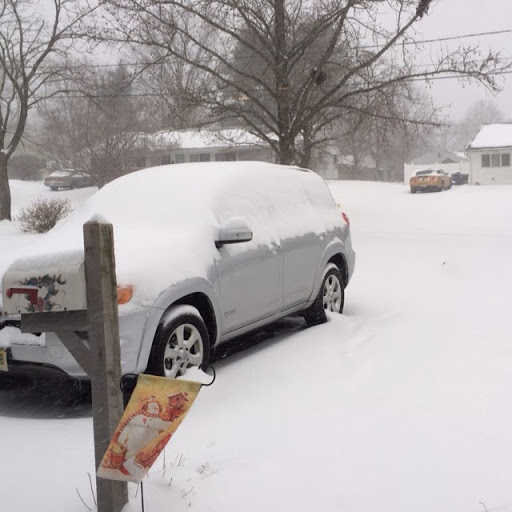
The same thing happens with all kinds of news — and not always for the good (think of the recent panic that spread across social media regarding a not-really-pending 30-inch snowstorm.) Of course, only the technology is new — we’ve always spread our news through social networks, only it was done word of mouth. Now, the technology allows for massive distribution and journalists need to understand this and continue not only to improve our social media skills but to innovate, to find newer and better ways to research/report, tell and market our stories.Consider this story and chart from The Atlantic, which I had read just an hour or so before the Kiner news hit the wire:

And Just Like That, Facebook Became the Most Important Entity in Web Journalism

The graph above tells maybe the most interesting—and definitely the most surprising—story of the past year of digital media.

It shows two years of referrals from Facebook and Google to the Buzzfeed Partner Network, a collection of websites (including this one!) that share their traffic stats with Buzzfeed. It quantifies what so many publishers have experienced: a massive surge of traffic from Facebook, unparalleled in its regular, day-after-day size and scope.
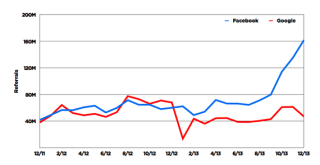
Facebook, basically, has become the most dynamic and useful distribution mode for Web journalism that exists today, more effective than Google and still stronger and more functional than the upstart social media. There are a lot of reasons for this — the ease of sharing stories, for sure, and sheer amount of time we spend on the social media site. But Facebook also offers journalism something else: A better and more diversified way to engage with stories — see above — than the traditional commenting function or the letter to the editor.

Journalists not only should be tweeting out their stories, but engaging their audiences — asking for help in reporting, joining the comment fray on Facebook and Twitter — and making clear that the process is an open-ended one. The more engaged the journalist is with his or her audience, the more engaged the audience is going to remain and the more likely it is that the story will move around the Web.

Journalists are in the business of collecting and disseminating information and creating opportunities for discussion and debate. Facebook, Twitter and other current social media do not replace journalism or journalists, but expand our tool box.

Send me an e-mail.
All wrongs apparently make things right

The scandal surrounding New Jersey Gov. Chris Christie has created a separate cottage industry on the right, one best characterized as the “I know I am but what are you” defense.

The two houses of the New Jersey Legislature are conducting parallel investigations into what is being called “Bridge-gate” — or the purposeful disruption of the region’s traffic for political purposes. Several people close to Christie — his deputy chief of staff, two high-ranking officials with a bi-state transportation agency and potentially others — are accused of shutting toll ramps to the George Washington Bridge in the town of Fort Lee as political payback for a local Democratic mayor’s failure to endorse a Republican governor. Or it was retribution against a Democratic state senator for her part in scuttling Christie’s judicial appointments. Or possibly was tied to a massive redevelopment project. The reasons remain unclear, which is why the Legislature has issued subpoenas and numerous high-ranking officials have resigned or been fired.

These investigations are appropriate. “Bridge-gate” – can’t we find a better name for this? – is about the abuse of state power and government resources for apparently political purposes and ultimately inconveniencing and endangering New Jersey commuters and Fort Lee residents. Democrats and liberal media outlets have been running with the story, as is to be expected, given Christie’s national profile and his administration’s carefully crafted image as a confrontational politician.

The response on the right can be summed up – in the words of Dick Polman and others – as “But but Benghazi!” Karl Rove invoked it. So did Reince Preibus and others (here is a good summary from Dave Weigal.

Cal Thomas, the long-time political columnist and Fox News contributor, makes the case. He doesn’t excuse Christie or the governor’s administration, but he makes it clear that he views the decision to go after Christie as essentially a political one – especially in light of the supposedly more important scandals engulfing the Obama administration: Benghazi, the IRS’ refusal decision to grant non-profit status to some conservative groups and the failures of the Affordable Care Act.

One wishes the media would grill President Obama over far more important matters with the same zeal they have applied to Governor Christie.

In light of A, B, C and D above, closing two lanes leading to a bridge is nothing. It does, however, again expose the media’s agenda and their intention to bring down anyone who is a potential threat to a Hillary Clinton presidency.

Has Thomas watched any television or read the newspaper over the last year or so? I seem to remember wall-to-wall coverage of the botched launch of the federal Affordable Care Act website – it was all Obamacare all the time for about two months late last year.

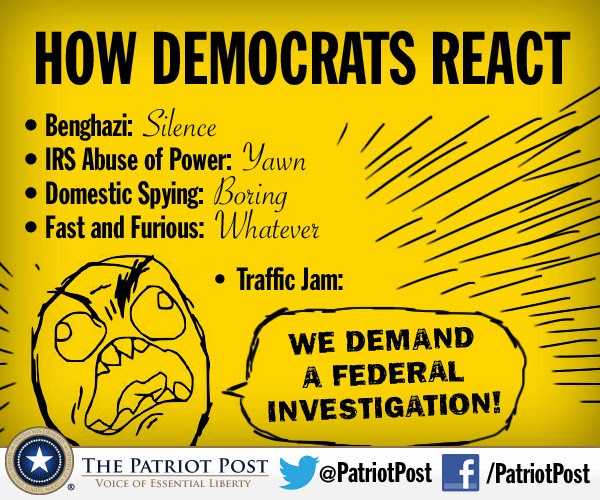
Consider the below graphic from Right Wing News and The Patriot Press, which has been making the rounds on Facebook:

The message is pretty clear. Here are four major scandals (at least as defined by Fox News) that met with silence from “Democrats,” which is supposed to cover a rather large and amorphous entity that includes not only the Obama administration, but members of Congress and the Senate and the media. The one scandal under investigation? A “Traffic Jam” – a phrase designed to make light of the abuses under investigation.

The premise, of course, is false, as the Los Angeles Times columnist Robin Abcarian points out. This “specious (and probably predictable) reaction” to the Christie scandal, she writes, “is a silly attempt at misdirection by whiny conservatives” who apparently have short memories of the extensive coverage that all of the above scandals elicited.

The reality, I must add, is that some of the loudest voices demanding investigation of domestic spying have been Democrats and members of the progressive community and Republicans (Lindsay Graham, John McCain, Fox News) have been at least as quick to call Glenn Greenwald and Edward Snowden traitors as establishment Democrats like Diane Feinstein.

And there have been a string of investigations into Benghazi, the IRS and Fast and Furious scandals, including Congressional inquiries (led by Republicans) and significant reporting by the major news outlets. The latest on the IRS scandal – IRS employees are accused of denying tax-exempt status to conservative groups on political grounds – hit in January, when the FBI announced it would not be filing criminal charges. Does this end the matter? No. The FBI is continuing its investigations, as is a Congressional panel – though U.S. Rep. Darrell Issa (R-Cal.), chairman of the House Oversight and Government Reform Committeeand the man driving the investigation, “has not exactly been on fire to resolve the matter,” as Kelly Phillips Erb points out on Forbes.com.

So the conservative argument falls apart for a number of reasons. First, it essentially is a variant of the tu quoque fallacy, but rather than arguing “he did it, so I can too,” conservatives are saying “they didn’t do what they were supposed to do, so you shouldn’t here.”

Second, it is a variant on the ad hominem attack, which seeks to use the identity or character of someone to undercut his or her argument. In this case, what is being argued is that Democrats are making this an issue only because they are Democrats – which means you shouldn’t take their arguments seriously. (There is some of this in the response to conservatives, with some on the left dismissing every defense of Christie as being suspect.)

Third, the analogy between these other scandals and the bridge controversy is weak, as I hope is clear from above. They have been investigated and reported on, which undercuts the premises of the GOP argument (that they were met with silence).

But rhetorical rigor no longer matters in our politics. Maybe it never did. What’s troubling, however, is the degree to which our political debate has excised any sense that we are discussing real policy. It is about ratings and rantings and it is more important to score partisan points than to actually make a coherent and logical point about policy and the lives of Americans.

The alleged abuses of power at the center of the bridge scandal need investigation. No amount of name-calling and obfuscation should intefere.

Send me an e-mail.

Imperfections key to power of new old Springsteen

I have been chewing on the new Bruce Springsteen album or four days now, soaking it in and considering what I might say about that I haven’t said about much of his catalog in the past. Readers of this blog know that Bruce is part of my big four: The Beatles, Bob Dylan, Bruce and Lou Reed. And some of you might have read previous blog posts or columns in which I’ve gushed over the latest. In some cases, my judgments hold up — Magic is a complete record in a way that The Rising and its shorthand lyrics just isn’t. So where does High Hopes fit into The Boss canon?

Some random thoughts to carry me through. High Hopes is an odd record in that it is a collection of material that Springsteen apparently liked a lot, but which did not fit onto earlier releases. In that way, it is like Devils & Dust (my original review), which was composed of outtakes from The Ghost of Tom Joad sessions — a record that came out in 2005, 10 years after Tom Joad, but sounded like a completely new effort. Devils & Dust‘s lyrics, which continued the southwestern motif of The Ghost of Tom Joad, managed to connect to current topics — the war in Iraq, immigration, cultural and economic dislocation — and turned the canned material into a meditation on a broken American dream and made it feel more acutely attuned to the times than Joad.

So how does one judge an album of older material that includes three cover songs — the first time he has done this on an album of otherwise original music — and two covers of his own work? High Hopes, lyrically, hits upon all of the familiar Springsteen themes — working class despair, economic dislocation, the meaning of identity and Americanness. “American Skin (41 Shots),” which was written as an homage to Amadou Diallo, the immigrant killed by New York police in 2000, fits here seemlessly, with acknowledgement that race and identity remain central to our lives. It is not just the dead black man who he is mourning in this song — which is all the more powerful in the wake of the Trayvon Martin death and the acquittal of his killer — but the police who pulled the trigger, who stand over the dead body and wonder what happened.

“The Ghost of Tom Joad”‘s reappearance, nearly 18 years after he first put the song on a CD, reminds us that all of the issues that were in play then remain relevant today. I could go song by song, but I think this review from Star Pulse does a good job and I don’t see the point in retracing its steps.

What I find compelling about this album is its sonic palette. Springsteen has not always been known for the sound of his records — aside from Born to Run, though I would argue that the two records that followed offered a distinct sonic sensibility and albums like Magic and Wrecking Ball present different elements of Springsteen’s aural approach.

High Hopes has a massive sound, with Springsteen making use not only of his traditional band, but a big horn section, strings and an array of studio tricks. Tom Morrello’s guitar is a key element here, taking these efforts in new directions for Springsteen, adding an extra edge of nastiness to many of the tracks.

Stephen Thomas Erlewine on Allmusic.com describes the album, quite accurately as an “unkempt collection,” on which “protest songs and workingman’s anthems are surrounded by intimate tunes” — which is quite a distance from the meticulous approach Springsteen usually takes. This meticulousness, of course, has resulted in classics, but has at times (The Ghost of Tom Joad, Tunnel of Love) lessened the potential impact of the songs by making them a little too neat. That is not the case here, as Erlewine says.

Much of this record oscillates between the moody and militant, particularly in the politically charged numbers, which are often colored by percussive guitar squalls

He goes on to make it clear that

these 12 songs don’t cohere into a mood or narrative but after two decades of deliberate, purposeful albums, it’s rather thrilling to hear Springsteen revel in a mess of contradictions.

Send me an e-mail.