Through the end of April, $5 from every purchase of As an Alien in a Land of Promise will go to the New Jersey Coalition to End Homelessness to aid their work advocating on behalf of New Jersey’s most vulnerable.
Send me an e-mail.

Through the end of April, $5 from every purchase of As an Alien in a Land of Promise will go to the New Jersey Coalition to End Homelessness to aid their work advocating on behalf of New Jersey’s most vulnerable.
Send me an e-mail.
Through the end of April, $5 from every purchase of As an Alien in a Land of Promise will go to the New Jersey Coalition to End Homelessness to aid their work advocating on behalf of New Jersey’s most vulnerable..
A second-day stab at the random resistance mode: Twelve random songs from my #ageoftrump revolution playlist:
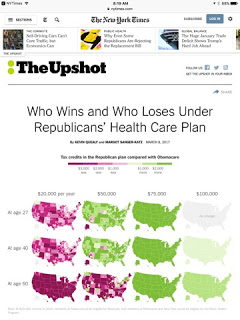
The New York Times has a useful set of maps today that graphically demonstrate the economic impact that the Republican healthcare plan will have on individuals in various regions of the nation. Supporters are touting the plan as a better and more efficient way to provide coverage. It “use(s) refundable tax credits to help people buy their health insurance,” which also was a feature of the Affordable Care Act. The ACA — i.e., Obamacare, included a variety of other sticks and carrots to expand risk pools and coverage, someof which is being dismantled by the Republicans, who also have changed the way the tax credits will work. Because of this, the plan is going to cost low-income Americans more while saving upper-middle class people money.
As the Times reports:
The biggest losers under the change would be older Americans with low incomes who live in high-cost areas. Those are the people who benefited most from Obamacare.
For some people, the new tax credit system will be more generous. The winners are likely to be younger, earn higher incomes and live in areas where the cost of health insurance is low.
Obamacare’s subsidies were structured to limit how much low- and middle-income Americans could be asked to pay for health insurance. Under the G.O.P. proposal, many of the people whose tax credits would fall sharply would be likely to end up uninsured. For people with few resources, a gap of several thousands of dollars between their tax credit and the cost of coverage would be impossible to make up.