
Chris Stapleton’s new record, Starting Over, is flawless, a master class in songwriting. He is deft with the rhyme and is expert at turning a phrase and making the cliched tropes of country songs feel both fresh and like your favorite sneakers. His band is tight, the production crisp (strings on “Cold” set a mood that the guitar solo slices into — brilliant). It all lends muscle to one of the best and most muscular voices in contemporary music. He is on par with Willie Nelson and Merle Haggard.
If you liked this post from Channel Surfing, why not share it? © 2020 Hank Kalet Unsubscribe
|
Author: hankkalet
Hank Kalet is a poet and freelance journalist. He is the economic needs reporter for NJ Spotlight, teaches journalism at Rutgers University and writing at Middlesex County College and Brookdale Community College. He writes a semi-monthly column for the Progressive Populist. He is a lifelong fan of the New York Mets and New York Knicks, drinks too much coffee and attends as many Bruce Springsteen concerts as his meager finances will allow. He lives in South Brunswick with his wife Annie.



For Our Fathers and for Us
For Our Fathers and for UsThe Coronavirus Has Made Physical Distance Seem Even More Distant, Which Was Apparent as Early as April, When This Essay Was First Written.
“Therefore are we bound to give thanks, to praise, to glorify, to honor, to exalt, to extol, and to bless him who wrought all these wonders for our fathers and for us.” — The Mishnah (qtd. in The Passover Haggadah, edited by Nahum Glatzer) It is still difficult to hear him cry. I write the sentence, then pause. Unsure. Overcome. I want to continue, to explain what this sentence means, to be rational, to place this moment in context. I can’t. And yet, here I am, putting words on paper (or, more accurately, typing words on a screen), setting word after word, sentence after sentence. It is still difficult to hear my dad cry. We talked on the phone last night. He had attended a small Seder, just he and two friends down the street. I know I should tell him it was not a good idea, that it violates the protocols most of us are attempting to follow as the coronavirus spreads like weeds across the nation. Dad will be 82 next month. His friends are a husband and wife in their 70s. She has MS and uses a wheelchair. He has had some respiratory issues in recent years. My dad has kidney issues and suffered an embolism that placed him the hospital a year and a half ago. They should be isolating themselves. But how can I tell him to stay home when staying at home is breaking his spirit? He’s being safe, for the most part. His neighbor gave him a mask and my sister was mailing him some additional face coverings. He’s limiting his visits to stores. His neighbors have helped — they are putting in bulk orders for several households at places like Costco and Walmart, then doing curbside pickup. This is smart and keeps them from having to wander the aisles and use grocery carts used by dozens of others. He has a good two-plus weeks worth of food and supplies, maybe more. He is by himself. My siblings and I are the only real contact he has with the outside world, aside from the occasional conversation from a distance with his neighbors and an occasional call from friends. I talk to him two, sometimes three times a day. We have the same conversation each day: “Same shit,” he’ll say, and then describe what he ate, his bathroom habits, maybe broach the subject of politics and the news. He watches Fox. I don’t. He voted for Trump. I didn’t. There is almost nothing on which we agree, so I have to engage in a kind of verbal jujitsu to move the conversation to something else. There are no sports, because of the virus, which makes it harder. Sports have always been our connection, especially basketball — some of the most vivid memories I have, the best memories, are of driving home from Madison Square Garden after a Knicks or Rangers game, me rifling through the Knick media guide and tossing out random details about players. “University of San Francisco, 6-foot-7,” I’d say. “Mike Farmer,” he’d respond. He never missed a player. The virus has taken away his primary passion, bowling, which is something he’s been doing for probably 70 years. He’s not as good as he once was — who at 81 can say they are. And he once was remarkable — perfect games and 800 series. Bowling, though, was more than just competition for him. It was his social life, as well, the place where he’d connect with his friends. It was something he did with my mom, as well, which also makes it pregnant with emotion. It is seven months to the day as I write this that she moved into the memory care facility. There was little choice — she was barely lucid and had become difficult to handle. She would get obsessed with the Tupperware, blame imaginary people for coming into the house and moving things and stealing. She would fly into rages that had nothing to do with the world the rest of us occupied. And dad could not handle her. She is doing well now, but he has been in mourning, racked with guilt, lonely. He talked with her yesterday, and she was in a good space — even seemed to know who she was talking with, which was not the case the last time, when he FaceTimed with her. He says he’s past his guilt, but I think he’s rationalizing, and that’s OK. He’s earned the right to cope with this however he can and my siblings and I have a responsibility to listen, I told him a couple of weeks ago, when he was feeling guilty about “infringing on our lives,” that he’d been there for us and now it was our turn. He laughed and then got weepy. So did I. He called me last night when he got home from the Seder. He said it was a good time and he only left because he forgot his pills. He would have stayed longer. It made me smile. He said he started crying a couple of times when he was there, as they talked, and it made sense. He was with a couple, something he couldn’t be any longer, and it was Passover, which holds such deep importance for him. He said they had Haggadahs and did the first half of the service. That had become our approach before he and mom moved to Las Vegas in 1995. Twenty-five years. Distance makes all of this more difficult — even before the enforced isolation brought on by COVID-19 (an 11th plague?). They took turns reading from the Haggadah, he tells me, and I ask if he read with the same speed as when I was a kid. He said he used to read it in Hebrew. That was how his father did it. In our house, though, the Seder was in English and dad raced through, as though the Egyptians were hot on our tail and he needed to finish before we were captured. As my siblings and I got older, we’d take turns but we were never quite fast enough for him. I think he did that for my mom, who was far more interested in getting the meal started than recounting the story of Jews in Egypt. Mom. That’s why he cried last night. It was the first time in their almost 60 years of marriage that they were not together for Passover. They weren’t together for Rosh Hashana, for Yom Kippur, Sukkoth, or Hanukkah, either. But Passover more than the others is a family holiday. More than the others, it is about identity and connectedness, about remembering a shared past and a shared history. It has not been transformed like Hanukkah, an otherwise minor holiday made central by its proximity to Christmas, into a commercial extravaganza. It is a holiday that, in many ways, recalls events that Franz Rosenzweig describes as the “welding of people into a people” (The Passover Haggadah, p. xx) and that Adin Steinsaltz describes as the “most important religious family casino of the year” (p. 123). The Seder story — a recounting of the book of Exodus interspersed with rabbinical interpretations and debates — is a story of deliverance and unity, but also of doubt. The Jewish people flee repression in Egypt as a people, but also waver, lulled into rebellion against Moses as the Egyptian army closed in. Moses descended from Sinai, smashes the first tablets of the Ten Commandments and destroys the idolators and rebels and a people is born. We all take different things from this story. The religious view this as proof of god — embedded in the story, the moral of the tale, is that the wicked will pay, and that the devout will prosper. For someone like me, an agnostic who still describes himself very much as a Jew, the doubt is most important, because it reminds me that there are things out there that we cannot know. Kierkegaard talks of making the leap of faith, of making the declaration of belief, as a singularly human act because man then moves beyond his doubt without relinquishing it. I remain at the precipice, unready to leap, full of a doubt that runs both toward belief and away from it. I can hear a similar doubt in my dad’s voice, a sense of helplessness, a quiet flailing at the injustice of aging, of Alzheimer’s, of the coronavirus that he would never put into words. He remains observant, even if he has left many of the rituals behind. Doubt hovers above everything for him now, questions about how long he has and what that even means, about how he can maintain the most important relationship of his life even as his partner recedes into a new and different reality, one he cannot inhabit. Above my desk are numerous framed black-and-whites: a company photo depicting my great uncle’s news distribution business (Kalet News Co.), a grainy shot of a somber great grandfather, and a half dozen wedding photos — my dad’s parents, my mom’s, Annie’s parents, ours. Everyone is so young, full of a sense of where things might lead. My parent’s wedding picture is among them. It shows two smiling kids — dad was 24 and mom 22. That was 60 years ago. Their’s was a promise fulfilled, but it is a promise that has grown difficult to maintain. When I was a kid, I spent most weekend mornings in the spring and summer with my dad, watching him play softball, which he did for probably 30-plus years. At first, I would just go with him to the games in Rockaway Beach, then at the Dumps in South Brunswick after we moved. It was a kind of hero worship that was destined to fade, as it must, as the son grows into a man. There is a passage in Philip Roth’s facts, his first stylized effort at autobiography, that stays with me. He writes of “naively believ(ing) as a child that I would always have a father present,” of the father commanding “my attention by his bulging biceps and his moral structures” (16-17). This is the father I remember from the softball fields, the one who could pull the ball over the right field fence or poke a base hit the other way almost at will. He was strong and powerful, and had remained so even as he aged. I was always the little kid looking up at the powerful man. Somewhere along the way, however, things began to shift. As Roth wrote about his father, mine “is no longer the biggest man I have to contend with — and when I am not all that far from being an old man myself — I am able to laugh at his jokes and hold his hand and concern myself with his well-being.” I’m able to love him the way I wanted to when I was sixteen, seventeen, and eighteen but when, what with dealing with him and feeling at odds with him, it was simply an impossibility. The impossibility, for all that I always respected him for his particular burden and his struggle within a system that he didn’t choose. Roth talks of the “mythological role of a Jewish boy growing up in a family like mine,” growing up as the oldest son, which Roth wasn’t, was to rise higher than he had. Each generation is supposed to achieve more, to be more than the previous one. Roth frames this as a particularly Jewish myth, but I think it transcends religion and ethnicity and race. This notion is a tenet of the American dream, and it is can be stifling. As I write in another essay, I rebelled against it. Like Roth, I think I found ways to be at odds with my father. And I think I’ve achieved something for myself, though not necessarily what he might have envisioned, and we have had our moments of strife. And I can admit that it was only when I’d stopped seeking his approval that I found peace with myself and the approval I craved, though his image continued to be outsized in my mind — at least until a nasty fight that left him deflated and me shaking. We’d fought before, but not like this. The stakes were high. My mom had become unmanageable, and I had grown frustrated with his seeming unwillingness to acknowledge that life was changing. He could not adjust as her Alzheimer’s robbed her not just of her memory but of her ability to perform the basic tasks he had come to expect from her in their old-fashioned, patriarchal relationship. He managed the money, all of the economic and decisions, did the “man” stuff. He took care of her in that way, while she took care of him and the house by cooking, cleaning, and so on. There’s was the ‘50s-‘60s marriage, and I don’t think they ever questioned the dynamic. There is a feminist critique of this, which I agree with, but that is not relevant here. They were always close, and only grew closer as they grew older, and for the last 25 years they were rarely apart. It was August of 2019 and I flew out, because he asked me to. He was struggling to cope, and it was time to consider other options. We looked at a couple of facilities, considered bringing someone in, and I’m not sure I was anymore ready than he was to do what ultimately had to be done. He was hemming and hawing, worrying about finances, saying he was done with it, angry that she would go off at the slightest thing. “I don’t have to take this,” he yelled, after she criticized him or accused him of something. I lost my temper, started screaming, said a lot of things that needed to be said. And as we yelled, he sat in his easy chair in his little office room, sinking into the cushions, shrinking before my eyes. I’d never seen him like this before. He was deflated. Defeated. I shifted my tone and we continued talking, finally coming to an agreement, an understanding, an admission on my part of what he was dealing with and realization on his part that he had no choice but to adapt, to change. Things could not be as they had been — not for him and my mother nor, as I now understand, for my dad and me. This is a good thing. It is important to see one’s parents as human beings and not as gods. But it does not make this new reality any easier to accept. I know I’m lucky. We still have him with us, even if he is on the other side of the country. He couldn’t say this about his father. I try to infuse this sense of gratefulness into each of our conversations, though it is difficult. I try to be as present as I can in these twice-daily calls, but I know my attention drifts, to the television, the computer screen, and then I feel guilty. And sometimes, I want to cry and I come close. Especially when he cries. Especially when the chill of the physical distance, of the isolation imposed by the coronavirus, when the reality that our time here is finite gets into my bones. Still, it hurts to hear him cry.
If you liked this post from Channel Surfing, why not share it? © 2020 Hank Kalet Unsubscribe
|

Did You Read the Article?
Did You Read the Article?A Six-Year-Old Thought Experiment and Personal Essay Has Trump Supporters and Other Conservatives in a Rage
Conservatives are on the warpath about this piece from Ezekiel Emanuel, accusing him of endorsing euthanasia and calling for a cap on how old we can get. Their arguments are absurd and based on a misreading of what he actually says. The piece is a personal consideration of the issues that surround aging, including the policy issues that an aging populace raises. Emanuel, an oncologist and medical ethicist, is a member of Joe Biden’s coronavirus task force, one of 10 medical professionals appointed by the presumptive president-elect to advise him on policy during the pandemic. His essay — “Why I Hope to Die at 75” — ran in The Atlantic in 2014 and is now being (willfully?) mischaracterized and his message distorted to make political hay. This is not surprising, really, given our tendency as humans to look only for evidence that supports our beliefs, and because past history (“Harry and Louise,” death panels). Lets dispense with the basics first. Emanuel is not calling for death panels or making the claim life should end at 75 — at least, not for anyone but himself. He is not calling for affirmative action toward ending his or any life, and instead wants us to consider the policies we have in place about end-of-life care, DNRs, extreme measures, and the lack of policies designed to help us be healthy through out our lives. This kind of essay — personal narrative as rumination of ethical issues — and is common among political and ethical philosophers. It offers a way to look at issues and concerns we otherwise might not wish to discuss. It should be taken as a starting point for discussion, not as a manifesto. But we, as a society, have apparently lost the ability to read fully and to take in complicated material without applying our biases. This is confirmation bias at work. Confirmation bias is the tendency to take in information and make it match our preconceptions. It’s a tendency to see even disconfirming evidence as supporting our ideologies. As a species, we are prone to this. All of us, to varying degrees. Confirmation bias does have its uses (we can discuss), though not when sorting through questions of ethics or politics and policy. When applied to these areas, we end up in bunkers, paralyzed by stereotyping and distrust. We end up stripping complex ideas of their context, of their nuance. I’m not endorsing Emanuel’s arguments. Some of em what he says intrigued me. Some of what he says I find disturbing. I think that’s the point. Rather than using him to attack Biden and did COVID task force and dismiss it out of hand, engage the specifics. Read and digest this 2014 Atlantic essay. Look at his other statements and his other writings from other contexts. Engage his arguments. Be present and a part of the debate he wants to start. But we have to start by actually reading what he says on his terms, and not through our own distorted lenses.
If you liked this post from Channel Surfing, why not share it? © 2020 Hank Kalet Unsubscribe
|

South Brunswick Re-Posted Live (on Tape) Interviews Mayor Carley
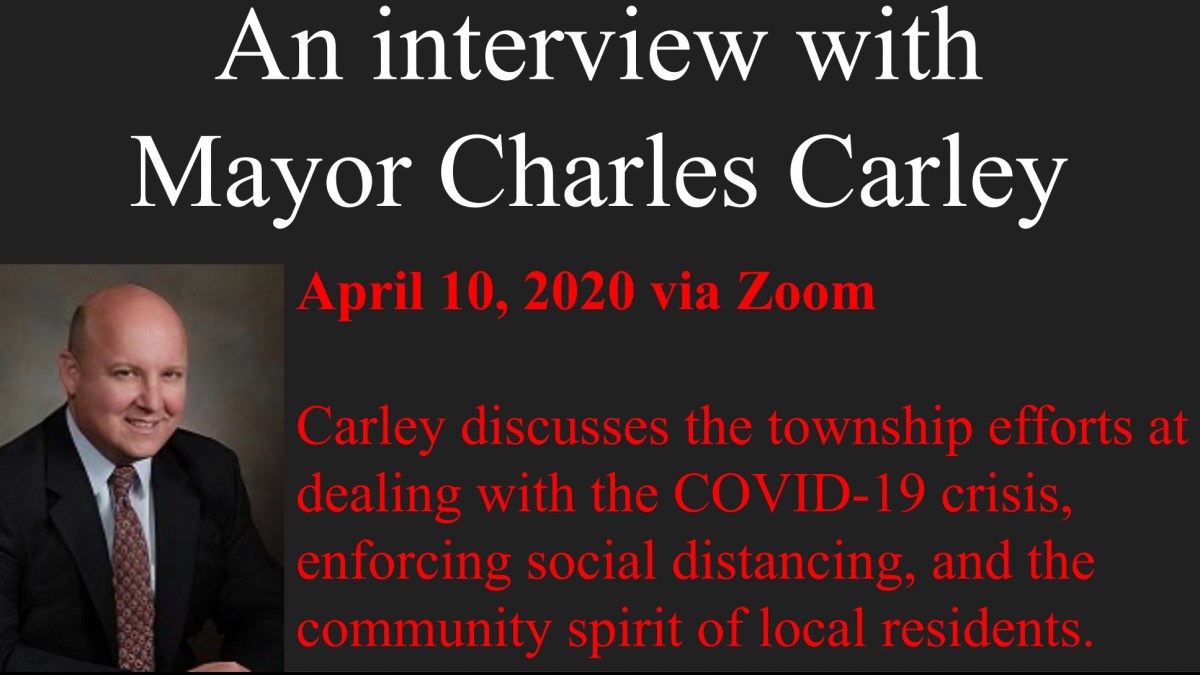
Mayor Charles Carley discusses the township’s response to the COVID-19 crisis on the first South Brunswick Re-Posted Live (on Tape).
Pizza Scam Leads to Arrest
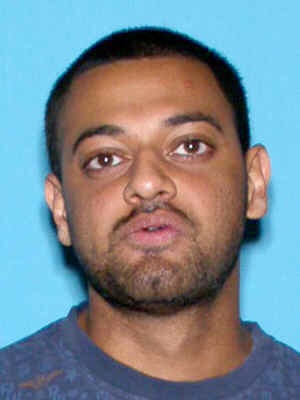
A Florida man was charged with scamming pizzerias throughout the township and region.

