What NJ Congressmen say about the #ACArepeal vote

The House of Representatives has passed repeal the Affordable Care Act by a 217-213 vote, with all but two New Jersey Congressmen voting “no” on the bill. Overall, all House Democrats and 20 House Republicans voted against the bill.

New Jersey progressives and Democrats are vowing to target the two “yes” votes — Tom MacArthur of the 3rd District and Rodney Frelinghuysen of the 9th.

MacArthur was an expected “yes” — it was his compromise plan on which the final bill was based.

Chris Smith had said beforehand that he planned to vote “no.”

Democrats like Josh Gottheimer and Frank Pallone were united in opposition.

Few New Jersey House districts are competitive, but Leonard Lance is in one that could be.

Bill Pascrell went after the GOP and the repeal bill repeatedly, and with gusto.

This is where Frelinghuysen’s posts would go.

Donald Payne Jr. was just as adamant as Pascrell.

Send me an e-mail.

House GOP plans Thursday vote to gut ACA

Tomorrow appears to be D-Day for health care in the U.S. House of Representatives.

As The New York Times reports, Republicans have scheduled a vote Thursday on a bill “to repeal and replace large portions of the Affordable Care Act after adding $8 billion to the measure to help cover insurance costs for people with pre-existing conditions.”

The bill’s outlines are troubling. It does away with protections for pre-existing conditions, allowing states to “apply for waivers allowing insurers to charge higher rates based on a person’s ‘health status.’”

The bill attempts to offset this change, which will result in many losing their coverage, by setting aside $23 billion for the sickest customers and $100 billion to aide states.

Significantly, according to the Times, the bill also rolls back Medicaid expansion — “a major reason the Congressional Budget Office estimated that the original bill would leave 24 million more Americans without health insurance after a decade.” Tomorrow’s vote comes “before C.B.O. can finish a fresh assessment of its cost and impact.”

To put it kindly, the bill is a disaster.

The most vulnerable in our economy will pay the price for the repeal, while those in the broad middle get nothing. And the rich? They’ll be getting a tax cut, if not in this bill, then later on.

As Chris Hayes of MSNBC and The Nation put it in a tweet:

That’s unconscionable, but it seems pretty clear at this point that the right-wing has no conscience.

In any case, the vote is expected to be close — The Guardian (UK) calls it “a nail-biter” — and there are no guarantees.

The party needs at least 216 votes to pass the measure, meaning they can only afford to lose 22 votes if all Democrats oppose the bill as expected. On Wednesday, at least 18 Republicans publicly opposed the bill and as many as two dozen remained undecided, according to counts maintained by news organizations.

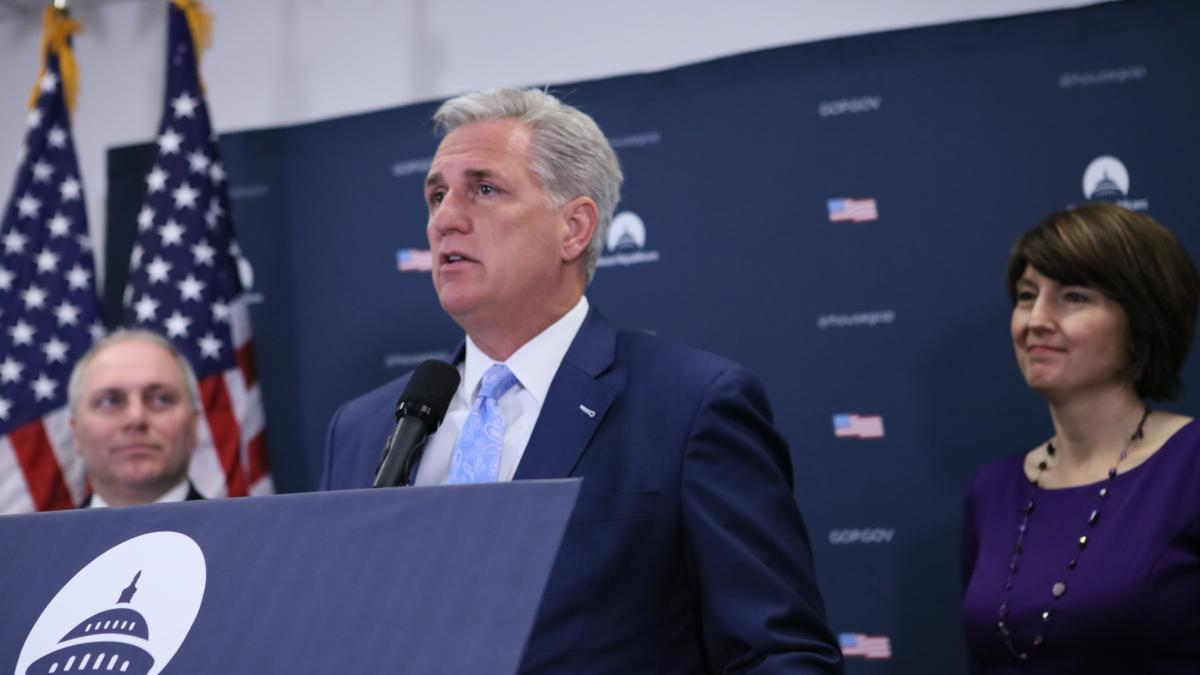
U.S. Rep, Kevin McCarthy, in a photo from his website.

Still, the GOP leadership believes it will pass, according to the Times..

“We have enough votes,” Representative Kevin McCarthy of California, the House majority leader, said Wednesday night. “It’ll pass.’”

Three of New Jersey’s five Republican Congressmen — Frank LoBiondo, Leonard Lance and Chris Smith — have announced they will vote no on the plan. A fourth, Tom MacArthur, of Ocean County, is a chief architect of the compromise plan. Appropriations Chairman Rodney Frelinghuysen, a North Jersey Congressman, opposed the previous repeal, but “refused to talk at all about where he stands on Thursday,” according to The Huffington Post.

If the reports are correct, only four Republicans need to be swayed — and Frelinghuysen could be one. So, if you’re in his district, make your voice heard tomorrow. The Affordable Care Act is far from perfect, but repealing it will leave too many without access to coverage.
Send me an e-mail.

I miss the complete game

Correlation is not causation. But one has to wonder about the shift from starting pitchers pitching deep into games to one in which teams regularly use four, five and six pitchers a game.

There was a time in baseball when pitchers regularly finished what they started — not every pitcher, of course, but the best pitchers would in more than half their starts. Up through the early ’70s, in fact, one in four or one in five starts resulted in a complete game and the best pitchers would regularly finish more than half their starts. (I’m using National League figures to avoid the issues raised by the designated hitter.)

Tom Seaver had 231 CGs in his career.

Today, however, the complete game is rare. So far this year, there have been five complete games — or one every 80 starts. There were 39 last year — one every 60 starts. Johnny Cueto had five complete games last year — which led the National League. Go back 30 years — to 1986 — and the league leader, Fernando Valenzuela — had 20.

At the same time, league ERAs have been higher over the last decade than they had been in the past. National League ERA has exceeded 4.00 20 times in the last 25 years, but only twice in the preceding 25 years.

Again, correlation is not causation. The rise in ERA coincides with other factors — an increase in both homeruns and strikeouts even as hits and walks have held relatively steady, the return to smaller ballparks, steroids, a change in strategy — but the drop off in complete games and the increase in the number of pitchers being used can’t be ignored.

One of the arguments favoring the use of more pitchers, of more relievers, is that it has been driving down late-inning scoring. This piece from 2014 from Slate offers some data on this, though comparing percentage of a games’s runs scored per inning obscures that scoring overall, while experiencing some ups and downs over the years, has actually remained rather stable.

This calls the pro-reliever argument into question — as well as arguments in favor of pushing starters as deep into games as possible. The game, it would appear, exists at an equilibrium, scoring staying within a consistent range regardless of the broader changes that might be happening. One pitcher, five pitchers — teams are still giving up around four runs a game, so maybe it doesn’t matter.

There are other issues — old-school pitchers believe that more throwing makes for better pitchers long-term and prevent injuries, and that may be correct. The number of big-name starters who have missed significant time over the last few years is rather large, and highlighted by what has happened to the Mets’ staff over the last four seasons (each of its big five has now spent time on the DL). Six pitchers last year exceded 200 innings compared with 25 pitchers in 1992, with Greg Maddux throwing more than 260. Compare that to Max Scherzer’s league-leading 228 in 2016, which would have placed him ninth in the league in 1992.

What I find interesting, in our age of pitch counts and innings restrictions is that younger pitchers were carrying those big work loads. Some did have arm troubles later in their careers, but many managed to go through their careers consistently throwing high-innings totals — guys like Maddux, Tom Glavine, Curt Schilling and so on. Glavine pitched until he was 42, threw 200-plus innings 15 times — and that does not account for the 218 innings he through in 12 post seasons. Scherzer — today’s prototypical workhorse — has pitched eight full seasons, the last four of which he has topped 200.

I don’t know if the change in workload or workout routine has contributed to the seeming injury spike. I’m not a player, manager, coach or front-office guy. I’m not a mathematician. I’m not an analytics guy. I respect the use of new stats, but I think we over rely on them — not just as fans, but as team-builders and managers. As a fan, I can only consider what those close to the game have to say. Both Tom House, a well-regarded former pitching coach, and long-time Major Leaguer Jim Kaat (24 years in the league, 14 with 200-plus innings — twice with 300-plus) believe “developing pitchers should throw more, not less.”

The modern industry believes the opposite. Yet pitchers continue to break down.

“What happens in today’s game is kids pitch too much, but they don’t throw enough,” House said. “That’s the simplest way to explain it. They haven’t created a broad enough throwing foundation to handle the pitching workloads.
“My brother and I wore out three garage doors throwing tennis balls against them. We lived at the beach. I bet you I threw a million sea rocks at sea gulls. Not very environmentally friendly, but we were throwing all the time.”
Kaat worked under the renowned pitching coach Johnny Sain, who believed that pitchers should throw at least a little every day. Two of Sain’s pitchers, Kaat and Tommy John, would go on to throw more than 4,500 innings apiece. No active pitcher has worked even 3,300 innings.
“The single most important exercise that I did during my career was throwing the baseball,” Kaat said. “Whenever they would say, ‘You sure you’re not throwing too much?’ I would say: ‘Well, this is how I make my living. I’m just spinning the ball. I’m trying to figure out what makes it move, how can I make it do this and do that?’ So my arm always stayed very flexible.”

These are the same arguments you can hear Ron Darling make on Mets’ broadcasts everytime Manager Terry Collings or Pitching Coach Dan Warthen come to the mound in the sixth or seventh inning to pull a starter because of the 100-pitch limit.

Are these old-school guys right? I’d like to think so — I’m a bit of an old-school fan. Few contemporary games compare with the 1985 duel between Fernando Valenzuela and Dwight Gooden in 1985. Valenzuela threw 11 innings of scoreless ball, Gooden nine and the Mets won it in the 13th on a two-run double. (Another Mets-Dodger duel took place in 1976 — Craig Swan tossed 10 innings of scoreless ball for the Mets, while Don Sutton tossed nine in a 1-0, 14-inning Mets win. I don’t remember this one; it’s mentioned in the LA Times coverage of the 1985 match-up.) Tension and drama still occur, but there is something about seeing starters battle like this, as if it were personal.

This is not where we are today. The game changes and the changes become ingrained. The numbers support some of the changes, though other numbers make it seem a wash. We may see a move back to more complete games and letting starters go deep — at least the top ones — because a tired Scherzer is better than most fresh middle-inning guys, and because it would allow teams once again to carry more position players — and shorten game times, which is sorely needed.

It won’t happen this year, or anytime soon. The thinking would have to change first, and then it would need to trickle down into the training.

I have no illusions, however. I’m old-school when it comes to baseball, but I still love baseball. And while I’d rather watch a tired Jacob deGrom on the mound than a fresh Sean Gilmartin, I have no illusions that it is going to happen anytime soon.

Send me an e-mail.

Trump, 100 days and the normalization of hate

We’ve hit the 100-day mark of the Trump administration and the news media has been filled with volumes of copy focusing on what he has and has not accomplished at this arbitrary milestone. While it is true that he has managed little legislatively, he has changed the focus of the federal government — administratively gutting environmental enforcement, ending oversight of local police, and so on.

These are significant changes that demand more coverage than they are getting — I have a piece coming soon at NJ Spotlight on New Jersey counties and immigration. But they are not his only legacy.

Much has been written about the empowering of “alt-right” groups and the possible rise in hate crimes — the numbers are notoriously difficult to gather or vet — that have been a hallmark of this administration.

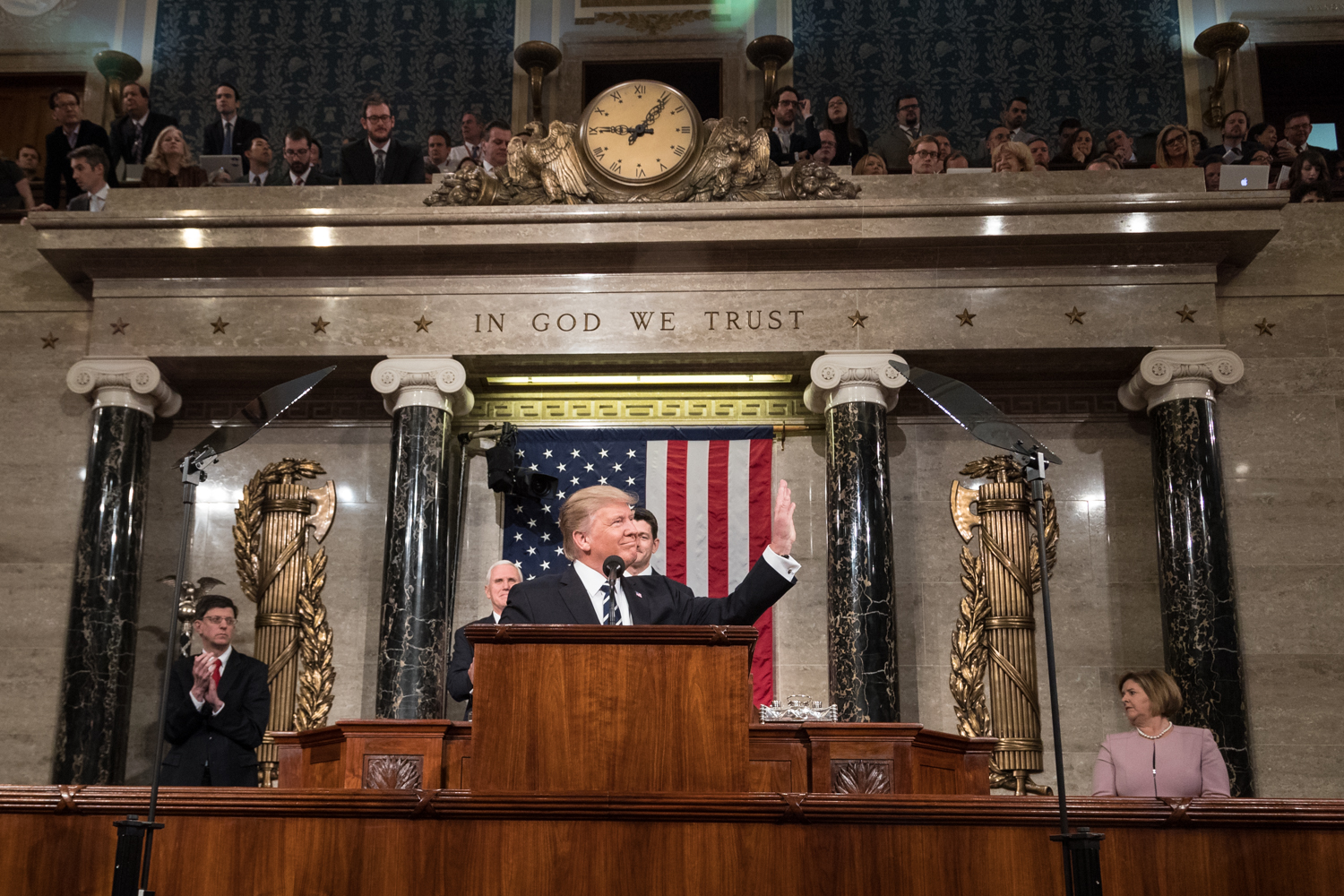
This passage from yesterday’s 100-day rally speech (link has been de-activated) is instructive, I think. Here we have the president of the United States reading the lyrics to a ’60s soul song, “The Snake,” , essentially a reworking of the Aesop’s tale and similar in theme to the scorpion and the frog. (He attributes its writing to Al Wilson, who sang a cover version of the song, but it was written and first performed by Oscar Brown). The song is apolitical, though the story can be applied to politics, as both Aesop’s fable and the later tale tell stories of unchanging nature — both the snake and the scorpion end up biting and killing their benefactors. Thematically, they are warnings that “the wicked show no thanks.”

And I thought of it having to do with our borders and people coming in.  And we know that we’re going to have; we’re going to have problems.  We have to very, very carefully vet.  We have to be smart.  We have to be vigilant.

So here it is, “The Snake.”  It’s called “The Snake”:

Trump, though, recontextualizes it — pointing the “moral” not at the powerful but at his favorite scapegoats, Latino and Muslim immigrants. Here is what he said:
“On her way to work one morning, down the path along the lake, a tender-hearted woman saw a poor, half-frozen snake.

His pretty colored skin had been all frosted with the dew.  “Poor thing!” she cried.  “I’ll take you in and I’ll stake care of you.”

The border.  (Laughter.)

“Take me in, oh, tender woman.  Take me in for Heaven’s sake.  Take me in, oh, tender woman,” sighed the vicious snake.

“She wrapped him up all cozy in a comforter of silk, and laid him by her fireside with some honey and some milk.  She hurried home from work that night, and as soon as she arrived, she found that pretty snake she’d taken in had been revived.

Take me in, oh, tender woman.  Take me in for Heaven’s sake.  Take me in, oh, tender woman, sighed that vicious snake.

She clutched him to her bosom, ‘You’re so beautiful,’ she cried.  ‘But if I hadn’t brought you in by now, oh, heavens you would have died.’  She stroked his pretty skin again and kissed him and held him tight.  But instead of saying, ‘thank you,’ that snake gave her a vicious bite!

Take me in, oh, tender woman.  Take me in for Heaven’s sake.  Take me in, oh, tender woman, sighed the vicious sake.

‘I have saved you,’ cried the woman.  ‘And you’ve bitten me, heavens why?  You know your bite is poisonous, and now I’m going to die.’

‘Oh, shut up, silly woman,’ said the reptile with a grin.  ‘You knew damn well I was a snake before you took me in.'”  (Applause.)

Does that explain it, folks?  Does that explain it?

Well, yes. It explains a lot — about Trump. The use of an otherwise innocuous song — contrary to Michael Gershon’s contention in an otherwise inciteful column, the lyrics themselves are not racist — to paint immigrants as unchanging in their nature and that, no matter how moderate and mainstream they might seem, no matter how much we help them, they eventually will lash out. It’s what they do and who they are and the only way to prevent it is to build a wall and keep them out. This is racist nonsense reminiscent of attacks on other groups — the “Jew vermin” of the Nazi era, our own depiction of blacks as sub-human, and so on.

Trump used this song lyric repeatedly in rallies during the election campaign, so we shouldn’t be surprised that he reached for it again when standing before a friendly crowd at a moment when he feels himself besieged by the press corps (see the first half of this speech). There is a difference, however: He is no longer a candidate.

He is the president, and rallying a crowd of supporters with naked appeals to race and ethnic purity is downright terrifying and carries with it dangerous possibilities. I’m not saying he is a fascist or a Nazi, though the historian Timothy Snyder in an interview with Salon said he sees “elements of his approach which are fascistic.

The straight-on confrontation with the truth is at the center of the fascist worldview. The attempt to undo the Enlightenment as a way to undo institutions, that is fascism.

Whether he realizes it or not is a different question, but that’s what fascists did. They said, “Don’t worry about the facts; don’t worry about logic. Think instead in terms of mystical unities and direct connections between the mystical leader and the people.” That’s fascism. Whether we see it or not, whether we like it or not, whether we forget, that is fascism.

Another thing that’s clearly fascist about Trump were the rallies. The way that he used the language, the blunt repetitions, the naming of the enemies, the physical removal of opponents from rallies, that was really, without exaggeration, just like the 1920s and the 1930s.

Snyder fears a Reichstag fire moment, though that seems a reach. And yet, there is Trump still holding rallies, still inciting the crowd with hate, still pointing fingers, creating scapegoats, fomenting rage. And few call him out for it. Much of the coverage focused on his attacks on the press (because, you know, we only worry about our own), with few focusing on the hate-filled core of his comments.

Gershon, a conservative with whom I agree on little, was one of the few, calling the speech “arguably the most hate-filled presidential communication in modern history,” and adding that the only thing more terrifying was “the apathetic response of those who should know better”

Citing the essay “Politics, Morality and Civility” by Vaclav Havel, the late-Czech dissident, playwright and former Czech president, he describes Trumpism as “moral and spiritual poverty”:

the cultivation of anger, resentment, antagonism and tribal hostilities; the bragging and the brooding; the egotism and self-pity. All is visible. None will be forgotten.

Gershon prescribes an antidote — the “democratic faith” that the American “people, in the long run, will choose decency and progress over the pleasures of malice.”

It is the job of responsible politics to prepare the way for new leaders, who believe that all of us are equal in dignity and tied together in a single destiny. But this can take place only if we refuse to normalize the language of hatred.

We have been blinded by Trump’s overactive Twitter finger and the incomprehensible nonsense that spews from his mouth on an almost daily basis — so much of it, in fact, that it all seems to run together. We dismiss it whole cloth, assuming it is either the ravings of a lunatic or a well-thought-out plan to distract us. The press corps, which has no experience with a man like this, attempts to treat him as any other president even as he hectors them and upends all of the rules.

This may make sense in terms of policy — much of what his policy agenda is in line with Republican orthodoxy, or at least in line with what George W. Bush did or attempted. But his influence goes beyond policy. it is cultural. What he says matters because his followers take what he says as gospel. He has spread the gasoline and he now stands ready with lighter in hand.
 Send me an e-mail.

Respectability, ‘uplift suasion,’ and being ‘woke’

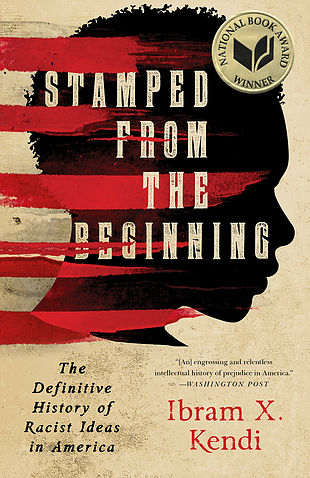
I’m reading Stamped from the Beginning: The Definitive History of Racist Ideas in America by Ibram X. Kendi, an important look at the birth and continuance of sometimes overt and sometimes unconscious racist thought. I was struck by this long passage (pp. 124-125), which echoes the arguments made by people like Randall Kennedy, Barack Obama and Bill Cosby over the years:

As freed Blacks proliferated in the 1790s and the number of enslaved Blacks began to decline in the North, the racial discourse shifted from teh problems of enslavement to the condition and capabilities of free Blacks. The American Convention (for promoting the Abolition of Slavery and Improving Conditions of the African Race) delegates believed that the future advance of abolitionism depended on how Black people used their freedom.

That meant, Kendi writes, advocating “uplift suasion” and pushing blacks to

attend church regularly, acquire English literacy, learn math, adopt trades, avoid vice, legally marry and maintain marriages, evade lawsuits, avoid expensive delights, abstain from noisy and disorderly conduct, always act in a civil and respectable manner, and develop habits of industry, sobriety, and frugality.

There is nothing wrong with any of these behaviors, in general, but the advice tracts published by the American Convention and targeted to free blacks, Kendi writes, meant that the “burden of race relations was placed squarely on the shoulders of Black Americans.”

If Black people behaved admirably, abolitionists reasoned, they would be undermining justifications for slavery and proving that notions of their inferiority were wrong.

Kendi’s book creates a taxonomy of America’s view of racial views, separating then into three basic categories: the segregationist/overt racist; the assimilationist racist; and the anti-racist.

The segregationist, he writes, views “Black people as biologically distinct and inferior to White people.” Blacks skin, for them, is an “ugly stamp on the beautiful White canvas of normal human skin” (p. 3).

The assimilationist, he writes, may seem to be an anti-racist, fighting to end slavery and segregation, but still fostered racist ideas.

In embracing biological racial equality, assimilationists point to environment — hot climates, discrimination, culture, and poverty — as the creators of inferior Black behaviors. For solutions, they maintain that the ugly Black stamp can be erased — that inferior Black behaviors ca be developed, given the proper environment. As such, assimilationists constantly encourage Black adoption of White cultural traits and/or physical ideals.

Kendi’s argument is simple: The creation of this kind of racial hierarchy, whatever its provenance, is racist. To say that blacks, for whatever reason are inferior, or that their behavior as a group is inferior, is racist. He is not saying that crime and poverty in black-majority neighborhoods does not exist, or that slavery and segregation, police brutality and de-industrialization have not taken their toll. On the contrary. He would agree that they have. What he is saying, however, is “there is nothing wrong with Black people as a group (italics in original), with any other racial group” (p. 11).

All cultures, in all their behavioral differences, are on the same level. Black Americans’ history of oppression has made Black opportunities — not Black people — inferior.

But what does this have to do with Kennedy, Obama and Cosby? He doesn’t directly address the “respectability” argument — at least not through the book’s first 120 pages — but he does point the finger at himself.

We have a hard time recognizing that racial discrimination is the sole cause of racial disparities in this country and in the world at large. I write we for a reason. When I began this book, with a heavy heart for Trayvon Martin and Rekia Boyd, I must confess that I held quite a few racist ideas. Even though I am an Africana studies historian and have been tutored all my life in egalitarian spaces, I held racist notions of Black inferiority before researching and writing this book.

Being an African American, he says, did not insulate him from an internalized racism. “Racist ideas are ideas” and

Anyone — Whites, Latina/os, Blacks, Asians, Native Americans — anyone can express the diea that Black people are inferior, that something is wrong with Black people.

There is a strain within black thought and in progressive thought more generally that essentializes race, that uses cultural reasons to explain so-called toxic or allegedly pathological behaviors among blacks (this could be anything from actual street violence that does real harm to individuals and communities to rather benign behaviors like the wearing of saggy jeans or the use of unacceptable slang or pronunciations) and tie the behavior of some to blacks as a racial group. This is not Jim Crow racial geneticism, but it creates the same kinds of racial hierarchies in the culture.

So when the nation’s first black president ignoring racial issues for much of his eight years in office except when he is hectoring a black audience and lecturing black youth for their saggy pants he fosters the mythology of black inferiority. While not letting the segregationists off the hook — yes, they still exist and still exert a dangerous level of influence on policy — Obama points the fingers at black culture, sharing the blame and, ultimately, making it the responsibility of black America to end discrimination and racism. This is the “uplift suasion” argument brought into the present. The

strategy to undermine racist ideas was actually based on a racist idea: “negative” Black behavior, said that idea, was partially or totally responsible for the existence and persistence of racist ideas. To believe that hte negative ways of Black people were responsible for racist ideas was to believe that there was some truth in notions of Black inferiority. To believe that there was some truth in notions of Black inferiority was to hold racist ideas.

I know this puts me out on a limb — a middle-class, white Jew pronouncing on the racial views of middle-class blacks is incredibly problematic and I apologize if I seem presumptuous. And I know I am far from pure on this issue. I am guilty of making the same kinds of arguments in the past that I am criticizing today, falling prey to the logical fallacy of generalizing, of turning behaviors that are more properly tied to a paucity of opportunity into pathologies and a ascribing them to “the black community” as if it is a monolith. My motivations were decidedly progressive — removing barriers to opportunity and ending segregation and discrimination — but my thinking and language relied on an underlying assimilationist approach.

My underlying racist — and those of most progressives who carry them — notions do not stem from any animus on my part, but are the outgrowth of hundreds of years of history in which the dominant powers cast blacks in the role of inferior beings. Recognizing this is important. I think this is why the word “woke” and its modern definition is so perfect for our times. Most of us have acknowledged the role race has played in our society, but many have yet to examine their own buried (and, for some, not so buried) racist beliefs. That examination, seeing how it governs our thinking, our language, our policies — seeing it, recognizing it for what is is, and then working to change this dynamic — that is what it means to be “woke.”