
Strikes and Strike Threats Are Winning Transformative Contracts for Workers Across Academia
Fighting Back Against the Neo-Liberal UniversityStrikes and Strike Threats Are Winning Transformative Contracts for Workers Across Academia
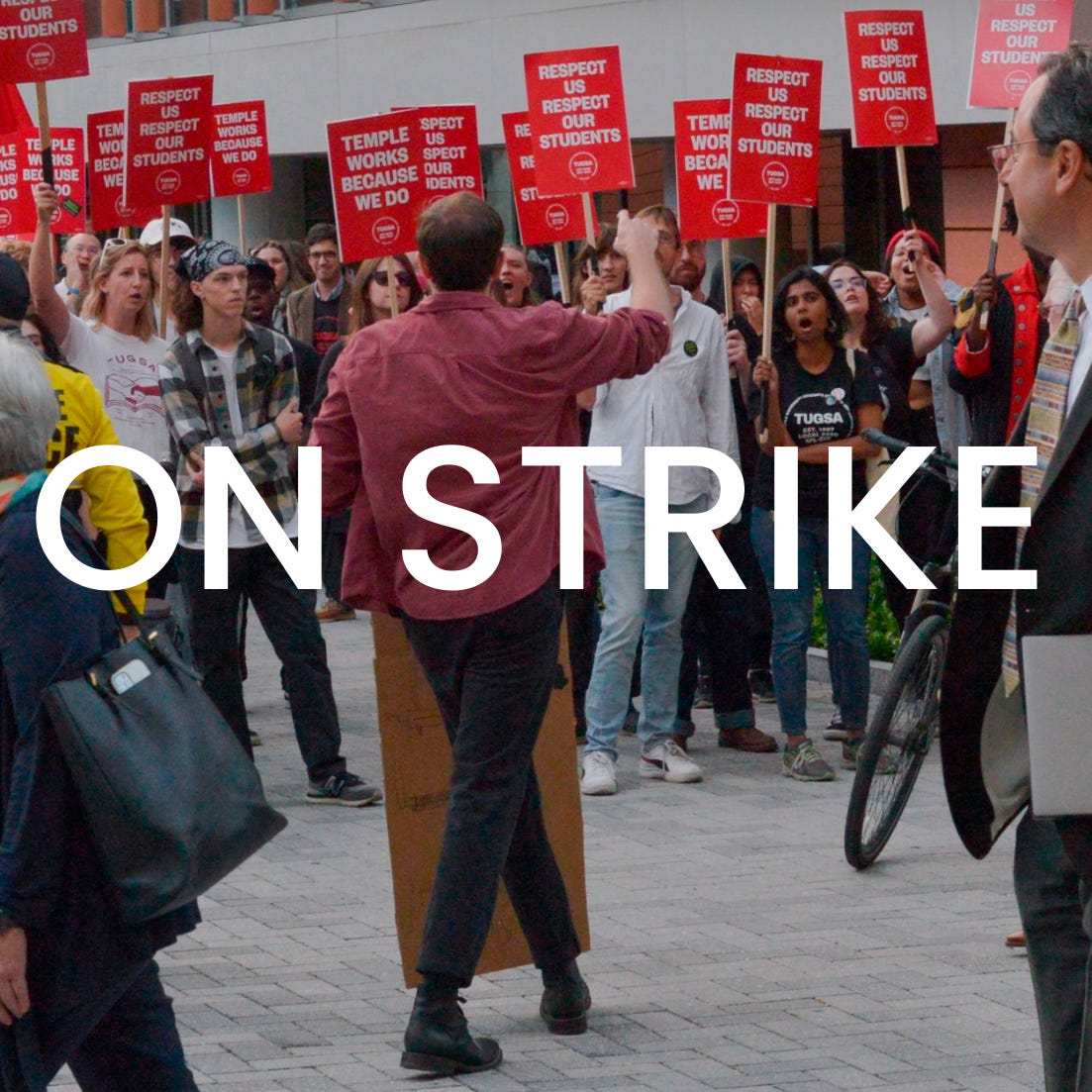
Temple grad students are on strike. Photos from the Temple University Graduate Students’ Association. American higher education is experiencing a wave of strikes and strike votes from contingent faculty who are tired of being treated as disposable cogs in the larger Neo-liberal academic system. Faculty teaching in the University of California system — the nation’s largest — and at The New School in New York struck in the fall and won significant raises and changes in working conditions, and Temple graduate students are out on the picket now. At Rutgers, we are holding a strike pledge drive and will kick off a strike vote in several weeks These strikes and threats are part of a growing movement among workers across the economy to take back control of their work lives. Workers at Starbucks, Target, Amazon, and elsewhere — companies that have evaded unionization in the past — are now organizing, seeking to move the service sector away from its exploitative scheduling and pay practices and toward a more sustainable working environment. The new militancy is having its effect. Earlier strikes and strike threats by the University Council-AFT, which represents 6,500 lecturers in California, helped win what they are calling a historic contract, while both the graduate student union at Columbia University in New York and faculty at Howard University have won new pacts. The wave of strikes and strike threats are part of a growing movement among contingent or “casual” faculty at both major research universities and smaller two- and four-year colleges to end the disparate treatment and disregard we — I teach at Rutgers — have experienced. Adjuncts, grad instructors, and contract employees are demanding significant increases in pay, job security, health care, and changes in scheduling that will end what Emily Raabe, a 12-year New School adjunct, told Nick Pinto in Hell Gate is “a culture of disposability that is the opposite of what education is supposed to be about." Donate: RU adjunct union Strike Fund Keep reading with a 7-day free trialSubscribe to Channel Surfing to keep reading this post and get 7 days of free access to the full post archives. A subscription gets you:
Join Channel Surfing in the app © 2023 Hank Kalet
|









 Hank Kalet